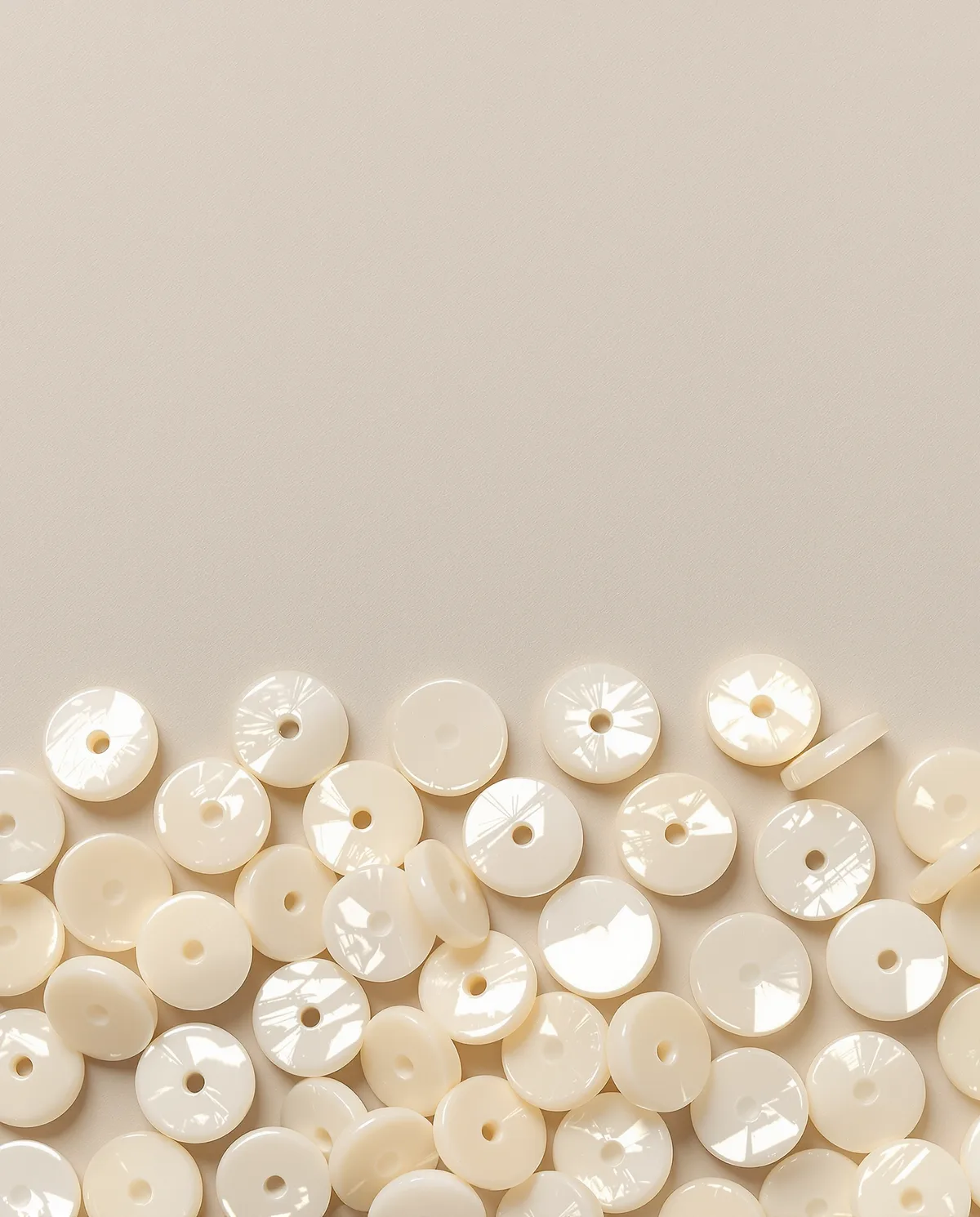
Material
Faux capiz discs
Cast resin or dyed cut acrylic, finished to imitate capiz shell: what it gives that real shell cannot, and why thin discs tangle.
See the detail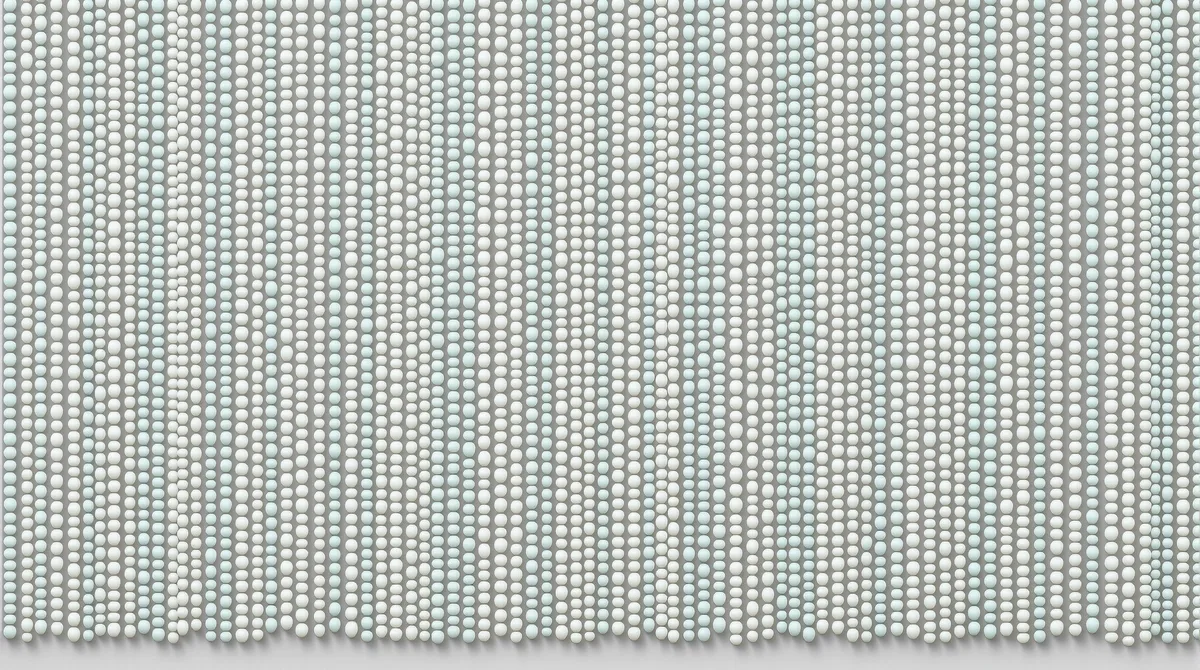
Application · Hospitality
A coastal interior stacks four loads at once: salt, humidity, hard daylight and an open side the weather comes through. Only two of our material families take all four, and neither of them is wood.
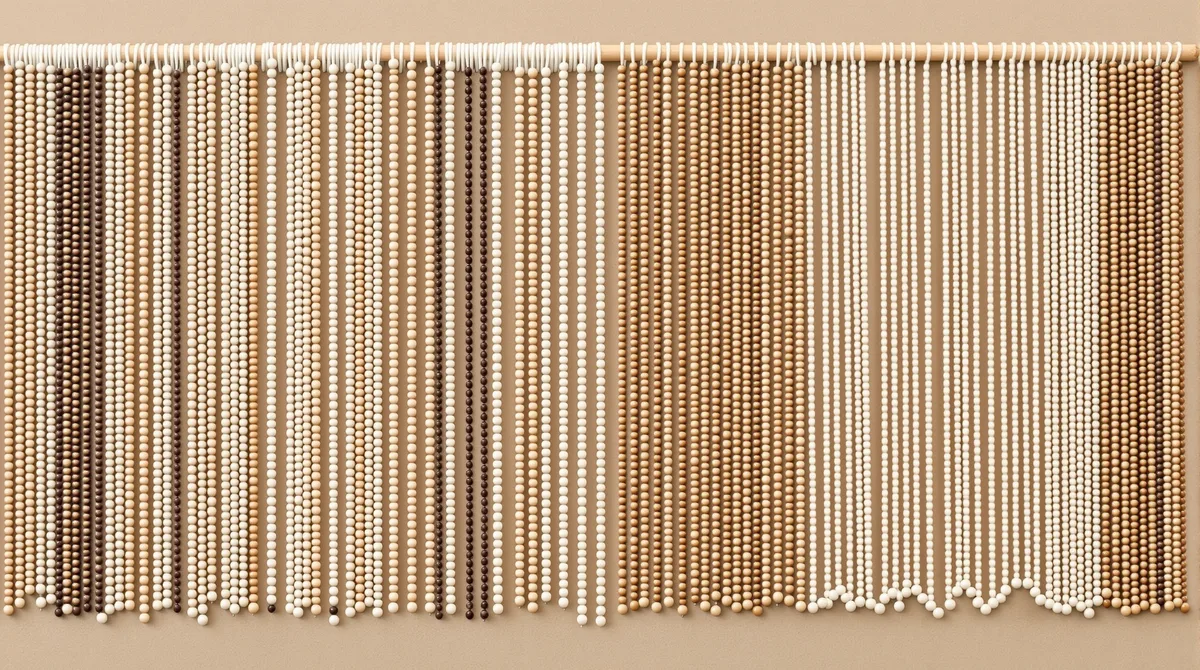
A beaded panel of frosted irregular sea-glass beads in pale aqua, seafoam, sand-white and clear, lightly tumbled to a matte uneven surface, finishing on a shallow scalloped arch.
In a coastal interior, salt and ultraviolet light rule the material choice: body-coloured pressed glass and engineered shell-look discs in cast resin or dyed cut acrylic are the two families that take salt air, humidity and hard daylight, while wood, bamboo and surface-dyed beads fail on at least one of them. Cotton cord remains the service item.
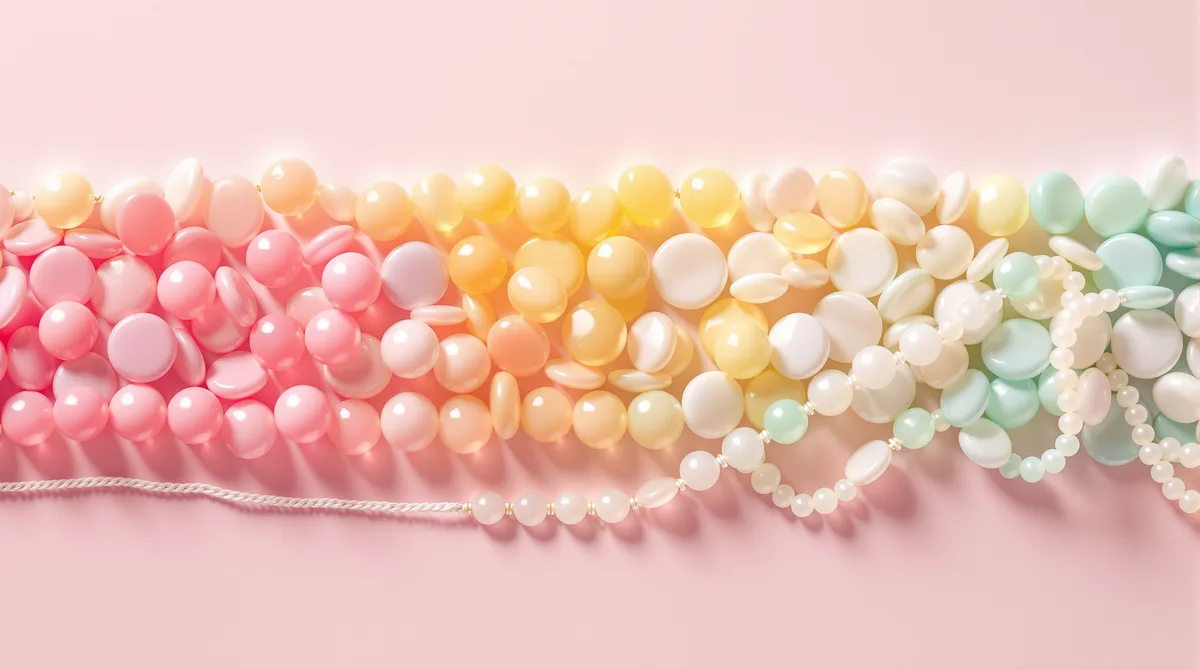
A coastal material language, at scale, with the sea doing half the lighting. Resort interiors reach for beadwork because it does what the setting already does — catches light, moves in air, reads as hand-made — and because shell and sea-glass are the obvious coastal references.
The complication is that a resort building is rarely sealed. Terraces, open-sided bars, cross-ventilated lobbies and cabanas all put the interior into the weather, and salt travels further inland than clients expect.
Salt indifference, on the bead, the cord and the fixing — and they fail in reverse order of expectation.
UV stability, because coastal daylight is harder and reflects off water and pale paving.
Humidity tolerance, which is continuous rather than occasional.
A clear read of the position. If a bar has an open side, it is an outdoor position; the drawing's label does not change the air.
Two families take all four loads. Body-coloured pressed glass, where the colour is fired into the glass body. And faux capiz discs, which are cast resin or dyed cut acrylic, cut and finished to imitate capiz shell.
That second one is worth being precise about, because it is the coastal look everyone wants. It is an engineered imitation of shell, not shell. That is the strength: consistent colour, no wildlife-import paperwork, better durability than the shell it imitates, and a dye range a natural material cannot match. Our record includes a laser-cut faux capiz blossom wall hanging at 18 × 30 inches, 155 to 170 blossoms on the dowel version and about 130 on a rod-pocket version, with a small spacer bead at each blossom centre to stop it sliding on the cord.
Also good: frosted sea-glass beads at around 4 to 5 mm, a shipped bead and a natural fit. Avoid wood, bamboo and surface-dyed beads.
More often than inland. Salt residue is fine, slightly tacky and attracts dust, so dry dusting on its own stops being enough sooner.
Dry first, down each strand from header to hem. Then a damp wipe with fresh water on a cloth wrung nearly dry, dried in the same pass — fresh water matters, because the job is to lift salt rather than move it around. No abrasive cleaner on cast resin discs: they dull and do not come back.
The fixings. Mild-steel brackets and hooks in salt air corrode in months and stain the finish below them. It is the most predictable failure on this site and the easiest to design out.
Then cotton cord, slackened and discoloured by continuous humidity. Then, in a fully exposed position, strand order in the first real onshore wind. The beads themselves — glass, resin discs — will outlast all of it.
Sampling 16 to 20 days from an agreed brief, photographs approved first; production 40 to 60 days after sample approval. Two additions for a resort programme. A specialty bead or a custom disc shape may need a development step — the laser-cut blossom format in our record went through a re-engineering round to settle construction — and a flammability test has to be scheduled if the project requires a report. Both are quoted separately. Landed duty paid delivery to a named location is available as a single delivered price.
Exposure first, stated plainly: "open-sided bar, salt-laden air, no driven rain at panel position". Then finished width and drop, with hem height above finished floor so it never stands in water.
Then strand or column count and pitch. Bead or disc material, shape and size with hole diameter, and for faux capiz, state cast resin or dyed cut acrylic rather than writing "capiz". Colour as Pantone references or physical chips. Header type and material. Fixings specified as stainless. A cleaning clause specifying fresh water. And a fire-performance clause naming the test, the build and the lab.
Faux capiz discs and body-coloured glass are not the cheapest beads in the library, and this is a setting where the cheap option is the wrong one.
Levers in order: bead or disc size and material, then strand or column count and tightness, then pitch, then header and packing, then height. Linked-disc construction has its own arithmetic: our design library describes linked faux-capiz panels at 12 to 16 columns and roughly 239 to 497 discs. Minimums and pricing are set per design and confirmed with your quote, and a rough cost sheet comes before any sample.
No resort installation. The coastal materials are evidenced — frosted sea-glass beads and the laser-cut faux capiz blossom piece are both shipped — and the installation experience is not.
That distinction is the whole value of this page to a resort specifier. The material behaviour is real and documented; the project risk is theirs and should be priced, not assumed away.
Wood or bamboo in any coastal interior, sealed or not. Surface-dyed beads in reflected coastal daylight. Mild-steel fixings. A full-length panel on an open-sided terrace. Real shell or real capiz, which we do not offer for this and which brings inconsistency and import paperwork the engineered version avoids.
We would also advise against specifying "capiz" on a drawing without saying which material is meant. Cast resin and dyed cut acrylic behave differently from each other and both behave differently from shell, so the drawing should name one.
The designer, the resort's engineering or maintenance lead — who will know exactly how fast salt eats hardware on that site — and whoever holds the fire file. In a branded resort, the brand standard team as well.
Our part of it is the sample — and on a coastal site it is worth sealing a hardware sample alongside the beadwork, because the fixing is what salt reaches first.
Stainless or properly coated, throughout, supplied by the project. We will raise this unprompted on any coastal enquiry.
Fix into solid structure. We make the panel and its wooden dowel or header rail; in a humid coastal position a project-supplied metal rail is the better header, and the panel is built to suit. The panel is weighed on the approved sample; the wind case and the fixing are then sized to that weight by the project.
Flammability. A resort is a commercial interior: NFPA 701 in the US, local equivalents elsewhere, often plus a brand standard. Fire performance is tested on the specified build and quoted with the project.
The coastal list, all absent. No salt-spray results. No accelerated-UV data. No humidity or condensation testing. No IP rating. No wind-load figure. And no marine or IMO certification, which is the one that stops a cruise-ship or floating-hotel enquiry before it starts — worth knowing on day one rather than at submittal.
Extractable data
| Item | Coastal position | Note |
|---|---|---|
| Body-coloured pressed glass | Best fit | Salt, humidity and UV all leave it alone |
| Faux capiz discs | Best fit for the coastal look | Cast resin or dyed cut acrylic, not shell |
| Frosted sea-glass beads, ≈4–5 mm | Good fit | Irregular frosted glass, a shipped bead |
| Moulded acrylic | Workable | Light and shatterproof; UV ageing not quantified |
| Surface-dyed beads | Avoid | Hard daylight lifts a surface dye unevenly |
| Turned wood | Avoid in humidity | Should be kept dry, not near constant damp |
| Bamboo | Avoid | Marks in rain or constant damp; indoor use published |
| Real shell and capiz | Not offered for this | Import paperwork and inconsistency; we make the engineered version |
| Cotton cord | A service item | Humidity shortens its life wherever it is used |
| Fixings | Stainless or coated, by the project | Salt finds mild steel in weeks |
| Position | Inside, or deeply covered and sheltered | An open-sided bar is effectively outdoors |
| Laser-cut disc reference | 18 × 30 in piece, 155–170 blossoms on a dowel | Shipped format; a rod-pocket version used ≈130 |
| Sampling | 16–20 days from an agreed brief | Photographs approved before the sample ships |
| Production | 40–60 days after sample approval | Published lead time for beaded décor |
| Flammability | Tested on the specified build and quoted with the project | NFPA 701 or the local equivalent |
Good to know
The fixings, long before the beadwork. Salt-laden air corrodes mild-steel brackets and hooks within months and the rust stains the wall below. After the fixings, cotton cord, which humidity slackens and discolours. Body-coloured glass and cast resin discs will outlast both by years, which is exactly why the specification effort belongs on cord and hardware.
The coastal material palette is the real evidence. Frosted sea-glass beads at around 4 to 5 mm are a shipped bead, and a laser-cut faux capiz blossom wall hanging at 18 × 30 inches — 155 to 170 blossoms on a dowel version, about 130 on a rod-pocket version — was adopted and shipped. Those are the materials a resort brief draws on, proved in production.
Inside the building, the usual formats: a door curtain at around 90 × 200 cm, a portal at 76 × 140 cm, or a modular wall piece. On a terrace or an open-sided bar, short formats only — a valance or a short drop — because that is an outdoor position whatever the drawing calls it, and short formats expose less surface, carry less weight on the cord and cost less to replace.
Stainless or properly coated throughout, specified and supplied by the project. This is the one setting where we would refuse to let a fixing question be deferred: a mild-steel hook in salt air will fail and will mark the finish around it. We make the panel and its wooden dowel or header rail, and in a humid coastal position a project-supplied metal rail is the better header. The panel is weighed on the approved sample and the fixing is sized to that weight.
Flammability first, because a resort is a commercial interior: NFPA 701 in the US or the local equivalent, and fire performance is tested on the specified build and quoted with the project. Coastal exposure is then handled by material choice rather than by a rating: body-coloured pressed glass and moulded acrylic are the stable families, and the position is agreed before the build is fixed. A cruise or floating-hotel fit-out carries its own marine regime, so bring it to us early. Our audited credentials are Sedex SMETA, FSC for wood, C-TPAT and Omega social compliance.
Dry dusting down each strand, header to hem, more often than inland because salt-laden air leaves a fine residue that attracts dust. Then damp spot-cleaning with fresh water on a cloth wrung nearly dry, dried in the same pass — the point of the fresh water is to lift salt rather than to redistribute it. The cord stays dry, and no abrasive cleaner goes near a cast resin disc, which dulls.
Keep exploring
Material
Cast resin or dyed cut acrylic, finished to imitate capiz shell: what it gives that real shell cannot, and why thin discs tangle.
See the detailPillar
Twenty settings, from a closet front to a hotel lobby, each with the format that suits it, the fixing it needs and the standard that applies.
See the detailSpecification
Round-the-clock operation, high ceilings, a house fire file and a maintenance window measured in hours — what an entertainment venue demands of beadwork.
See the detailSpecification
Large-format panels, fire performance, the maintenance plan and the approvals a lobby specification has to clear before it gets built.
See the detailSpecification
Service traffic, kitchen-pass screening, cleaning between covers and the fire paperwork a restaurant or bar fit-out will ask for.
See the detail
Start a conversation
Send a reference, a colour chip or a sketch. Minimums are set per design and confirmed per quote; sampling is quoted separately and usually runs 16 to 20 days from an agreed brief.