Specification
Acoustic performance
A hanging bead panel scatters a little high frequency and reduces nothing meaningfully — and what to specify instead.
Read the guide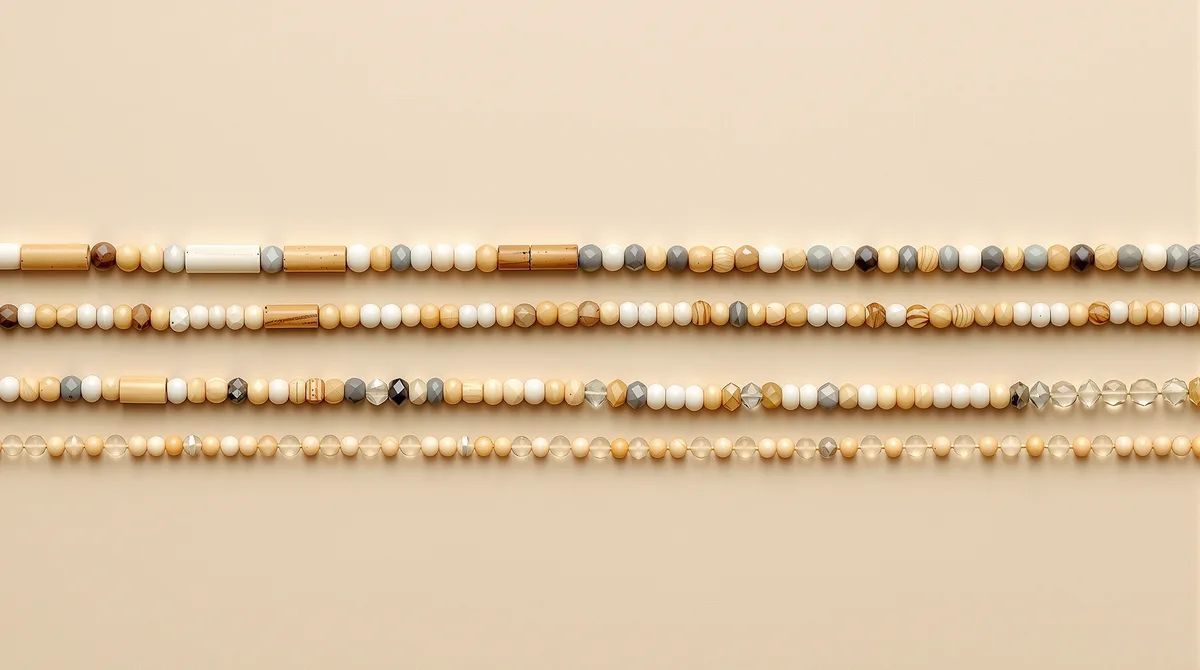
Guide · Performance
Nobody asks about the sound and everybody notices it. It is a material property you can choose in advance, and the one most likely to decide whether you keep the panel.
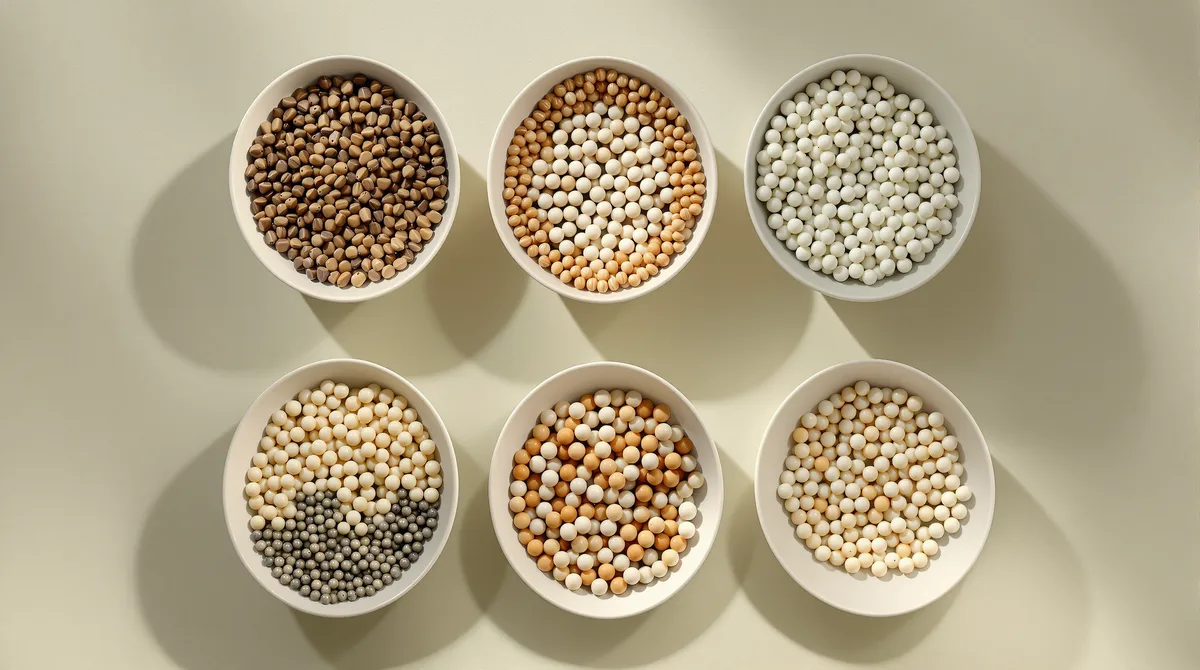
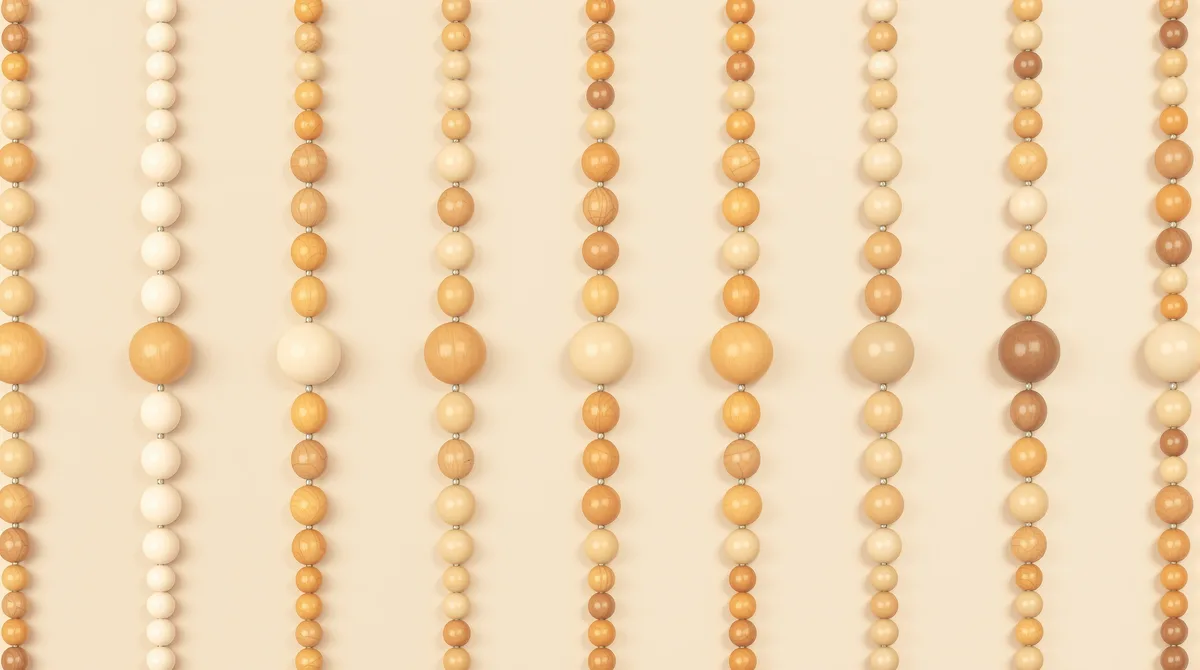
Four bead strands laid parallel with their beads pressed tight so every contact point reads — hollow cut bamboo tube, turned wood, glazed ceramic and heavy faceted glass.
A beaded curtain's sound is set by its material. Glass gives a bright chime, acrylic a light click, wood a soft knock and bamboo a dry rattle; flat faux capiz discs clatter. Bead size and strand pitch change the volume rather than the character — more beads struck at once is louder, and larger beads are lower.

Because it is the property people never specify and always notice.
A bead panel is the only window or door treatment that makes a noise. Every passage through it is an audible event, several times a day, for years. And unlike privacy or light — where the answer is that the panel does less than you hope — the sound is something you can choose precisely in advance, because it is a direct function of the material.
The sad part is how often it gets decided by accident. Someone picks glass for the sparkle and then discovers they have hung a wind chime outside a bedroom door.
The published comparison is brief and accurate:
Two more worth adding from the work itself:
Density and damping. A dense, hard, homogeneous material struck by another one rings, because it does not absorb its own vibration; the energy stays in the material and radiates as sound.
Glass sits near 2.5 g/cm³. Acrylic is around 1.2 and most woods below 1. Wood is also fibrous, which means it absorbs vibration internally almost immediately — so a wood bead gives one short thud rather than a decaying note.
That is the same density ranking that explains weight, hang and tangling. One number, four properties.
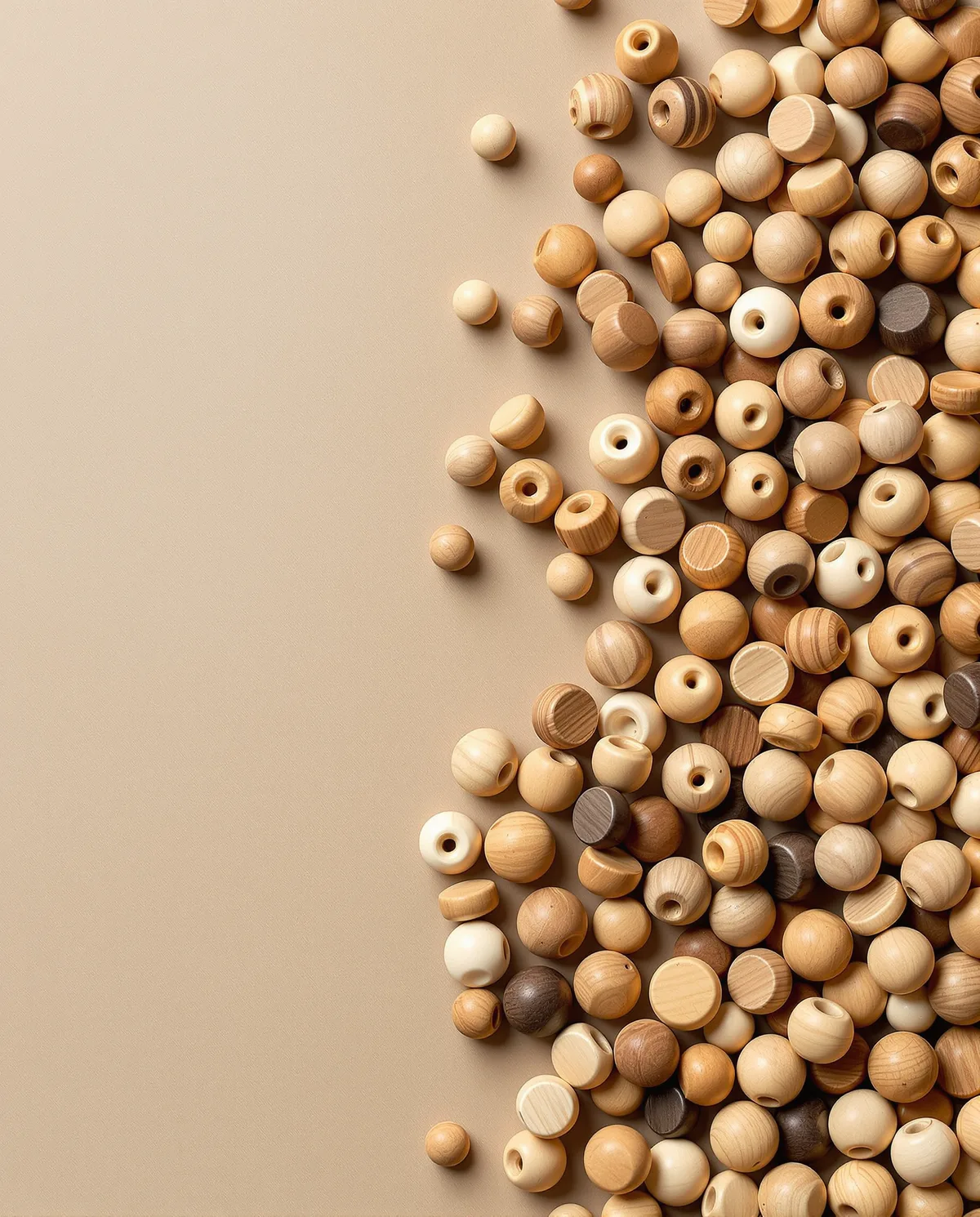
Pitch and volume, not character. Larger beads give a lower, louder note; smaller beads a higher, quieter one.
What size does not change is the kind of sound. A 20 mm wood bead is still a knock, just a deeper one. A 2 mm glass seed bead is still a chime, just at the top of the register and much quieter — which is why a seed-bead panel is the quietest glass build available and worth knowing about if someone wants glass and silence.
Volume, directly, because pitch determines how many beads are struck in a single passage.
The shipped construction is 30 strands on a 90 cm panel, a 3 cm pitch; the design library draws denser, at roughly 2.25 cm on 40 strands across 90 cm and 2 cm on 60 strands across 120 cm. A close-pitched glass panel on a kitchen door is a substantial audible event every time somebody comes in with shopping. The same design at a wider pitch is noticeably quieter, because fewer strands are displaced.
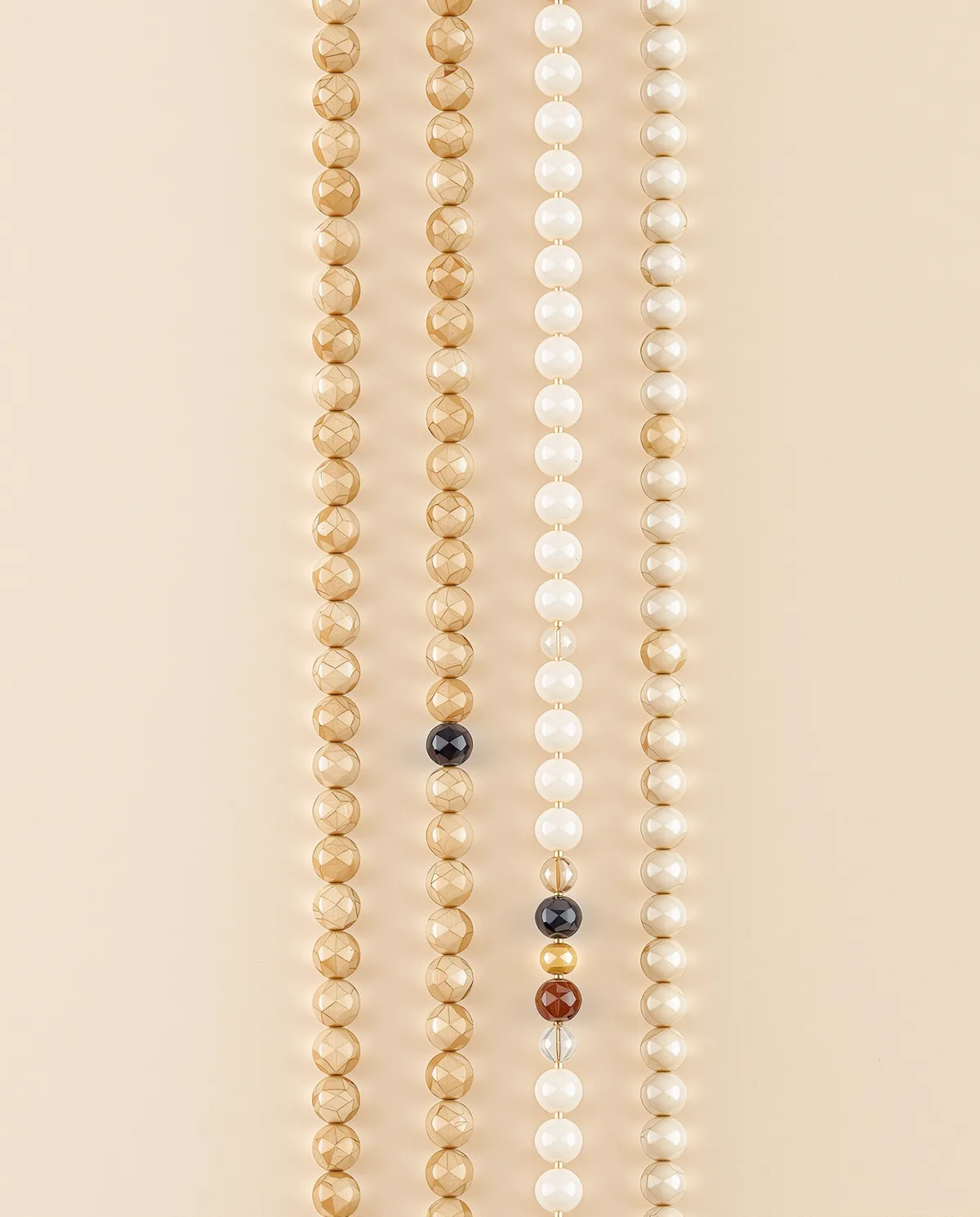
So the pitch decision that governs privacy, light and cost also governs volume. It is the busiest single number on a bead-curtain specification.
Entirely, and this is the practical content of the page.
A hallway or a back door: glass. The chime is the best thing about it, and these are the openings where the sound reads as character rather than as interruption.
Outside a bedroom: wood or acrylic. A soft knock or a light click will not wake anyone.
A shared room — a dorm, a studio flat, a room with a roommate: acrylic at a wide pitch, which is the quietest hard-bead combination available.
A closet: anything, because a closet panel is moved rather than walked through, so the sound is a brush rather than a strike.
A child's room: this is the one place where more sound can be the point. A panel that makes a noise when touched is a panel a child will interact with.
A dog at speed makes considerably more noise than a person, because it hits more strands at once and lower down, where the beads are often largest. On glass that is a loud chime; on wood a muffled clatter; on acrylic a quick rattle of clicks.
If the panel is on a route a dog uses constantly and somebody sleeps nearby, that alone is an argument for wood.
No, and it is worth being explicit because the two questions get confused. A bead panel adds sound and attenuates none. Sound attenuation needs mass and a sealed perimeter, and most of a bead panel's area is open gap.
So the panel's sound is something you are choosing to introduce, not something you are using to control other noise.
Beadwork is a visual and spatial device, not an acoustic one — it adds sound rather than attenuating it, which is the opposite of what an acoustic specification asks for. Everything on this page is description — from the production record, from the material comparison, and from handling the pieces.
If a contract specification genuinely requires an acoustic figure, it would have to be tested against the actual build, bead, cord, header and mount together, and quoted separately. A number offered without naming the test and the build is a guess.
Bead materials sets out the nine families and the density that explains every note on this page. A wood bead curtain is the quietest of the larger beads and a seed bead curtain the quietest in glass; glass bead curtains is the loudest and the most rewarding. Choosing a bead size covers the pitch of the note, and tangled strands covers the pitch of the panel, which sets the volume. Small-space beadwork is the page where this property matters most, because you hear it from a metre away.
Three further pages bear on the decision. A capiz curtain is the construction with the most distinctive sound of all, a broad flat clatter rather than a point-contact note. Bead curtain formats matters because a valance makes almost no sound at all, having nothing at hand height. And routine care covers what a panel sounds like once it is dusty, which is duller and flatter than a clean one.
Good to know
They make a sound every time someone passes through, and how much of a problem that is depends entirely on the material and the location. Glass is the loudest and brightest, acrylic the quietest of the hard beads, wood the warmest and softest. In a hallway it is charm; outside a bedroom at two in the morning it is not.
Glass seed beads, which rustle rather than chime — small beads at point contact produce a high, quiet, almost continuous sound. Among larger beads, wood gives the softest knock. Acrylic is quieter than glass but more percussive than wood.
Density and damping. A dense hard material rings when struck because it does not absorb its own vibration; a less dense fibrous one absorbs it almost immediately. Glass sits near 2.5 g/cm³ and rings. Wood is below 1 and does not.
It changes the pitch and the volume. Larger beads give a lower, louder note and small beads a higher, quieter one. It does not change the character — a large wood bead is still a knock and a small glass bead is still a chime, just further up the scale.
It sets the volume rather than the tone, because a tighter pitch means more beads are struck in a single passage. A close-pitched glass panel on a kitchen door is an audible event every time somebody comes in; the same design at a wider pitch is noticeably quieter.
A clatter. Broad flat surfaces striking face to face produce a bigger, flatter, lower sound than the point contact of two round beads. It is the most distinctive sound in the category after bamboo, and it is the first thing people notice about a disc panel.
Everything on this page is description, from the production record and from handling the pieces. Beadwork is a visual and spatial device, not an acoustic one: a bead panel adds its own sound and attenuates nothing between rooms.
Keep exploring
Specification
A hanging bead panel scatters a little high frequency and reduces nothing meaningfully — and what to specify instead.
Read the guideReference
Nine material families, what each gives in light, weight and colour, and how far our own manufacturing reaches into every one of them.
Open the referencePillar
Door curtains, portals, café lengths and valances: the standard sizes, the strand counts and the one question each format answers.
Read moreGuide
Air moves through, insects are discouraged rather than excluded, and strand pitch is the only lever that changes either.
View the rangeGuide
Opaque beads at a tight pitch screen movement and never detail — and nothing in this category works from close up.
Read moreGuide
A soft knock instead of a chime, grain that never matches twice, low weight, and the one thing wood cannot tolerate.
How it is made
Start a conversation
Send a reference, a colour chip or a sketch. Minimums are set per design and confirmed per quote; sampling is quoted separately and usually runs 16 to 20 days from an agreed brief.