Specification
A hanging division
Ceiling fixing, double-sided reading, strand drift in airflow, and a plain account of what a bead division will not do.
Open the reference
Guide · Ideas
In a small room a bead panel is the only divider that costs no floor area. It is also the one object you will be standing a foot away from, which changes every decision about it.
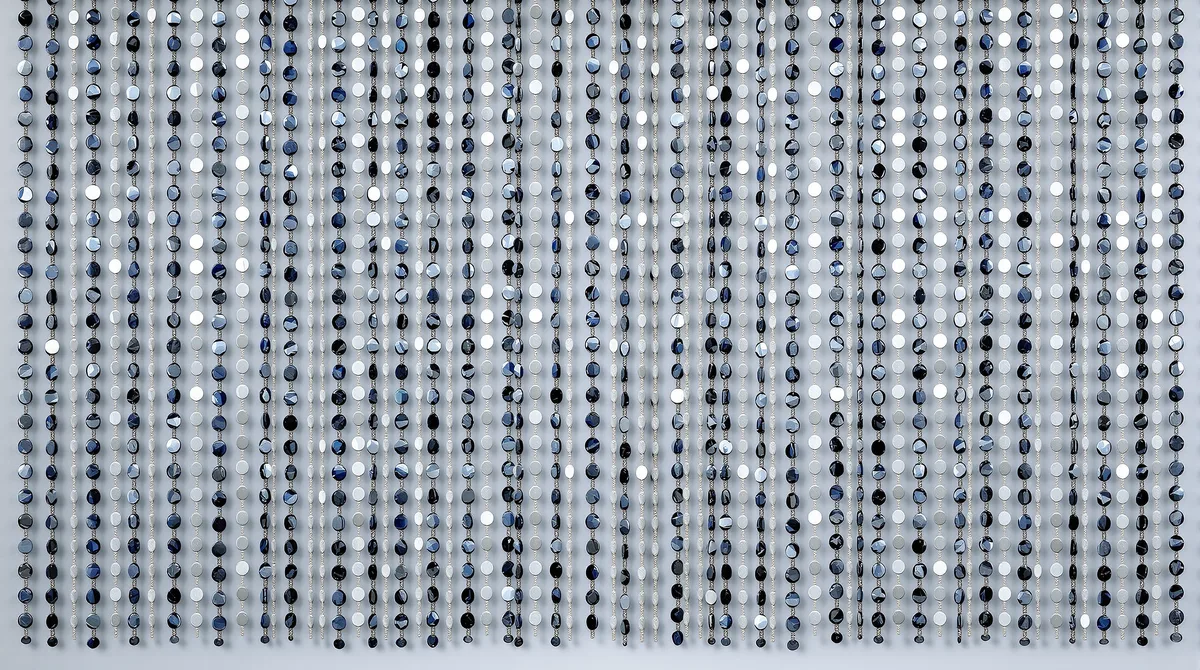
A beaded curtain at a wide open strand pitch with broad clear bands between the cords, strung with small pale silver-lined beads in pearl, grey-blue and chalk white.
In a small room a bead panel divides space without occupying any floor, needs no swing clearance, and keeps borrowed light moving between zones. At close quarters, open the strand pitch, narrow the palette and choose a quiet bead — a tight pitch, a loud colour mix and a glass chime all read as clutter from a metre away.
One thing nothing else does: it divides space at zero floor cost. A freestanding screen needs a footprint to stand up. A door needs clearance to swing. A bead panel hangs from a line and occupies nothing.
It also keeps light moving. In a small flat, borrowed daylight from one window doing the work of two rooms is often the difference between livable and oppressive, and a bead panel is the only boundary that preserves it.
Those two properties are why beadwork keeps reappearing in small-space advice, and they are both structural rather than decorative.
Because you are inside the object's field rather than looking at it. A panel you see from across a hall is a texture; a panel you pass within a foot of, several times an hour, is furniture.
Three consequences. Density reads as weight rather than as richness. Colour variety reads as noise rather than as interest. And sound stops being charm and becomes a property of your day.
Every recommendation below follows from that shift.

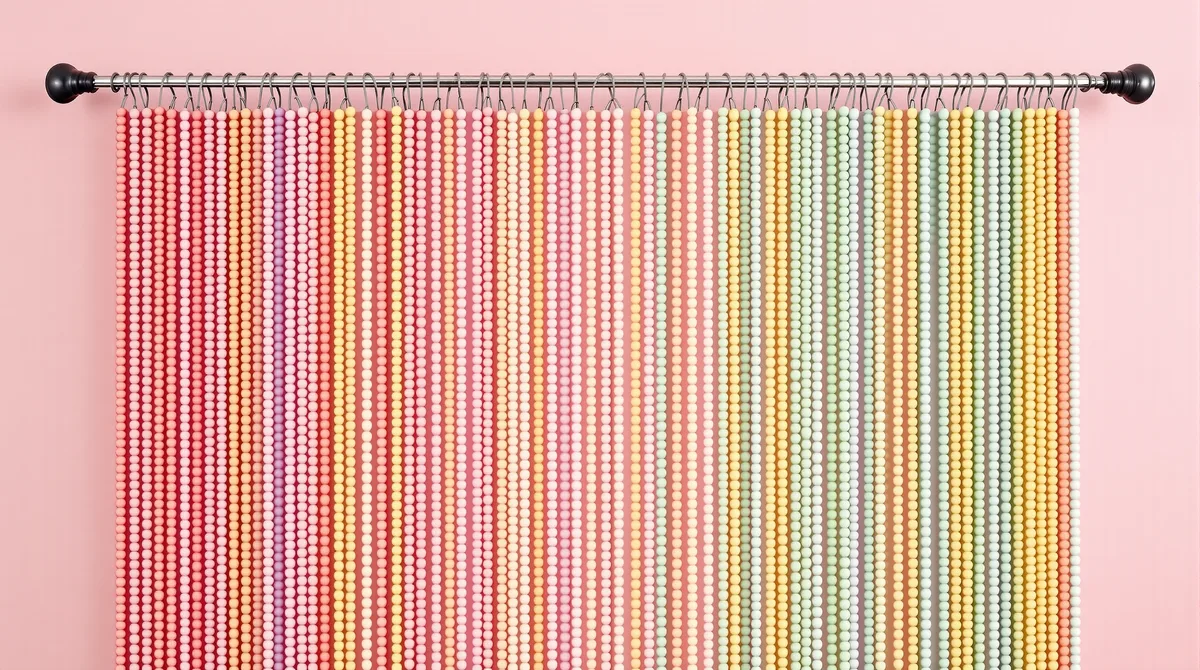
Wider. The arithmetic: the shipped construction is 30 strands across 90 cm, a pitch of roughly 3 cm, and the design library draws denser at 40 strands across 90 cm, roughly 2.25 cm, and 60 across 120 cm, roughly 2 cm. In a small room you want the open end of that range.
Opening the pitch removes whole strands, which means more of the space beyond reads through the panel and more light passes. It also reduces the bead count and therefore the cost, so it is one of the rare decisions that improves both the room and the invoice.
What you give up is concealment. In a one-person flat or a studio, that is usually a non-issue.
One tonal family. Let bead size carry the interest instead of colour variety.
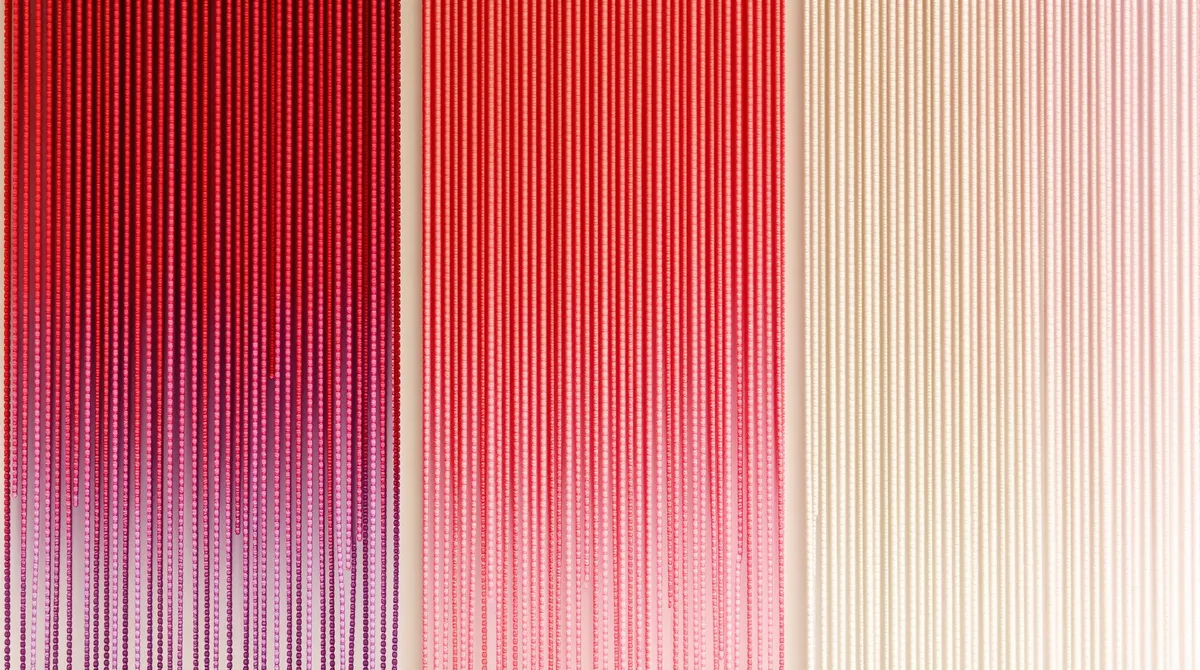
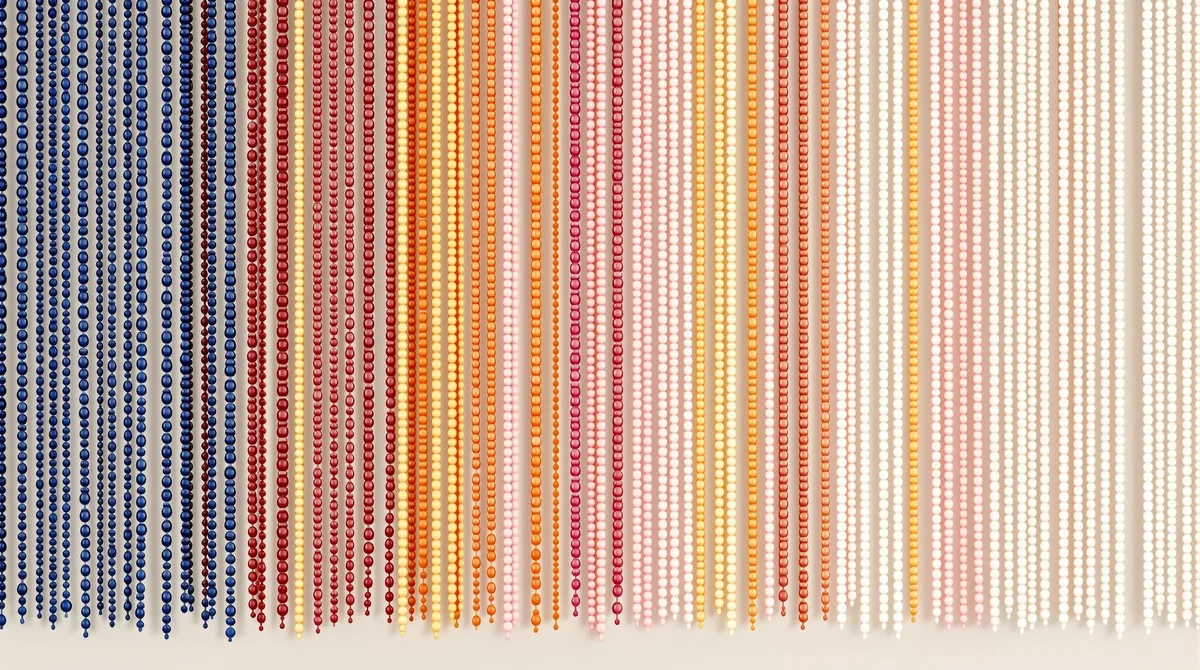
The clearest demonstration of this is grading by size rather than by dye: our honey ombre colourway runs from cornsilk through honey to deep autumn amber, and the change lands on a change of bead size — smallest beads at the top, largest at the hem. At a metre's distance that reads as depth. A full-spectrum mix at the same distance reads as a lot of information.
If you want saturated colour in a small room, put it in one narrow band of the panel rather than across the whole of it.
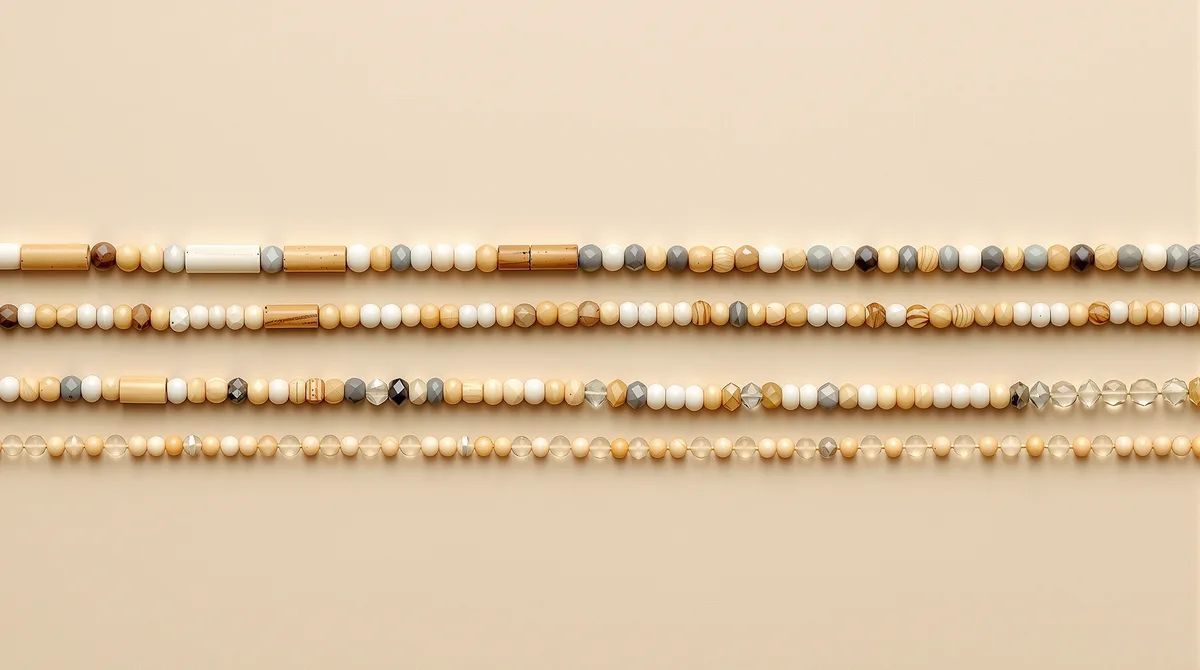
Start from the sound, because it is the property you will notice most. Wood gives a soft knock, acrylic a light click, glass a bright chime and bamboo a dry rattle. In a studio flat, the first two are the comfortable options.
Then weight. Small spaces often mean older buildings or awkward fixings, and a light acrylic or wood panel can hang on a tension rod inside a reveal with nothing drilled. Glass needs a screwed fixing.
Then light. If the panel's job includes passing borrowed daylight, translucent beads — glass or translucent acrylic — do it and opaque wood or bamboo do not.
On an architectural edge that already exists. An alcove, a bed recess, the entrance to a kitchenette, the top of a stairwell, a doorway without a door.
Hanging one mid-room is the idea people arrive with and the hardest to execute, because it needs a structural fixing overhead — into a joist, not plasterboard — and most flats do not provide one you are allowed to use.
One note on scope, because it comes up most in a small room: dividing a space here means hanging panels in or across an existing opening. Two door curtains side by side on one rail is the format we build for that, and in a small room it is also the better answer — a freestanding screen eats floor area that a hung panel does not.
Frequently, and it is under-considered. A café length or a valance drop defines a zone, keeps the sightline below it completely open — which is what makes a small room read as larger — and puts nothing at hand height in a space where people are constantly brushing past.
Bead count falls with the height, so it is also the cheapest way to buy the spatial effect. For a kitchenette threshold or an alcove in a studio, a short panel is usually the better object as well as the cheaper one.
More than any fabric and less than nothing, which is exactly the useful range. A translucent glass or acrylic panel at an open pitch loses a modest amount of daylight and redistributes the rest — refracted points from glass, a diffuse glow from translucent acrylic.
In a small internal space with no window of its own, that borrowed light is often the entire reason to use beadwork rather than a door, and it is worth specifying translucent beads deliberately rather than choosing on colour alone.
Two things. Someone specifies the densest, darkest panel they can find because density looks luxurious in a photograph, and the room closes in. Or someone chooses glass for the sparkle and then spends a year listening to it from a metre away.
Both are solved at the brief stage by deciding the pitch and the material against the room you actually live in rather than the image you are working from.
What a beaded curtain sounds like is the page to read first, because sound is the property you notice most at close quarters. A colourway covers the palette decision, and choosing a bead size covers the scale one. A short bead panel is often the better object in a tight space than a full drop, and tangled strands explains why a wider pitch is worth the coverage it costs. If the panel is going up in a rental, no-drill bead curtains deals with the fixing. For the broader format question, bead curtain formats sets out what each one is for.
Good to know
Only if it is dense, dark and tightly pitched. A panel with an open pitch in a light, narrow palette does the opposite: it reads as a translucent plane, borrowed light keeps passing through it, and the eye still registers the space beyond. Density is the variable that decides this, not size.
It can define two zones, which is different from dividing them. There is no sound or temperature separation, so what you get is a visual boundary — sleeping side, working side — at zero floor cost. For that job it is better than any freestanding screen, which has to occupy floor to stand up.
Wider than you would use on a doorway seen from across a hall. A 90 cm panel at 40 strands is roughly 2.25 cm pitch; opening that out removes strands and lets more of the room beyond read through. You lose concealment, which in a one-person space usually does not matter.
One tonal family, and let bead size do the work the colours would otherwise do. A graded panel — small beads at the top, larger at the hem, one colour story throughout — holds attention at close range without adding visual noise. A full-spectrum mix at a metre's distance is a lot.
Yes, considerably. You will be passing through it several times an hour and hearing it from a metre away rather than across a room. Wood gives a soft knock and acrylic a light click; glass chimes brightly and bamboo rattles. Pick for the room you will be living in, not the photograph.
Across an alcove, a bed recess or the entrance to a kitchenette — anywhere there is already an architectural edge for it to sit on. Hanging one mid-room needs a structural fixing overhead, which most flats do not offer, and beaded room dividers are a craft category rather than a Gemixx range.
Often. A café length or a valance drop defines the zone, keeps the sightline below it open, and stops anything hanging at hand height in a space where people are constantly brushing past. It is also the cheaper way to buy the same spatial effect.
Keep exploring
Specification
Ceiling fixing, double-sided reading, strand drift in airflow, and a plain account of what a bead division will not do.
Open the referencePillar
Door curtains, portals, café lengths and valances: the standard sizes, the strand counts and the one question each format answers.
See the detailGuide
No drilling, packs flat twice a year, survives a car boot, and does the work of a whole wall of decoration.
Specs and sizesGuide
Strand weight, pitch, handling and packing: the four variables that decide whether a panel knots, and the three set at the brief.
How it is madeGuide
Glass chimes, acrylic clicks, wood knocks, bamboo rattles, discs clatter: the sound of each material and how to choose one.
Specs and sizesGuide
Across the strands or down each one: the distribution decision that matters more than the palette, plus grading by bead size.
Specs and sizes
Start a conversation
Send a reference, a colour chip or a sketch. Minimums are set per design and confirmed per quote; sampling is quoted separately and usually runs 16 to 20 days from an agreed brief.