Pillar
The applications index
Twenty settings, from a closet front to a hotel lobby, each with the format that suits it, the fixing it needs and the standard that applies.
Open the referenceBuyer · Events
An event company does not buy a backdrop. It buys an asset it will rig forty times, and the specification that matters is the one that survives the fortieth build.
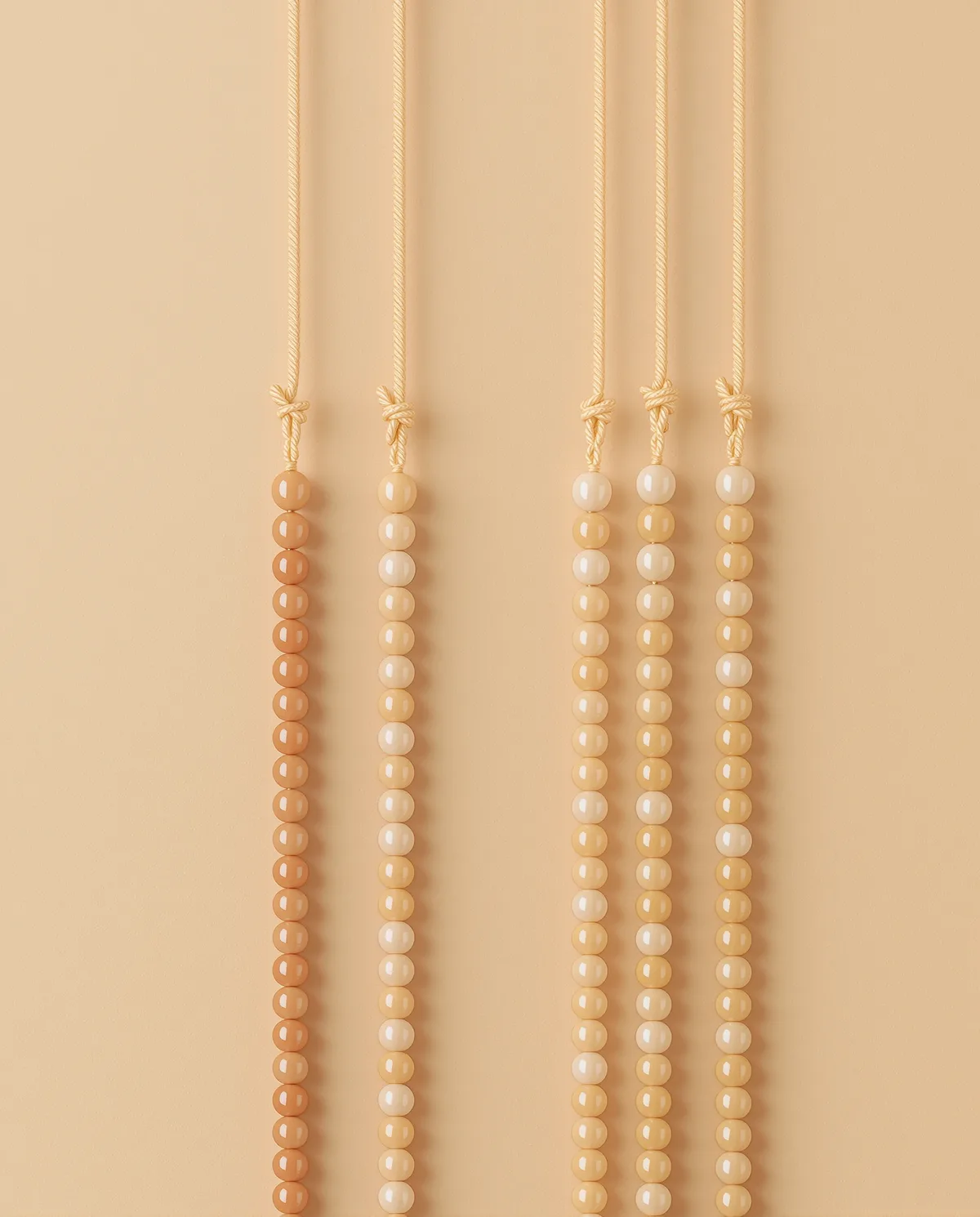
Event and wedding companies buy beadwork as reusable stock rather than per booking: identical narrow panels that rig on pipe or truss by one person, end suspension loops so a panel hangs level without adjustment, spares and cord strung with the run, and a colourway that can be reordered without a new sample cycle.
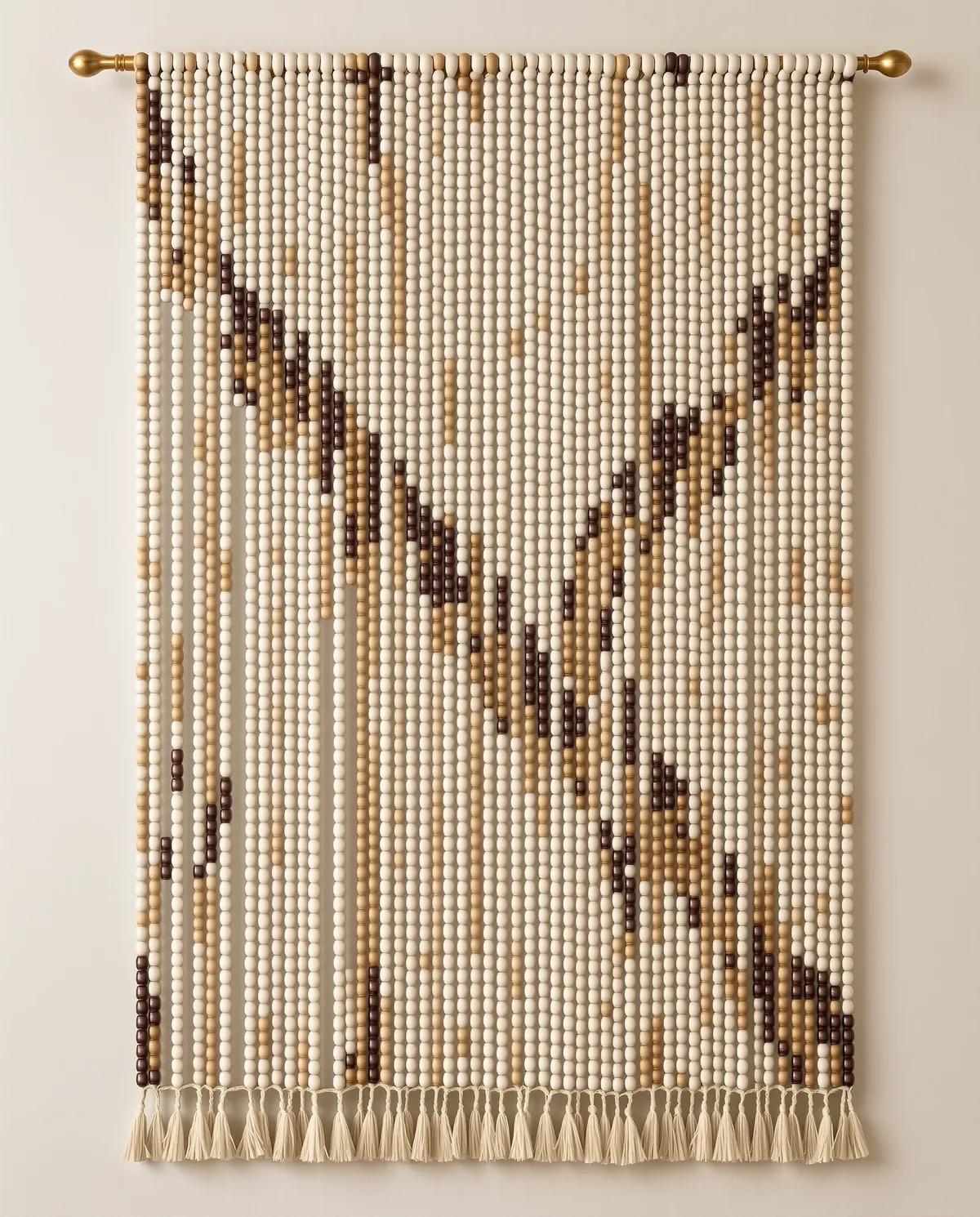
Backdrop and aisle panels built as identical repeating modules. Each is a hand-strung bead panel on a header rail, with end suspension loops knotted at the top of every strand so it hangs level on pipe, truss or a free-standing frame without adjustment.
The construction is the same hand-strung build behind our shipped formats. What is specific to event work is everything around it: the module discipline, the loops, the spares, and the packing.
Changeable: module width and drop, strand count and pitch, bead material, bead size, colours, hem shape, and whether the panels carry a pattern across the joins or repeat independently.
Fixed, by advice rather than by capability: one module size per backdrop. An event company that orders three different widths loses the ability to build short, swap a damaged unit or extend the wall next season, and gets nothing in return.
Module width and the number of modules. Finished drop, measured from the rigging line. Strand count or pitch — wider than an interior build, for tangle resistance. Bead material, shape and size, with the size chosen against viewing distance rather than taste. Colour references as Pantone codes or physical chips. Hem shape. Rigging interface: pipe diameter, truss type or frame. Spares quantity and repair-kit contents. Carton and packing specification. Destination port or warehouse.
Forty to sixty days after sample approval, which is the published beaded-décor lead time. Sampling runs 16 to 20 days from an agreed brief, and photographs are approved before the sample ships.
Formal quotes follow within 48 hours of receiving a specification, and a multi-design programme starts with a discovery call. Landed duty paid delivery to a named US location is available as a single delivered price, with no separate freight or broker line items — which for an event company replacing stock between seasons is usually the simplest route.
Not for retail, for a van. Panels ship in loose tied bundles with strand order preserved, in a flat carton to your specification, because the only thing that reliably ruins event beadwork is being compressed.
Three handling rules belong on the case rather than on a care card that will be thrown away: lift and carry by the rail, settle the panel after hanging, and store in loosely tied bundles. Put them on the case and the panels will last years longer.
Header rails and dowels are turned in our own Saharanpur wood factory, and on event work the header is the component that takes the beating — a rail rigged and de-rigged twenty times is a different specification from one that hangs in a hallway. The beads are drawn and hand-strung in our own Firozabad glass works, or moulded and dyed to our colour on our own dies.
We own those plants. Nothing in an event panel is booked out to a third party, which is why a reorder six months later can be held to the same approved sample.
The inspection point that matters most on event work is strand length consistency across modules. A backdrop built from eight panels shows a 5 mm discrepancy in hem height from across a room, so hem line is checked module to module rather than panel by panel in isolation.
That sits on top of first-article and lot AQL inspection against the approved sample, in our own Greater Noida quality house.
Cost per use, not cost per panel. A set that survives three seasons of weekly bookings is cheap at almost any sensible price; one replaced annually is not.
The levers in order: bead size and material first, then strand count and tightness, then pitch, then the rail and packing, then height. Two are specific here. Packing is a real cost line, because event panels need protective bundling an interior piece does not. And repetition is the biggest saving available, because one bead map strung many times costs materially less than several bespoke panels. A rough cost sheet comes before any sample so look and price can be traded while it is still a drawing.
Event and display companies, wedding planners and production houses, and venues that dress their own spaces. They sell it as part of a package rather than as a product: a ceremony set, a stage surround, a marquee entrance.
That changes what matters. The panel is a capital item and the margin comes from reuse, so set-up time, repairability and reorder consistency are worth more than novelty. The construction evidence is the thing to judge us on: a panel that survives repeat rigging, a strand that can be replaced from spares, and a colourway that reorders true.
Moulded acrylic, dyed to colour, is the right default: light to freight, wide colour range, and it does not shatter when a case is dropped. Body-coloured pressed glass where weight and sparkle are wanted and handling is careful. Frosted sea-glass beads at around 4 to 5 mm where a softer, non-flashing surface suits the look. Turned wood for a natural palette.
Avoid surface-dyed beads for event work: they mark where they are handled, and event panels are handled constantly.
Backdrop modules at around 90 cm wide, with drops to 200 cm in the formats we build today; the 2027 design library takes the drop to 210 cm. Aisle work in short drops or valances on frames, never floor-length, because a floor-length aisle panel will be walked on.
A compliance note that belongs in a sizing section rather than a footnote: venue fire files routinely require a flammability certificate on anything hung, and fire performance is tested on the build you specify and quoted with the project. For an event company that is worth doing once on a core reusable design rather than booking by booking.
The bead materials, the stringing specifications a panel is drawn against and the cost levers that set a quotation are each documented on their own pages.
Extractable data
| Specification | Value |
|---|---|
| Backdrop module | Identical narrow panels, ≈90 cm wide |
| Drop, shipped formats | To 200 cm |
| Drop, 2027 design library | Drawn to 210 cm |
| Aisle format | Short drops or valances on frames |
| Preferred bead material | Moulded acrylic, dyed to colour |
| Alternative | Body-coloured pressed glass; frosted sea-glass beads |
| Bead size | Larger than an interior build, set against viewing distance |
| Rigging | End suspension loops at each strand |
| Top fixing | Header rail; pipe, truss or frame supplied by the buyer |
| Spares | Beads and cord strung with the production run |
| Packing | Loose tied bundles, strand order preserved, to your carton spec |
| Inspection | First-article and lot AQL, own quality house, Greater Noida |
| Colour matching | Pantone reference or physical chip, confirmed on the sample |
| Sampling | 16–20 days from an agreed brief; photographs approved first |
| Production | 40–60 days after sample approval |
| Minimums | Set per design, confirmed per quote |
| Flammability | Tested on the specified build and quoted with the project |
Good to know
Glass beads are drawn and hand-strung in our own Firozabad glass works. Wooden header rails and dowels are turned in our own Saharanpur wood factory. Acrylic and resin beads are moulded and dyed to our colour, to our own dies where a design needs a custom bead. Inspection, kitting, export packing and labelling run through our own quality-control and packaging house in Greater Noida. We own the plants; nothing is booked out.
No. Minimums are set per design and confirmed per quote, not fixed across the range, because a plain-strand panel and a patterned one use very different amounts of material and stringing time. For event work the practical question is usually the reorder quantity on one colourway rather than the first-order quantity, and that is answered on the quote.
No. Everything is made to order against an approved sample, with no retail stock programme. That is the single most important thing for an event company to plan around: there is no shelf to buy from in a hurry, so panels are ordered in the quiet months and treated as owned stock across a season.
Yes. Acrylic beads are moulded and dyed to the colour you specify, and glass beads are matched to a Pantone reference or a physical chip, with the match confirmed on the sample. For event work the useful discipline is to lock a core palette once and reorder against it, so a later panel matches the ones already in the van.
Yes, with the strand count and bead map recalculated for the new width and drop so the pattern still reads. For event work, resist it: the economics of this category come from identical repeating modules, and a backdrop built from one module size can be extended, repaired and re-rigged in ways a set of one-off sizes cannot.
Forty to sixty days, the published lead time for beaded décor, with sampling at 16 to 20 days from an agreed brief beforehand. Those figures do not serve a single booking and serve a season well, which is why this page is written around owning the panels rather than buying them per event.
Keep exploring
Pillar
Twenty settings, from a closet front to a hotel lobby, each with the format that suits it, the fixing it needs and the standard that applies.
Open the referenceIndex
Retailers, own-label brands, interior and hospitality designers, event companies, display teams and children's retail — and the one thing each cares about most.
Specs and sizesManufacturing
Brief, rough cost sheet, colour match, sample, production, packing — the route from a sketch to a packed carton, in plants we own.
How it is madeManufacturing
Short runs, fast colour changes, reusable rigging and panels that survive being struck and rebuilt scheme after scheme.
Specs and sizesManufacturing
The CPSIA scope question, small-parts and cord risk, age grading, and the builds we will and will not make for children's retail.
Specs and sizes
Start a conversation
Send a reference, a colour chip or a sketch. Minimums are set per design and confirmed per quote; sampling is quoted separately and usually runs 16 to 20 days from an agreed brief.