Pillar
Compliance and safety: the rules that gate a bead programme
Lead, CPSIA, Prop 65, REACH, fire standards, electrical listing and audit — what applies, who carries it, and what we hold.
Open the referenceBuyer · Nursery and kids
In every other category the design comes first and compliance validates it. Here the scope question comes first, and it decides what can be designed at all.
Before a beaded piece can be sold into nursery or children's retail, its buyer has to determine whether it is a children's product in law, because that decision sets the test regime, the labelling and the design limits. We build to that regime and test through the laboratory you nominate, with the certificate and tracking labels completed before shipment.
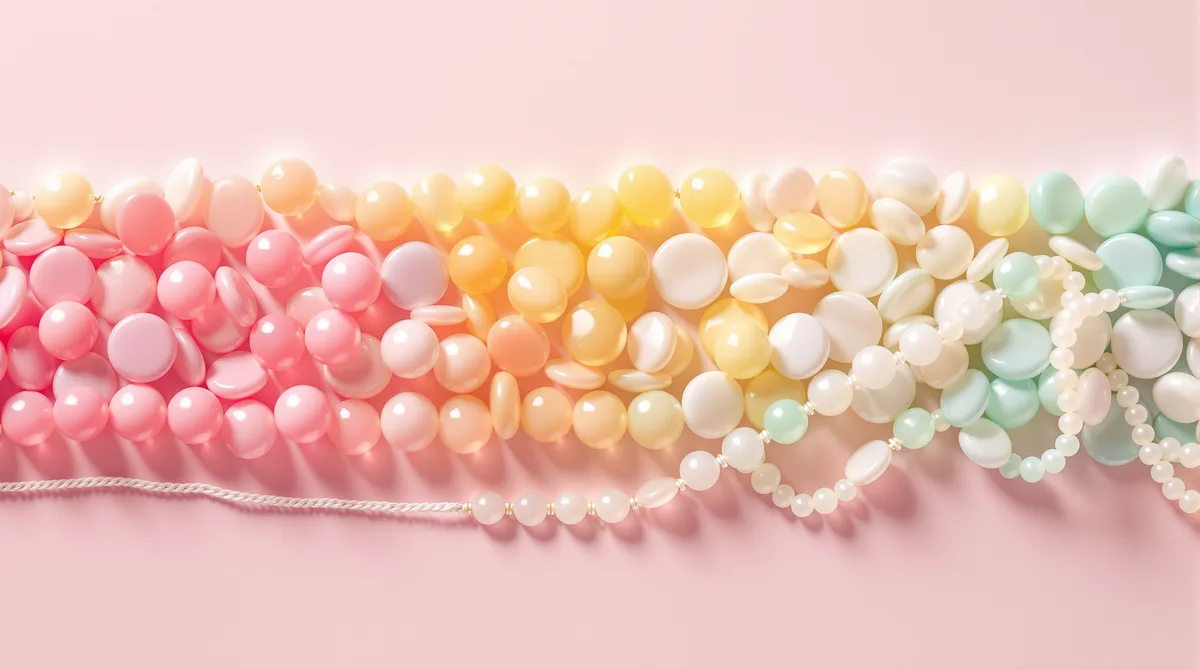
Beadwork specified for the children's channel: moulded acrylic builds in translucent or opaque versions, plastic or glass seed-bead pieces, and hand-strung panels built so the beads stay captive on the cord.
The manufacturing experience behind it is real. Our record includes an acrylic bead development made in both translucent and opaque versions, and a seed-bead pillow development where plastic beads replaced glass specifically for production. Both are the kind of decision this channel forces.
Changeable: size, bead material, bead size, colour, pattern, format, and the captivity detail at each strand end.
Fixed: we will not build a piece that sheds loose small beads when a strand is pulled, and we will not assign an age grade. The first is a design line we hold at sample review. The second is a legal determination that belongs to whoever is selling the product, because it depends on how the piece is marketed and packaged — not on how it is made.
Before anything else, the scope decision: who the piece is marketed to, what age grade is being assigned, and therefore which test regime applies. That line governs everything after it.
Then the usual: finished size, strand count or pitch, bead material and size with hole diameter, bead captivity detail, colour references as Pantone codes or physical chips, header type, hem shape, carton and label specification, tracking-label requirement, the nominated test laboratory and the test package, and quantity per colourway.
Wood is the material this channel asks for most often, and wood beads, dowels and header rails are turned in our own Saharanpur factory. Glass, where a design uses it, is drawn and hand-strung in our own Firozabad works. Acrylic and resin beads are moulded and dyed to our colour, to our own dies where a design needs a bead that does not exist.
That last point carries weight in this channel specifically. Owning the die means the bead's material and geometry are a known quantity at test time, not something inherited with a catalogue number.
For a children's programme the inspection points to specify explicitly are the captivity detail at each strand end and the header knot, because those two features determine what happens when a child pulls. Write them into the inspection criteria rather than leaving them as construction description.
First-article and lot AQL inspection against the approved sample runs in our own Greater Noida house, and group product issue rates run at a fraction of a percent.
The beadwork levers are the usual ones in the usual order: bead size and material first, then strand count and tightness, then pitch, then header and packing, then height.
The cost that surprises buyers in this channel is not a bead cost at all. If the piece is inside the children's-product definition, third-party testing at an accepted laboratory, the certificate and the tracking labels are a programme cost, and on a small first order they can be a meaningful share of the landed figure. That is an argument for settling the scope question before sampling rather than testing twice. Minimums and pricing are set per design and confirmed with your quote, and a rough cost sheet comes before any sample.
Nursery and children's specialists, the kids and teen departments of general home retailers, and own-label brands building a children's range. They sell it as room décor rather than as a toy, which is precisely why the scope question is live: a piece sold as décor in a children's department can still fall inside the children's-product definition depending on how it is marketed.
What the record evidences is manufacturing for the younger end of a home range at volume. The certificate itself is obtained as part of the programme, through the laboratory you nominate, and it is scheduled from the day the sample is approved.
Moulded acrylic, dyed to colour, translucent or opaque. This is the default and the reason is simple: acrylic does not shatter, and in a child's room that outweighs everything glass offers.
Plastic seed beads where a fine seed-bead effect is wanted in production — a route our own record took when glass was used for sampling and plastic specified for the production run. Glass seed beads where the piece is out of reach and the buyer's test regime allows it. Turned wood, from our own wood factory, for a natural nursery palette.
Avoid surface-coated beads. A coating is both a compliance surface and something that can come off.
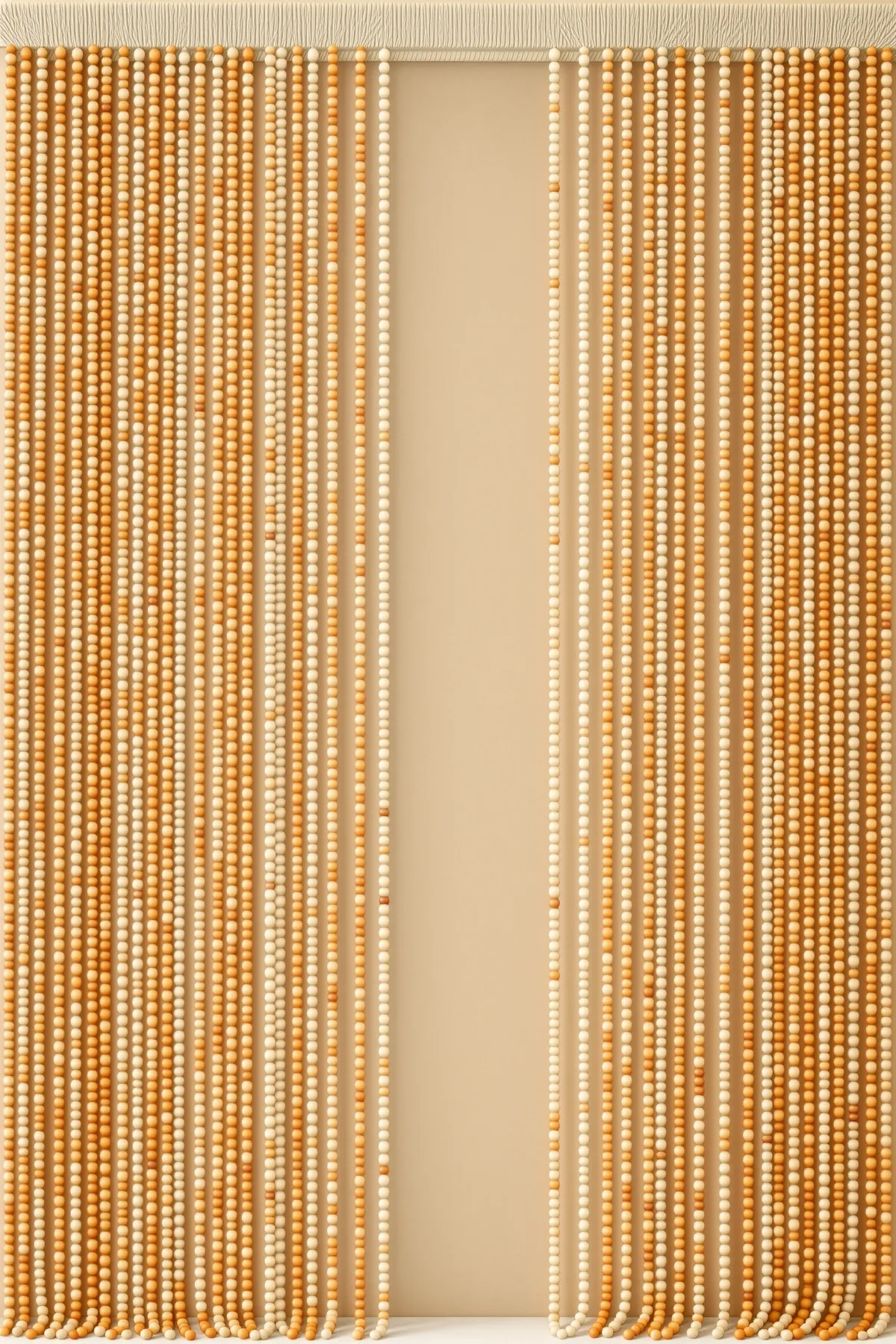
A door curtain at around 90 × 200 cm is the shipped standard and adapts down easily. Wall-mounted pieces run 50 to 76 cm wide on a dowel. Smaller formats — coasters, cushions, ornaments — sit in the table and soft-décor families.
Two format rules specific to this channel. Hem height is specified deliberately short where the design allows it, so the lowest beads sit above a toddler's easy reach. And nothing is specified to hang within reach of a crib, cot or changing table, in any format, at any age.
Against a Pantone reference or a physical chip, bead by bead, confirmed on the sample before production. Acrylic beads are moulded and dyed to the specified colour; glass seed beads can be dyed to match an adjacent fabric.
For a children's range, approve the colour and the finish type together. A through-dyed or body-coloured bead and a surface-coated bead can look identical on an approval board and sit in completely different places in a test package.
The normal route to a sample, and then, for this channel, the test cycle. The buyer nominates the laboratory and the package; we submit against the approved sample; testing, the certificate and the tracking labels are completed before shipment. Production runs against the approved sample throughout, with first-article and lot inspection.
Forty to sixty days after sample approval for the manufacturing, plus the test programme, which is quoted and scheduled separately and should begin the day the sample is approved rather than at purchase-order hand-off.
Formal quotes follow within 48 hours of a specification and a multi-SKU children's programme starts with a discovery call. The most useful thing on this page is the sequence. The Children's Product Certificate, ASTM F963 testing and small-parts testing are obtained against the approved sample through your nominated laboratory, and they belong in the programme schedule from the day that sample is approved. California Proposition 65 lead testing is covered as standard on our retail programmes — a chemical-content step alongside the certificate, not a substitute for it.
To your carton, label and packaging specification, shipped to the port or warehouse you name, with tracking labels applied where you specify them and child safety warnings where your compliance team requires them.
Strand order is preserved in the packing: a tangled unit in children's retail is a return, and a returned unit in this channel often comes with a complaint rather than just a refund. Packing, labelling, kitting and inspection all run through our own Greater Noida house, and the standard is first-article and lot AQL against the approved sample.
The bead materials, the hand-strung construction and the cost levers behind a children's programme quotation are each documented on their own pages.
Extractable data
| Specification | Value |
|---|---|
| Children's-product determination | The buyer's, based on marketing, packaging and intended use |
| Children's Product Certificate (CPC) | Issued off third-party testing at a CPSC-accepted laboratory, arranged with the programme |
| CPSIA total lead content | Built to the 100 ppm limit and tested through the buyer's nominated laboratory |
| CPSIA lead in surface coating | Built to the 90 ppm limit and tested on the coated bead |
| CPSIA phthalates | Tested on the plasticised components named in the specification |
| ASTM F963 toy standard | Tested on the specified build where a range is age-graded for children |
| Small-parts testing | Tested on the specified build; captivity engineered in with spacer and locking beads |
| Tracking labels | Applied where the buyer specifies them |
| Cord-safety certification | Designed out: the hem is set short and no loop is left in a cord |
| California Proposition 65 lead testing | Covered as standard on retail programmes |
| Age grading | Assigned by the buyer, from marketing, packaging and intended use |
| Preferred bead material | Moulded acrylic, dyed to colour, translucent or opaque |
| Colour matching | Pantone reference or physical chip, confirmed on the sample |
| Sampling | 16–20 days from an agreed brief; photographs approved first |
| Production | 40–60 days after sample approval, plus the test programme |
| Minimums | Set per design, confirmed per quote |
| Flammability | Tested on the specified build and quoted with the project |
Good to know
No. Everything is made to order against an approved sample, with no retail stock programme. For a children's programme that is an advantage rather than a limitation: the piece is built to the test regime the buyer has settled, rather than being pulled from stock that was certified against something else.
Yes. Acrylic beads are moulded and dyed to the colour you specify and glass seed beads are matched to a Pantone reference or a physical chip, with the match confirmed on the sample. One children's-specific note: we would steer a nursery programme towards body-coloured or through-dyed beads rather than surface-coated ones, because a coating is both a compliance surface and a thing that can come off.
Yes, with strand count and bead map recalculated so the pattern still reads. In this channel the more common change is not size but captivity: a build that sheds beads when a strand is pulled gets redesigned rather than resized, and we will raise that at sample review rather than ship it with a warning sticker.
Forty to sixty days, the published beaded-décor lead time, with sampling at 16 to 20 days from an agreed brief beforehand. The children's channel then has a third phase: if the piece is inside the children's-product definition, third-party testing at a CPSC-accepted laboratory and the certificate and tracking labels have to be complete before shipment. That is quoted and scheduled separately.
To your carton, label and packaging specification, with tracking labels applied where you specify them and child safety warnings applied where your compliance team requires them. Strand order is preserved so a unit does not arrive tangled. Packing, labelling, kitting and inspection run through our own quality-control and packaging house in Greater Noida.
Glass beads are drawn and hand-strung in our own Firozabad glass works. Wooden dowels and header rails are turned in our own Saharanpur wood factory. Acrylic beads are moulded and dyed to our colour, to our own dies where a design needs a custom bead — which matters in this channel, because owning the die means the bead's material and geometry are known rather than inherited. Inspection and export packing run through our own Greater Noida house.
Keep exploring
Pillar
Lead, CPSIA, Prop 65, REACH, fire standards, electrical listing and audit — what applies, who carries it, and what we hold.
Open the referenceIndex
Retailers, own-label brands, interior and hospitality designers, event companies, display teams and children's retail — and the one thing each cares about most.
Read the guidePillar
Twenty settings, from a closet front to a hotel lobby, each with the format that suits it, the fixing it needs and the standard that applies.
Read moreManufacturing
Repeatable backdrop panels, rigging that survives a van, fast reorder of one colourway, and real set-up times.
Specs and sizesManufacturing
Short runs, fast colour changes, reusable rigging and panels that survive being struck and rebuilt scheme after scheme.
Read the guide
Start a conversation
Send a reference, a colour chip or a sketch. Minimums are set per design and confirmed per quote; sampling is quoted separately and usually runs 16 to 20 days from an agreed brief.