Technique
Couched beadwork
Seed and bugle bead couched onto a stiffened ground in the zardozi tradition: the stitch, the interval, the failure modes and why images live here.
See the detail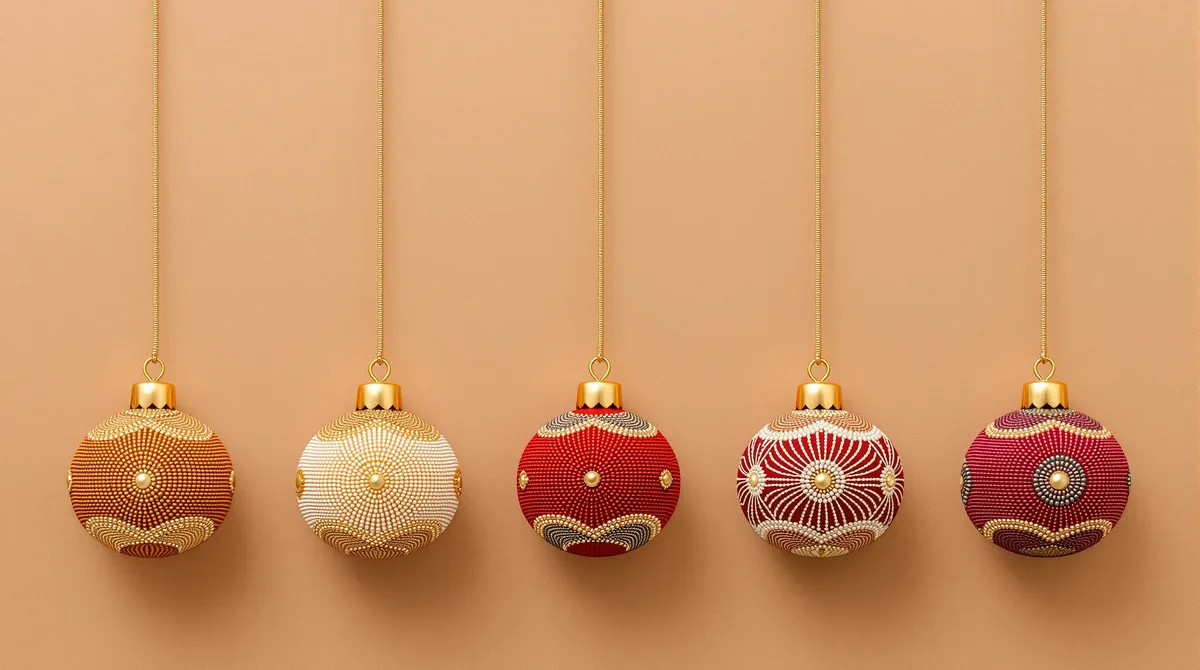
Craft topic
An ornament is embroidery wrapped round a sphere, which is the hardest geometry in beadwork. Rows that run beautifully round the equator converge at the poles, and how a maker solves that is the whole quality question.
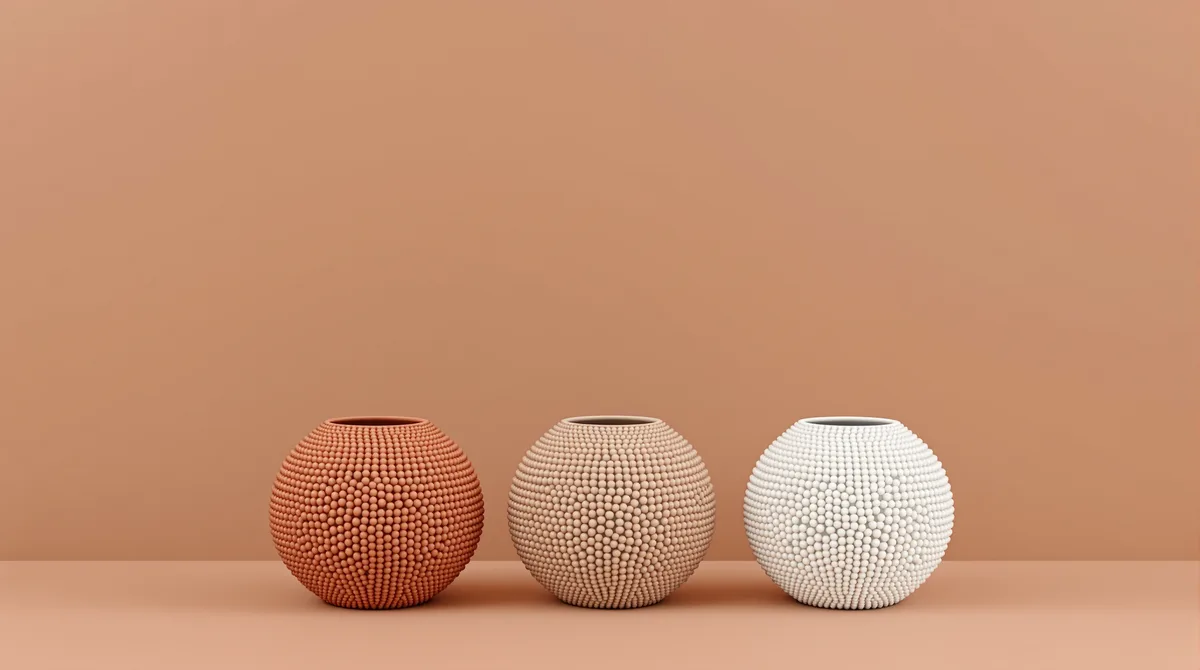
Hand bead-embroidered ornaments hanging in a row, each a round form covered in couched glass seed beads and metallic zari thread in antique gold, crimson and cream.
A hand-beaded ornament is four things: a form, a ground stretched or fixed over it, beads couched onto that ground, and a hanging loop anchored into the form rather than glued to the surface. Documented formats run 7 to 11 cm. The difficulty is geometric — bead rows converge at the poles of a sphere, and the solution is visible.
A hand-beaded ornament is a small covered form with beads stitched onto its surface. The tree ornament is its best-known use, and the construction is far older and far broader than Christmas: the same object with a different fitting is a charm, a pendant, a tassel head or a finial.
It belongs to the bead and thread embroidery family — couched work in the zardozi tradition — rather than to strung beadwork. There is no cord running through it and nothing hangs. Every bead is held individually by thread.
The form. A sphere, a drop, a star, a figure. Polystyrene, a stuffed and stiffened fabric shape, or a card-and-wadding sandwich for a flat ornament. The form carries the shape and the loop.
The ground. A cloth pulled over the form, smoothed and fixed. Nothing is stitched into the form itself; the ground is what the needle works into.
The beads. Couched onto the ground in rows, spirals or bands, the thread crossing between beads at each stitch so a broken thread loses two beads rather than a row.
The loop. Seated into the form before the beadwork closes over it, so the load goes into the body of the ornament rather than into the cloth.
Because rows of equal-size beads cannot keep equal spacing as the circumference shrinks. Round the equator a row of seed beads lies flat and even. Towards each pole the same row has less distance to cover, so the beads crowd, lift and eventually pile.
Every good ornament solves this visibly. The usual solutions are a cap — a metal or beaded disc covering the convergence — a pinned rosette worked outwards from the pole, or a deliberate change of bead size through the last few rows so the count can reduce without crowding. A maker who has not solved it leaves a crowded, slightly domed mess at the top, which is exactly where the hanging loop draws the eye.
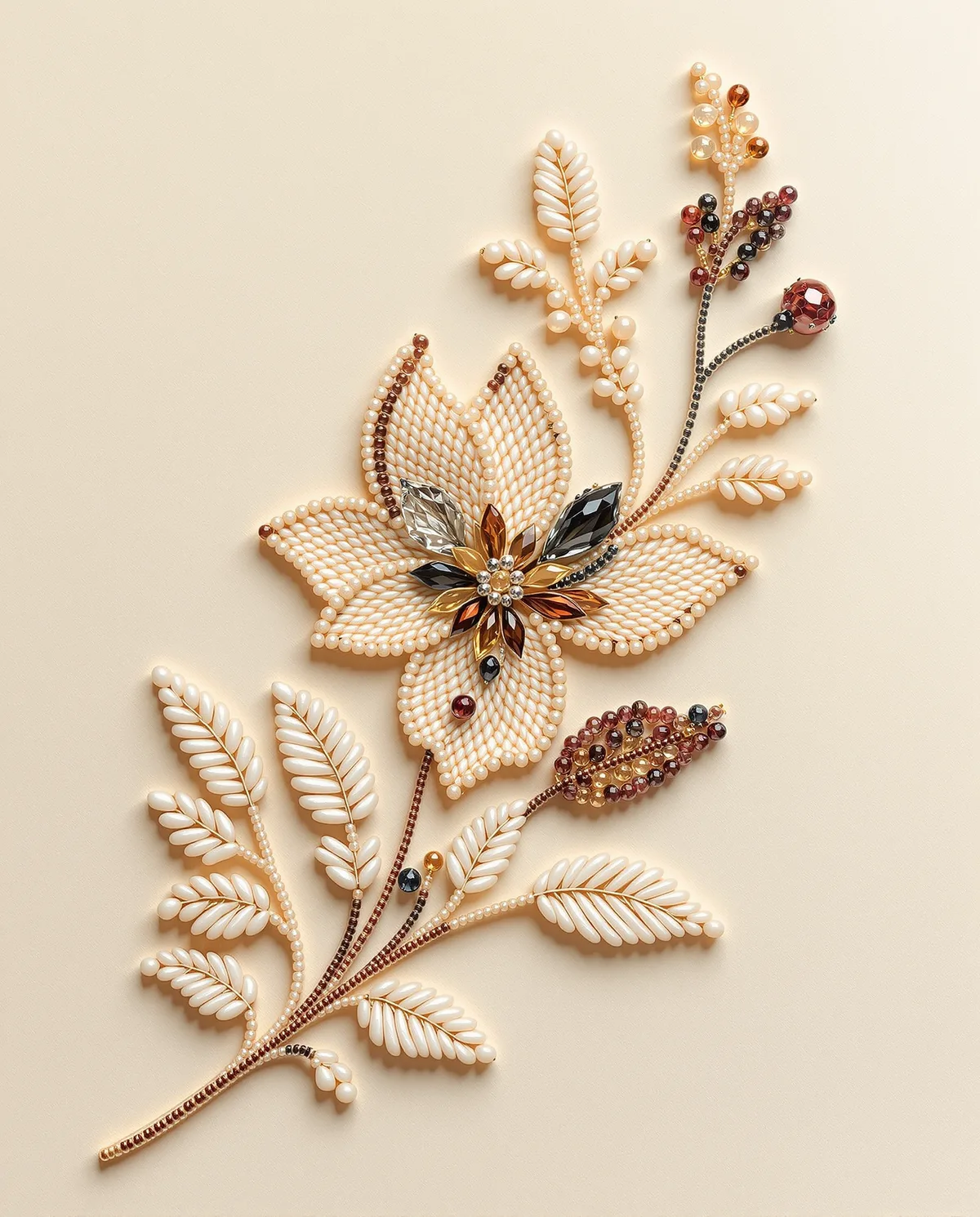
Glass seed beads and bugle beads carry the surface, with metallic thread and zari in the same stitch. Flat-backed cabochons, sequins and small rhinestone settings are couched the same way. Bands of bugle beads are a common way to break a sphere into zones and dodge the pole problem by changing direction.
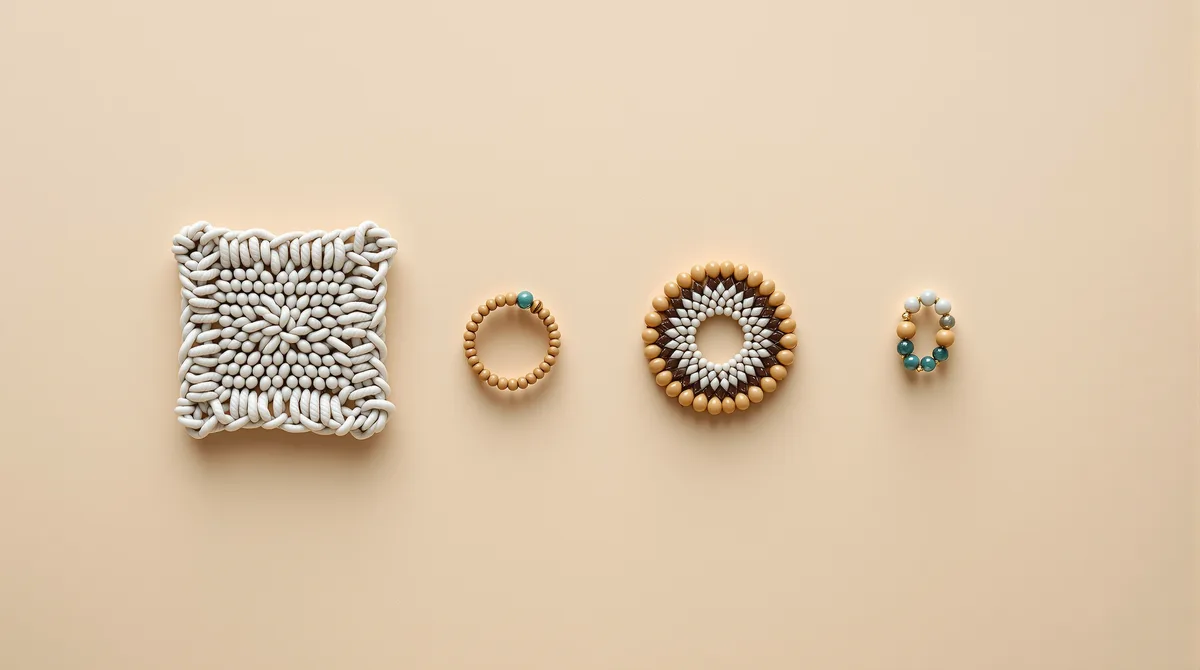
The alternative route is crochet: hand-crochet in cotton yarn at four to eight ply, worked flat as appliqué or as stuffed amigurumi, with documented ornaments at 7 to 11 cm. That is yarn work rather than beadwork, and it sits in the same reference catalogue because it shares the bench and the buyer.
Ornaments are one of the best-documented small objects we make. Our gift work carries hand bead and zari-embroidered ornaments right across its colour collections, with a holiday range of its own inside them; crocheted ornaments at 7 to 11 cm sit in the crochet family alongside them.
So the construction described on this page is construction we run, and the caveats are the ordinary ones: nothing is held in stock, everything is made to order against an approved sample, and minimums are set per design and confirmed per quote.
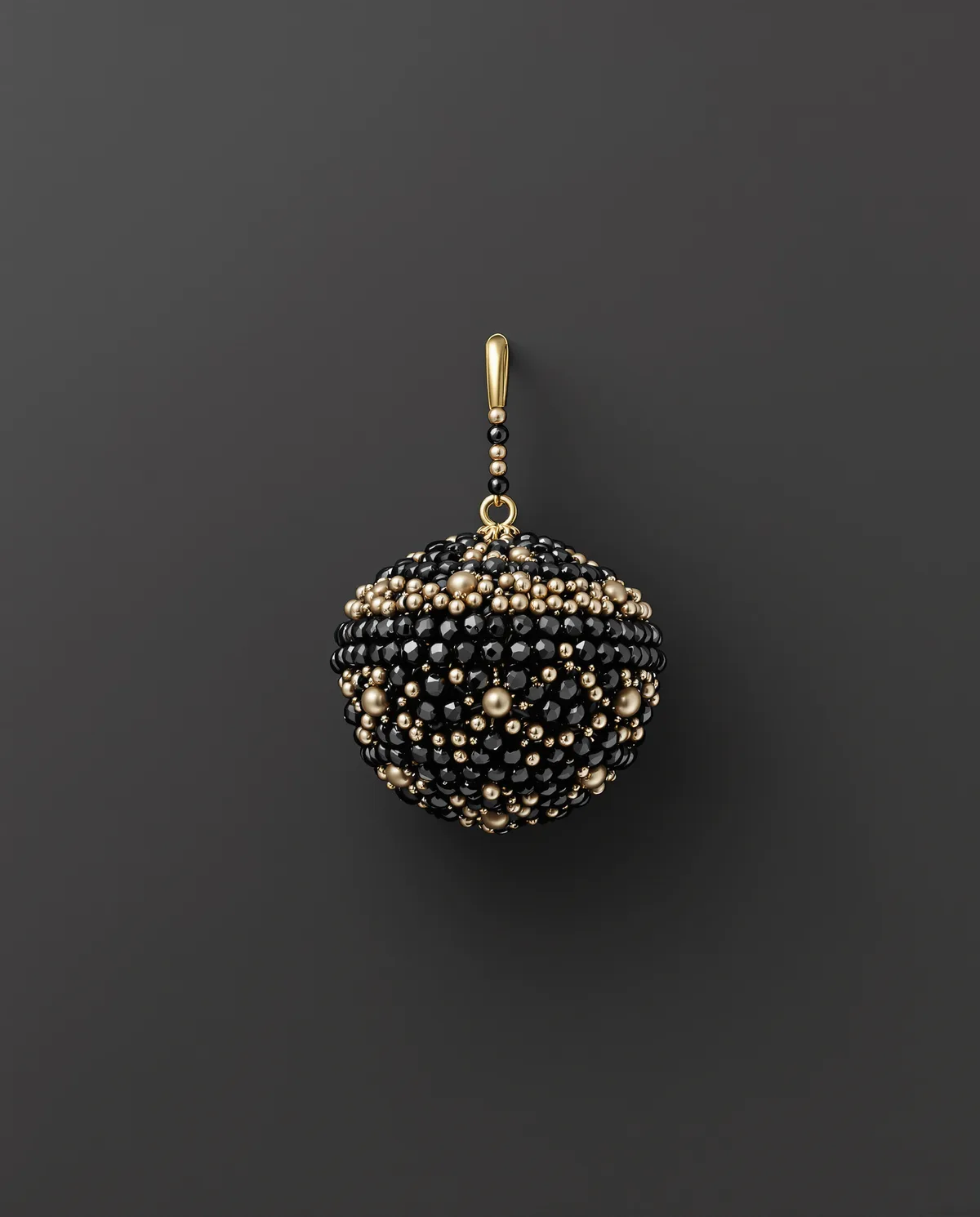
Seven to eleven centimetres is the documented range and it is not arbitrary. Below about seven centimetres a couched motif has nowhere to resolve — the pole problem arrives almost immediately and the motif has no equator to sit on. Above about eleven, the bead count rises with the square of the diameter while the perceived size barely changes on a tree.
Larger pieces exist and change in kind: at around 25 cm the same crochet family makes statement wall faces, which are wall objects rather than ornaments.
Scale and holding. A hand-strung panel holds about 11,800 beads in a dense 90 by 200 cm curtain, all of them held by one cord each and aligned by gravity. An ornament holds a few hundred beads, every one of them held by thread, with no gravity to help and a curved surface to work on.
That is why the two sit in different studios on different day rates, and why an ornament programme is priced on stitch hours rather than on bead count alone.
The poles. Then the loop, with a gentle tug. Then bare patches between beads, which usually mean the bead count was cut after the drawing was approved. Then the back, if the ornament is flat — a reverse with exposed thread ends is a returns problem on an object people turn over in their hands. Then the set, because ornaments that each pass on their own can still look mismatched together in one box.
Hand bead embroidery at this size is overwhelmingly made in India, with a smaller tradition in Eastern Europe, and it is slow work by definition. Machine-made and glued versions dominate the low price points, and the difference is visible in exactly the places listed above.
The seasonal calendar is unforgiving: beaded décor runs 40 to 60 days after sample approval and sampling runs 16 to 20 days from an agreed brief, so a Christmas range is briefed in the first half of the year.
Dust with a soft brush. Never wet an ornament: there is a form inside it, water reaches that form through the ground and does not come back out. Store in a divided box so pieces cannot press against each other — crushing is what flattens a couched surface permanently — and hang by the loop rather than by the cord above it.
It is a craft topic because the page's job is to explain the object, not to sell a season. The construction is genuinely ours, which is why this page says so plainly where the garland and toran pages say the opposite. Where we make something, that is worth stating once and clearly; where we do not, so is that.
Good to know
Dust with a soft brush, never wet. An ornament has a form inside it — polystyrene, wadding, card — and water reaches that form through the ground and does not come back out. Store in a divided box so pieces cannot press against each other, and hang by the loop rather than by the cord above it.
A motif, a form, a ground, a bead specification and a loop method, then a sample. All of the craft is in place: couched bead and thread embroidery is a standing family in our own studios, glass seed and bugle beads are drawn in our own glass works, and ornaments are among the objects we build most.
Ornaments are among the best-documented small objects we make: built right across our gift collections, with a holiday range inside them, in hand bead and zari embroidery. Everything on this page about construction is construction we run. Nothing here is a stock item, because beaded décor is made to order against an approved sample.
A form is covered with a ground cloth, pulled smooth and fixed. Beads are then couched onto that ground in rows or bands, with the thread crossing between beads at every stitch, working from the equator towards each pole. A loop is seated into the form before the beading closes over it. Crocheted and amigurumi versions replace the couching with worked yarn.
Bauble, tree ornament, hanging ornament and tree decoration all describe the same thing. In beadwork terms the description is a couched embroidered form, because the technique is embroidery and the Christmas association is seasonal rather than structural — the same construction makes a charm, a pendant or a finial.
Look at the poles. That is where rows converge and where a maker either closes them deliberately — with a cap, a rosette, a change of bead size — or lets them crowd into a mess. Then tug the loop gently: it should be anchored into the form. Then look for bare patches where the ground shows between beads, which means the bead count was cut after the drawing was approved.
By the loop, on a hook or a short cord, so the piece hangs free and turns. A couched ornament is heavier than a blown-glass bauble of the same size, so it wants a branch or a hook that will take it. Boxed sets displayed open are the usual retail presentation, because the construction is the selling point and it does not photograph from a distance.
Keep exploring
Technique
Seed and bugle bead couched onto a stiffened ground in the zardozi tradition: the stitch, the interval, the failure modes and why images live here.
See the detailIndex
Seventeen beaded objects documented from inside the craft — what each one is, how the tradition builds it, and what it would take to develop one.
View the rangeCraft topic
Backdrop, aisle run and favour — three scales, three constructions, three lead times, and the fixed date that makes the arithmetic unforgiving.
See the detailCraft topic
Three routes — coiled rope on a wire ring, a bead net over a vessel, beads threaded into cane — and why the rim is always where these pieces fail.
See the detailCraft topic
Wire-wrapped and couched ring constructions, and the plain heat rule by material: the ring goes around a holder, never against hot glass.
Specs and sizesManufacturing
The couched bead-and-metal-thread technique behind the flat beaded objects: what it is, what it can depict, and the forms built with it.
Read the guide
Start a conversation
Send a reference, a colour chip or a sketch. Minimums are set per design and confirmed per quote; sampling is quoted separately and usually runs 16 to 20 days from an agreed brief.