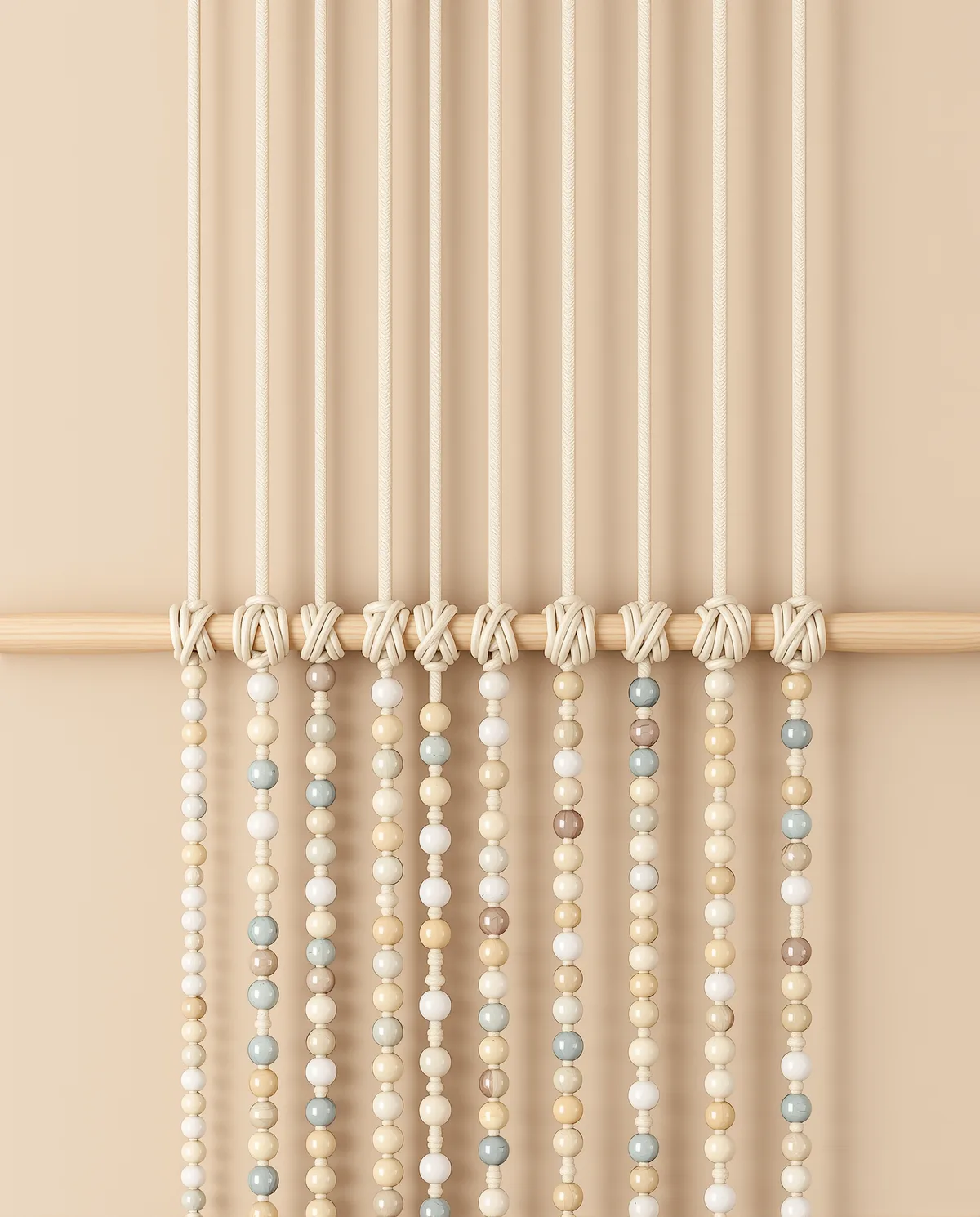
Specification
Headers and dowels
Dowel, stained header rail, sewn rod pocket or suspension loops — what each hangs from and when each fits.
Read the guide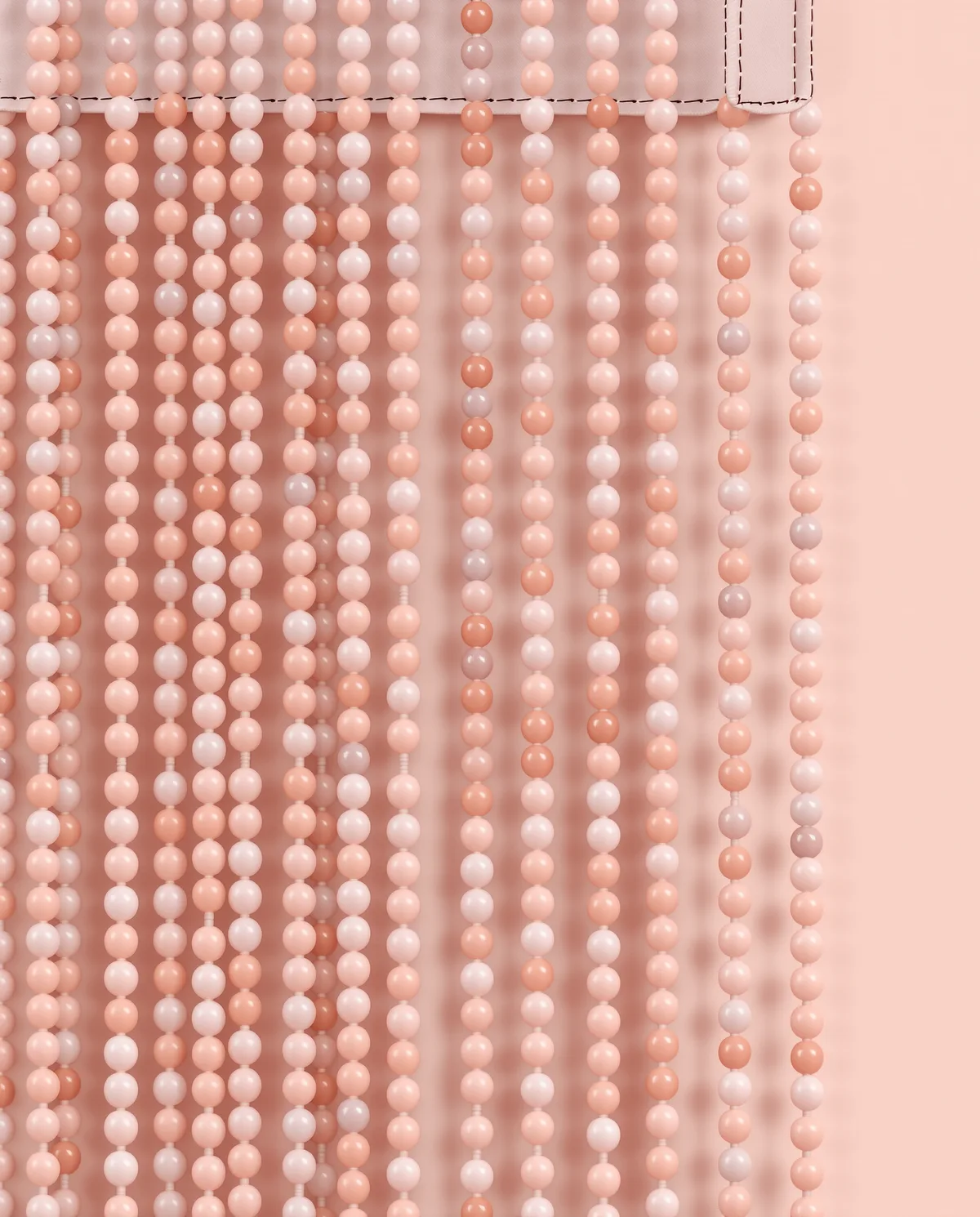
Design · Sixties Beaded Portal
Six or seven iterations of the drawing, and the change that worked was using two bead sizes instead of one. Not a cheaper bead — a second bead.
Bead strands hanging from a narrow stitched cotton header band, its top edge folded and stitched into a rod pocket.
The Sixties portal is a fabric-mounted beaded panel at 24 in high by 30 in wide, built on a ten-ounce canvas mounting pattern with a three-inch rod pocket, in acrylic beads dyed to match and a custom injection-moulded flower bead. It reached its target through six or seven iterations at the bench, and the change that worked was moving from one bead size to two.
The Sixties portal is a fabric-mounted beaded panel at 24 in high by 30 in wide, with a 20 × 30 in alternative. The beadwork is carried on a ten-ounce canvas mounting pattern with a three-inch rod pocket sewn into it, in acrylic beads dyed to match, with a custom injection-moulded flower bead as the motif.
It is the only design in the portal group that hangs from a rod pocket rather than from a dowel or a rail, and it is the design in the whole library with the most honest cost history attached to it.
Beaded strands worked to a flower motif, mounted onto a canvas pattern rather than gathered on a dowel. The canvas is the structure; the beadwork is applied to it.
That changes what a strand is. On a dowel-hung curtain a strand hangs free and its length is its specification. On a fabric mount the panel has a defined shape and the strands sit inside it, so the pattern is a two-dimensional drawing from the start rather than a set of independent columns.
A fabric mount changes the sheet entirely. There is no dowel and no strand length; there is a rod pocket header, a canvas pattern and a bead map. The beads are dyed to match rather than selected, so colour is a dye specification. And freight cubing improves, because canvas folds and the rod is not in the shipment.
| Specification | Value |
|---|---|
| Finished size | 24 in high × 30 in wide, plus a 20 × 30 in alternative |
| Mount | Ten-ounce canvas mounting pattern |
| Header | Three-inch rod pocket sewn into the canvas |
| Bead material | Acrylic, dyed to match |
| Feature bead | Custom injection-moulded flower bead, to our own dies |
| Iterations to target | Six or seven |
| Decisive change | Two bead sizes in place of one |
| Source art | A flattened portal artwork held as owned design source |
| Production | 40 to 60 days after sample approval |
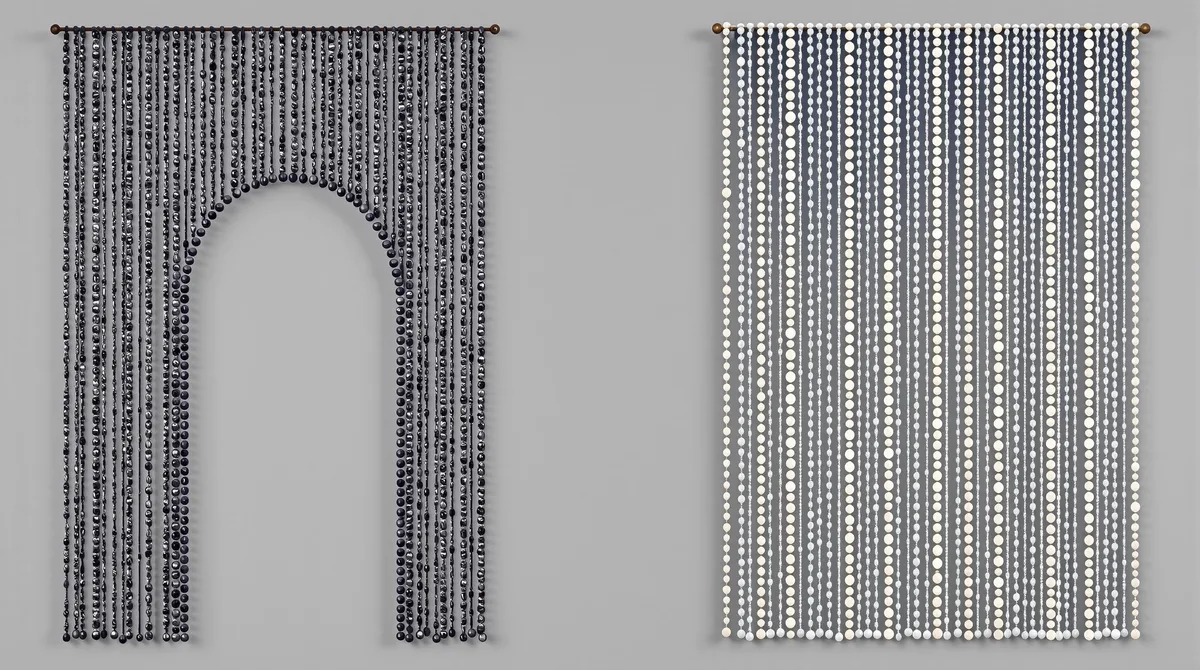
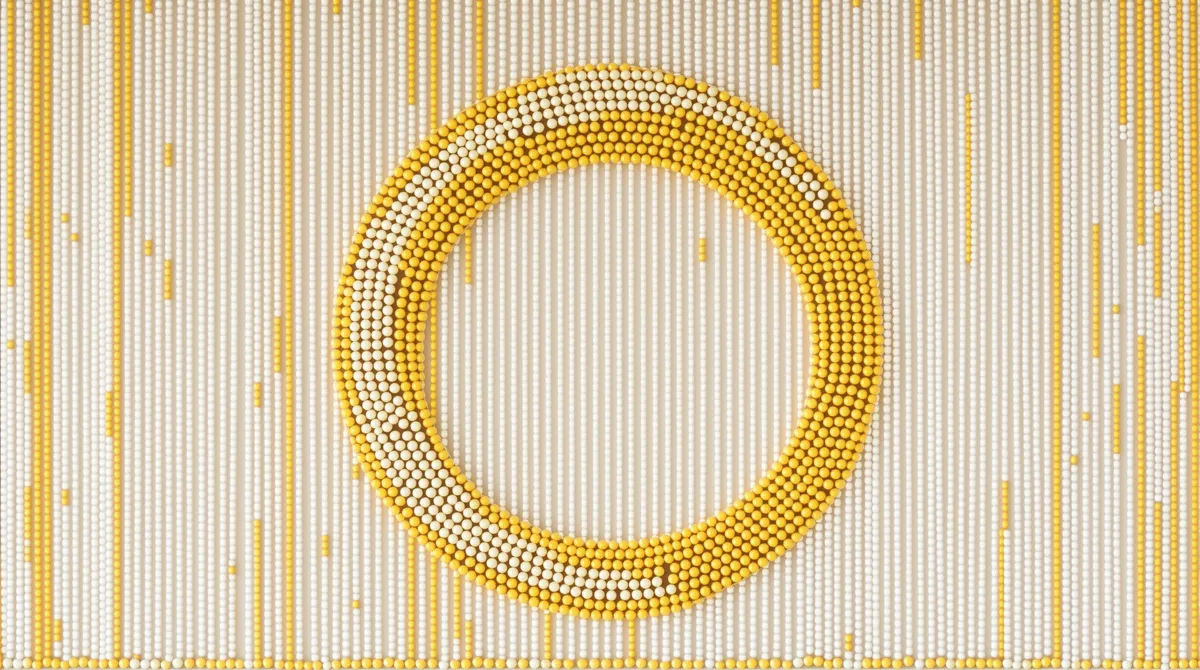
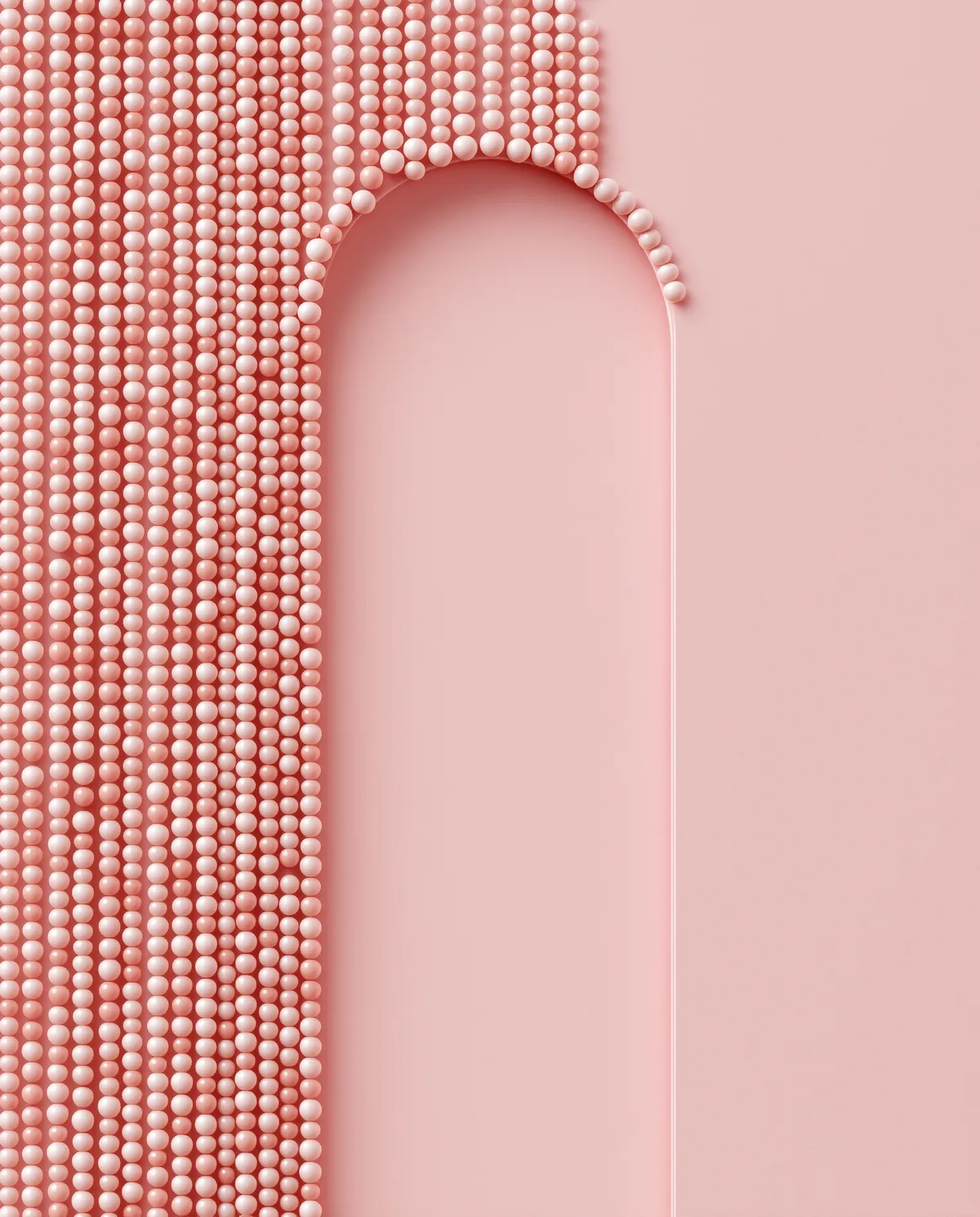
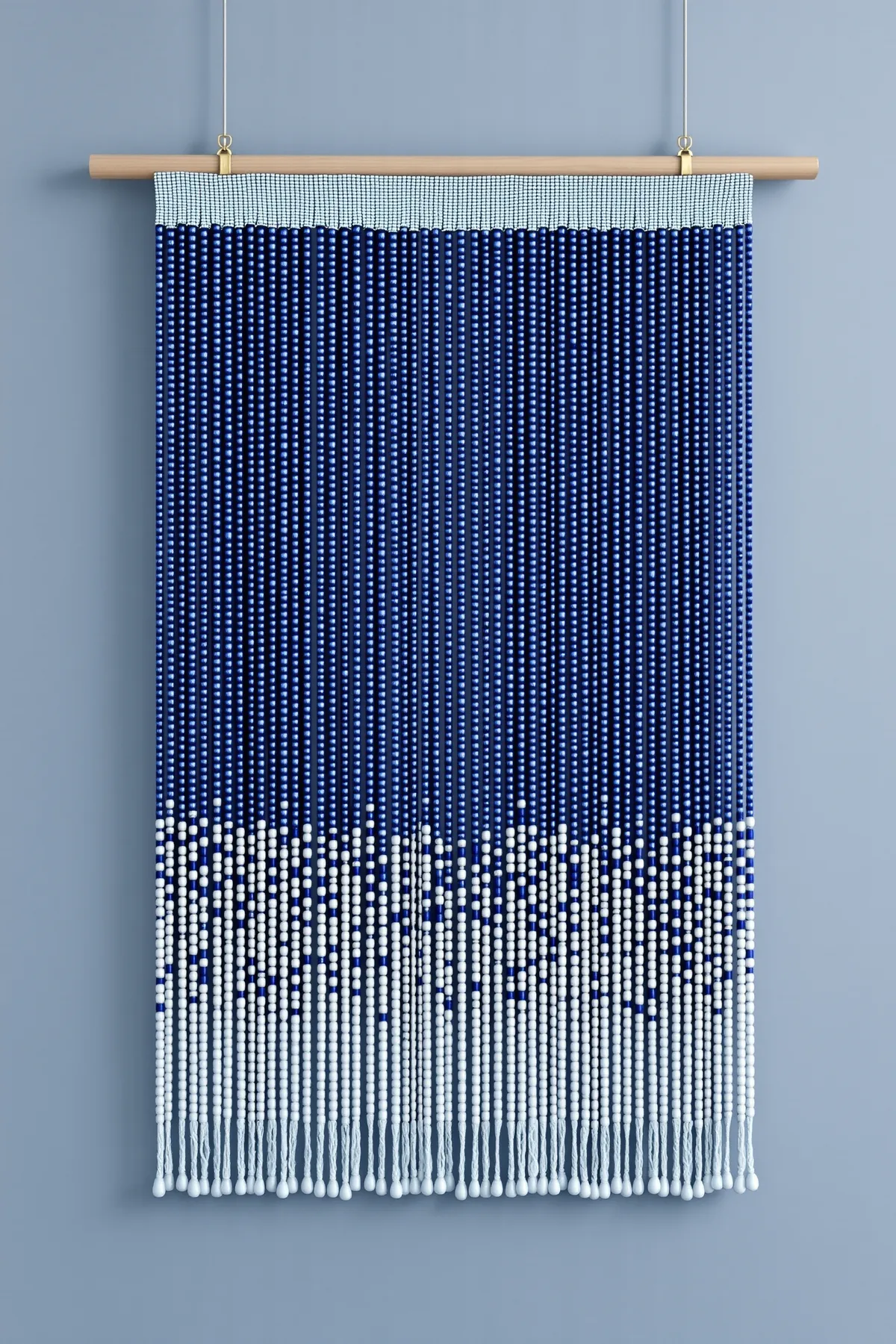
The imagery here is editorial and shows mount and bead construction. What a buyer receives is the approved sample, matched in production.
There is a better-than-usual alternative on this design, though: a flattened portal artwork is held as owned source art. That is a drawing, not a photograph, and it is the document that lets this pattern be reissued exactly years later rather than reconstructed from a sample photograph.
None of the named 2027 stories. The Sixties portal predates them and belongs to the development programme. Its palette is specified as dyed-to-match acrylic, which means it has no fixed colourway at all — the palette is whatever a programme specifies.
The custom flower bead, and it is custom in the full sense: injection-moulded to our own dies because no existing bead had the shape. Acrylic is injection-moulded and dyed to the colour given, so a new shape is a tooling question rather than a material one.
Around it, acrylic beads in two sizes carry the field — and that two-size decision is what stops a dotted field reading as a polka-dot print.
The hem is defined by the canvas pattern rather than by strand lengths, which is the practical advantage of a fabric mount: any outline that can be cut and sewn can be the shape of the panel, including shapes a strand-length map cannot produce.
A rod through a three-inch pocket. The rod is the installer's, which is deliberate — a window-panel programme specifies its own rods, and a design that supplies a dowel cannot join one.
An acrylic build on canvas is among the lightest formats in the library, which is part of why it suited a window-panel application.
Recoloured without limit, because everything in it is dyed to match. Resized in two directions, and it already exists at two heights.
A size change here is also a sewing change. The canvas pattern has to be redrawn, the rod pocket re-sited and the bead map rescaled, so a resize is a larger piece of work than on a dowel-hung design where only the strand lengths move.
Window-panel and soft-furnishing programmes, where a rod pocket is the expected header, and retailers who want a beaded piece that hangs from existing hardware. It also suits a buyer who needs a beaded panel to sit flat against a wall rather than swing.
The format answers a specific objection: a beaded curtain that cannot be hung on a standard rod gets refused at the planning stage. A three-inch pocket removes that objection.
More than any other design here about cost. It took six or seven iterations to reach its target, and the change that worked was not a cheaper bead.
It was a second bead size. Introducing a larger bead alongside the smaller one covered more drop per bead in the areas where the pattern did not need to resolve, while keeping the fine bead where the flower motif had to read. The bead count fell, the pattern survived, and the palette never changed. That is the single most useful cost lesson in the library, and it generalises: on a patterned beaded piece, bead size is a design variable with a price attached to it, and reaching for a cheaper material is usually the worse of the two moves.
A fabric-mounted panel packs more compactly than a dowel-hung piece, because the canvas folds and the rod is not in the shipment, which is a genuine freight advantage at volume.
Good to know
Strands are kept in order and protected against knocking in transit, then packed to your carton, label and packaging specification. A fabric-mounted panel packs more compactly than a dowel-hung one, because the canvas folds and the rod is not part of the shipment.
Yes. A sketch, photo or artwork with size, materials, colours and quantity becomes a colour-count sheet. Where a design needs a bead shape that does not exist, it is moulded to our own dies, and the die work is quoted as part of the development.
Yes. The acrylic beads are moulded and dyed to your colour, matched to a physical chip or a colour reference and confirmed on the sample, and the moulded flower bead is dyed the same way.
Yes, and it already exists in two: 24 × 30 in and 20 × 30 in. A size change on a fabric-mounted panel also changes the canvas pattern, so it is a sewing change as well as a beadwork one.
Acrylic beads dyed to match, in two sizes, plus a custom injection-moulded flower bead made to our own dies. Acrylic is injection-moulded and dyed to the colour given, which is what makes a two-size build in one exact palette possible.
Exclusivity is a commercial decision taken per programme rather than a property of the design. Where a design involves a bead moulded to our own dies, the tooling arrangement is part of that conversation and is quoted with it.
The imagery here is editorial and shows the mount and the bead construction. What a buyer receives is the approved sample, matched in production. The design also exists as owned flat source art, which is a drawing rather than a photograph and is used for pattern work.
Keep exploring
Specification
Dowel, stained header rail, sewn rod pocket or suspension loops — what each hangs from and when each fits.
Read the guideDesign
Portals at 76 × 140 cm and hanging divisions at 90 × 180 and 120 × 180 cm, documented by strand count and opening shape.
Read moreDesign
A legible motif carried across a 76 × 140 cm portal, where bead diameter against strand pitch decides whether the image reads.
Read the guideDesign
A scattered accent field on an arched portal, where the arch profile and the scatter map are drawn as one document.
Compare the optionsDesign
Mixed translucent jewel-tone beads at 90 × 200 cm, cut to an arched centre opening on a stained header rail.
Read the guideSpecification
Diameters, drill holes, cord selection, strand counts and format dimensions — the sheet to copy into a tech pack.
Read the guide
Start a conversation
Send a reference, a colour chip or a sketch. Minimums are set per design and confirmed per quote; sampling is quoted separately and usually runs 16 to 20 days from an agreed brief.