Technique
Bead and thread embroidery: the stitch does the work
Seed and bugle bead couched onto a stiffened ground in the zardozi tradition: the stitch, the interval, the failure modes and why images live here.
Read the guide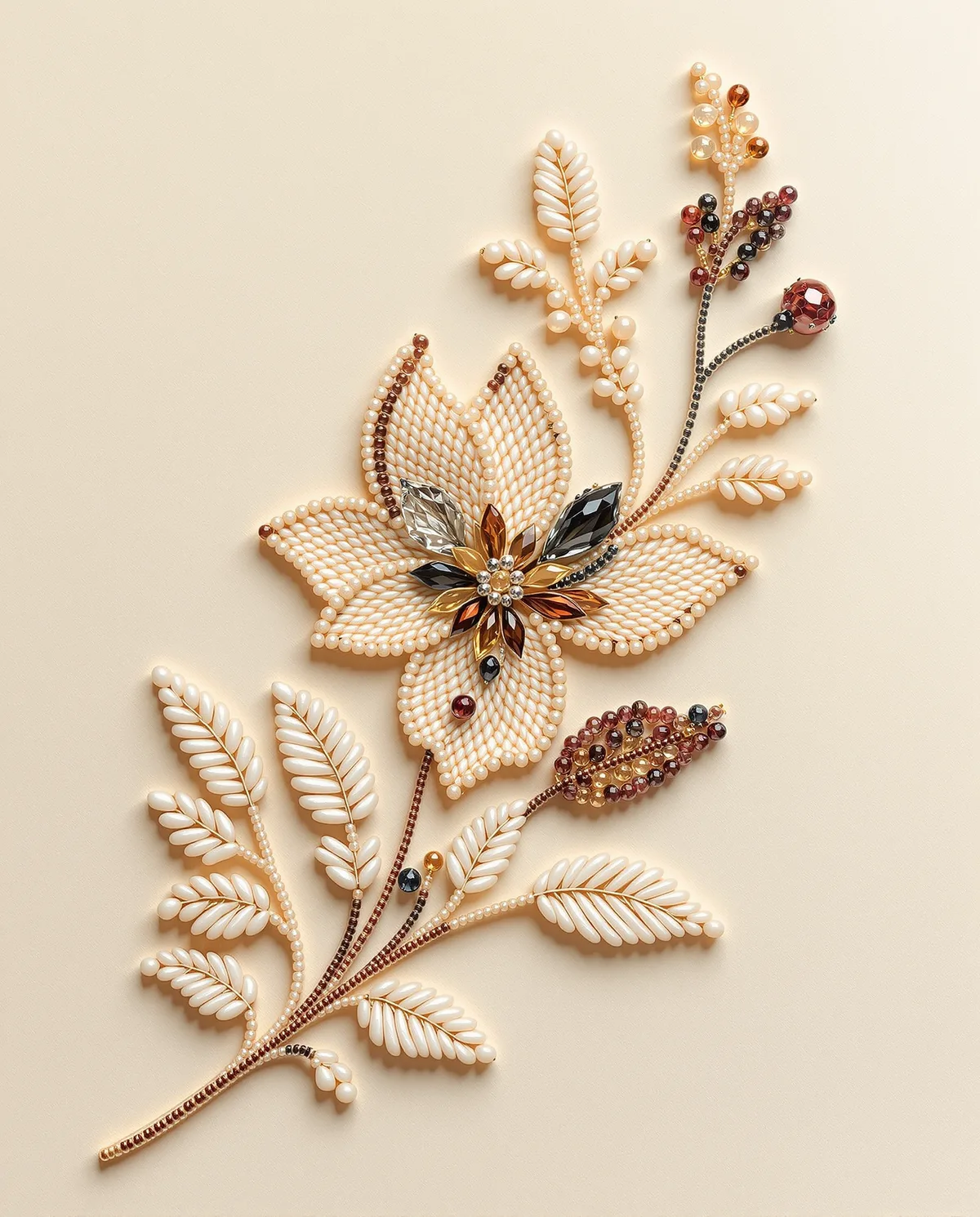
Design · Seed Bead Café Curtain
The only design in the library with no strands in it. The beads are stitched to a sheer fabric, which makes the fabric the structure and the bead the surface.
Glass seed and bugle beads couched onto stiffened felt in the zardozi tradition, the fine thread crossing between beads at every stitch.
The seed-bead café curtain is bead embroidery rather than beadwork on cord. Dyed glass seed beads are stitched onto a sheer ground at 30 × 30 in, with a three-inch rod pocket as the header. It began life as a full-length curtain and became a café curtain because flat bead embroidery is worked on a frame and the frame sets the practical maximum — the craft, not a design preference.
The seed-bead café curtain is the only design in the library with no strands in it. Glass dyed seed beads are embroidered onto a sheer ground at 30 × 30 in, with a three-inch rod pocket as the header.
It was sampled and shipped in September 2025. An alternate version works white beads on white chiffon, which is the same construction with the contrast taken out of it.
It is not. That is the whole point of the page, and it is worth being blunt about because the brief for a piece like this is written differently.
Each bead is couched to the fabric with thread, in the bead-and-thread embroidery tradition that our beadwork studios work in. The fabric carries the structural load and the beads carry the image, which inverts the relationship in every strung design in the library — there, the cord carries the load and the fabric does not exist.
An embroidered piece is specified as a textile. There is no strand count and no stringing medium; there is a fabric weight, a rod pocket header and a bead density per area. The beads are dyed to match, in a dye lot agreed per run, and retail packing is a folded-textile problem rather than a tangle problem.
| Specification | Value |
|---|---|
| Finished size | 30 × 30 in |
| Header | Three-inch rod pocket |
| Technique | Hand bead embroidery onto a sheer ground |
| Beads | 100 per cent glass dyed seed beads |
| Base fabric | Sheer poly-cotton at about 60 to 65 GSM, or organza |
| Alternate version | White beads worked on white chiffon |
| Size constraint | Worked on an embroidery frame, which sets the practical maximum |
| Craft family | Bead and thread embroidery, in the zardozi tradition |
| Production | 40 to 60 days after sample approval |
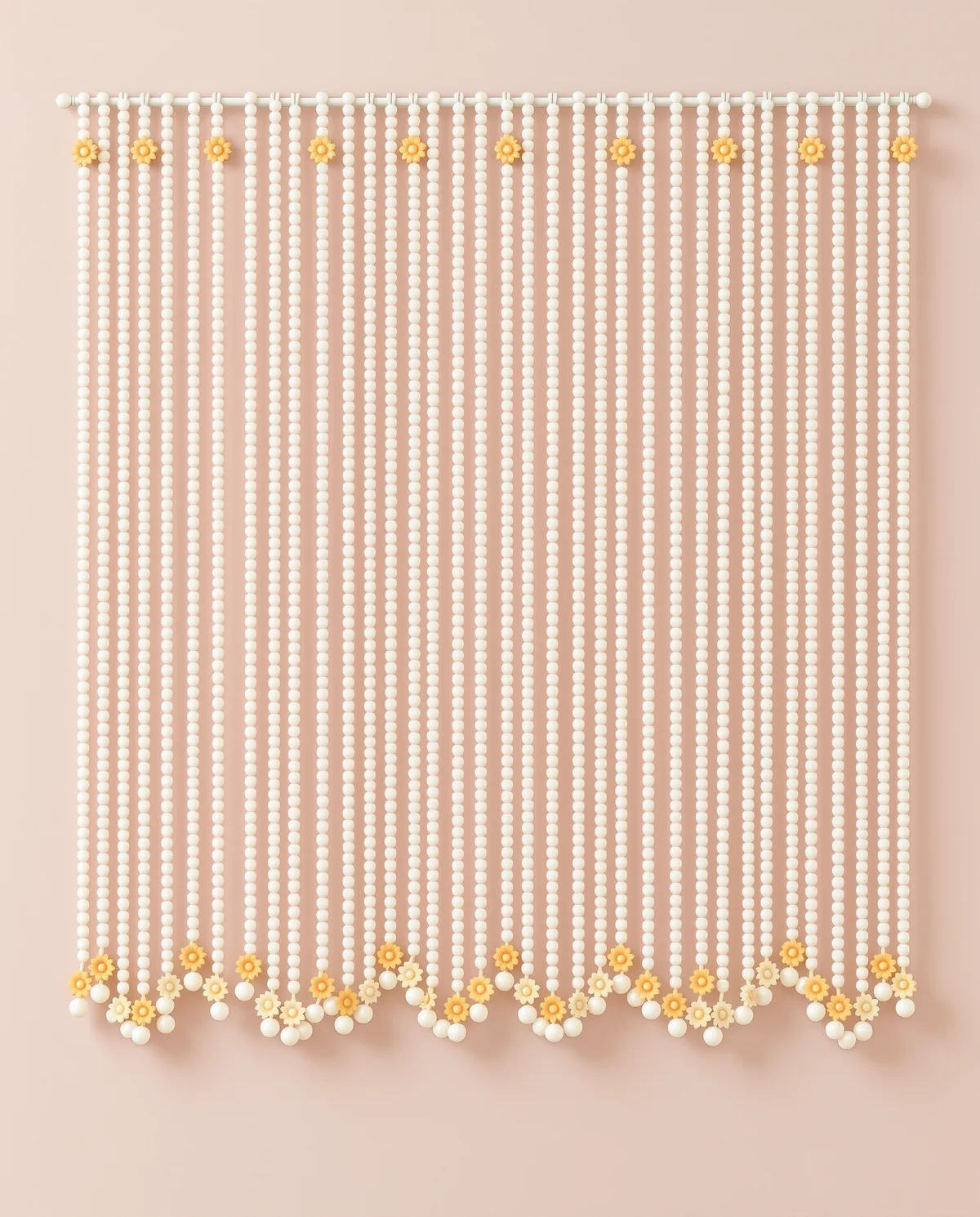
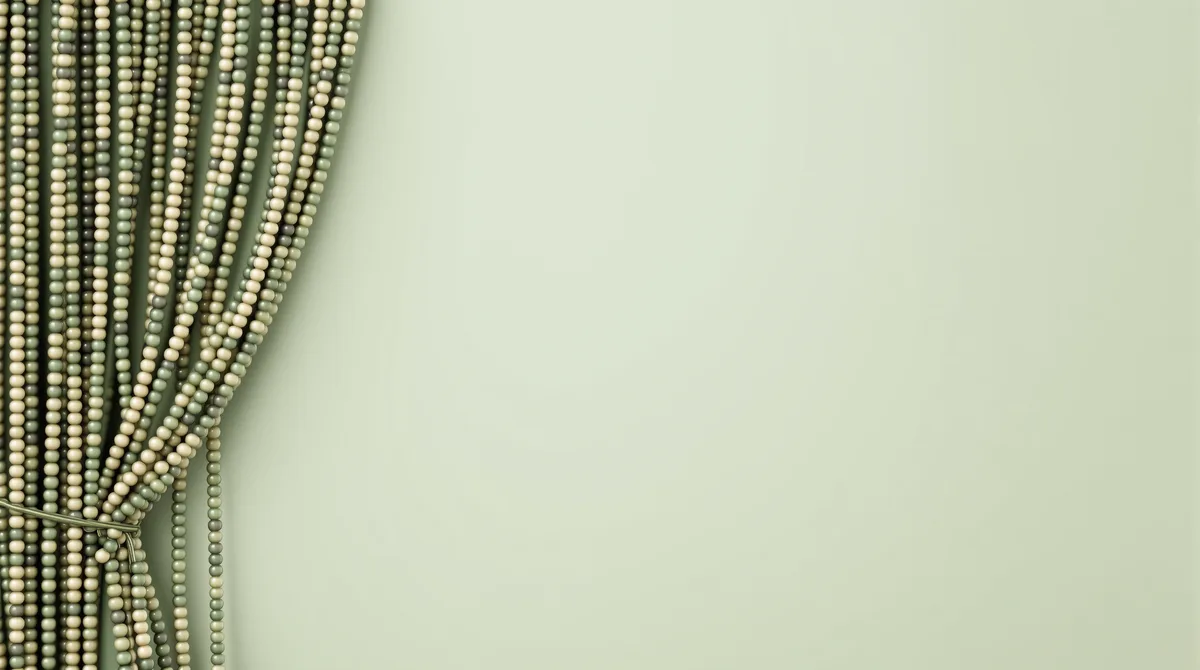
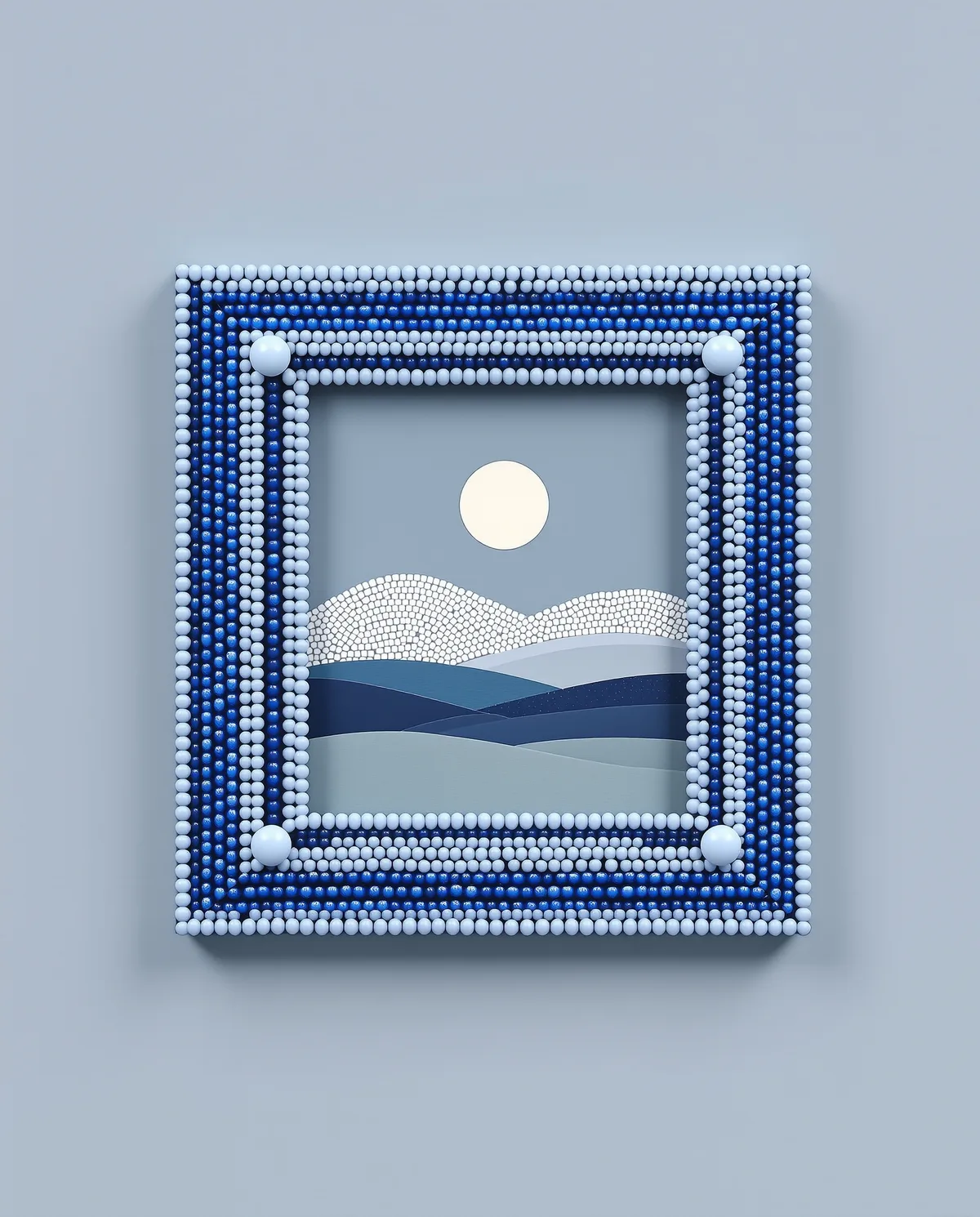
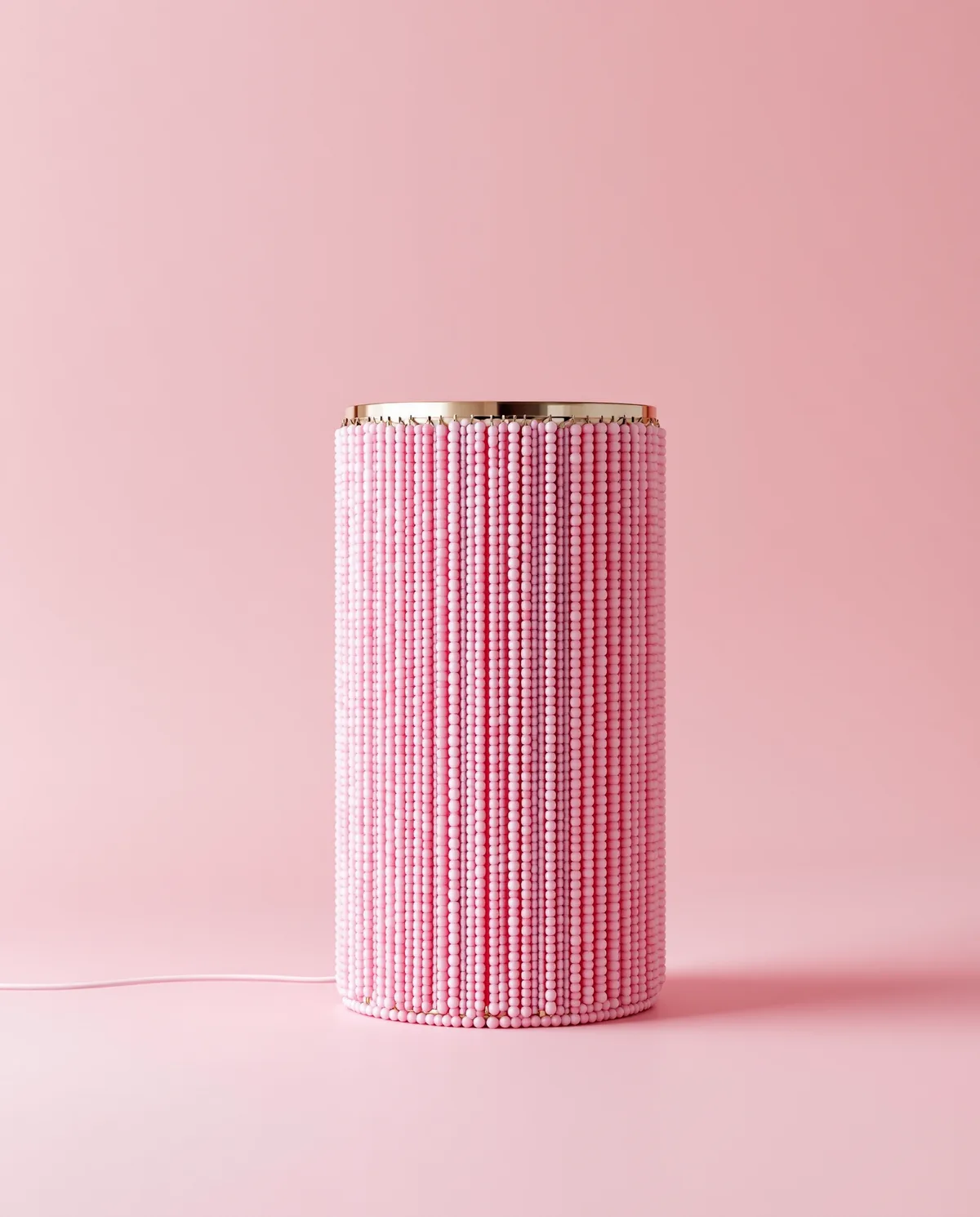
The imagery here is editorial and shows the technique and the bead at close range. This design has been sampled and shipped, and a buyer receives the approved sample matched in production.
This design was sampled and shipped, so there is real record imagery of it — a sample-in-box photograph taken at dispatch. It is real evidence and it is not styled photography, so it is not substituted for one.
None of the named 2027 stories. The sampled version is a coloured seed-bead design and the alternate is white on white, so the design is better described by its contrast level than by a palette.
The white-on-white version is the more interesting one technically. With no colour contrast at all the entire image is carried by the difference between a beaded and an unbeaded area of sheer fabric, which is a texture design rather than a colour design.
Glass seed beads, and nothing else would work. A seed bead is the only bead fine enough to be stitched at embroidery density without tearing a sheer fabric or distorting it under its own weight.
The relevant material fact is that a seed bead's colour is dyed rather than carried in the glass. That makes the colour a surface and a batch property, which is why dye lots are agreed per run — a consideration that does not arise on a body-coloured pressed bead.
As a sewn hem, not as a bead hem. The edge of the piece is the edge of the fabric, so the hem is a textile operation and can be any shape that can be cut and sewn.
That is a genuine freedom. Strung designs can only make hem shapes expressible as strand lengths; an embroidered piece can have a curved, notched or appliquéd edge.
A rod of the installer's choice, through a three-inch pocket. The weight consideration is unusual here and it is about distribution rather than total. Bead embroidery concentrates weight wherever the beading is dense, and a sheer ground at around 60 to 65 GSM will sag locally if a heavy motif is placed without the fabric being supported. That is a design-stage decision, not a finishing one.
Recoloured in two layers — beads and fabric — with two separate colour approvals.
Resized only within a limit, and the limit is the frame. Flat bead embroidery is worked on a frame, and the frame sets the practical maximum for the construction: this design began as a full-length curtain and was converted to café size for exactly that reason. Above that size the format becomes a strung one, or the piece is panelled and re-engineered rather than scaled.
Window-treatment and soft-furnishing programmes, where a rod pocket is the expected header and a piece has to behave like a textile. Also bridal and event, where sheer beaded fabric has a use that strung beadwork does not.
The white-on-white version in particular sells into a different register from everything else in the library — it reads as fine textile rather than as décor.
Two constraints and one opportunity.
The constraints are the mount size cap, which set the format, and the density question — the fabric ground limits how heavily it can be beaded before it distorts. Both were discovered in sampling rather than predicted.
The opportunity is the sheer ground itself. A beaded sheer admits light through the unbeaded areas, which means the design can use negative space as a material. None of the strung designs can do that, because a strung panel is all gap.
As a textile. It folds, so it packs flat to the client's carton, label and packaging specification, with interleaving so bead faces do not rub against each other.
That is a real freight advantage over a dowel-hung piece of the same area, and it is one of the practical reasons an embroidered format is worth considering for a programme shipping at volume.
Good to know
Yes, in two independent layers: the beads and the fabric. Glass seed beads are dyed, so colour on them is a surface and batch property and the dye lot is agreed per run. The fabric is dyed separately, which means two colour approvals rather than one.
Up to a point, and the point is the frame. Flat bead embroidery is worked on a frame, and the frame sets the practical maximum, which is why this design became a café curtain rather than a full-length panel. A larger piece has to be either panelled or re-engineered, not simply scaled.
100 per cent glass dyed seed beads, embroidered onto a sheer ground. Glass seed beads are drawn and hand-worked in our own Firozabad glass works, and a seed bead is the only bead fine enough to be stitched at this density without tearing a sheer fabric.
Exclusivity is a commercial decision taken per programme rather than a property of the design. Name it in the brief and it is quoted alongside the piece.
The imagery here is editorial and shows the embroidery technique and the bead at close range. This design has been sampled and shipped, and what a buyer receives is the approved sample, matched in production.
As a textile rather than as beadwork. It folds, so it packs flat to your carton, label and packaging specification, with interleaving to stop bead faces rubbing. That is a genuine freight advantage over a dowel-hung piece of the same area.
Keep exploring
Technique
Seed and bugle bead couched onto a stiffened ground in the zardozi tradition: the stitch, the interval, the failure modes and why images live here.
Read the guideManufacturing
Built on a cotton or organza header with a three-inch rod pocket: the band, the strands, the hem and the sizes we have shipped.
Open the referenceDesign
Valances at 120 × 30 to 40 cm and café curtains at 76 × 76 cm, documented by hem shape, strand count and bead count.
Compare the optionsDesign
The deep blue story at valance drop — 120 × 30 to 40 cm, where the same palette runs a fraction of the doorway bead count.
How it is madeDesign
A scalloped awning profile over a pastel scatter at the 120 cm width, so the short drop reads as deliberate.
Open the referenceMaterial
How seed beads are drawn, why dye lots are quoted per run, what the drill hole limits, and where seed-bead work earns its cost.
Specs and sizes
Start a conversation
Send a reference, a colour chip or a sketch. Minimums are set per design and confirmed per quote; sampling is quoted separately and usually runs 16 to 20 days from an agreed brief.