Material
Moulded and dyed acrylic
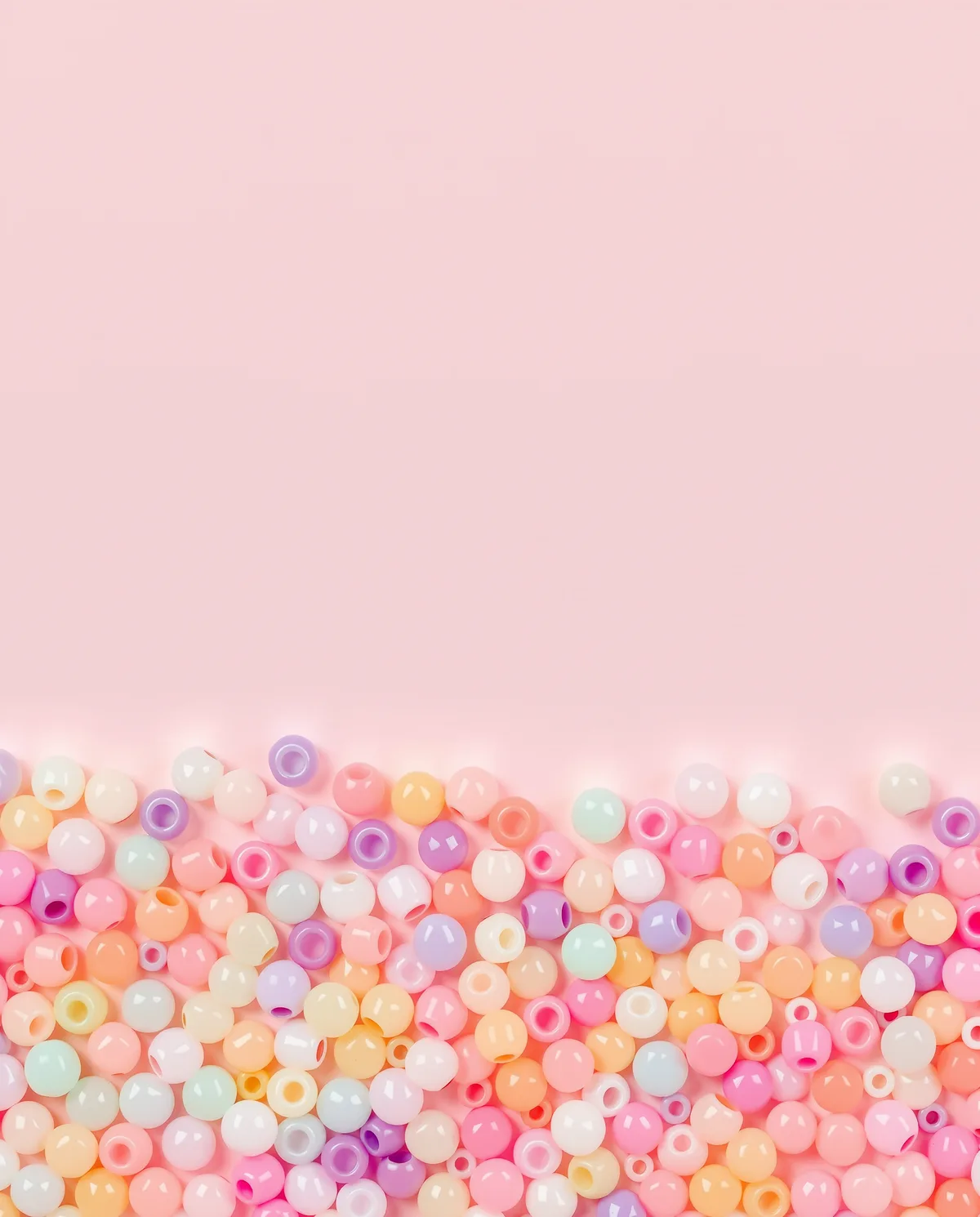
Moulded to our dies and dyed to the reference: the widest colour latitude in the library, half the weight of glass, and no shatter risk.
Compare the options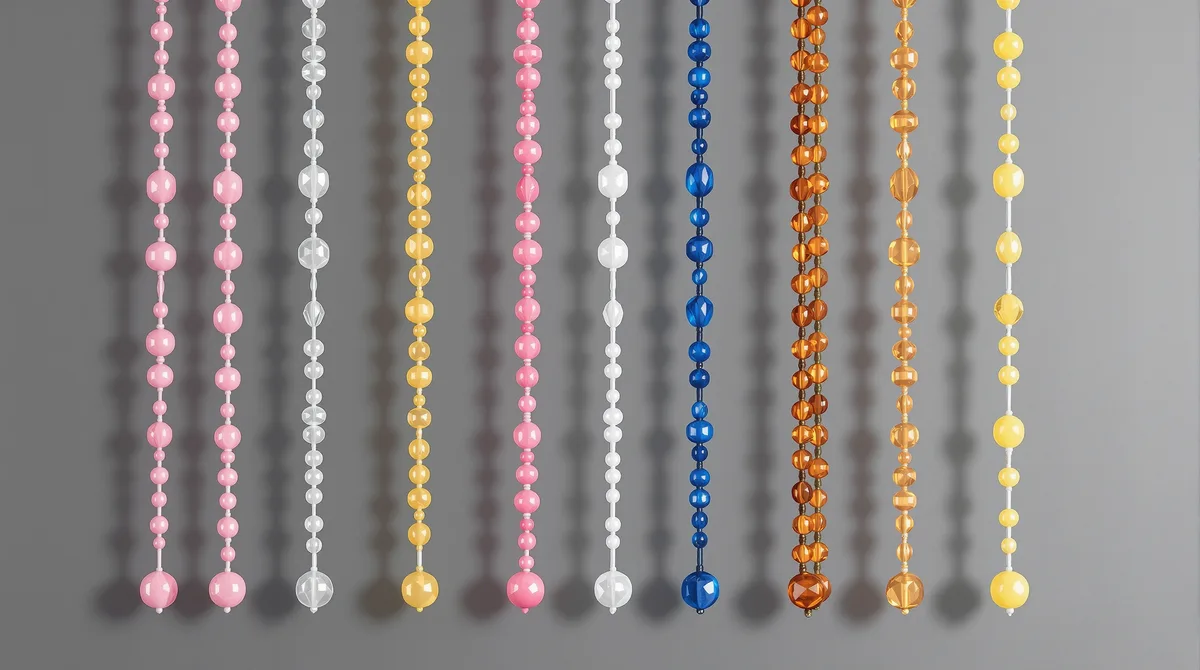
Guide · Comparison
Six factors decide this and only two of them are about the bead. The other four are drape, freight, failure mode and who the piece is for.
Strands of moulded translucent acrylic beads in candy pink, lemon and clear alternating with strands of pressed glass in cobalt and amber at the same pitch, the density and edge…
Specify glass where weight, chime and a premium read matter and the piece will be handled gently; specify acrylic where an exact colour, light weight, lower freight and resistance to shattering matter more. Glass hangs straighter because it is roughly twice as dense. Acrylic takes any colour, because the bead is moulded and dyed to the reference given.
Glass for weight, chime and a premium read, where the piece will be handled gently. Acrylic for an exact colour, light weight, lower freight and durability in a busy household. Wood for a natural look and a quiet sound.
If the brief is unresolved, build a mixed strand: the length in acrylic or wood, the accents in glass. That is the most common answer among the designs we actually make, and it is the cheapest way to get sparkle where it is seen.
Glass beads here are soda-lime glass, drawn and hand-strung in our own Firozabad glass works, in seed sizes of roughly one to three millimetres and in pressed shapes up to about 13 × 22 mm for a dotted oval accent. The family also includes wound Venetian-style beads and irregular frosted "sea glass" beads of about four to five millimetres.
Acrylic beads are moulded and dyed to the colour specified, to our own dies where a design needs a shape that does not already exist. Translucent and opaque versions of the same bead are both routine, and the difference between them changes a design more than most buyers expect.
| Glass | Acrylic | Wood | |
|---|---|---|---|
| Weight and drape | Heaviest; hangs straight and settles fast | Light; moves more, needs good design to hang straight | Light; soft movement |
| Sound | Bright chime | Light click | Soft knock |
| Colour range | Wide, with tints and specialty beads | Widest; dyed to any reference | Natural grain, or a colour finish |
| Durability | Can chip or crack if knocked hard | Does not shatter | Rarely breaks; avoid damp |
| Approximate density | About 2.5 g/cm³ | About 1.2 g/cm³ | Most woods below 1 g/cm³ |
| Made by | Drawn and hand-strung in our own Firozabad glass works | Moulded and dyed to your colour, to our own dies where a design needs a custom bead | Turned beads specified per design; dowels turned in our own Saharanpur wood factory |
Glass is roughly twice as dense as acrylic, and most woods are lighter than acrylic again. On a hanging panel that difference shows up twice.
First in drape. A glass strand pulls straight and settles quickly after someone walks through, which keeps a graphic pattern legible. A light acrylic or wood strand sways longer, so the design compensates with a larger bead or a heavier end bead to steady the drop.
Second in load. A full-length glass panel puts real weight on whatever it hangs from, which is the difference between a tension rod and a bracket fixed into the frame.
Acrylic has the widest range, because the bead is dyed to the colour you give us — a Pantone reference or a physical chip — and confirmed on the sample. It can be matte or glossy, translucent or opaque.
Glass offers deep, luminous colour, transparent tints and specialty beads, with a narrower range in any one run. The important difference is permanence: body-coloured glass has its colour in the glass, while a dyed surface is a surface. On a seed-bead ground, dye lots also shift slightly between runs, which matters on a repeat programme and does not matter on a one-off.
Per bead, glass costs more than acrylic, and specialty glass costs more again. But bead material is only one of five levers, and it is rarely the biggest.
In order of effect: bead size and material, then construction — strand count and tightness — then strand spacing, then the dowel and packing, then height. A densely patterned 90 × 200 cm curtain can hold about 11,800 beads, a figure derived from our 2027 design renders, and at that density the stringing labour is the cost. A spaced panel of the same size holds closer to 3,100 beads. Changing the density moves the price far more than changing the material.
Acrylic, and by enough to matter on a container. Freight follows bead weight, so the same design lands cheaper in acrylic than in glass. Glass also needs more protection — strands kept in order and cushioned so beads do not knock in transit — which adds carton volume on top of the mass.
Whichever material is chosen, the panel is packed to the carton, label and packaging specification given to us, and shipped to the port or warehouse named.
Glass chips. The usual cause is not rough handling but two beads knocking together, and glass strength is colour-dependent: some colours are incompatible when they clink against each other in a hanging panel. On one Venetian-glass portal we solved it by changing the furnace process, annealing the beads, and revising the palette so the incompatible colours were not adjacent.
Acrylic does not shatter. It scuffs, and it softens with heat well below the point where glass would notice. Wood does not break but marks in constant damp.
On every one of them, the cord is the real service item. Dust and water reach the cord through the drill hole of every bead it passes, and that is where a panel finally fails.
For a doorway in daily family use: acrylic, in an opaque colourway, with a weighted end bead. It survives being walked through, it does not shatter, and the colour can be matched exactly to a range.
For a hospitality installation or a hero retail piece: glass, with the large feature beads annealed, and the palette checked for colour compatibility before sampling.
For anything in between: a mixed strand, with glass only in the top third where the light hits it and acrylic below. That is the version that usually survives a cost review.
Premium home retail, hotels, restaurants and bridal: glass, or glass accents on a lighter strand. Colour-led retail, children's and dorm ranges: acrylic. Natural, boho and spa ranges: wood, with glass or acrylic accents for colour. Event and display companies re-using panels: acrylic, for durability and lighter freight.
Interior designers specifying for a single site usually want glass and can carry the freight. Brands building a repeating programme usually want acrylic, because it holds a colour exactly from run to run.
Routinely, and in two different ways. Along a strand, where glass accents sit at intervals on an acrylic or wood drop. Across a panel, where whole strands alternate.
Along the strand is the better value, because the eye reads the glass and the hand feels the weight without the whole drop costing glass money. Both are planned on the same bead map: the plan names every bead position on every strand, so a mixed strand is no harder to repeat in production than a plain one.
Both materials run at volume, which is the answer to "which do you actually make". Our lead doorway portal is translucent acrylic on cord, thirty hand-strung strands on a single wooden dowel. The dotted oval construction uses glass beads of about 13 × 22 mm, roughly ninety to a hundred and twenty per curtain, scattered three or four to a strand and never aligned in a row, over a seed-bead base dyed to match the dots. A frosted sea-glass valance uses irregular glass beads of about four to five millimetres on thirty strands with a scalloped arch hem, longest drop 24 in and shortest 10 in.
Our beaded programme has been in continuous production, reordered season after season. Glass and acrylic both run right through it, which is the point: the choice between them is a design decision rather than a quality one.
Good to know
Not better, different. Glass hangs straighter and sparkles more; acrylic is lighter, cheaper to ship and does not shatter. The only wrong answer is choosing one without deciding which of those four properties the piece actually needs.
Yes, and it is often the best answer. A few glass beads on an acrylic strand add weight and sparkle exactly where they show, while the rest of the drop stays light and cheap to land. Mixed strands are planned on the same bead map as single-material ones.
Acrylic, by a clear margin, because it is roughly half the density of glass and the freight follows the weight. Wood is lighter again. Glass also needs more protective packing so beads do not knock in transit, which adds carton volume as well as mass.
It depends on how the colour got there. Body-coloured glass holds its colour indefinitely because the colour is in the glass. Acrylic is dyed, and a dyed surface is a surface property — excellent when matched to a chip, but the component to ask about if the piece will sit in direct sun.
Glass fails by chipping where two beads knock together, and glass strength is colour-dependent, so a palette can make it worse. Acrylic does not shatter at all; it fails by scuffing and by softening if it meets heat. On both, the cord usually gives out before the bead does.
Both run in volume. Our lead portal design is built on translucent acrylic beads over thirty hand-strung strands; the dotted, mushroom and sea-glass constructions are glass. Our beaded programme has been in continuous production in both materials.
Glass for premium home retail, hospitality and bridal. Acrylic for colour-led retail, children's and dorm ranges, and event hire that will be packed and unpacked repeatedly. Wood for natural and spa ranges. If the brief says all of those at once, mix the strand.
Keep exploring
Material
Moulded to our dies and dyed to the reference: the widest colour latitude in the library, half the weight of glass, and no shatter risk.
Compare the optionsMaterial
How seed beads are drawn, why dye lots are quoted per run, what the drill hole limits, and where seed-bead work earns its cost.
How it is madeGuides
One guide per question that arrives often enough to be worth answering properly.
How it is madeGuide
A portal frames the opening and leaves it clear; a full curtain covers it. Wear, bead count and how the room reads all follow.
See the detailGuide
A valance dresses the top of an opening; a short curtain covers part of it. The line sits near a third of the height.
See the detail
Start a conversation
Send a reference, a colour chip or a sketch. Minimums are set per design and confirmed per quote; sampling is quoted separately and usually runs 16 to 20 days from an agreed brief.