Guide
How to clean beaded curtains
Dry dusting first, spot cleaning the beads, keeping the cord dry, what never to use, and how to handle a broken strand.
Specs and sizes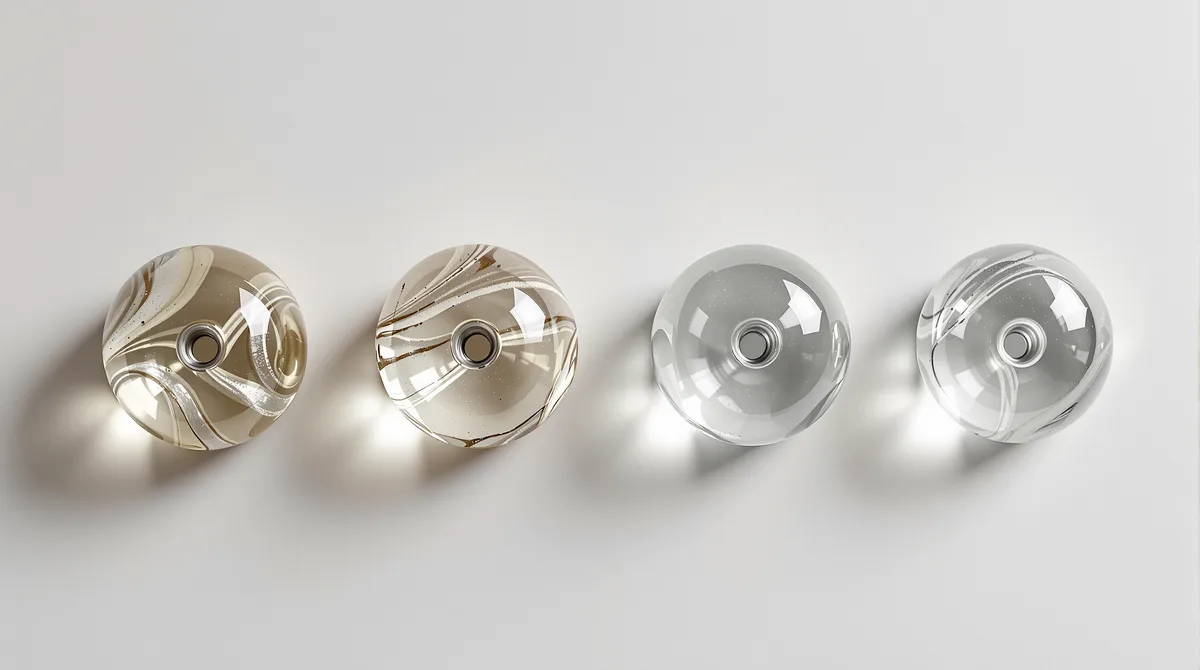
Guide · Care
A panel that looks worse after cleaning has not been damaged. It has been dried badly, and that is a procedure fault rather than a product one.
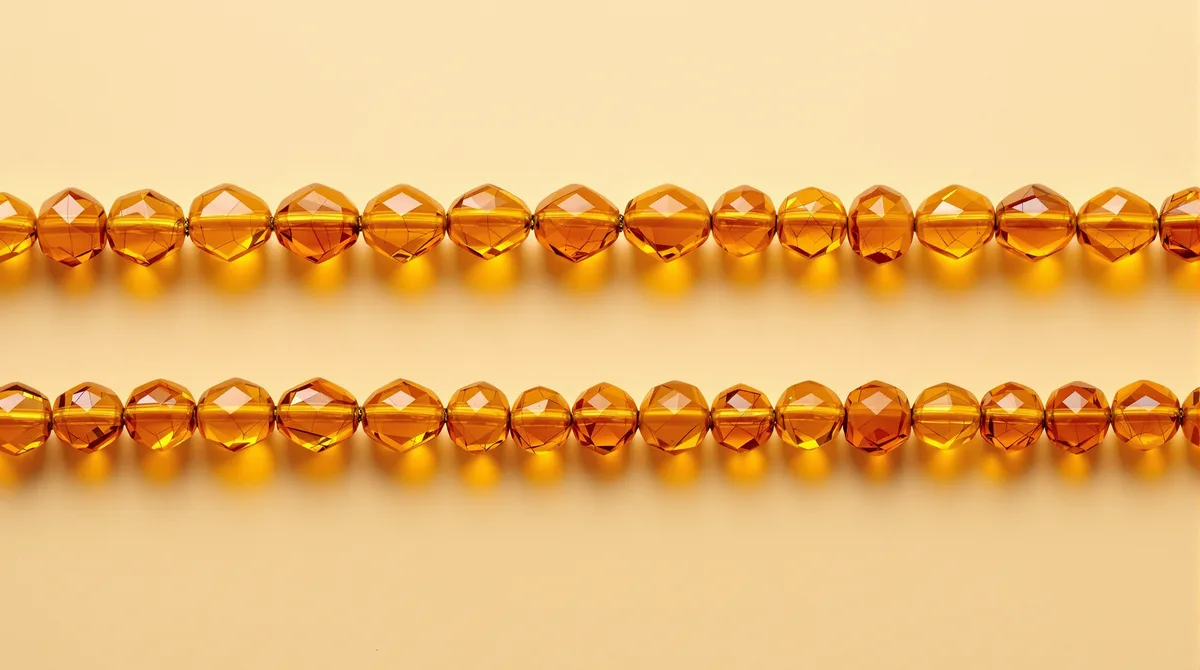
Four clear glass beads compared in a row: fine dried white water rings, a milky cloudy haze, a chalky tide line, and one bead perfectly clear with a single crisp highlight.
Cloudy beads after cleaning are almost always a mineral film left behind as hard water evaporated, not damage to the bead. The cure is in the drying rather than the cleaning: wipe each bead dry in the same pass, work in small areas, and use cooled boiled or distilled water on a panel in a hard-water area.
Dust dry. If a damp pass is genuinely needed, do it in small areas with a barely damp cloth and dry each area in the same pass with a second cloth.
The order is not negotiable, and the reason is specific: a mineral film forms while water sits on a surface and evaporates. Remove the water before it evaporates and the film does not happen. Everything else on this page is a remedy for having skipped that step.
Because the cord is why you cannot simply rinse a panel.
On any other household object, a hard-water film is cured by a rinse in soft water followed by a dry. On a strung bead panel that remedy is unavailable: a rinse means immersion, immersion means a wet stringing medium, and wet cotton cord slackens, discolours and abrades at the drill hole of every bead it passes through.
So beadwork is stuck with the harder discipline. The water has to be managed bead by bead, because the structure cannot tolerate the easy method.
| Surface | Marks easily? | Can a film be lifted? | Method of last resort |
|---|---|---|---|
| Body-coloured pressed glass | Yes | Usually | Damp cloth, then a dry buff; repeat rather than press |
| Glass seed beads | Yes | Usually, but slowly | Work along the strand; the gaps hold deposit |
| Frosted or sea-glass beads | Very | Often not | Do not buff — buffing polishes the matte surface |
| Faceted or AB-finish beads | Very | Sometimes | The facet valleys hold deposit; a soft brush, dry |
| Faux capiz, resin or acrylic | Yes | Often not | Leave it. Abrasives dull the surface permanently |
| Acrylic beads | Yes | Sometimes | Lukewarm distilled water, dried at once; no solvent |
| Wood beads | Marks differently | No | Dry cloth only; the mark is in the finish |
| Metal beads | Yes | Usually | Dry buff; plated finishes tolerate a dry cloth well |
| Prevention | — | — | Dry in the same pass; distilled water in a hard-water area |
Dry, and verifiably dry rather than apparently dry.
A panel that is still faintly damp when it is bundled and bagged will dry slowly inside the bundle, and every drop of that remaining water will leave its mineral content behind on whatever bead it was sitting on. That is how a light film becomes a heavy one over a winter.
Hang the panel for a full day after any damp work before taking it down, then bundle the strands loosely, tie at two or three points with soft ribbon, and lay it flat or roll it around a cardboard tube.
The prevention, not the cure, because the cure is unreliable.
"Wipe with a barely damp cloth and dry immediately" is the single sentence that prevents this fault. Adding "in a hard-water area, use cooled boiled or distilled water" costs nothing and is genuinely useful.
What a care card should not do is recommend a descaling product. Descalers are acidic, and acid attacks surface dye, pearlised finishes and metal plating. A customer following that advice will convert a removable deposit into permanent damage, and the complaint will arrive as a quality fault.
Yes, in two ways that matter.
Hard water is a facilities fact rather than a product fact: in a building with hard mains water every cleaning operation deposits minerals, and a hand-strung panel is simply the object where it shows. Giving housekeeping a litre of distilled water alongside the care card is a trivially cheap intervention.
The second difference is speed. A housekeeping pass is fast by design, which means a panel gets wiped faster than it can be dried. The commercial answer is to take damp work off the routine entirely: dry dusting fortnightly, damp work only on instruction, so nobody is ever wiping at speed.
The deposit itself is almost always removable in principle. What cannot be undone is the damage done trying to remove it.
A buffed frosted bead is polished into gloss and is now a different bead. An abraded pearlised faux-capiz disc has lost the finish the product consists of. A descaled surface dye is patchy for good. A solvent-cleaned acrylic bead is clouded or crazed.
That asymmetry is the practical argument of this page: a visible film on a few beads is a cosmetic nuisance, and every aggressive remedy for it is permanent.
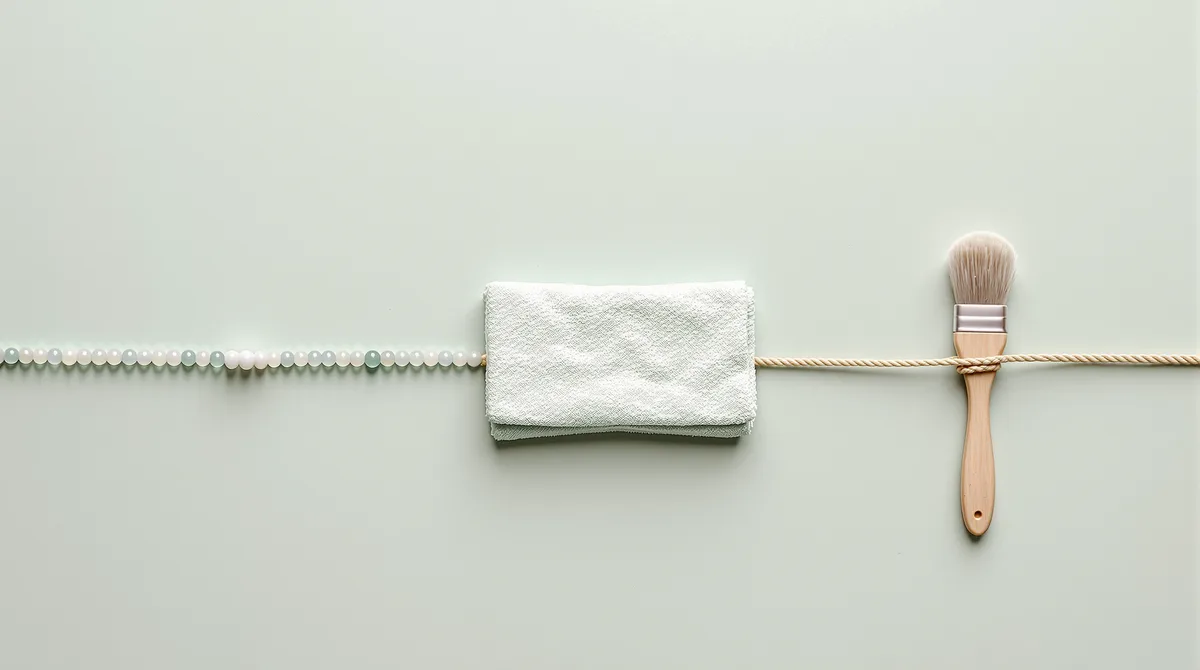
Dust more, wipe less. A panel dusted monthly with a dry microfibre cloth or a soft brush, drawn down each strand from header to hem, will not need a damp pass for years.
Then help the dusting work. A smaller bead holds less dust because there is less flat surface facing upwards, and panels built on glass seed beads stay cleaner than large-bead panels in the same room — the bead sizes reference carries the working dimensions. An open pitch lets a brush pass between strands rather than dragging dust sideways — on a 90 cm panel, forty strands at a pitch of about 2.25 cm on our 2027 design-render basis.
Water hardness does the rest. The same panel in a hard-water area marks visibly within weeks of damp cleaning and in a soft-water area does not mark at all, which is why the first question is where the building is rather than what was used on the beads.
Dry work, and dry work only. First article inspection at our quality-control and packaging house in Greater Noida checks a panel against its approved sample without water touching it, and network product issue rates run at a fraction of a percent.
That is worth knowing because it answers a question buyers ask when a film appears: a panel is not washed before it ships, so a film that appears in service came from the service water rather than from the factory.
Dry dusting: monthly at home, fortnightly in a commercial interior.
Damp work: twice a year at most, and only where dry work has stopped being enough. In a hard-water area, treat every damp pass as an event to be planned — distilled water, two cloths, small areas — rather than as a routine, and put the dry interval on a maintenance schedule instead.
For this fault in particular: no abrasive cream, no scouring pad, no melamine sponge, no descaler, no vinegar solution on a dyed or plated bead.
And the general list still applies: no solvents, no bleach, no steam, no hot water. Hot water makes a film worse rather than better, because it carries more dissolved mineral and evaporates faster.
Prevent, and then accept.
On a frosted or sea-glass bead a film sits in the surface texture, which is exactly where no cloth can reach without pressure — and pressure polishes the texture away. On a disc finished to imitate capiz shell the same applies. On a bead dyed to match an accent, every acid or solvent that would lift the film also lifts the colour.
So on those three surfaces the instruction is: use distilled water, dry immediately, and if a mark survives, leave it. A faint film on a matte bead is far less visible than a polished patch.
Good to know
No, and a water-marked panel is not finished either. Both are maintenance rather than failure: a parted strand is re-strung on new cord in bead-map order with the spares from the original order, and a mineral film is a deposit on a surface rather than a change to it.
Completely dry. Storing a panel that is still faintly damp is how a light film becomes a heavy one, because the remaining water evaporates slowly in a sealed bundle and leaves everything it was carrying behind. Hang the panel for a day before taking it down to store.
No. Among the many reasons, a machine rinses in whatever water comes out of the tap and then spins without drying, which is the exact recipe for a film on every bead in the panel at once. There is no cycle that avoids it.
Dry, downwards, strand by strand, from header to hem — and dusting is the real answer to this page. A panel that is dusted often enough never needs damp work, and a panel that never gets damp work can never acquire a water mark.
For a mineral film specifically: never an abrasive cream, a scouring pad or a melamine sponge, and never a descaling product. Descalers are acidic and will attack a surface dye, a pearlised finish and a metal plating. The deposit is softer than the bead; the cure does not need to be harder.
No — and a dowel marks differently from a bead. On timber the mark is in the finish rather than on it: water raises the grain and can lift a lacquer, so what looks like a water mark is damage and will not wipe off. Keep the wooden dowel dry from the start.
Brush dry, wipe the beads with a barely damp cloth, dry at once, and never immerse. Flat beadwork is the construction where a water mark is most likely to be permanent, because the deposit settles at the junction between bead and thread where no cloth reaches.
Keep exploring
Guide
Dry dusting first, spot cleaning the beads, keeping the cord dry, what never to use, and how to handle a broken strand.
Specs and sizesGuides
One guide per question that arrives often enough to be worth answering properly.
How it is madeGuide
The one case for a mild detergent: how to lift kitchen or smoke film without soaking the cord, and why dry dusting comes first.
Specs and sizesGuide
Loosely tied bundles in strand order, flat or hanging, never folded, somewhere dry — and label which opening it came off.
Specs and sizesGuide
The four dos, the four nevers, the material note and the one line about the cord that prevents most returns.
Read the guide
Start a conversation
Send a reference, a colour chip or a sketch. Minimums are set per design and confirmed per quote; sampling is quoted separately and usually runs 16 to 20 days from an agreed brief.