Guide
How to clean beaded curtains
Dry dusting first, spot cleaning the beads, keeping the cord dry, what never to use, and how to handle a broken strand.
Open the reference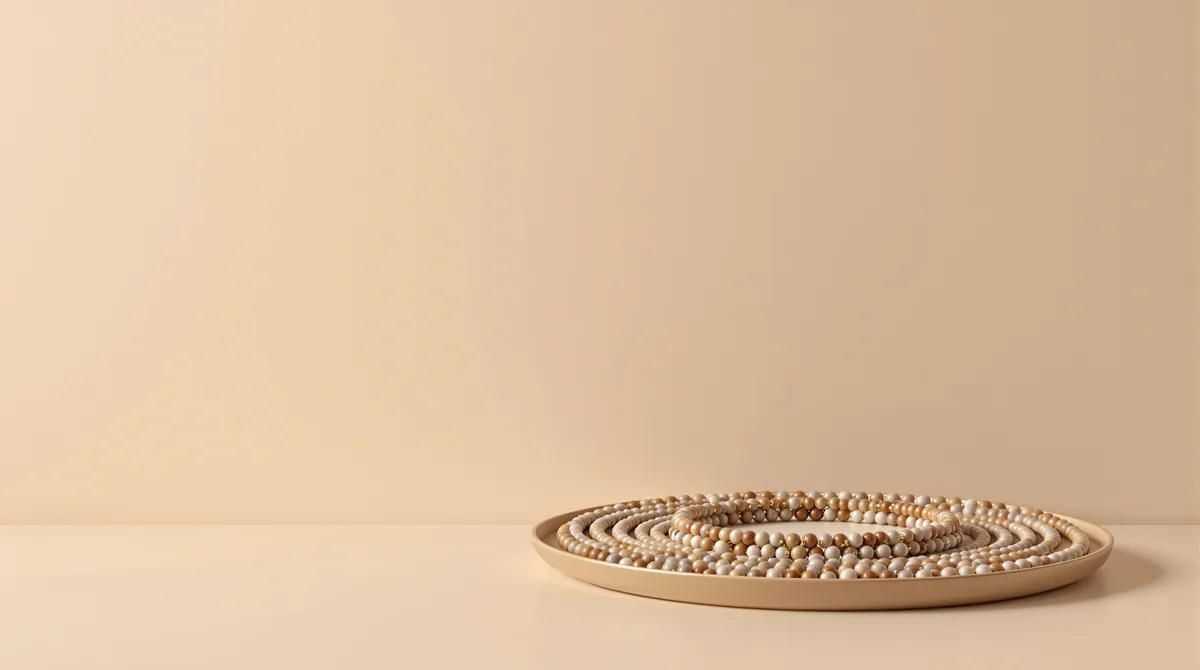
Guide · Care
A care card has about forty words of attention. Spend them on the cord, because the cord is what the customer will unknowingly destroy.
A coiled beaded mat lying flat, strands of wood and glass beads wound in close concentric rounds.
A beadwork care card needs four instructions and four prohibitions, plus one line naming the material. Dust dry and downwards, lift by the rod, spot-clean with a barely damp cloth, store in loose bundles. Never immerse, never spray, never use solvent or abrasive, never vacuum. Then: the cord is the part that fails, so keep it dry.

Material, then routine care, then the prohibitions, then the cord line, then the spares line. Five blocks, in that order, because it is the order of decreasing likelihood of being read.
The material goes first because everything else depends on it and the customer cannot determine it by looking. A card that opens with "glass beads on cotton cord, wooden dowel" has already done most of its work.
Because it is the only structural component, and because every instinctive cleaning action attacks it.
A strung panel is cords carrying beads — a densely patterned 90 × 200 cm panel holds about 11,800 of them. Glass is near-indestructible in domestic use. Wet cotton cord slackens, discolours, holds dust and abrades against the drill hole of every bead it passes through under load. Customers do not know this, so they wash, spray and vacuum, and the panel fails months later for reasons nobody connects to the cleaning.
One sentence prevents it: the cord is the part that fails, so keep it dry.
| Material | Routine care | Wet work | Never |
|---|---|---|---|
| Acrylic | Dust dry, or wash strands in lukewarm mild soapy water | Permitted; keep the dowel dry | Solvents and very hot water |
| Glass | Dust dry, or wipe with a damp cloth | Permitted on the beads | Knocking beads together hard |
| Wood | Dust or wipe with a dry cloth | No | Soaking; constant steam |
| Bamboo | As wood | No | Rain and damp |
| Faux capiz discs | Wipe with a soft damp cloth and dry | Light only | Abrasive cleaners, which dull the face |
| Bead embroidery | Soft dry brush, spot clean only | No | Immersion of any kind |
| Cotton cord and header | Keep dry | No | Any water |
| Fire rating | Tested per project | — | Tested on the specified build and quoted with it |
Give each a clause if the piece has one. "Keep the wooden dowel dry" and "do not wet the cotton header" are both short, both specific, and both address a component the customer will otherwise treat as part of the washable panel.
The header deserves it most. A stitched cotton band with a rod pocket looks like fabric, behaves like fabric, and sits directly above every strand's knot — so water in the header is water in thirty cords.
As a service, not as a warning. Something close to: a broken strand can be re-strung rather than replaced.
Add "spare beads supplied" only where they were. Spares are a packing-specification item agreed per order rather than something every panel carries, so a card can only promise them if somebody asked for them when the order was placed. For a retail programme that is worth deciding deliberately: ask for spare beads by colour on the packing specification, and the card earns a line most of the category cannot write.
That phrasing does three things. It tells the customer the panel is repairable, which it is. It explains why there is a small bag of beads in the box, where there is one, which otherwise gets thrown away. And it pre-empts the return, because a customer who knows a strand is replaceable is not holding a broken product.
One line, covering the three failure modes: down by the rod, loosely bundled, stored dry and never folded.
Folding is the specific thing to name, because it is the instinctive way to put a long thing in a box and it sets a permanent kink into every strand at the same height. "Never folded" earns its two words.
Yes, and the difference is the destination of the information. A hangtag goes to a consumer; a hospitality panel's care instructions go to a housekeeping schedule, and a card in a drawer will not be read by whoever cleans the panel in two years.
For contract work, the instruction belongs in the project's own maintenance documentation in three lines: dry brush downwards, nothing wet, nothing sprayed. We can include a buyer's care text in the packing to their specification alongside their labels and cartons, which is the mechanism — but getting it onto the cleaning schedule is the client's side of the job.
Name two of them, briefly. Solvent on a dyed bead, and rubbing a frosted bead. Both are irreversible, both look like reasonable cleaning, and neither is obvious.
The others — a wet lacquered dowel, a folded strand, a soaked cord — are covered by the prohibitions. A card that explains why would be twice as long and read half as often, so the prohibitions carry them.
Keep it short and make the first line specific to the product. A card that opens with "Beadwork care" is wallpaper. A card that opens with "Glass beads, cotton cord, wooden dowel" is information, and the customer reads the next line.
Second: put it where the panel is handled rather than in the carton. A hangtag on the dowel is read during installation, which is exactly when the lifting and settling instructions matter.
Panels are inspected at first-article and lot level on an AQL plan at our quality control and packaging house at Greater Noida, then packed with the strands held in their order so they arrive untangled. Product issue rates across the network run at a fraction of a percent.
What belongs on the card from that is only the handling consequence: the strands are packed in order, so hang before untying. The inspection regime is a reason the customer can trust the panel; it is not care advice, and a card is not the place for it.
Monthly, for dusting, in a normal room. More often in a kitchen. That is the only frequency worth printing, because it is the only task that recurs.
Resist putting a schedule against anything else. Spot cleaning is as-needed, storage is seasonal, and repair is on failure. A card with four frequencies on it is a card nobody follows.
A machine-wash symbol. A flammability class. A fade rating. A weight rating. A warranty period. A claim of outdoor or bathroom suitability.
None of those is a claim these panels can carry, and a care card is the hardest place to retract a claim from — it is physically attached to the product. A good card is short, specific about materials, and firm about the cord.
Good to know
It should not get wet, and yes, say so explicitly. Customers reading a card that permits washing acrylic strands will reasonably assume the whole panel can go in the water. One clause — keep the wooden dowel dry — closes that gap, and it is the clause most cards omit.
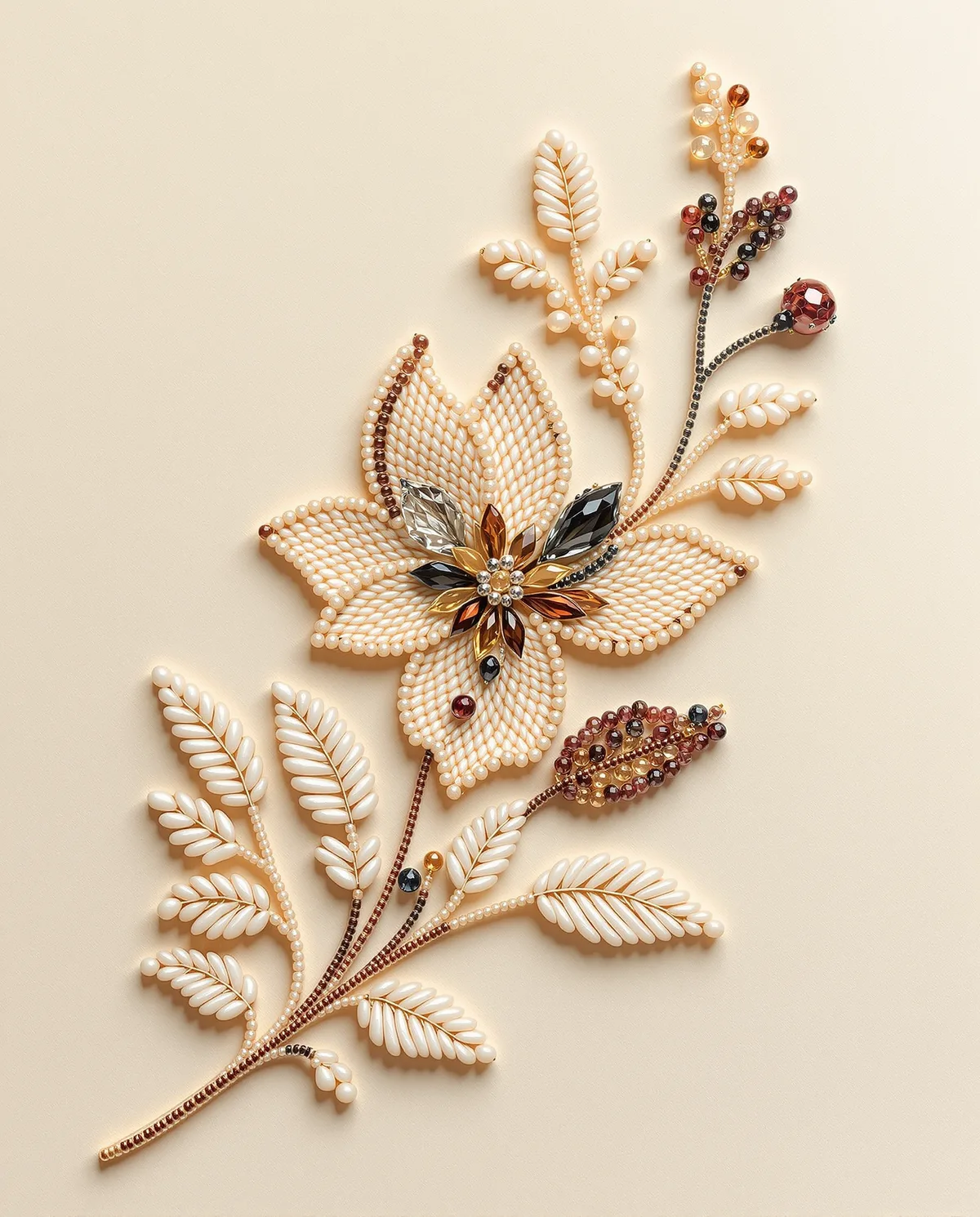
Differently from a strung one, because the construction is different. Something like: brush gently when dry, spot clean only, never immerse. On embroidered work every bead is couched to a stiffened ground individually, so immersion swells the ground and slackens the thread.
That a broken strand is a repair rather than a fault, whether spare beads were supplied with that order, and who to contact. A card that says this converts the single most common complaint into a service interaction, and it is true — a strand is re-strung in its original bead order and re-knotted at the header.
One line: take it down by the rod, bundle the strands loosely, store dry and never folded. That covers the three ways a stored panel is damaged, and it is the only storage advice that fits on a hangtag.
Only with a qualifier, and only for acrylic. Acrylic strands can be washed in lukewarm mild soapy water with the dowel kept dry. A card that says washable without that qualification will produce a panel in a washing machine, which destroys it — the cord carries everything and a drum abrades it at every drill hole.
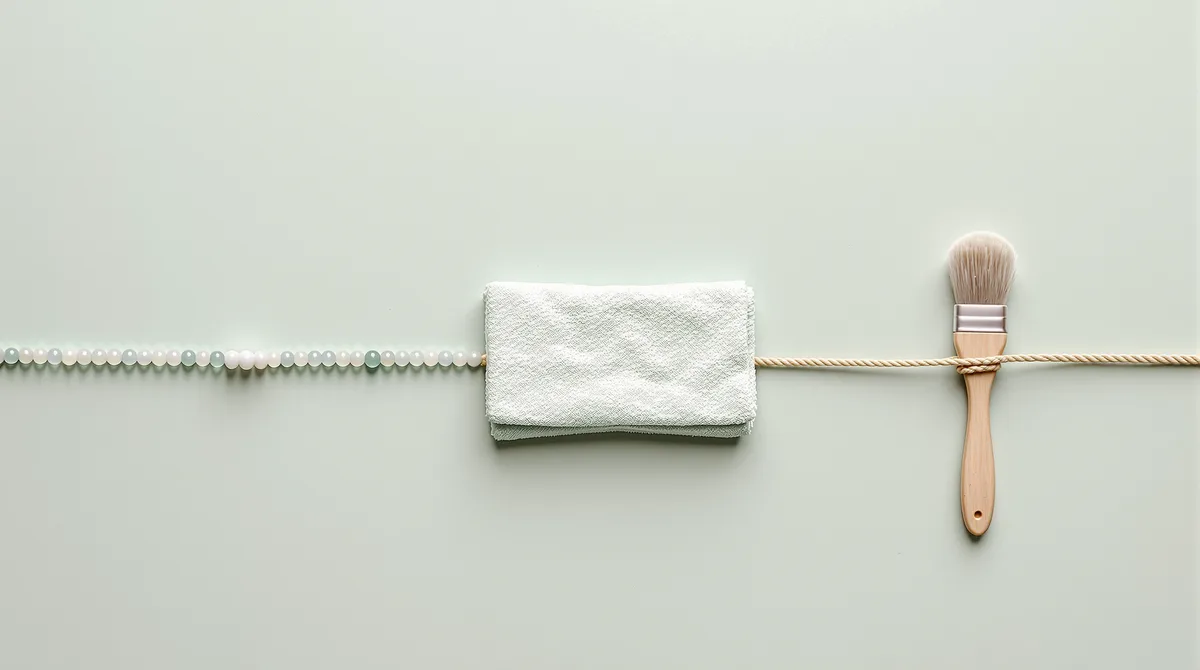
With the direction in it. Dust dry, downwards, strand by strand. Omitting downwards leaves the customer brushing upwards, which drives dust into the header where nothing can reach it. Three extra words and they are the useful ones.
No. No flammability, lightfastness or load rating is published for these panels, and a card is the worst possible place to invent one. Where a contract specification requires a rating it must be tested against the actual build, and that testing is quoted separately.
Keep exploring
Guide
Dry dusting first, spot cleaning the beads, keeping the cord dry, what never to use, and how to handle a broken strand.
Open the referenceIndex
Retailers, own-label brands, interior and hospitality designers, event companies, display teams and children's retail — and the one thing each cares about most.
How it is madeGuides
One guide per question that arrives often enough to be worth answering properly.
View the rangeGuide
Why abrasives dull the surface permanently, how to handle a laser-cut edge, and the method that keeps the pearlised look.
Read the guideGuide
Why soaking slackens every couching stitch at once, and the brush-then-damp-then-dry routine that works instead.
How it is madeGuide
A soft brush drawn downwards, strand by strand, so dust leaves at the hem instead of compacting in the header.
How it is madeGuide
The header, a care card and packing that held the strands in order — plus the spare beads you have to specify yourself.
Compare the options
Start a conversation
Send a reference, a colour chip or a sketch. Minimums are set per design and confirmed per quote; sampling is quoted separately and usually runs 16 to 20 days from an agreed brief.