Guide
Repairing a bead panel
Identify what failed, re-string that strand, re-knot it at the header, and match the bead from the spares specified with the order.
How it is made
Guide · Repair
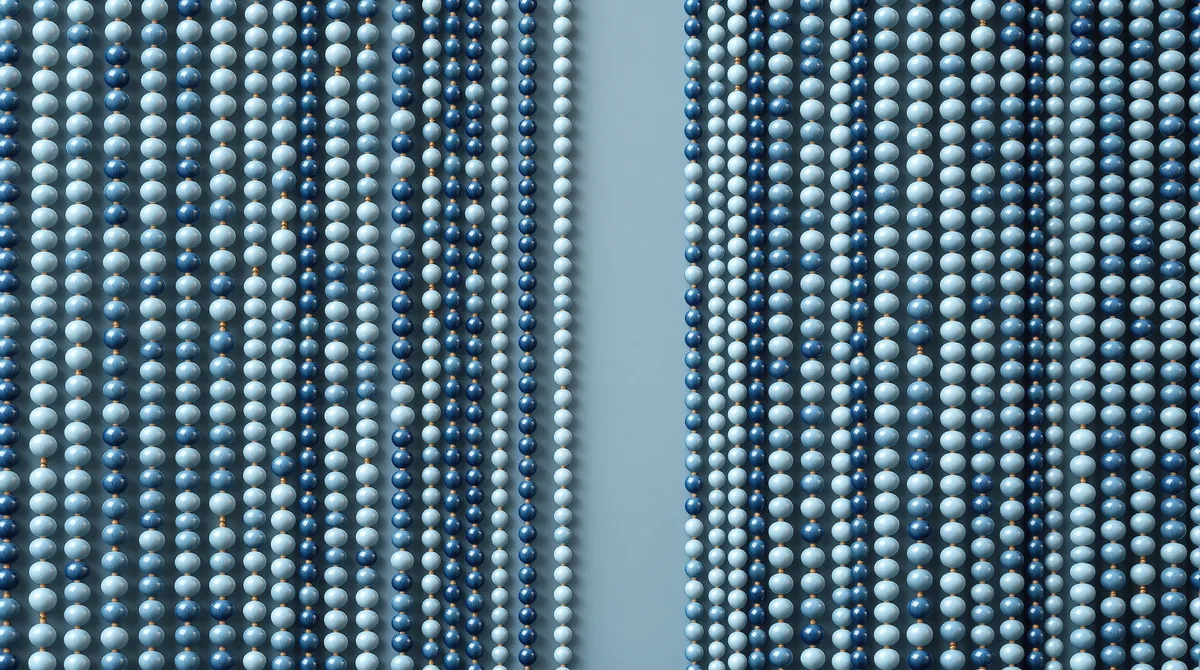
One bead, in the middle of a strand, with several hundred beads above it. There is a way to do this without dismantling the strand, and a better way to avoid needing it.
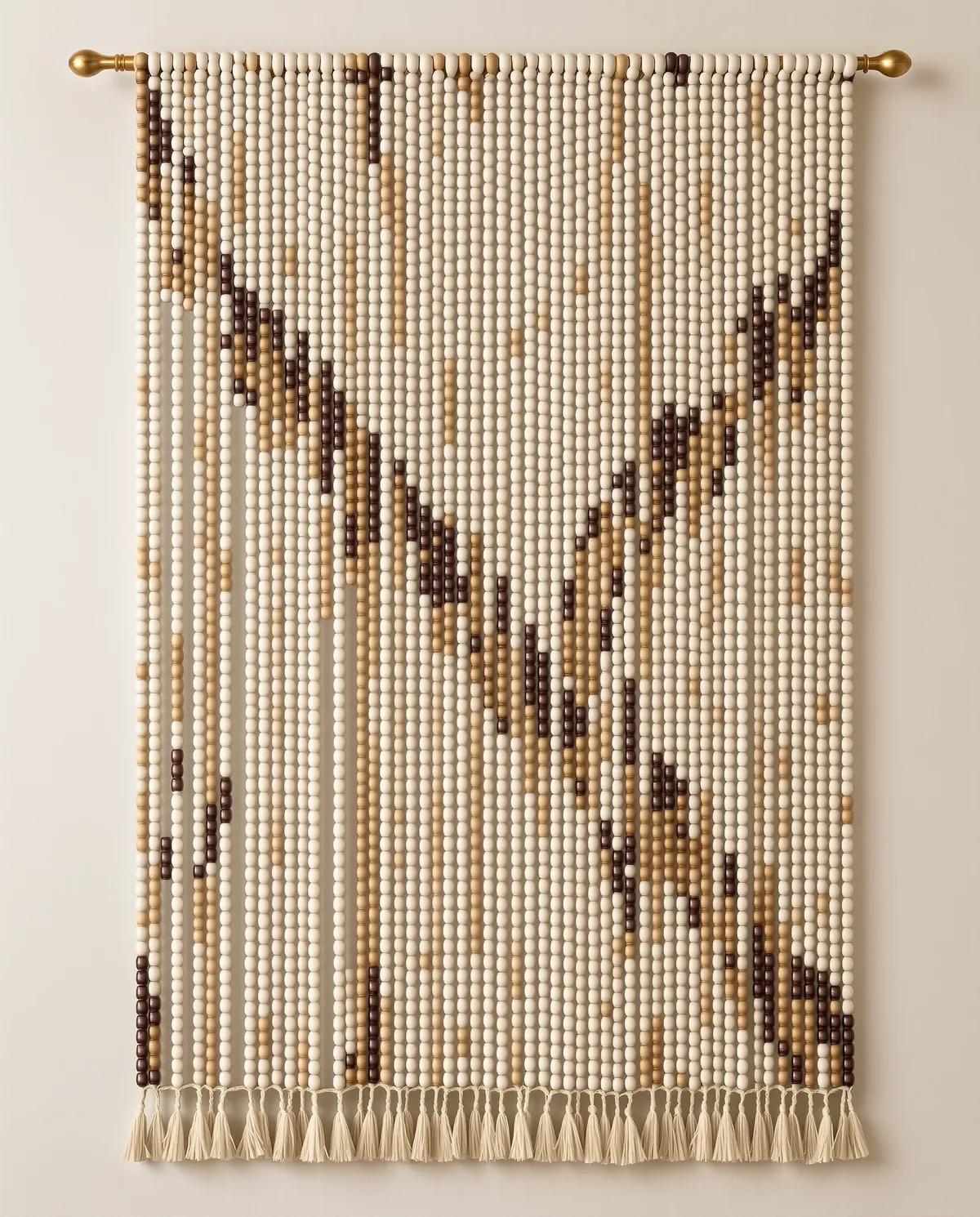
Five bead strands of plain seed beads carrying large patterned accents placed so that no two accents fall level across the panel.
Work from the nearest end. Release that end of the strand, slide off the beads above the gap into a tray in order, fit the replacement, and re-thread the beads you removed before re-securing the end. Where no matching bead exists, swap a bead from the least visible edge strand into the gap and put the mismatch there instead.
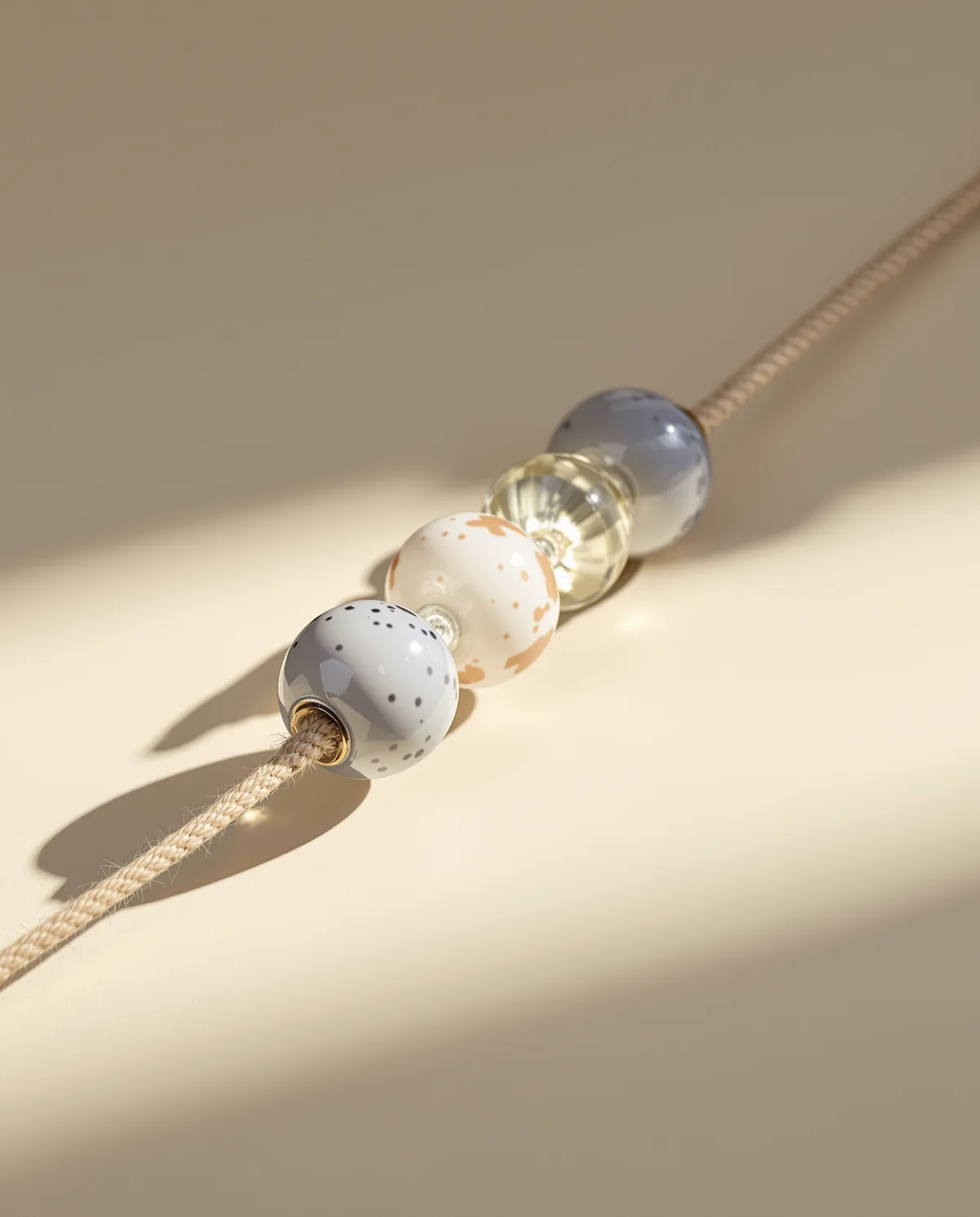
Emptying part of a strand into a tray, in order, and putting it back. The bead itself takes two seconds.
That is the whole shape of the job and it explains every decision in it. The cost of the repair is the number of beads you have to remove to reach the gap, which is why the first question is always which end of the strand is nearer — and why a chipped bead at the hem is a ten-minute job and the same bead near the header is an hour.
The spare beads for that panel, if spares were specified with the order. A shallow tray with a lip, so nothing rolls off the table. Good light at the height of the damage. And a measurement: the diameter of a neighbouring bead, in millimetres.
Diameter is the one property people do not check and the one that shows. A replacement a millimetre larger makes that strand longer than its neighbours, and the error appears at the hem rather than at the bead.
Find the gap and count the beads between it and each end of the strand. Work from the shorter side.
Photograph the strand and its neighbours, straight on.
Release the chosen end — untie the knot, cut above the crimp, or remove the stopper bead and keep it.
Slide the beads off one at a time into the tray, laying them in a line in the order they came off.
Fit the replacement bead.
Re-thread the line of beads from the tray in reverse order.
Re-secure the end the way it was finished: double knot, fresh crimp, or the original stopper.
Hang, settle for a day, and check the hem against the neighbouring strands.
The nearer one, and on a hanging panel that is nearly always the bottom. Working from the bottom means releasing the end finish rather than the header knot, which keeps the strand attached to the panel throughout and means nothing has to be re-tied at the dowel.
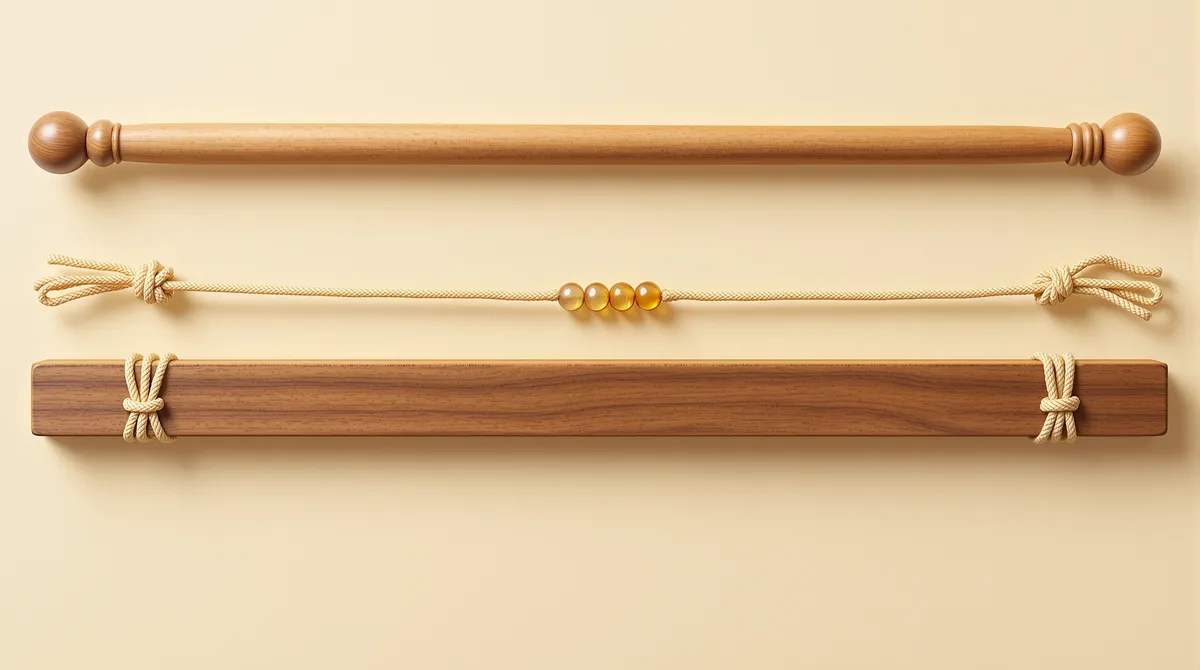
Working from the header makes sense only when the gap is in the top few beads. In that case, release the strand at the dowel, work on it flat, and re-knot it at the same pitch and the same height as its neighbours.
Three options, in order.
Move the mismatch. Take a correct bead from an edge strand near the frame, where it is least visible, put it in the gap, and put the near-match out at the edge. This is the trick that makes a near-match acceptable: it puts the compromise where nobody looks.
Swap to another stocked colour of the same bead, which works where the panel is multicoloured and the new colour reads as part of the mix rather than as an error.
Or ask. The construction of anything we have built is documented, so a photograph of the strand and the header is usually enough to identify the bead years later.
Because it is the one dimension that decides whether the repair is possible at all. A replacement with a smaller hole will not take the cord; one with a much larger hole rattles and sits off-centre, which on a plain strand is visible.
Hole size is a real specification in bead development rather than an afterthought: one of our current bead developments is specified at a 4 to 5 mm hole because the customer's build requires it. If you are buying loose beads to repair a panel, ask for the hole size rather than only the diameter.
Beads into a bag instead of a tray. Forcing a bead over a knot instead of releasing the end. Choosing on colour and ignoring diameter. And repairing a bead in the middle of a mapped pattern with a bead of a different shape, which breaks the motif rather than filling the gap.
The fifth: shuffling beads up and down the cord repeatedly while trying to decide. Each pass abrades the cord, and the cord is the component that fails.
Never glue a bead onto a strand. Never knot the cord either side of a gap to close it — that shortens the strand and puts a knot where the load is. Never substitute a bead of a different diameter in a plain field. And never cut the cord to reach the middle of a strand when you could release an end.
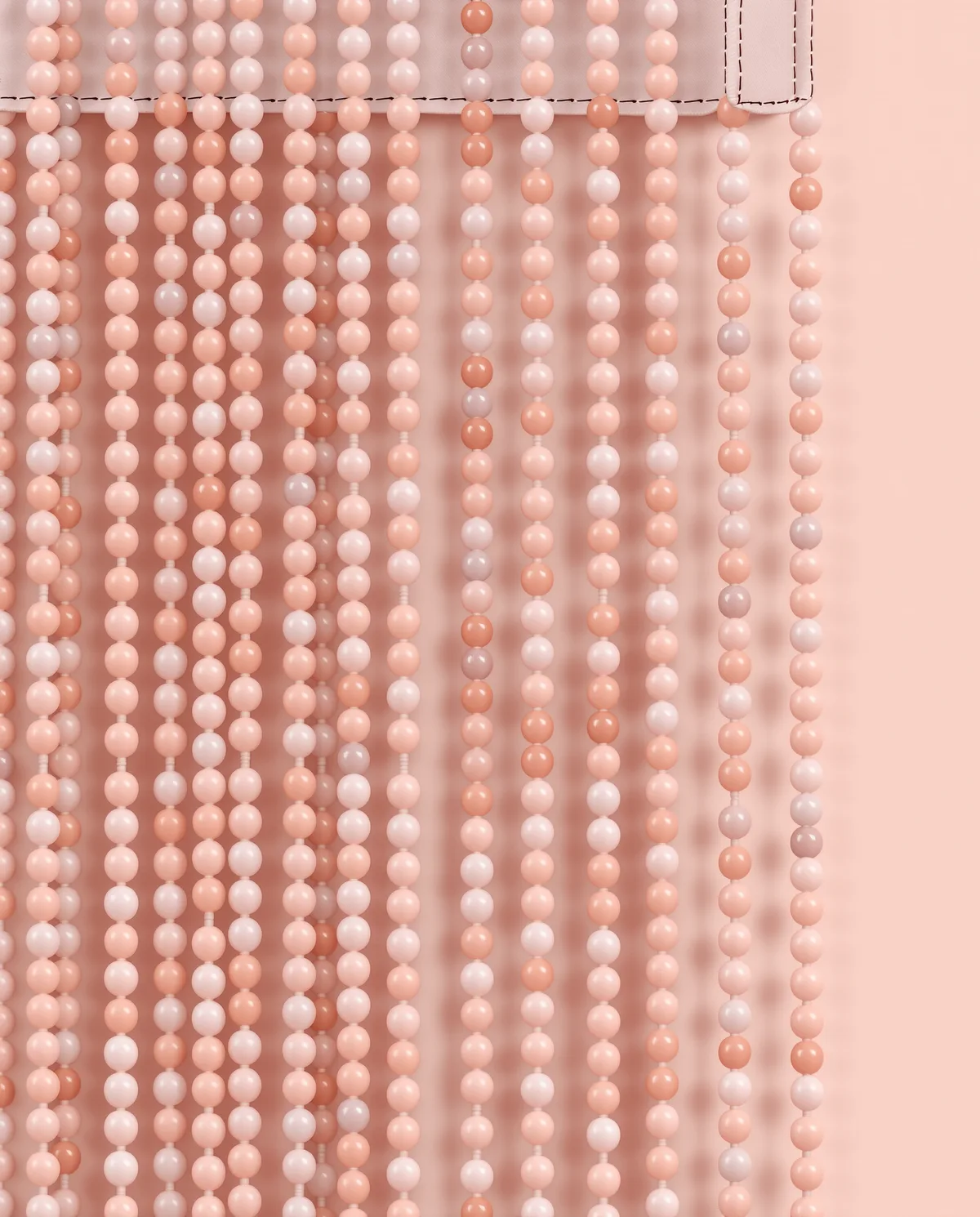
Acrylic is the easiest: moulded and dyed to a colour reference, consistent in diameter, and it does not chip in the first place. Wood is forgiving on colour because natural grain variation means no two beads matched exactly anyway. Faux capiz discs match well on colour and must match exactly on diameter, because a disc's diameter is its whole visual presence.
Glass is the hardest and also the material most likely to need this repair, because glass is the only bead family that chips. Large hand-made glass beads are strength-graded by colour, since some colours chip where they knock against others in a hanging panel — on one Venetian-glass portal the furnace process was changed, the beads annealed and the palette revised for exactly that reason. A replacement should respect that history, not just the colour.
When it is in the top few beads of a strand on a plain panel and you would have to empty three hundred beads to reach it. In that case the options are to leave it, or to treat the strand as a re-string and rebuild it from the header.
Also when the bead is an accent on a scattered build. Where large beads are thrown three or four to a strand at random and never aligned in a row, a missing one genuinely does not read — the pattern has no position for it to be absent from.
That spares exist for this purpose — when somebody has asked for them. Spare beads are a packing-specification item agreed per order rather than something every panel carries, so the cheapest moment to make this repair possible is the order itself. The stated preference on a contract installation is to repair in place rather than replace a piece.
What also comes out of the record is which beads are replaceable in practice. Scattered accent builds carry roughly 90 to 120 large accent beads per curtain in one dotted design and about 120 glass mushroom beads in another, placed up to four to a strand and deliberately never in a row. On builds like those, one accent is one of a hundred and a spare is genuinely interchangeable. On a mapped pattern, each bead has a position, and the spare has to go back into it.
Extractable data
| Property | How much it matters | Where to get it | If it is wrong |
|---|---|---|---|
| Drill-hole diameter | Critical | The bead itself | It will not thread, or it rattles |
| Bead diameter | Critical | Measure a neighbour | Strand length changes; the hem steps |
| Shape | High | The neighbouring beads | Reads as a different bead |
| Colour | High on a plain field, low on a multi | The spares | Visible as a mark |
| Finish | Moderate | The spares | Catches light differently |
| Weight | Low | — | No practical effect on one bead |
| Spare beads | — | Asked for on the packing specification | No match available later |
Good to know
Yes, and it is the one bead repair a shop can realistically do — provided the spares for that design are to hand, which means somebody asked for them on the packing specification when the panel was ordered. It takes ten minutes from the nearer end and needs nothing but a tray and good light.
Then it is a re-string rather than a bead swap, and that is actually easier: the strand comes off at the header, is laid out in order, and is rebuilt onto fresh medium with the replacement bead in its place. A parted strand removes the fiddly part of this job.
Ten to twenty minutes if the gap is in the lower third of the strand. Considerably longer if it is near the header, which is why the method starts by asking which end is nearer — and why a bead missing at the very top is sometimes better left.
Yes, if the removed beads go back in their original order and the replacement matches. That is why they go into a tray in a line rather than into a bag. A bag turns a ten-minute repair into a reconstruction.
A shallow tray with a lip, a beading needle if the cord is soft, fine scissors or flush cutters, a crimping plier if the panel is on coated wire, and a vernier or a ruler with millimetres to check the replacement's diameter against a neighbour.
Not if you release an end rather than force a bead over a knot. The risk is sliding beads repeatedly over the same length of cord, which abrades it — so slide them off once, in order, and back once, rather than shuffling.
Matching is harder. Glass colour is usually in the body and set at the furnace or the press, so a replacement comes from a run rather than a dye bath, and specialty beads — dotted ovals, Venetian-style feature beads, irregular frosted sea glass — are the hardest to match after the fact.
Keep exploring
Guide
Identify what failed, re-string that strand, re-knot it at the header, and match the bead from the spares specified with the order.
How it is madeGuides
One guide per question that arrives often enough to be worth answering properly.
How it is madeGuide
Work with the panel hanging, separate in small groups, never pull against a knot, and support the weight as each strand comes free.
Open the referenceGuide
Release the old strand at the header, rebuild the bead sequence from the count sheet or a sibling strand, and knot it back true to length.
Read the guideGuide
How strands transfer in order, why loop diameter decides the replacement, and when a rail beats a round dowel.
Compare the optionsGuide
The header, a care card and packing that held the strands in order — plus the spare beads you have to specify yourself.
Read the guide
Start a conversation
Send a reference, a colour chip or a sketch. Minimums are set per design and confirmed per quote; sampling is quoted separately and usually runs 16 to 20 days from an agreed brief.