Guide
Getting it hanging straight
Three causes in order of likelihood: a header that is not level, a dowel that has rolled, and strands that have not settled yet.
Read the guide
Guide · Install
A new panel is not yet the panel you bought. Strands carry the memory of the carton, and they lose it over a day — which is the day most people spend deciding it is wrong.
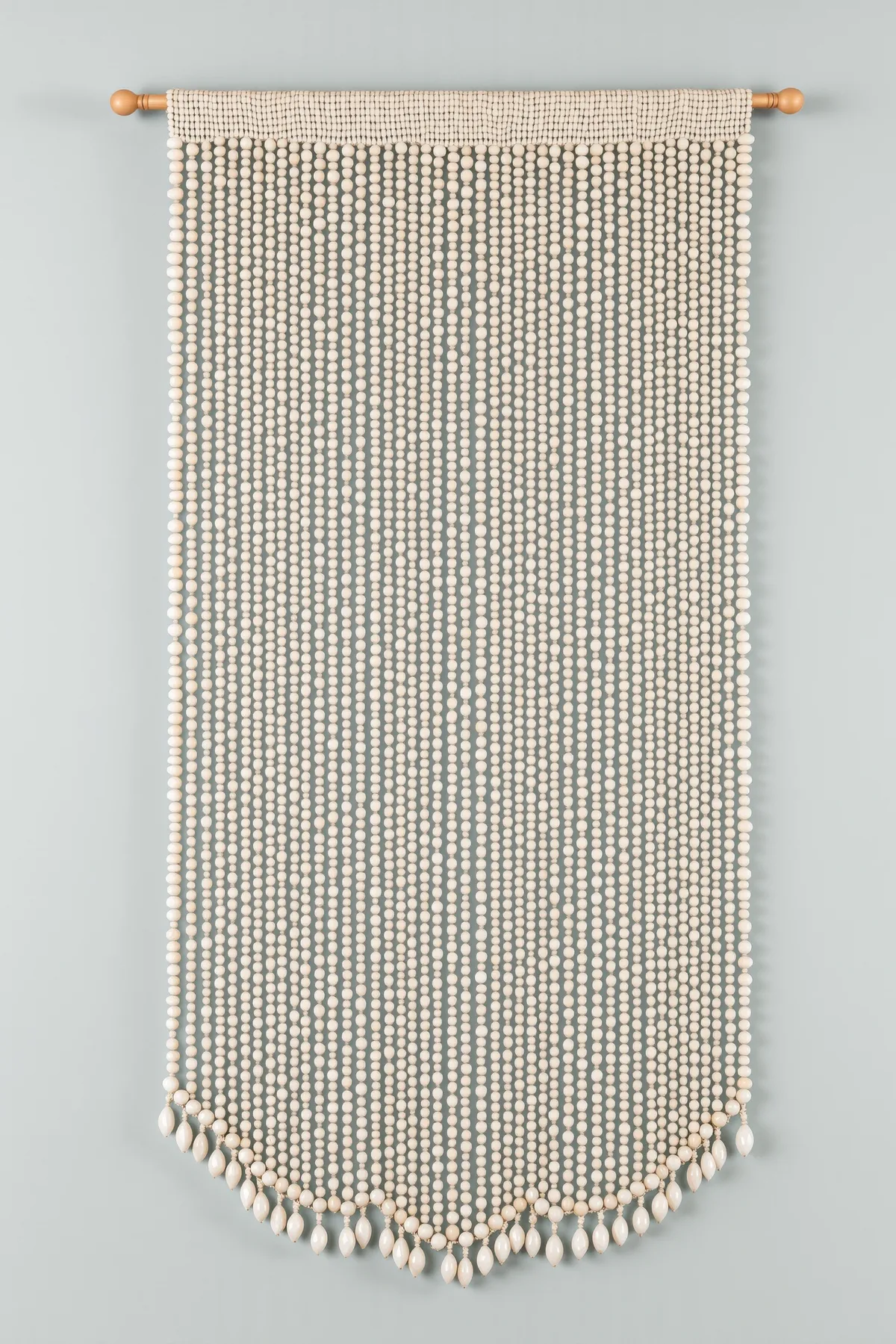
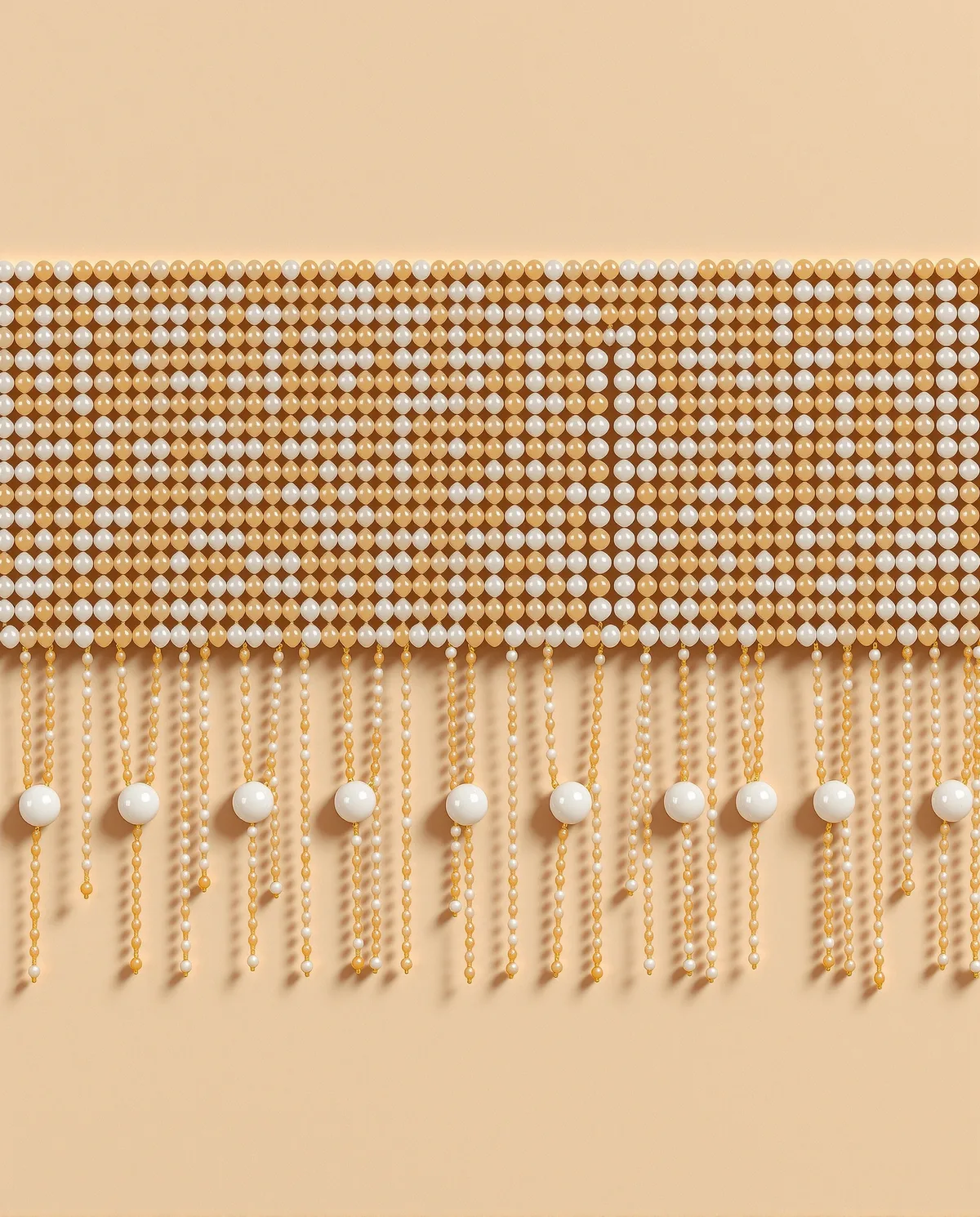
A new beaded curtain in glossy orange and canary glass, the cords hanging plumb and parallel at an even pitch from edge to edge of the frame.
Settling is strands losing the shape they held in the packing and coming to hang under their own weight. It takes hours for a heavy glass panel and a day or two for a light acrylic, wood or bamboo one. Help it by running your hands down the panel in sections. Cut nothing and adjust nothing until it has finished.

Waiting, and separating crossed strands by hand. That is the complete list of permitted actions.
A strung panel travels with its strands held in order and protected against knocking, which means they travel in a shape — bundled, laid flat, or coiled. Cord takes a set from that, and it loses the set over hours or days once the strand is hanging vertically with beads pulling on it.
Two things. The cord is straightening, and the beads are seating.
Straightening is the cord losing the curve the packing put into it. Seating is each bead settling against the one below until the whole strand is one continuous column of beads with no slack between them. Both effects shorten the apparent length slightly, then lengthen it as the cord takes up under load — which is why a hem can look marginally short on day one and correct on day three.
| Material | Settles in | What changes | Help it by |
|---|---|---|---|
| Glass | Hours | Hem drops slightly and evens out | Hanging it and leaving it |
| Acrylic | A day or two | Strands straighten, crossings release | Running hands down in sections |
| Wood | A day or two | Strands straighten | Separating crossed strands |
| Bamboo | Two days or more | Slowest; very light strands | Patience, and a heavier end bead by design |
| Faux capiz discs | A day | Discs find their orientation | Letting each column hang free |
Because settling is gravity working against a set in the cord, and a heavier strand applies more force. Glass is the heaviest bead family available and a glass panel is usually hanging true within a few hours.
Light materials have the opposite problem. An all-bamboo strand is very light, and a light strand is slow to straighten and easily deflected by a draught while it is trying to. That is the reason a heavier end bead exists as a design option: a deliberately weightier final bead steadies a light acrylic, wood or bamboo strand so it falls straight.
Somebody intervenes. The panel looks slightly uneven on the evening it goes up, and they tension strands, tie weights to them, or trim the hem level.
The second failure is untying the transit ties before hanging, which creates a tangle that then gets mistaken for a settling problem. The third is judging the hem against a floor that is not level, which settling will never fix because it is not the panel's fault.
Never cut anything. Never add weight to a strand. Never pull a strand to straighten it. Never comb through the panel with a brush or a comb, which crosses more strands than it frees.
And never make a judgement about the panel's quality from its first hour. A panel that has been in a carton for weeks is not a panel yet.
Timescale, as above, and the manner of the change. Glass drops and then stops. Acrylic and wood straighten gradually and visibly. Bamboo is slowest. Faux capiz discs behave differently again: each disc has to find its orientation on the cord, and a column of discs looks restless for a day before it reads as a column.
Where a disc build uses a spacer bead at each disc's centre to stop it sliding, settling is quicker and more predictable, because the discs cannot migrate down the cord.
Settles panels before inspecting them, and packs them so that settling is a small job rather than a big one.
Panels are inspected at first-article and lot level on an AQL plan at our quality control and packaging house at Greater Noida, and strand length consistency is one of the things that check looks for — which only means anything if the panel is hanging in its settled state. Then the packing holds the strands in order so that the set the cord takes is as gentle as possible.
When it has been two days or more and something is still wrong, and when the problem is localised rather than general. A single strand hanging low is a slipped header knot. A whole panel twisted is a dowel rolling in its seat. A hem that slopes evenly is a header that is not level.
Settling produces a general, gradually improving unevenness. Anything specific, static or worsening is one of those three, and each has its own fix.
A day. Against that, the cost of not waiting is a panel permanently shortened to a length it had not reached, or a header re-drilled to correct a slope that was never there.
Both of those are common and both are entirely avoidable by hanging the panel and going away. Beaded décor runs 40 to 60 days after sample approval and nothing is held in stock, so a panel damaged on its first evening is not replaceable from a shelf.
Indirectly, quite a lot. The documented packing method keeps strands in order and protects them against knocking in transit, which is the whole reason a new panel settles rather than arrives tangled. The documented mounting options — a stained header rail, a single turned dowel, end suspension loops, a stitched cotton header with a three-inch rod pocket — all assume a panel that will be left to hang.
A settling time is a property of the panel and the room together — bead weight, strand length, packing and the air in the room all move it — so it is judged on the panel rather than scheduled. The instruction that is both true and useful is the simple one: give it a day before you measure or trim anything.
Good to know
Hours for a glass panel, a day or two for acrylic and wood, longer for bamboo. No figure is published for it, because it depends on bead weight, strand length and how the panel was packed — the instruction is to wait a day before judging anything.
Adjusting the fixing, yes — nothing is lost. Cutting strands, no. That asymmetry is the whole reason to wait: an early header adjustment costs ten minutes and an early trim costs the panel's drop permanently.
No tools at all. Your hands, in sections, drawn down the panel to separate crossed strands. Anything that applies tension is the wrong instinct — strands straighten under their own weight, which is a force you cannot usefully add to.
No. Settling is the cord doing exactly what it was designed to do: carrying beads in tension down a straight line. The damage comes from the interventions people make during it — pulling strands, weighting them, or trimming them to a length they have not reached yet.
Glass is the easy case. It is the heaviest bead family by a wide margin, so a glass panel reaches its final hang within hours and holds it. Light panels in acrylic, wood or bamboo take longer and are more affected by draughts while they are doing it.
Yes, and a display panel should be hung at least a day before anybody judges the merchandising. A panel put up an hour before opening will look slightly ragged at the hem, which on a shop floor reads as poor quality rather than as a new panel.
It is caught rather than unsettled. Look at the header: a strand that keeps twisting is usually hooked over its neighbour in the first few centimetres below the knot. Free it there, not at the hem.
Keep exploring
Guide
Three causes in order of likelihood: a header that is not level, a dowel that has rolled, and strands that have not settled yet.
Read the guideGuides
One guide per question that arrives often enough to be worth answering properly.
Specs and sizesGuide
How the two positions change the ordered width, the edge gaps and the clearance over a handle.
Specs and sizesGuide
Where to put the join, how to match pitch across it, and how to get two headers level with each other.
Read the guideGuide
Brushing the floor looks intentional and wears fast; a clear gap of a few centimetres lasts and still reads finished.
How it is madeGuide
Open the carton flat, find the header first, lift by the rod, hang it, then release transit ties one at a time from the top down.
Open the reference
Start a conversation
Send a reference, a colour chip or a sketch. Minimums are set per design and confirmed per quote; sampling is quoted separately and usually runs 16 to 20 days from an agreed brief.