Pillar
How an order runs
Brief, rough cost sheet, colour match, sample, production, packing — the six stages with the real published timings.
Read more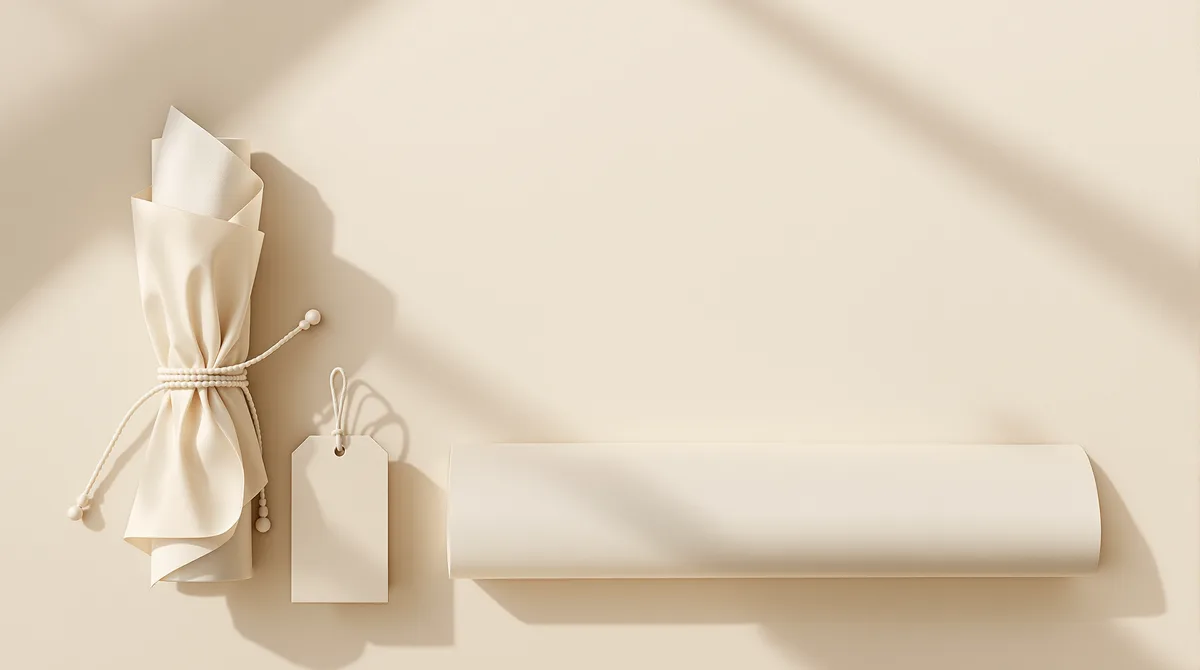
Manufacturing · Private label
Most of the brands we manufacture for sell under their own label. Nothing we ship carries our name, and we do not sell at retail — which is the only version of that promise worth anything.
A tissue-wrapped roll tied with plain tape, a blank unprinted swing tag, and a plain wrapped tube lying beside them.
Yes. Brands across the group manufacture under their own private labels, and we work to your packaging, finish and SKU specifications. Nothing we ship carries our name, and we never compete with our clients at retail. Beadwork is made to order against an approved sample, with no stock programme behind it.

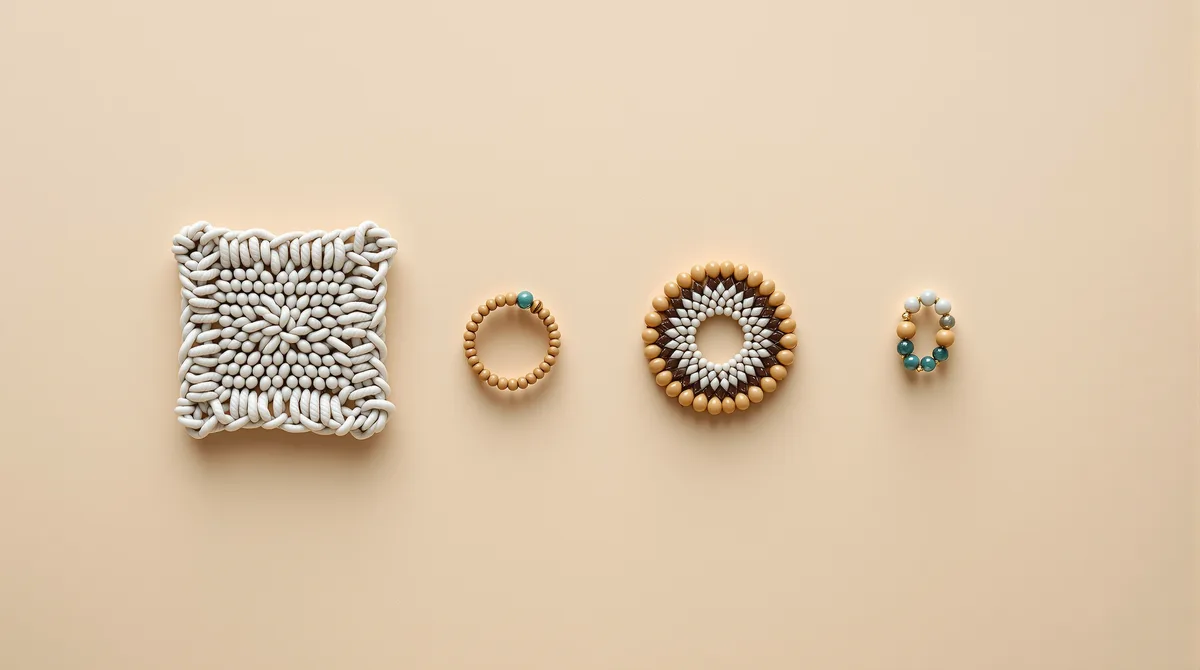
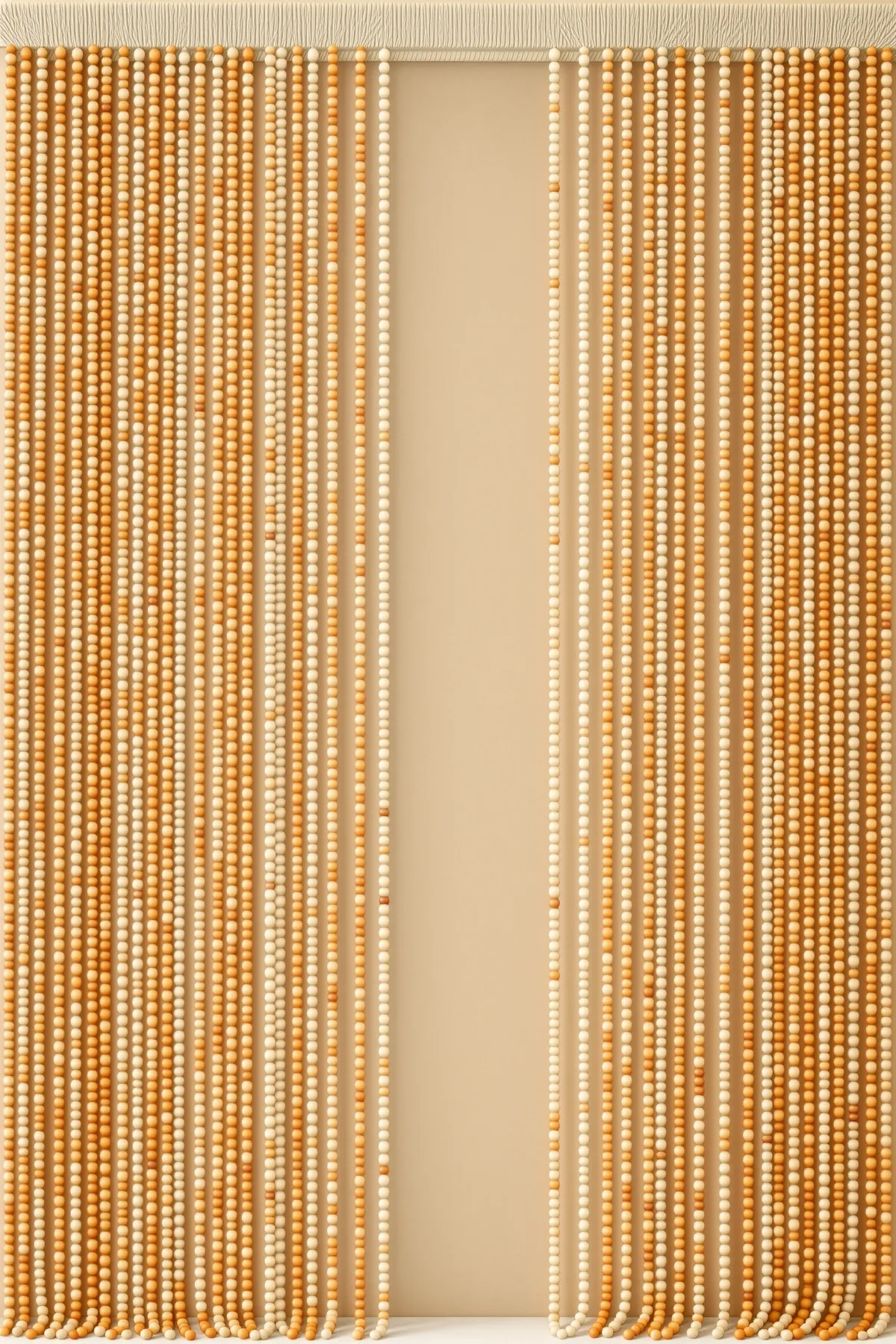
Every beaded format we make, manufactured under your brand. Door curtains, portals, café curtains, valances, window panels and strung wall hangings on the hanging side; bead-embroidered coasters, placemats, runners, napkin rings and chargers on the table side.
The construction is the same work we do under any other arrangement: a bead map that fixes every position before stringing begins, cord sized to the smallest drill hole in the build, thirty hand-strung strands on a single turned dowel at the standard 90 × 200 cm format, hem cut to shape by strand length.
What private label changes is everything around the piece — the label, the packaging, the SKU structure, and whose name is on the box.
Brands across the group manufacture under their own private labels. We work to your packaging, finish and SKU specifications, and we never compete with our clients at retail.
That last clause is the one worth testing when anyone offers it. The reason we can state it plainly is structural: we are a manufacturer and an exporter, and we do not run a consumer-facing retail operation in these categories. There is no Gemixx-branded bead curtain on a shelf next to yours, because there is no Gemixx-branded bead curtain.
Nothing we ship for a private-label programme carries our name.
Changeable: format, size, bead material, bead size, strand count and pitch, colour, pattern, hem shape, top fixing, finish, packaging, labelling, carton specification and SKU structure.
Fixed: the construction logic, and the facts. Strands hang from a straight line. Cord is sized to the smallest hole in the build. Production runs 40 to 60 days after sample approval. Minimums and pricing are set per design and confirmed with your quote.
The product brief and the brand brief, and they are separate documents in practice.
Product: format, finished width and longest drop plus shortest drop if shaped, strand count or pitch, bead material and shape and size and drill hole for each bead, colours as references or chips, pattern as artwork or a reference image, top fixing, hem shape.
Brand: label artwork and placement, packaging format, inner packing, carton size, carton markings, barcode data, SKU and colourway codes, destination port or warehouse, and quantity per colourway.
A brief missing the drill hole cannot be assembled. A brief missing the carton specification cannot be packed, which is the second most common omission.
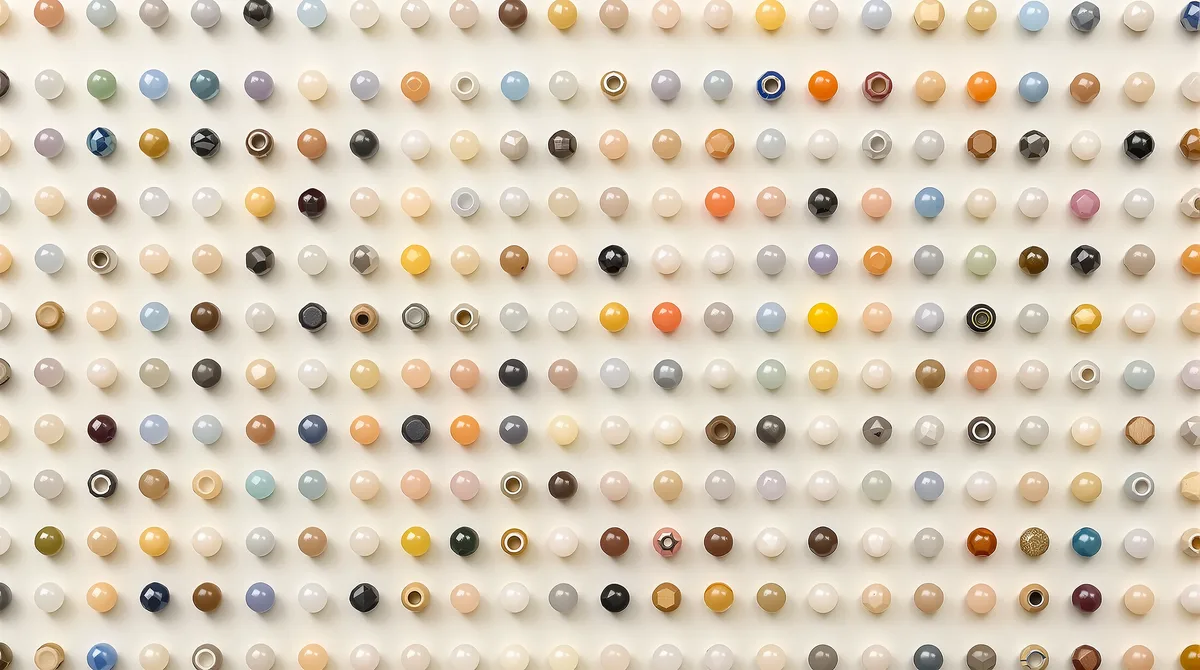
All nine bead families are open to an own-brand range, and the practical consequence of a bead library this deep is that a brand can be given a bead nobody else is using without a new die being cut for it.
Faux capiz is cast resin or dyed cut acrylic, finished to imitate capiz shell — an engineered imitation, which for a repeat retail programme is an advantage: consistent colour across a run, no wildlife import paperwork, better durability.
Metal accents come in eight standard finishes — matte gold, matte black, rose gold, brilliant gold, champagne gold, antique silver, brilliant silver, matte silver — with custom finishes available.
Bamboo is confirmed per design rather than held as an owned capability. On a private-label programme with a repeat schedule behind it, that distinction is the useful information.
The standard door curtain is about 90 × 200 cm, roughly 35 × 79 in, which suits the 28 to 36 in interior doors common in North America; from 36 in upwards, 120 cm. Portals in the design library run 76 × 140 cm, with a 90 × 67 cm dual wall-and-short-portal format developed in 2026. Valances run 120 × 30–40 cm. Café curtains hang from a three-inch rod pocket on a fabric header band.
Those are starting points, not a range. Width, drop and strand count are set per order.
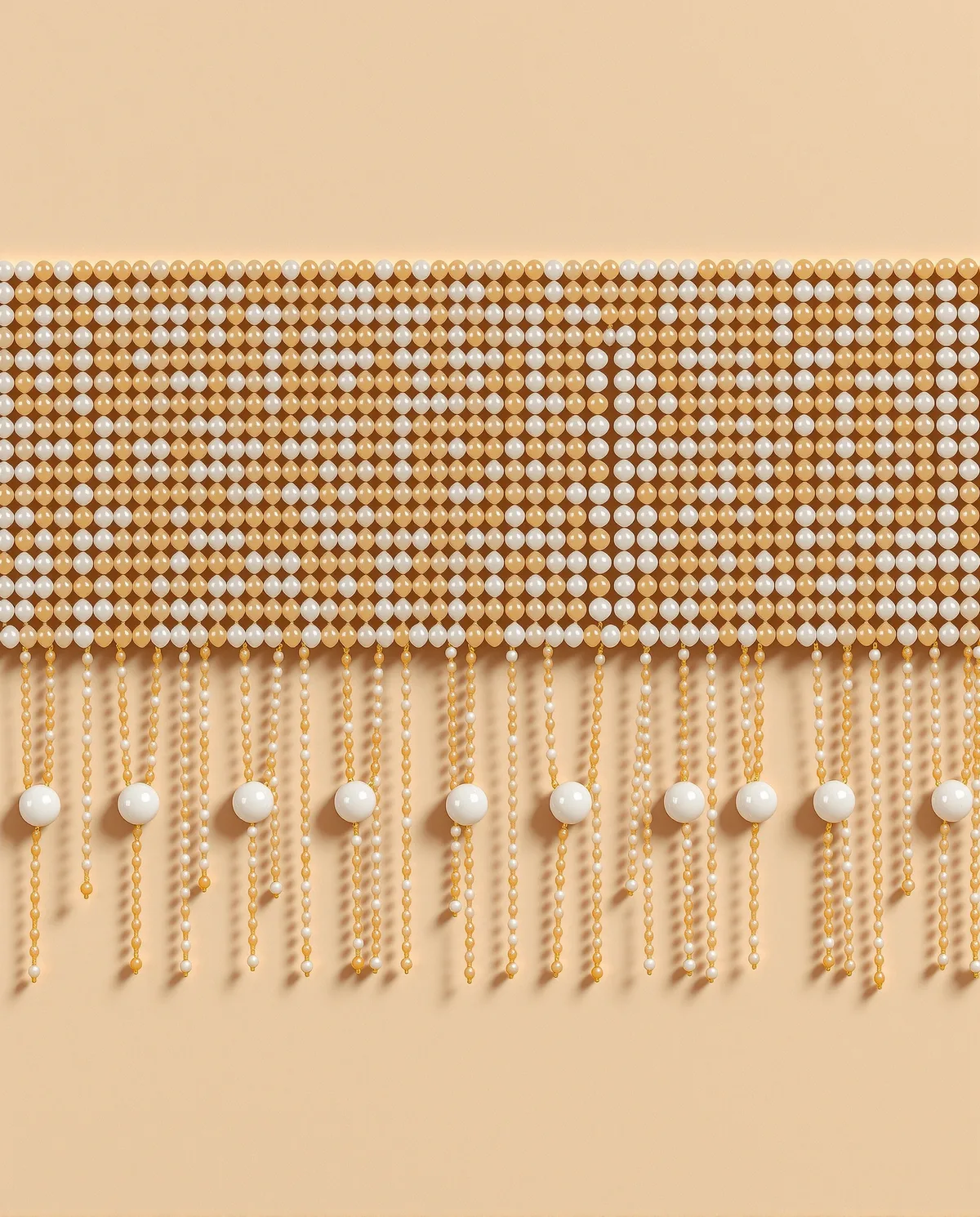
Against a colour reference or a physical chip, and confirmed on the sample rather than on a screen.
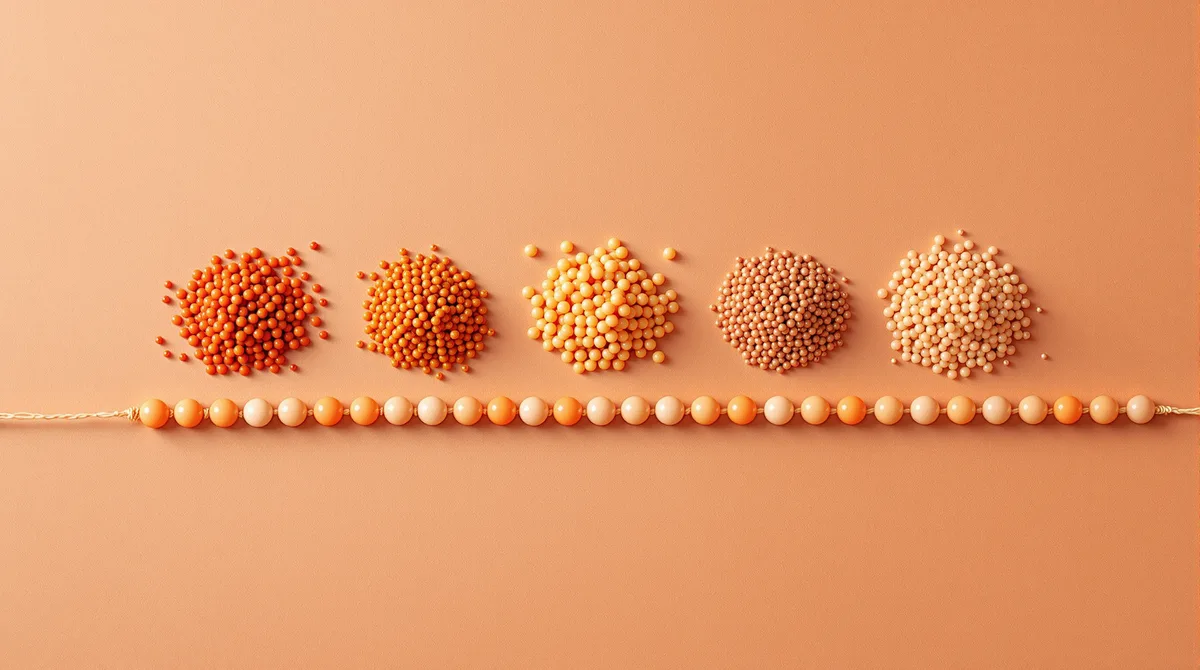
Acrylic is moulded and dyed to the reference. Glass is matched from the library or run as a new colour, with one real constraint: glass strength is colour-dependent, so a palette sometimes has to be revised where large beads knock together in a hanging panel.
The approved sample becomes the standard. Production is held to the sample, not to the reference, which is what makes a reorder reproducible.
A brief. A rough cost sheet before any sample is made, showing where the cost sits and which lever moves the price, so look can be traded against price while the design is still a drawing. Colour matching. Then the sample, usually 16 to 20 days from an agreed brief, photographed for your approval before it ships, and quoted separately from production.
A prototype has to be approved before the full production run begins. Development can take more than one loop: a 2025 portal development ran six or seven iterations to reach its target cost.
The private-label difference is in what gets inspected alongside the product. Your label, your ticket, your barcode and your carton artwork are checked against your own artwork files on the first article, in the same Greater Noida house that does first-article and lot AQL inspection, assembly and kitting, and consignment consolidation. A correct panel in a wrong carton is a rejected delivery.
Packing is to your carton, label and packaging specification, shipped to the port or warehouse you name. Landed duty paid is available — manufacturing, export, freight, duties and US warehousing in a single delivered price at your chosen US location, with no separate freight agents or customs brokers in between. We manufacture, import and warehouse product in the US.
Retailers and e-commerce sellers. Brands manufacturing under their own label, which is how most of the group's work leaves the plants. Interior and hospitality designers specifying for hotels, restaurants, salons and spas. Event and display companies.
What that looks like in practice: beaded portals, door curtains, café curtains, valances and wall hangings in continuous production, with the lead portal reordering season after season — one approved sample and one bead map standing behind every territory it ships into.
An own-brand programme inherits the plant's credentials, which is usually what a buyer's compliance pack needs: Sedex SMETA on the Sedex platform, FSC on the wood lines, C-TPAT membership, and Omega social-compliance audit. Certificates come with the quote pack, and a retailer putting an FSC claim on its own packaging should ask for the chain-of-custody code at briefing.
Lead-content testing to California Proposition 65 is run as standard on the beaded curtain programme. Any further testing is scoped against the specific build and quoted separately. Fire performance is tested on the specified build. Beadwork is a visual and spatial device rather than an acoustic one, and it discourages insects rather than excluding them.
| Specification | Value |
|---|---|
| Branding | Your label, your packaging; nothing ships under our name |
| Retail position | We never compete with our clients at retail |
| Partner brands | Global retailers, wholesalers and own-label brands across the group |
| Formats | Door curtains, portals, café curtains, valances, window panels, wall hangings, table décor |
| Standard door format | 90 × 200 cm (35 × 79 in); 120 cm for openings from 36 in |
| Design routes | Your own design, a recoloured library design, or a ground-up development |
| Colour | Matched to a colour reference or physical chip, confirmed on sample |
| Sampling | 16–20 days from an agreed brief, quoted separately |
| Production | 40–60 days after sample approval |
| Inspection | First-article and lot AQL inspection, Greater Noida |
| Packing | To your carton, label and packaging specification |
| Shipping | To the port or warehouse you name; landed duty paid available |
| Compliance | Sedex SMETA · FSC · C-TPAT · Omega social-compliance audit |
| Minimums | Set per design, confirmed per quote |
Design exclusivity covers what can be held for one brand, and repeat bead orders covers what keeps a design identical once it is selling. Bead colour matching sets out how a chip becomes an approved bead. For the formats themselves, bead curtain formats and a beaded portal are the pages to start from.
Good to know
No. Minimums are set per design and confirmed per quote, because a plain-strand curtain and a fully patterned one use very different amounts of material and stringing time. Minimums are set per design and confirmed with your quote, because a single number across a category this variable would mean nothing.
No. There is no retail stock programme for beaded décor — every piece is produced in the colours, size and packing you approve. For a private-label programme that is usually the point: a stocked product is somebody else's specification.
Yes. Beads are matched to a colour reference or a physical chip and confirmed on the sample rather than on a screen. Acrylic is moulded and dyed to the reference, which gives the widest colour range; glass is matched from the library or run as a new colour.
Yes. Strand count and bead count are recalculated for your width and drop, and we check the pattern still reads well at the new scale. That check matters: a motif that works at 90 cm can lose its reading at 120 cm, and a scattered accent that works on a 200 cm drop can look sparse on a café length.
Beaded décor runs 40 to 60 days after sample approval. Bohemian and macramé work runs 60 to 90 days. Sampling is a separate step, usually 16 to 20 days from an agreed brief, quoted separately, and you approve photographs before the sample ships.
To your carton, label and packaging specification, shipped to the port or warehouse you name. On strung work the inner packing is part of the design, because a panel has to reach the shelf with its strands in order and unknocked.
Glass beads are drawn and hand-strung in our own Firozabad glass works; wood, including curtain dowels, is turned in our own Saharanpur factory; ceramic is glazed and fired in Khurja; metal is finished and plated in Moradabad. Acrylic and resin beads are moulded and dyed to our colour, to our own dies where a design needs a custom bead. Inspection and export packing run through our own Greater Noida house.
Keep exploring
Pillar
Brief, rough cost sheet, colour match, sample, production, packing — the six stages with the real published timings.
Read moreIndex
Retailers, own-label brands, interior and hospitality designers, event companies, display teams and children's retail — and the one thing each cares about most.
Open the referencePillar
A live app holding the full bead library and the Gemixx 2027 collections: build a design, render it in about a minute, take it to tech pack and costing.
Open the referenceManufacturing
Brief, rough cost sheet, colour match, sample, production, packing — the route from a sketch to a packed carton, in plants we own.
Compare the optionsManufacturing
Draw the bead, cut the die, mould and dye it: what a custom bead shape costs, what it needs from a buyer, and when it pays.
Read the guideManufacturing
Library design, recolour or ground-up development: the three routes, and what exclusivity can realistically cover on each.
Specs and sizes
Start a conversation
Send a reference, a colour chip or a sketch. Minimums are set per design and confirmed per quote; sampling is quoted separately and usually runs 16 to 20 days from an agreed brief.