Material
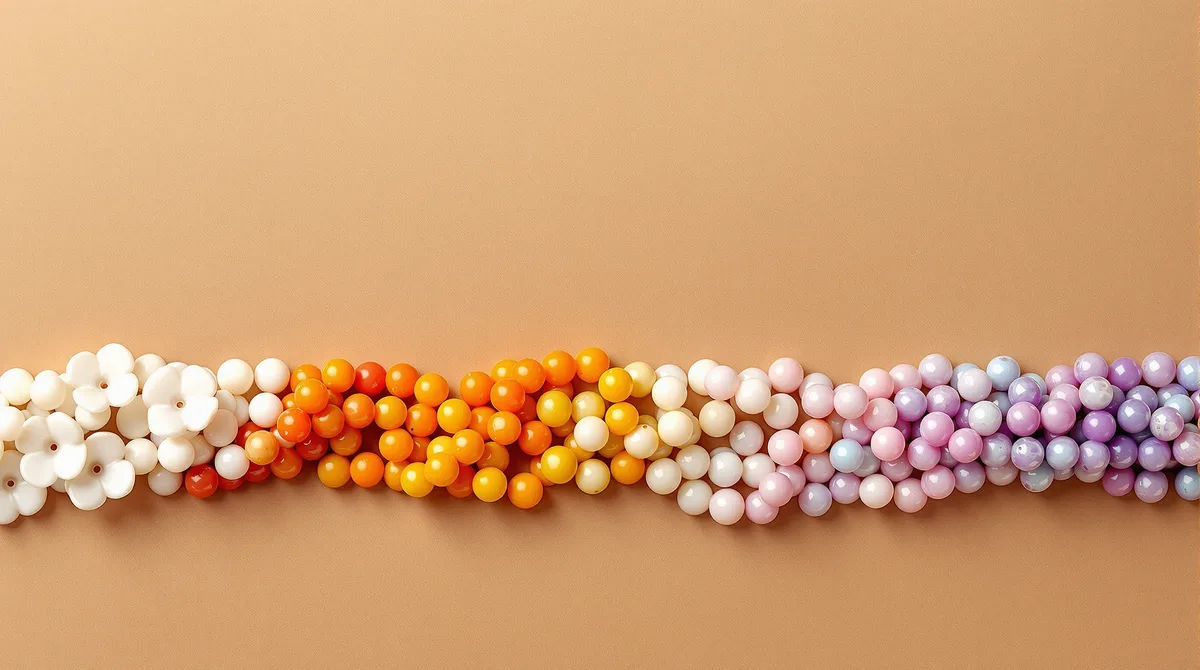
Faux capiz: the shell look, engineered
Cast resin or dyed cut acrylic, finished to imitate capiz shell: what it gives that real shell cannot, and why thin discs tangle.
Read the guide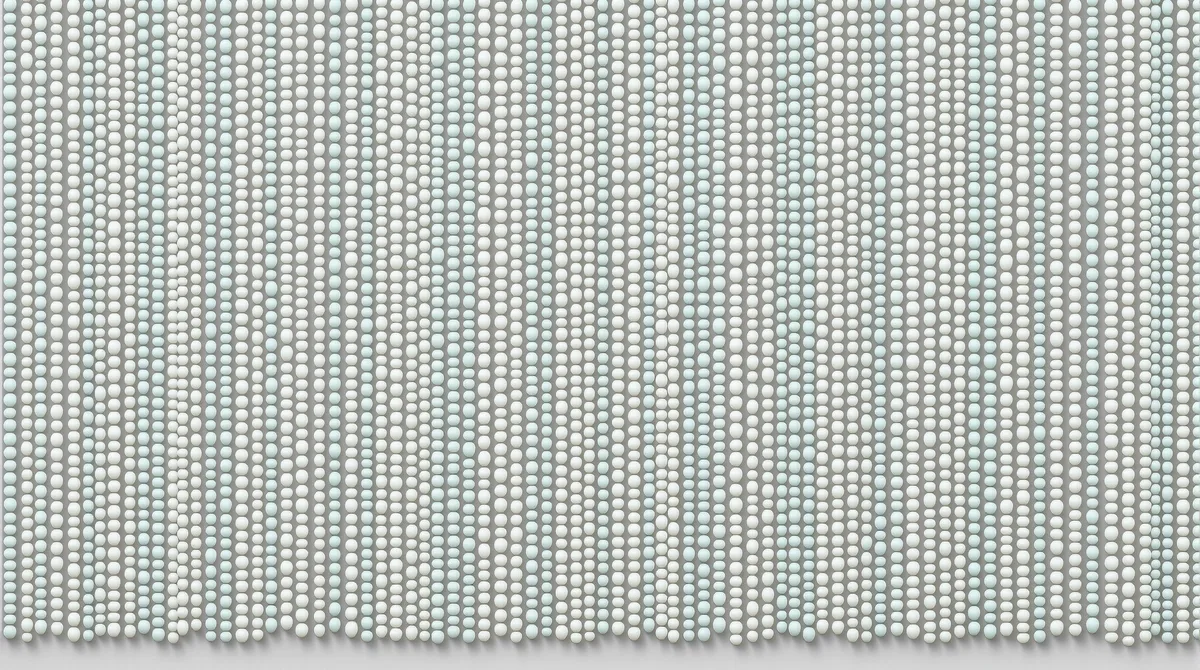
Style · Era
The coastal register lives on one optical property: frosted glass diffuses light where clear glass transmits it. That single difference is what separates a coastal panel from a tropical one in the same colours.
A beaded panel of frosted irregular sea-glass beads in pale aqua, seafoam, sand-white and clear, lightly tumbled to a matte uneven surface, finishing on a shallow scalloped arch.
Coastal beadwork is specified through surface and tone, never through motif. Frosted and tumbled glass in bottle green, aqua and chalk white, with cast faux capiz discs for the shell look, reads coastal on its own. Shells, starfish, anchors and rope motifs are what tip the same palette into seaside kitsch.
Coastal décor as a retail category is a twentieth-century invention — the New England and Hamptons summer-house aesthetic, later blended with Mediterranean and Scandinavian pale-wood interiors. It has almost no beadwork history behind it, which is useful: there is no original to be faithful to. What exists instead is a material coincidence. Sea glass — bottle glass tumbled smooth and frosted by water — is a found object that happens to look exactly like a bead, and that single coincidence is where coastal beadwork comes from.
Surface before colour. A frosted bead scatters light at its surface instead of passing it through, so a panel of frosted glass glows softly and evenly rather than throwing coloured points of light. That diffusion is what the eye reads as sea air and bleached light. Put the identical palette into clear glossy glass and the panel reads tropical instead — brighter, harder, more saturated. Coastal is a finish decision pretending to be a colour decision.
The palette that goes with it sits in bottle green, aqua, oyster, chalk white and bleached oat, tones with very little range between them. That narrowness is deliberate, and it has a consequence worth knowing before a panel is hung: the piece needs daylight behind it. Against a solid wall the same beads read as grey.
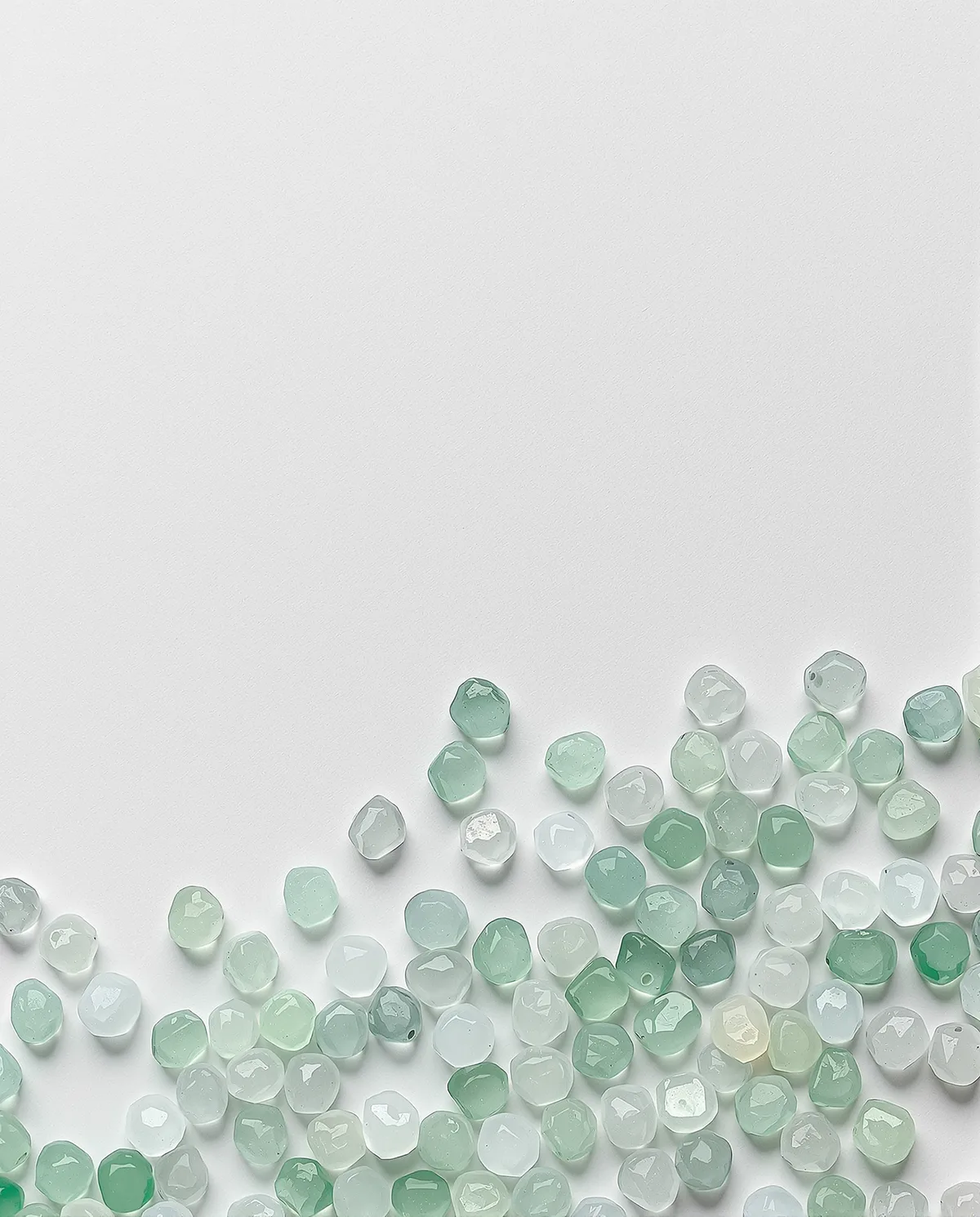
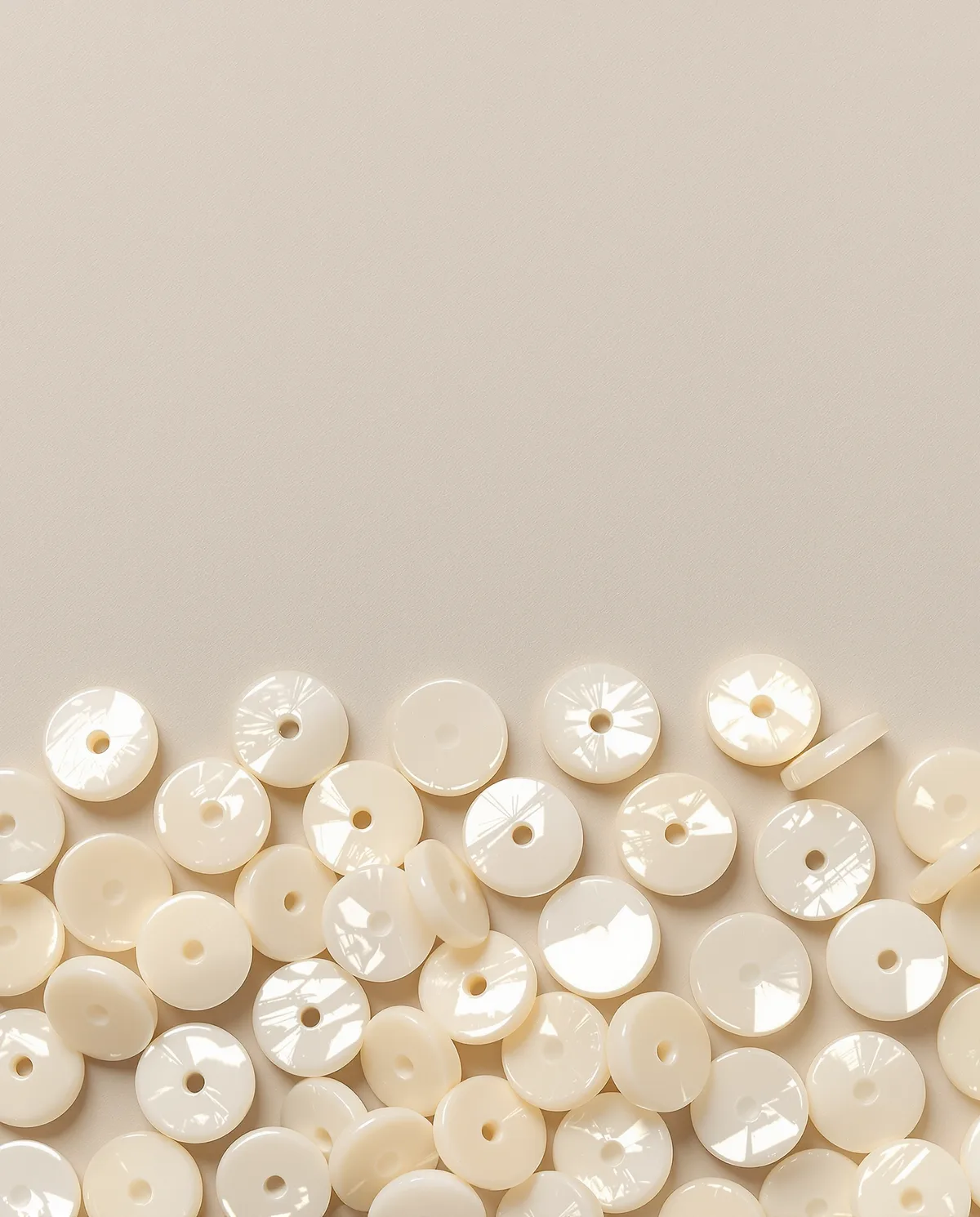
Irregular frosted glass at roughly four to five millimetres, strung with glass seed beads so the small units carry the colour field and the irregular beads break it up. Larger drop beads at the strand ends give weight and finish the hem. We have built exactly this construction as a thirty-strand valance with a scalloped arch hem, fullest at the sides and shortest at the centre. Faux capiz discs — cast resin or dyed cut acrylic, in twenty-five and fifty millimetre sizes — give the shell look without shell.
Increase the contrast at one point only. The weakness of the register is flatness, and the fix is not more colours but one darker note — a run of deep bottle green, or a bronze metal spacer — placed low in the drop so the panel has a base. That single change lifts a pale panel from washed-out to composed.
A fixture in hospitality and seasonal in retail. Beach bars, resorts, cabanas and spa thresholds want this register permanently; home retail wants it between March and August. A range built on it should be planned around that seasonality rather than against it.
There is no original to revive, but there is a predecessor to avoid: the 1990s shell curtain, strung from real cut shell and capiz. Real capiz is the shell of Placuna placenta, and a shell panel brings variable colour, variable thickness and shell paperwork with it. The engineered route gives consistent colour, even thickness and better durability, and saying so plainly is a strength rather than an apology.
Moonwater is the closest fit — midnight blue through grey-blue to silver-lined crystal and pearl white, built as a straight hem with disc drops, which is a texture story rather than a colour one. Sterling Swan takes the same register colder and brighter with mirrored silver and pearl. Olive Press works for a Mediterranean rather than Atlantic reading.
It photographs best backlit and badly on a grey ground, which is a real problem for buyer-facing sample photography. A frosted panel shot flat against a studio backdrop loses the whole mechanism. It sells on an in-situ frame at a window, and on a macro of the frosted bead surface, and on very little else.
Hospitality designers specifying beach bars, resorts, spas and salons; event and display companies dressing summer windows; and home retailers running seasonal ranges. The format briefed most in this register is the valance rather than the door curtain.
A glossy pale acrylic panel with printed shells, or a real shell panel assembled without sorting so the thicknesses do not match. The first fails because gloss contradicts frosting; the second fails because unsorted shell has visible thickness steps at every disc. There is also a construction point worth stating: a short format carries about a quarter of the bead count of a full drop, so a sea-glass valance has to reach its look on far fewer beads than the same palette on a door panel. Bead size and hem shape are the levers, and height is the one closest to hand.
Through the count sheet and a sorting rule. Irregular beads have to be graded before stringing, or the drop length drifts across the panel and the hem stops reading as an arch. We specify a size band for the irregular bead, a seed-bead ground dyed to match it, and a strand-length tolerance on the stringing sheet that is checked at first article and again on the lot.
Close to a plain strand on material and above it on handling. The irregular bead is cheap; grading it, checking strand length and finishing thirty strands to a shaped hem is where the hours go. Cutting the height to save beads is a false economy here, because the arch profile needs drop to read.
Windows, café fronts, verandas, open thresholds between a room and a terrace, and anywhere the light comes from behind. Not internal corridors, not north-facing rooms, and not a doorway with a wall three feet behind it.
Good to know
Slightly, because the characteristic bead is irregular. Irregular beads cannot be picked as fast as uniform ones and they do not stack to a predictable drop, so strand length has to be checked more often. The bead itself is not expensive — the handling is.
Valances and window panels. The coastal palette is pale and low-contrast, so it needs light behind it to read; at a window it glows and in a dark corridor it disappears. A short format at a window is the strongest commercial expression of the look.
Remove the nouns. No shells, no starfish, no anchors, no knotted rope. Coastal is a tonal register — bleached, frosted, chalky — and the moment a recognisable object appears the whole panel reads as a souvenir shop. The best coastal panels contain no marine imagery at all.
We treat this as a specification register rather than a consumer trend. It arrives mostly through hospitality — a resort interior, a beach bar, a spa threshold — rather than through retail.
Recycled glass tumbled from reclaimed bottle glass gives the true sea-glass surface, with bubbles still held in the body. Frosted irregular glass at about four to five millimetres is the working bead. Cast faux capiz discs at twenty-five and fifty millimetres carry the shell reference.
We can match its look, colours and bead sizes in new materials as an inspired design, and we do not reproduce another brand's protected design. One caution specific to this register: an old piece may contain real shell, and we would rebuild it in cast resin or dyed acrylic rather than in shell.
Keep exploring
Material
Cast resin or dyed cut acrylic, finished to imitate capiz shell: what it gives that real shell cannot, and why thin discs tangle.
Read the guideSpecification
Salt air, humidity, strong daylight and open sides — and the coastal material palette that survives all four.
Compare the optionsIndex
Twenty-four named looks, each described by the material, palette, pitch and hem that actually produce it.
Compare the optionsStyle
Sixties geometry, seventies warmth, nineties translucence — separated by palette, bead shape, material and hem.
See the detailStyle
Rust, mustard, olive and amber at ten to sixteen millimetres in glass — why the palette needs the bead size.
Specs and sizes
Start a conversation
Send a reference, a colour chip or a sketch. Minimums are set per design and confirmed per quote; sampling is quoted separately and usually runs 16 to 20 days from an agreed brief.