Material
Hand-made lampwork
Wound at the torch one bead at a time: what that buys in shape freedom, what it costs in hours, and how variation is specified instead of eliminated.
Open the reference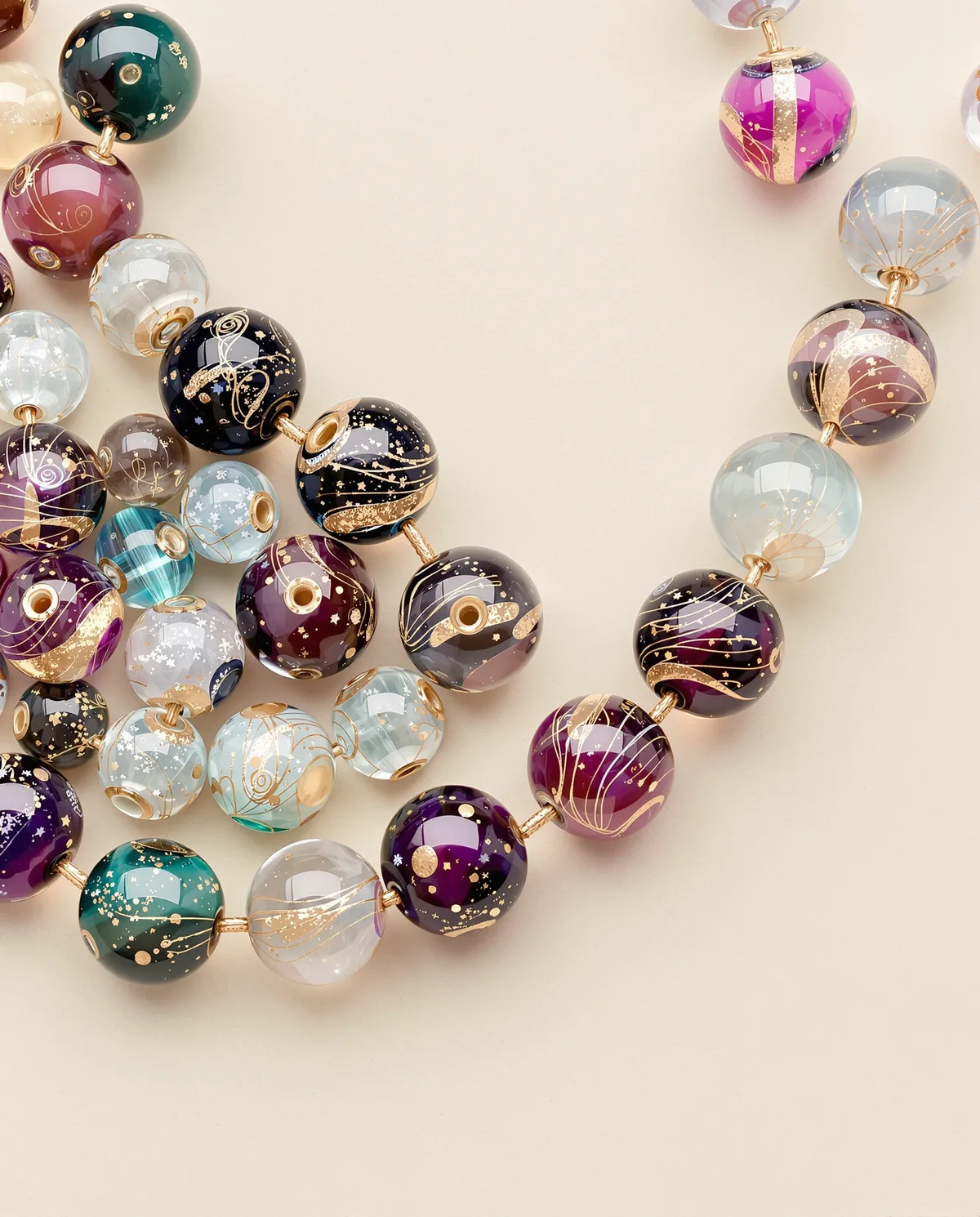
Process · Annealing
A beaded portal is a machine for knocking glass against glass, thousands of times a season. Whether it survives depends on two things most briefs never mention: whether the beads were annealed, and which colours were put next to each other.
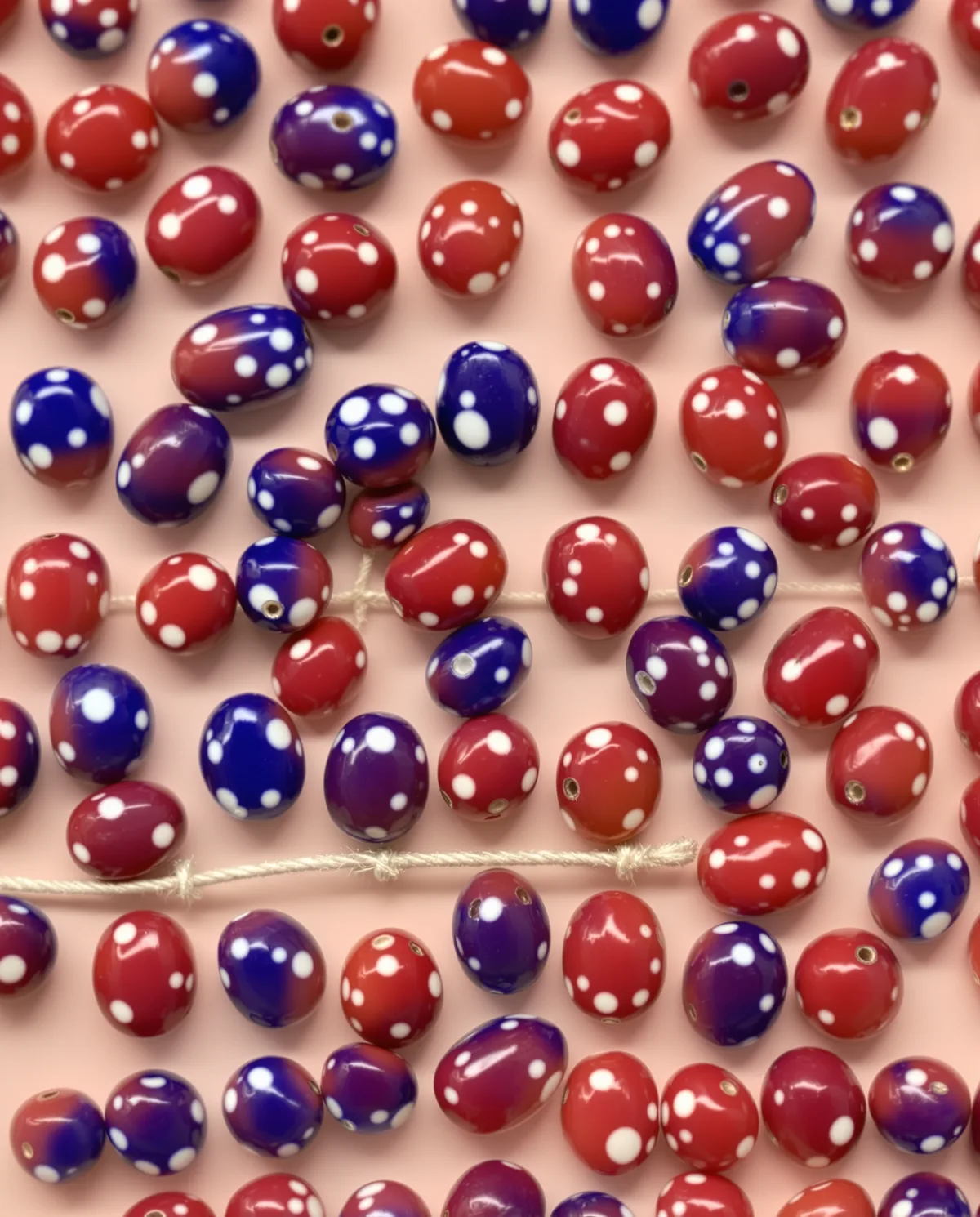
Hand-made Venetian glass beads in plum, teal and amber, wound rounds and ovals carrying aventurine fleck, spiral trails and gold leaf.
Annealing is a controlled slow cool that lets a glass bead relieve the internal stress built into it by uneven heating. Without it a bead carries that stress until something releases it, often months later. Colour matters because the metal oxides that colour glass change how it expands and contracts, so two colours in one panel can behave differently when they knock.
It is a slow cool with a purpose. When hot glass cools, the outside reaches a rigid state before the inside does, and the inside then contracts against a shell that has already stopped moving. The result is a bead that is in tension with itself: it looks finished, it measures correctly, and it is holding a load.
Annealing removes that load. The bead is taken back up to a temperature where the glass can still creep, held there until the gradient through the wall relaxes, and then cooled on a controlled ramp slow enough that the outside and the inside pass through the rigid transition together.
Seven stages, and two of them are about colour rather than heat. That is the part most briefs do not expect: an annealing programme for a bead palette begins with a review of the palette, because the colourant is not a coating on the glass. It is in the glass, and it changes how that glass expands and contracts.
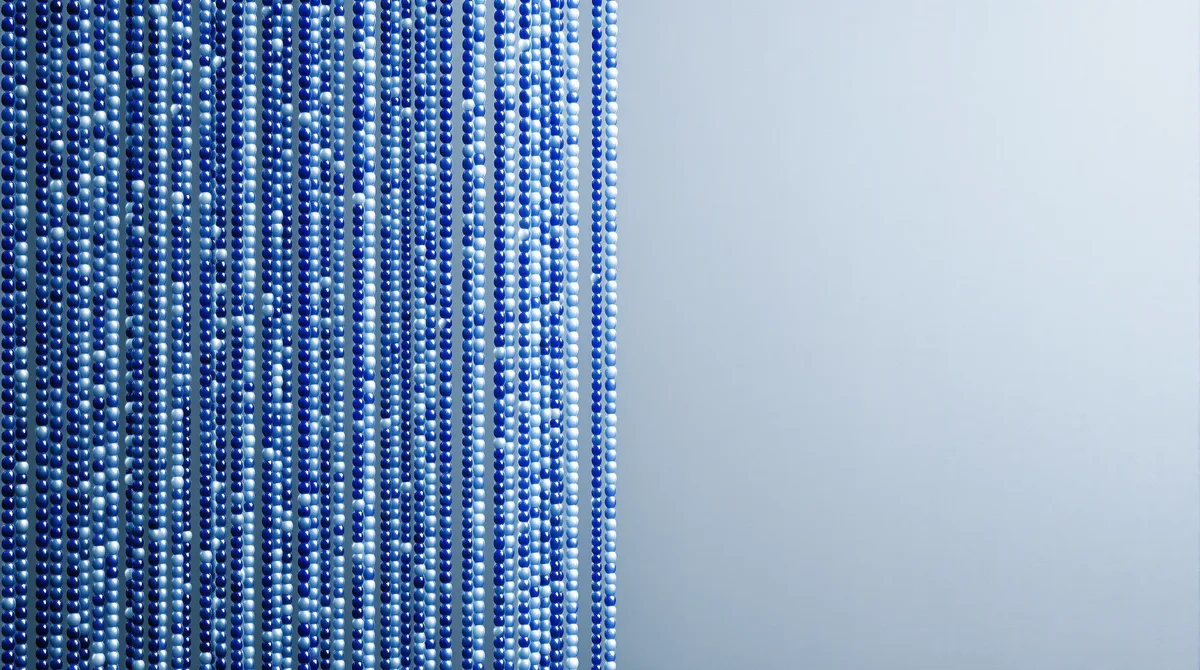
Large glass beads in a hanging panel. Without annealing, a big hand-made glass bead in a doorway is a reliability problem rather than a product: the panel knocks against itself every time somebody walks through it, and a stressed bead eventually finds its crack.
With annealing, and with a palette checked for contact, the same bead becomes a shippable style. Everything the material does well — the depth, the weight, the colour you cannot get any other way — only becomes available once this process is in place.
One line, and it is almost never there: that feature beads above a certain size are annealed. It belongs in the tech pack as a process requirement, because it is not something a buyer can inspect on arrival and not something that shows on a photograph.
The second thing worth specifying is a palette that has been through a contact test. A brief that fixes four colours and their positions without that test may be fixing a failure into the design.
The clearest case in our own record is a large hand-made glass door portal built on Venetian-style beads. The first version broke. The solution was not a single change but three: the furnace process was changed, the beads were annealed, and the palette was altered because glass strength is colour-dependent and some of the colours were incompatible when clinking together in a curtain.
The revised beads went into production, and the piece is in the shipped record. Lampwork glass beads covers what that material gives and what it costs; this page is what makes it survivable.
Not the annealing cycle — that is process detail held in the plant. What the colour-count sheet carries is the consequence: bead positions. When a contact test says two colours cannot be adjacent, the fix is to move them apart in the strand sequence, and the strand sequence is exactly what a count sheet records.
That is why a strength problem in glass often arrives on a designer's desk as a pattern change rather than as an engineering note.
Glass only. Annealing depends on a strain range between rigid and liquid where stress can relax, and that is a glass property. It applies most to large hand-made and pressed feature beads; small drawn beads have thin walls and little stored stress, so the standard cycle on the drawing bench is usually enough.
Nothing else in the library has an equivalent. Ceramic is fired and its glaze and body shrink together. Moulded acrylic and cast resin relieve what little stress they carry as they cool at much lower temperatures.
Mass, and the number of colour pairs. A heavier bead needs a longer soak and a slower ramp, so kiln time scales with wall thickness rather than with bead count — a kiln load of large beads takes longer than a kiln load of small ones regardless of how many are in it.
Testing scales differently. A four-colour palette has six pairs to knock together; a six-colour palette has fifteen. That is the hidden cost of a wide palette on a large-bead design.
By retaining beads and recording the cycle. The retained sample is what colour and size are measured against; the recorded cycle is what the kiln is set to on the reorder. Keep one and lose the other and the second run is a new development rather than a repeat.
This is also the only way to answer a buyer who asks whether a reorder will be as strong as the first shipment. The answer is yes if the cycle was recorded, and a guess if it was not.
Two, and they cost very different amounts. Cracking in the kiln is the cheap one: it happens before the bead has been strung, counted or shipped, and it is simply rejected.
The expensive one is latent stress that survives inspection. A bead under internal tension passes every dimensional and visual check, gets strung into a panel, gets packed, gets shipped, and fails on a shop floor. That is the defect annealing exists to prevent, and it is the reason the process is not optional on large glass.
Kiln time and trial time, both at the front of the development rather than in the per-bead cost. Once a cycle is established for a bead size and colour, running it adds little per bead.
The lever that moves it is bead size. A smaller feature bead needs a shorter cycle, tolerates a wider palette, and is less likely to be the bead that breaks — which is why "make the feature bead one size down" is so often the cheapest answer to a strength question, and why it also happens to reduce the bead count.
In our own Firozabad glass works, in a programmable annealing kiln next to the furnace that made the bead. Colour annealing has been trialled there directly: a recent glass programme ran borosilicate against pot glass and tested two-colour lines specifically for how the colours behaved together.
That is the practical value of drawing and pressing our own glass. A colour-strength problem is a conversation with our own furnace, not a request passed outward and waited on. Factories we own, not vendors we book.
Extractable data
| Stage | What drives the time | What is rejected here |
|---|---|---|
| Palette review | Number of colours and how unlike they are | Colour pairs flagged as incompatible in contact |
| Furnace process | Bead size; a larger bead builds more stress | A forming route that cannot be stabilised |
| Soak | Wall thickness of the heaviest bead in the run | Beads that deform in the soak |
| Controlled cool | Mass of the bead; heavier means a longer ramp | Beads that crack on cooling |
| Knock test | Number of colour pairs to test | Any pair that chips on contact |
| Palette revision | How many positions have to move on the bead map | A design that cannot be made safe at that size |
| Retention | One pass | Nothing; this is the record step |
| Where it applies | Large hand-made and pressed feature beads | Small drawn beads rarely need more than the standard cycle |
Good to know
It has to be, and that is the whole point. A small drawn bead has a thin wall and little stress to relieve; a large hand-made bead holds a steep gradient and needs a longer soak and a slower ramp. The bigger the bead, the more the annealing cycle matters and the longer it takes.
The kiln cycle is programmed and controlled, which is the only way to make it repeatable. Deciding which colours can sit next to each other, and knocking the beads to find out, is bench judgement with a record behind it.
Longer for a heavier bead. The cycle is set per colour and per bead section and held as process detail, because what controls it is the glass and the wall thickness of that bead — the kiln is ours, so the cycle is matched to the bead rather than the bead to a published figure.
Cracking on cooling, which appears in the kiln and is cheap to lose. The expensive defect is the one annealing prevents rather than catches: latent stress that survives inspection and releases weeks or months later, in a buyer's warehouse or on a shop floor.
Glass. It is a glass-specific process, because it depends on glass having a strain range between solid and liquid where stress can relax. Ceramic is fired rather than annealed, and moulded acrylic and cast resin have no equivalent stage.
By retaining sample beads and recording the kiln cycle together. A reorder is annealed to the recorded cycle rather than to recollection, and the retained beads are what colour and size are measured against. Without both, a second run is a new development.
The colour-count sheet is the bead-by-bead plan for every strand. Annealing does not appear on it, but a palette decision taken for strength does — because moving two colours apart changes bead positions, and those positions live on the count sheet.
Keep exploring
Material
Wound at the torch one bead at a time: what that buys in shape freedom, what it costs in hours, and how variation is specified instead of eliminated.
Open the referenceProcess
The gather, the drawn cane, the cut, the tumble and the anneal — and why colour is decided in the melt before any bead exists.
Compare the optionsMaterial
Why a mould, not a draw: how a pressed shape repeats across a run, what the mould seam costs you, and where a feature bead earns its weight.
How it is madeMaterial
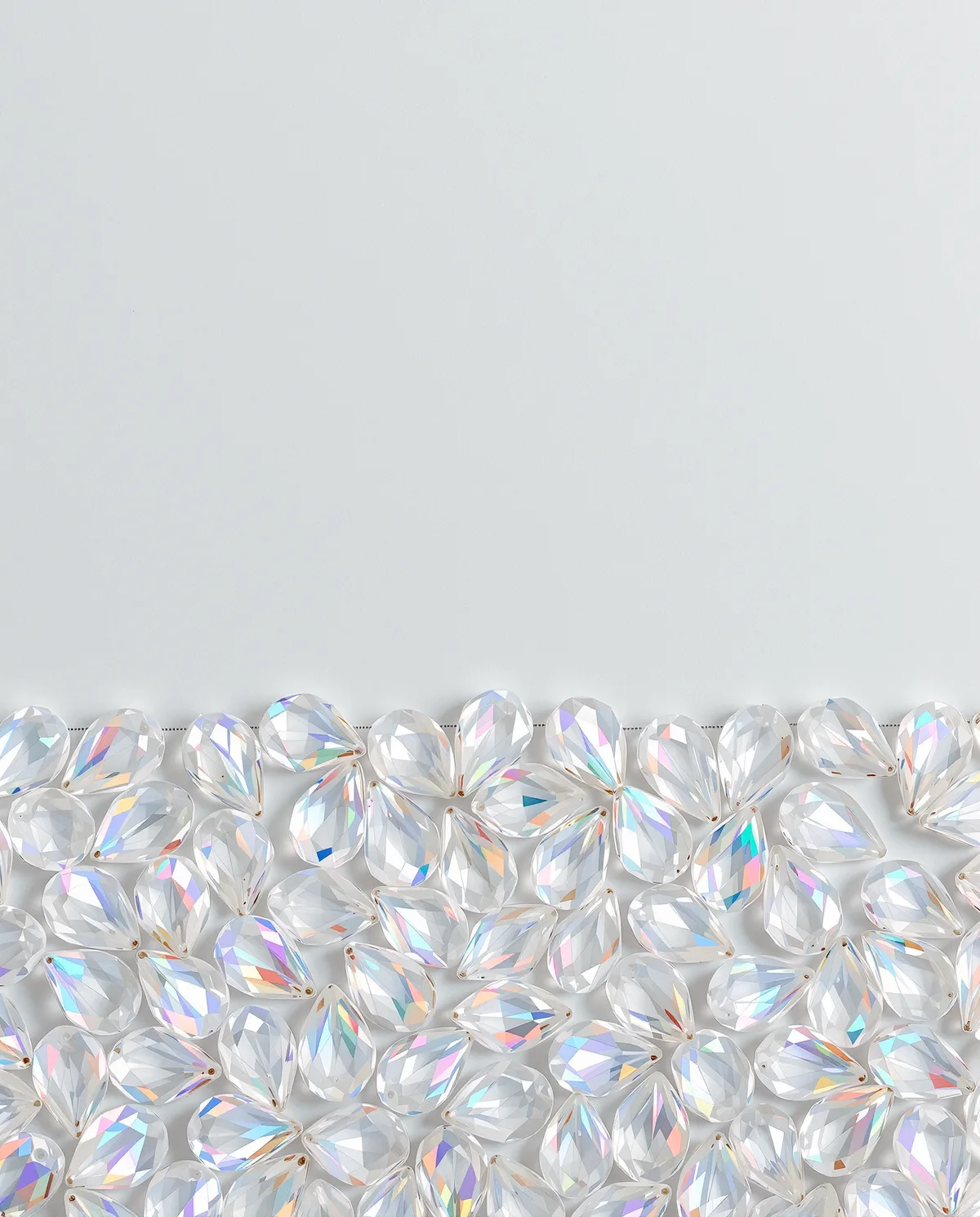
Faceting, refraction and weight — why the market says crystal, why a specification says glass, and where the premium is actually earned.
How it is madeReference
Five craft families — strung, embroidered, wire-wrapped, knotted and wrapped fibre — and what each one is good for.
See the detail
Start a conversation
Send a reference, a colour chip or a sketch. Minimums are set per design and confirmed per quote; sampling is quoted separately and usually runs 16 to 20 days from an agreed brief.