Pillar
Beaded drapes
Door curtains, portals, café lengths and valances: the standard sizes, the strand counts and the one question each format answers.
Open the reference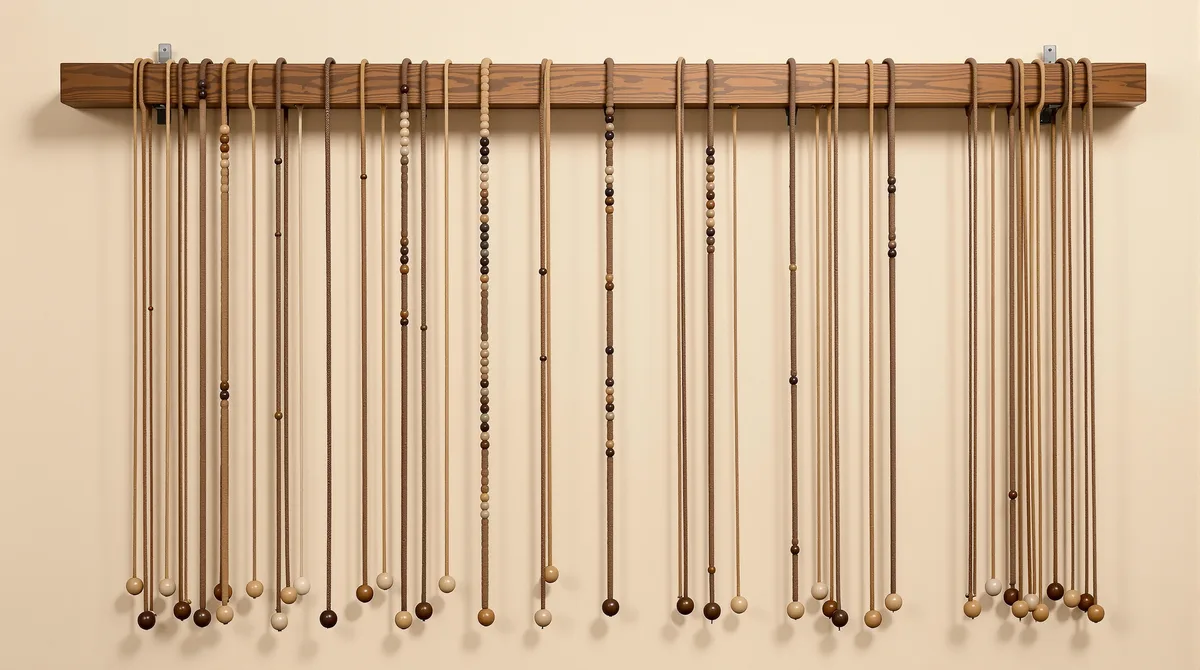
Guide · Format
Past about a metre and a half, the question stops being about beads and becomes a question about a beam. A long dowel carrying a hundred strands will deflect in the middle, and nothing about the beadwork changes that.
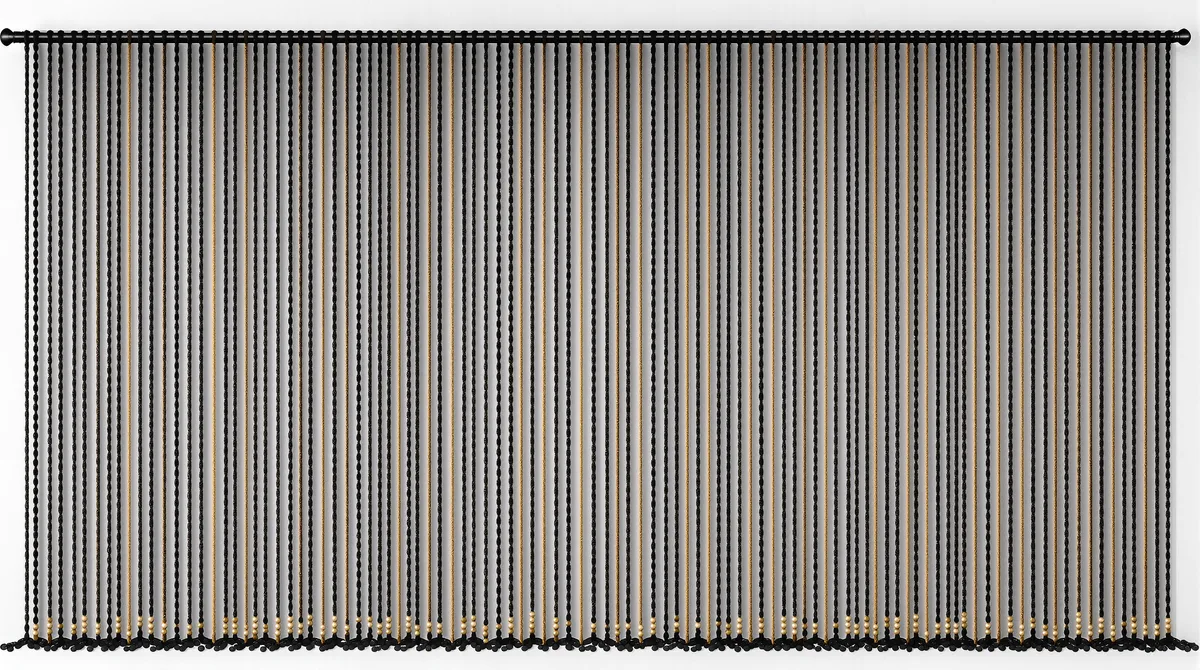
A rectangular stained wooden beam carried on steel brackets across a wide span, hand-strung bead strands hanging below it at an even pitch.
A very wide bead panel is limited by its header rather than by its beadwork. A single turned dowel carrying sixty or more strands deflects in the middle, which shows as a sagging top line. The answers are a mid-span bracket, a stiffer rail, or — usually best — two or three modules side by side, each on its own header.

Because the beads are fine and the beam is not.
A bead panel's header — a turned wooden dowel, a stained rail or a rod — is a beam carrying a distributed load. Every beam sags under load, and deflection grows sharply with span. The beadwork does not care how wide the panel is: a strand at the far left carries exactly what a strand in the middle carries. What changes is how much the thing holding them all bends.
So past a certain width the limiting component is the dowel, and the conversation is about structure rather than design.
The published formats top out at 120 cm — about 47 in — at roughly 60 strands and a 2 cm pitch. A single turned dowel handles that comfortably, and 120 × 200 cm and 120 × 180 cm both appear as real sizes in the record, along with a 120 × 35 cm valance.
Past about 1.5 m you are into territory where the header has to be specified rather than assumed, and the three available answers are a mid-span bracket, a stiffer rail, or modules.
A top line that dips in the middle. That is the direct effect, and it is bad enough on its own, because a sagging top line draws the eye immediately.
The indirect effect is worse: a dipped header makes the hem look uneven, even when every strand has been cut to exactly the right length. Strand lengths are measured from the header, so if the header moves, the hem moves with it — and nobody looking at the panel will conclude that the dowel is the problem.
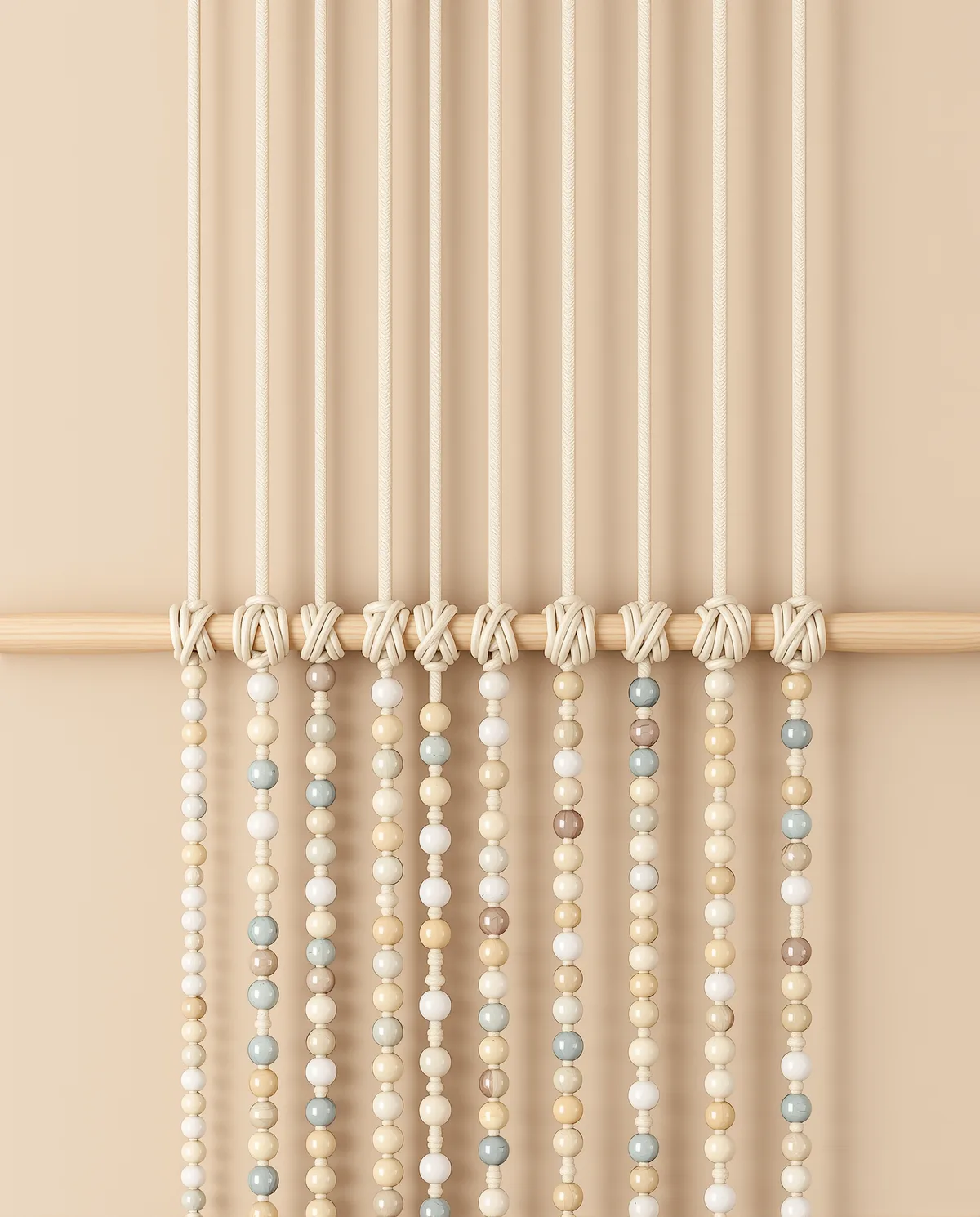
Structurally yes, aesthetically at a price. A bracket halves the effective span, which more than halves the deflection, so it is a genuinely effective fix.
What it costs is the clean, uninterrupted run of strands across the top of the opening, which is the thing a wide bead panel is for. If you use one, decide where it lands as a design decision: on the centre line it reads as deliberate symmetry; two thirds of the way along it reads as an afterthought, because it is one.
Because they remove the problem rather than managing it.
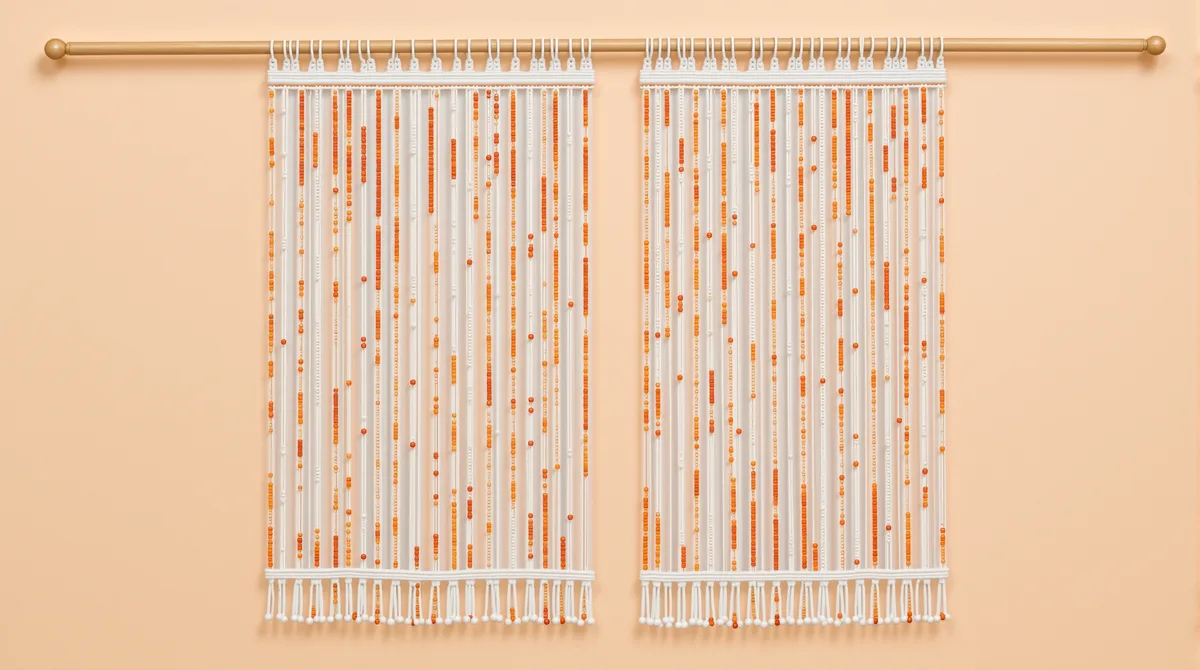
Two or three panels, each on its own header, each spanning a fraction of the opening: no deflection, no mid-span bracket, no long dowel to source or move. A damaged module is replaced on its own instead of taking the whole installation down. And in a doorway you get a centre part, which is useful rather than merely tolerable.
The beadwork costs about the same, because bead count follows the area you cover rather than how it is divided. What you add is hardware and fixing points; what you remove is the structural risk.
Deliberately, with two good answers. Overlap by about one strand pitch so the strands interleave visually and no line of daylight shows — right in a doorway, where the overlap is also the route through. Or separate by a visible gap of twenty centimetres or more, which reads as rhythm and is right on a wall.
At extra width the join multiplies: three panels have two joins, and each one has to be decided the same way. Carry the pitch across them or separate them on purpose.
More than a stiffer rail, and much more cheaply. The load on the header is the panel's weight, and weight is bead count times material density.
Glass sits near 2.5 g/cm³, acrylic near 1.2, most woods below 1. The same wide design in acrylic loads its header at roughly half the weight of the glass version, which can be the difference between needing a mid-span bracket and not.
On a very wide run, material is the first lever, pitch is the second, and hardware is the third. People reach for the third first.
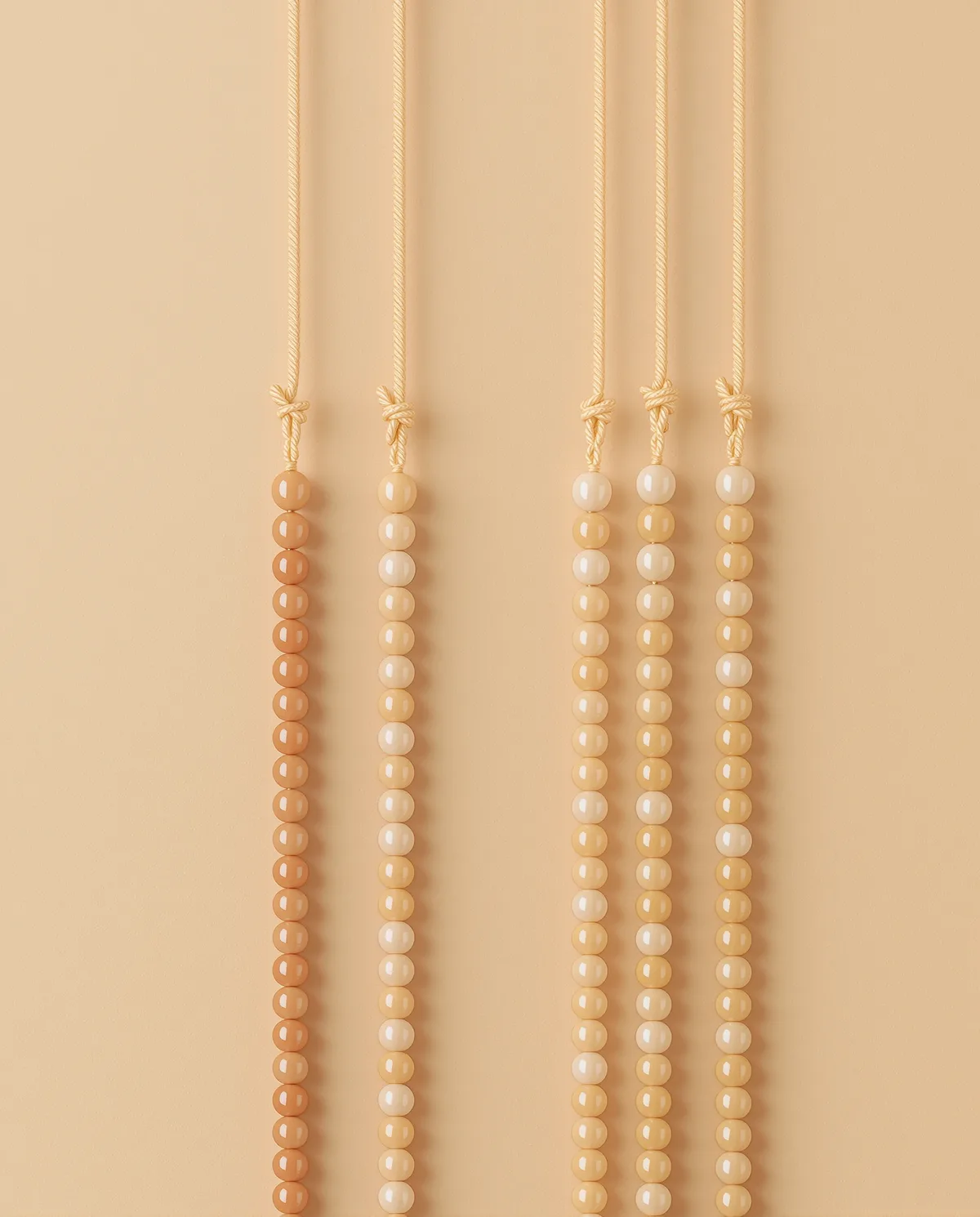
It changes how the load arrives. A sewn rod pocket — a three-inch pocket on a cotton or canvas header band, the construction used on our café curtains and fabric-mounted portals — spreads the load along the rod rather than concentrating it at individual knots.
The rod still has to be sized for the span, so it moves the problem rather than removing it. But a distributed load deflects a beam less than the same load concentrated at points, and on a wide run that is worth having. End suspension loops are the other flexible route: they let one panel hang from either a dowel or a rod without being rebuilt.
Panel count first, at extra width, because it is the decision everything else follows from. Two panels at 120 cm and three at 80 cm cover the same opening and are different products: different headers, different cartons, different fixings and a different number of joins to design.
Width, drop and strand count are set per order against an approved sample, so there is no standard range to work around. What there is, is a span past which a single dowel is the wrong component — and saying up front whether you want one panel or several is the fastest way to get a sample that behaves.
A wide doorway covers the same span from the walk-through side rather than the structural one. Panel runs sets out the case for modules in detail, and panel headers covers the rail, the rod pocket and the mid-span bracket. Panel weight is the number the span actually has to carry, and an acrylic bead curtain is the cheapest way to reduce it. A beaded portal is worth considering on any wide opening, because it cuts the walk-through into the beadwork instead of relying on a parting.
Three more pages help on a long span. Bead curtain formats covers the dual wall-and-portal format that suits a very wide low opening. Mixing bead materials is the cheapest way to take weight out of a wide build without changing the look. Routine care is worth reading too, because a wide panel is harder to dust and the header is the hardest part to reach.
Good to know
Wider than is sensible. The published formats stop at 120 cm, around 47 in, at roughly 60 strands and a 2 cm pitch, and that is a width a single turned dowel carries comfortably. Past about 1.5 m the header becomes the governing component, and the right answer is usually modules rather than a longer dowel.
The header deflects. A dowel is a beam carrying a distributed load, and a long beam sags in the middle. On a bead panel that shows as a top line that dips, which in turn makes the hem look uneven even when every strand is cut correctly.
It works structurally and it costs you the clean top line, because the bracket interrupts the run of strands. If you use one, decide where it falls as a design decision — on a centre line it reads as deliberate, two thirds of the way along it reads as an afterthought.
Usually, yes. Two modules each on their own header remove the deflection problem entirely, halve the span, let a damaged module be replaced on its own, and give a centre part that is useful in a doorway. The beadwork costs about the same because bead count follows the area covered.
Either overlapping by about one strand pitch, so no line of daylight shows, or separated by a gap wide enough to read as deliberate. The bad outcome is the accidental middle case — a one-centimetre sliver of light that looks like a mistake.
More than a stiffer rail does, and much more cheaply. Glass sits near 2.5 g/cm³ against acrylic at about 1.2 and most woods below 1, so the same wide design in acrylic loads the header at roughly half the weight. On a very wide run, material is the first lever and hardware the second.
Yes, and on a wide run it distributes the load differently — a sewn rod pocket spreads the load along the rod rather than concentrating it at knots. The rod still has to be sized for the span, so it moves the problem rather than removing it, but it does help.
Keep exploring
Pillar
Door curtains, portals, café lengths and valances: the standard sizes, the strand counts and the one question each format answers.
Open the referenceGuide
Cumulative strand weight, cord creep and header load: what changes when a bead panel goes past two metres.
Read the guideGuide
Valance, café length and half drop: three short formats, what each one does, and how bead count falls with height.
View the rangeGuide
One panel or a pair, where the join falls, and why the walk-through gap should be designed rather than left to chance.
How it is madeGuide
Where to put the join, how to match pitch across it, and how to get two headers level with each other.
See the detailSpecification
Dowel, stained header rail, sewn rod pocket or suspension loops — what each hangs from and when each fits.
Specs and sizes
Start a conversation
Send a reference, a colour chip or a sketch. Minimums are set per design and confirmed per quote; sampling is quoted separately and usually runs 16 to 20 days from an agreed brief.