Reference
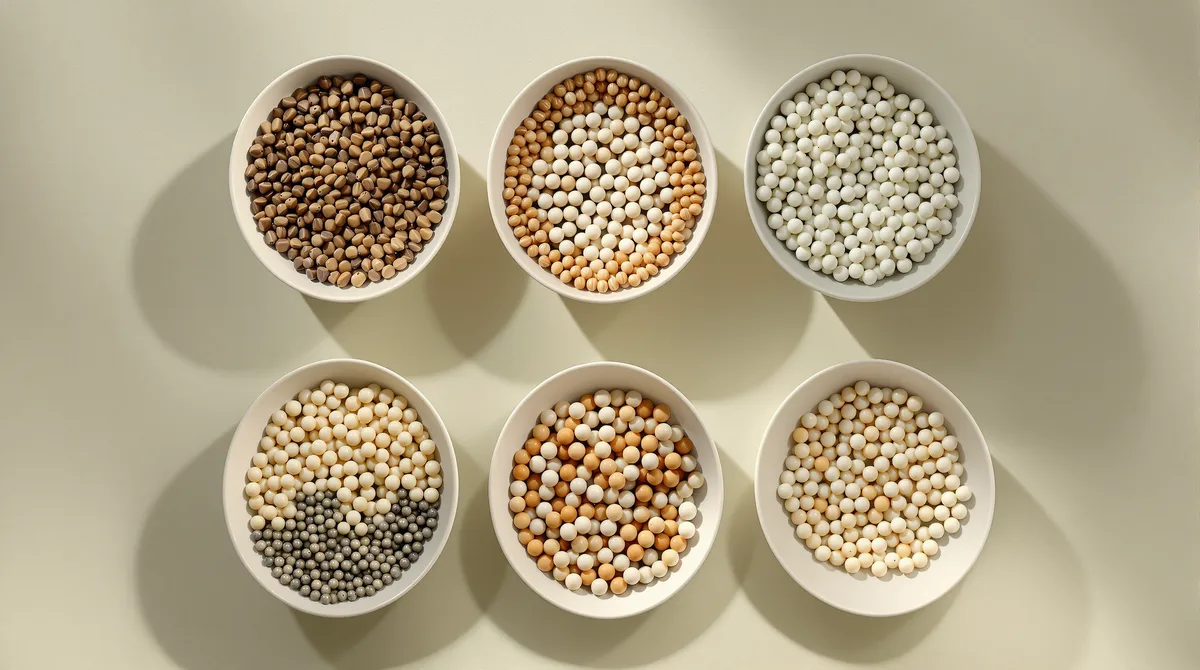
Bead materials, family by family
Nine material families, what each gives in light, weight and colour, and how far our own manufacturing reaches into every one of them.
Compare the options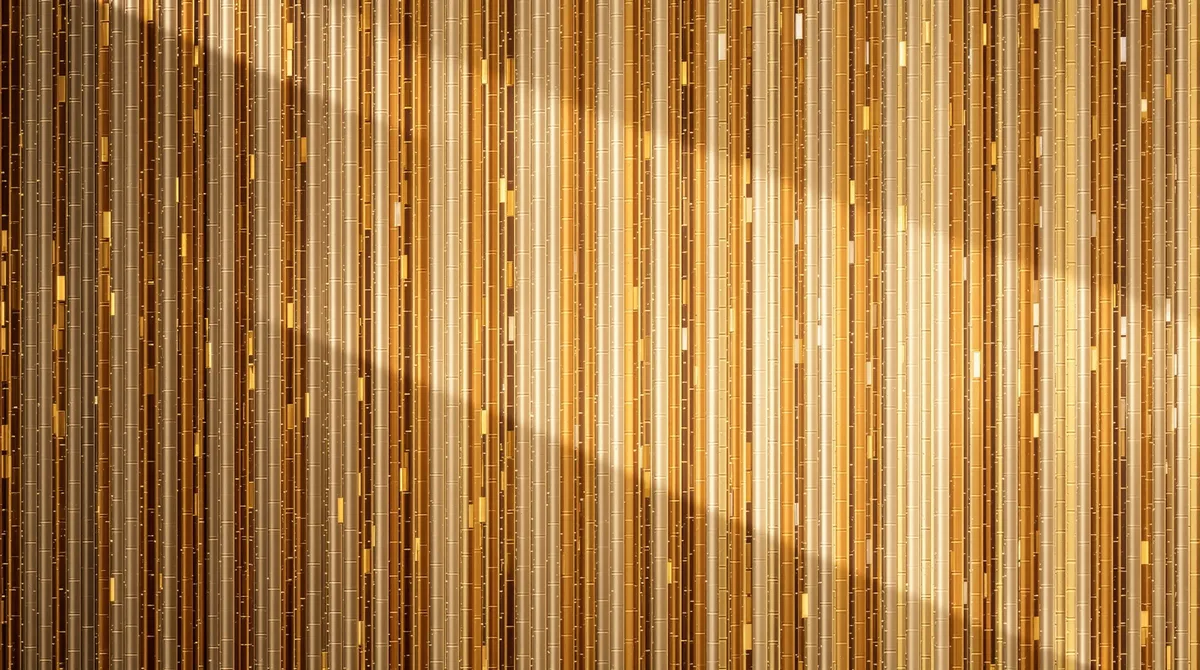
Guide · Material
A mixed strand is not a compromise. It is what most well-designed bead panels actually are, because it puts the expensive material only where the eye goes.
Editorial frame. Light through hand-strung glass, not a specific SKU.
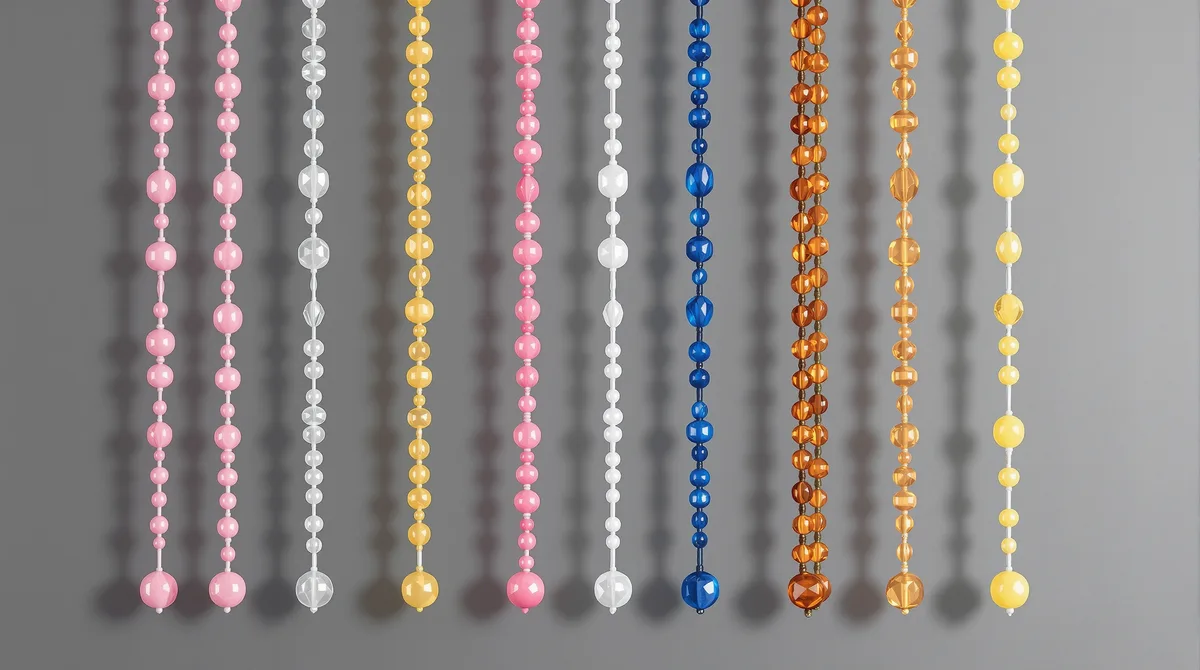
Mixing materials in one strand puts the costly, heavy, light-catching bead only where it is seen and lets a cheaper, lighter bead carry the rest of the drop. It is the standard way to add sparkle while holding weight, cost and freight down. The one hard constraint is the drill hole: cord is sized to the smallest bead in the build.
Because the eye does not look at the whole panel evenly. It goes to where the light is, to where the scale changes, and to anything that breaks a repetition.
So a panel that spends its material budget uniformly spends most of it where nobody is looking. A mixed strand does the opposite: it puts the costly, heavy, light-catching bead exactly where it is seen and lets a cheaper, lighter bead carry the rest of the drop.
That is not a compromise. It is what most well-designed bead panels actually are, and it is the single most useful piece of specification advice on this cluster.
Four things at once.
Light without the weight. A handful of glass beads placed where the sun falls does most of the visual work a full glass panel would, at a fraction of the weight on the fixing.
Weight where light materials need it. An all-acrylic or all-bamboo strand drifts; a few denser beads, or a heavier end bead, pull it straight.
Colour on a natural panel. Wood and bamboo have grain rather than palette, so glass or acrylic accents are how colour arrives.
Cost. A scattered accent on a plain base is the cheapest build that still reads as patterned.

Hole compatibility. Cord is sized to the smallest drill hole in the whole build, not to the look of the panel or to the biggest bead on it.
So if a design pairs 2 mm seed beads with a 20 mm feature bead, the cord has to pass the seed bead. That constrains the cord, which constrains the strand's strength, which constrains the drop. Four to five millimetres is the usual hole ask for cord-strung work and the comfortable middle of that trade.
Get this wrong and the panel is not expensive, it is impossible: the cord will not pass the bead and the build stops. It is also why the stringing specification lists hole diameter for every bead in the build, not just outside sizes.
Towards the hem. Weight at the bottom pulls the strand straight, which is useful; weight at the top adds load at the header knot and at the topmost drill holes, which is not.
This is the same logic that governs long drops — lighter beads at the header, heavier at the hem — and it has an aesthetic bonus: a strand that gets visually heavier towards the bottom reads as grounded rather than as top-loaded.
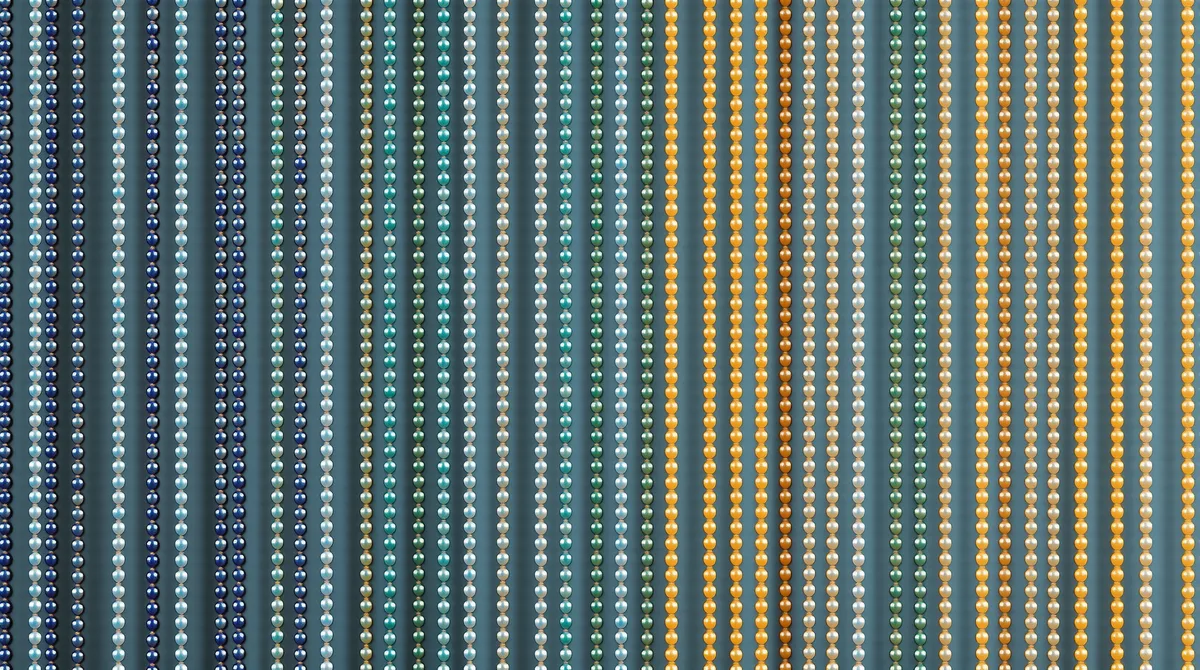
Our honey ombre colourway is the elegant version of this: three bead sizes graded small to large down the drop, with the colour changing on the change of scale.
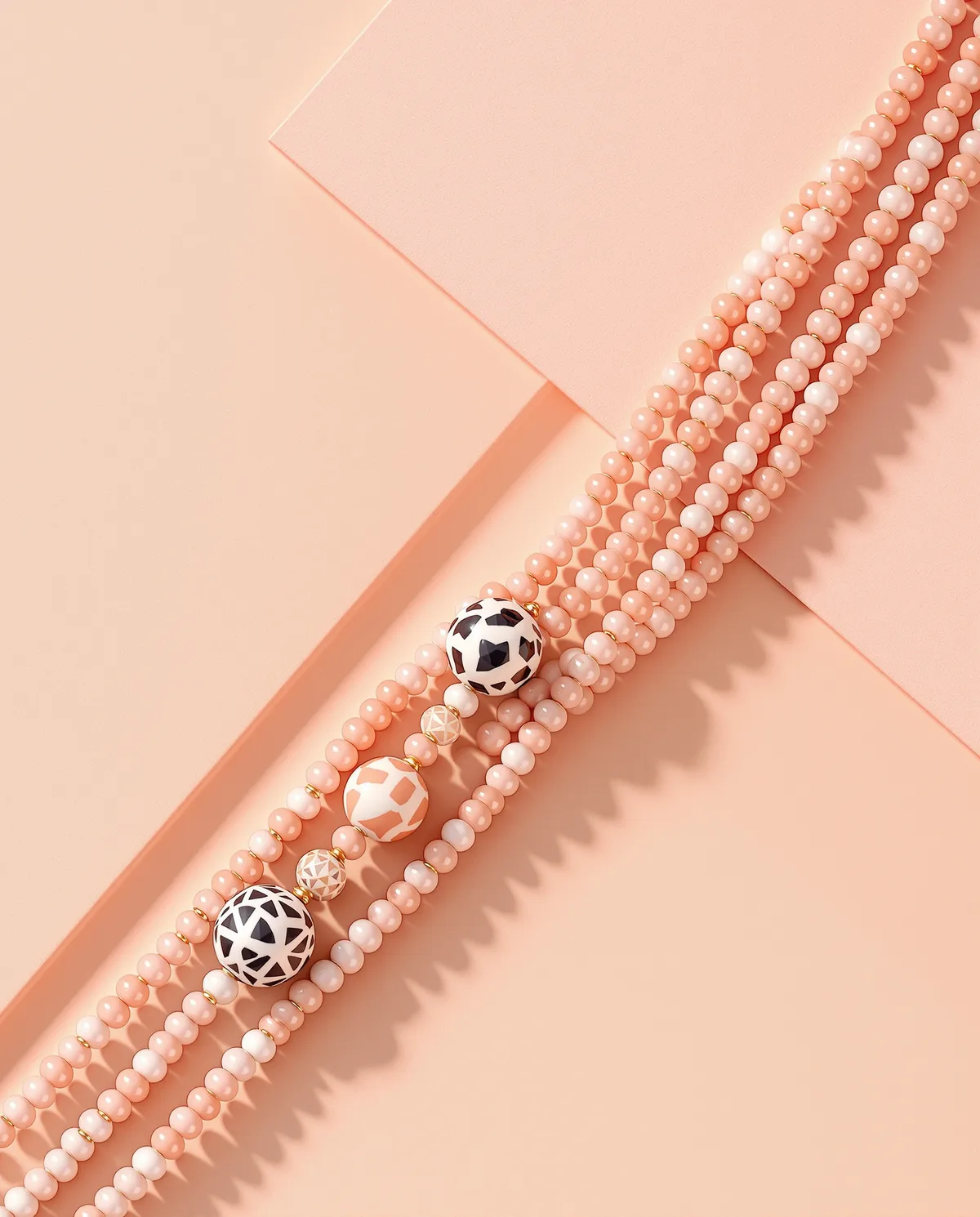
A plain base strand carries a handful of feature beads, placed deliberately so no two land level on neighbouring strands.
The numbers are instructive. Our Polka Dot portal carries roughly 90 to 120 dotted oval glass beads — 13 × 22 mm — across the whole curtain, three or four per strand, on a seed-bead base dyed to match the dot colours, and explicitly never aligned in a row. Our Mushroom portal carries about 120 glass mushroom beads the same way, up to four per strand, randomly placed, alternating orange and brown.
Both read as patterned from across a room. Both contain a fraction of the feature beads a covered build would need.
The opposite. The combination that reads as a cheap import is one material at one bead size in even stripes at regular spacing — four kinds of uniformity stacked together.
Mixing breaks at least two of them: scale and surface change along the strand. That is precisely what makes a panel read as designed, and it is why the current designs that sell are built this way rather than as flat single-material fields.
Marginally, and far less than the material it replaces. More bead types means more sorting at the bench — colour and type count is a sorting problem, which is cheap — rather than more placement work, which is expensive.
The saving on the other side is large. A scattered glass accent on a seed-bead base costs a fraction of a fully covered glass strand, and the published cost levers put bead size and material first for exactly this reason.
Two different designs, and the brief has to say which.
Within each strand: every strand has the same mix, so the panel reads as one texture with accents distributed through it. This is the scattered-accent build.
Across the strands: strand one is glass, strand two is wood, and so on. The panel reads as vertical bands of material, which is a much more graphic and architectural effect.
The stringing sheets for the two are nothing alike, so saying which you want is the difference between a first sample that is close and one that is wrong.
Glass with seed beads — the most common. Fine base, feature accents, maximum resolution. Glass with wood — warmth plus light. The classic natural-with-sparkle build. Acrylic with glass — colour plus a few points of real refraction. Bamboo with wood or glass spacers — the standard fix for bamboo's lack of weight. Faux capiz with small locking beads — not a mix for looks but a structural one: a spacer bead at a disc's centre stops it sliding on the cord.
The constraint in every case is weight distribution and hole compatibility, rather than any rule about which materials belong together.
Bead materials sets out the nine families and what each one gives, which is the groundwork for any mix. Glass bead curtains and an acrylic bead curtain are the two most commonly combined, and bamboo door beads is the material that most needs a mix to work at all. Stringing specifications holds the hole and cord relationships that constrain what can share a strand. Bead curtain pricing explains why mixing is usually the cheapest good answer, and graphic bead patterns covers the bead map that places the accents.
Two more pages are worth reading. Bead curtain formats covers which formats suit a mixed build, and choosing a bead size explains how two sizes in one strand became the standard way to meet a cost target. Panel weight is the number a mix is usually being designed to reduce.
Good to know
Yes, and mixing them is a common way to get sparkle where it shows while keeping weight and cost down. A handful of glass beads placed where light falls does most of the visual work that a full glass panel would, at a fraction of the weight on the fixing and the freight.
Yes. Mixed strands are common and are often the best way to add colour while keeping the cost down. Wood carries the drop warmly and cheaply, glass or acrylic accents bring the colour and the light. It is also the standard way to get a natural panel that does not read as plain.
Hole compatibility and weight distribution, not appearance. Cord is sized to the smallest drill hole in the whole build, so if a seed bead and a 20 mm feature bead are both in a strand, the cord has to pass the seed bead. Get that wrong and the panel cannot be assembled at all.
Towards the hem. Weight at the bottom pulls the strand straight, which is useful; weight at the top adds load at the header knot, which is not. That is the same reason long panels are designed with lighter beads up top and heavier ones below.
The opposite, usually. A single-material panel at a single bead size is the combination that reads as a mass-produced import. Mixing materials introduces changes in scale, surface and weight, which is exactly what makes a panel read as designed rather than as bought by the metre.
Marginally, because more bead types means more sorting at the bench. It is far cheaper than the material it replaces: a scattered glass accent on a seed-bead base costs a fraction of a fully covered glass strand, and our Polka Dot portal carries only about 90 to 120 feature beads across the whole curtain.
Yes, and it reads completely differently. Alternating a glass strand with a wood strand gives vertical bands of material; mixing within each strand gives a uniform texture with accents. Say which you want at the brief stage, because the stringing sheets are nothing alike.
Keep exploring
Reference
Nine material families, what each gives in light, weight and colour, and how far our own manufacturing reaches into every one of them.
Compare the optionsPillar
Door curtains, portals, café lengths and valances: the standard sizes, the strand counts and the one question each format answers.
Specs and sizesGuide
A dry rattle, almost no weight, a natural look that marks in damp — and the note that bamboo is confirmed design by design.
Compare the optionsGuide
Cut or faceted glass, described plainly: the heaviest panel in the category and the only one that genuinely dazzles.
Compare the optionsGuide
The heaviest panel and the only one that refracts: weight, chime, a straight hang, and the chipping risk that comes with them.
Open the referenceGuide
Weight and drape, sound, colour range, breakage, cost and freight, with a verdict by buyer type rather than a neutral shrug.
Specs and sizes
Start a conversation
Send a reference, a colour chip or a sketch. Minimums are set per design and confirmed per quote; sampling is quoted separately and usually runs 16 to 20 days from an agreed brief.