Reference
Which bead material to specify
Nine material families, what each gives in light, weight and colour, and how far our own manufacturing reaches into every one of them.
How it is made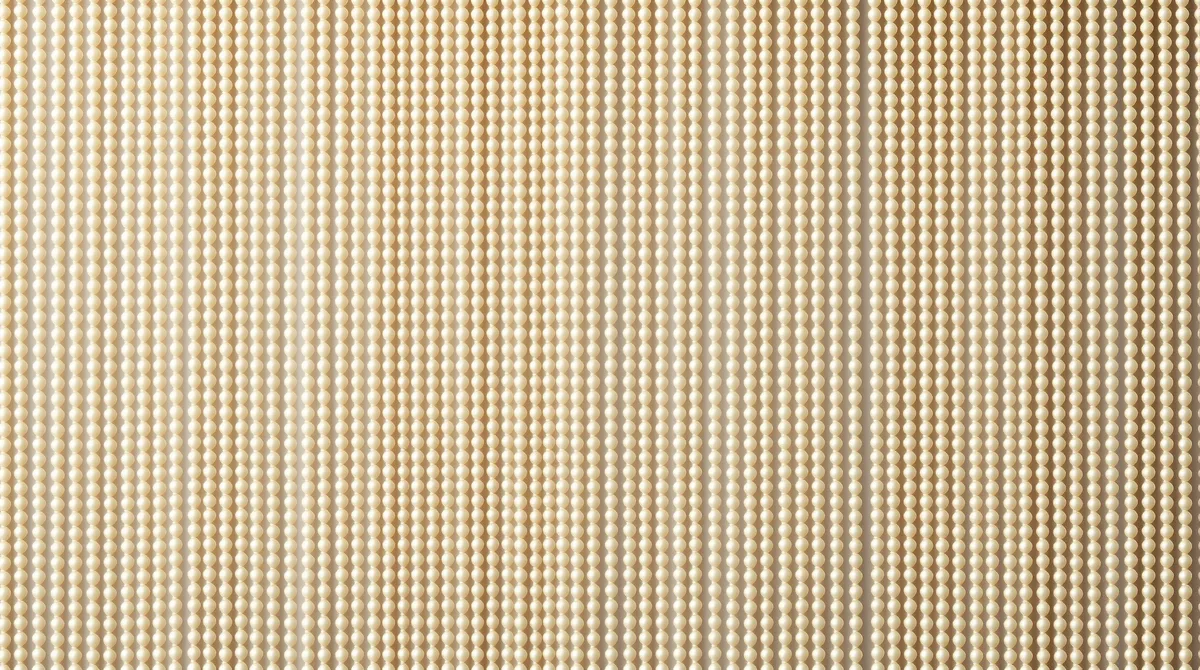
Guide · Material
A pearl bead is a coating on something else. That is not a criticism — it is the single fact that explains how the panel looks, where it works, and what will eventually go wrong with it.
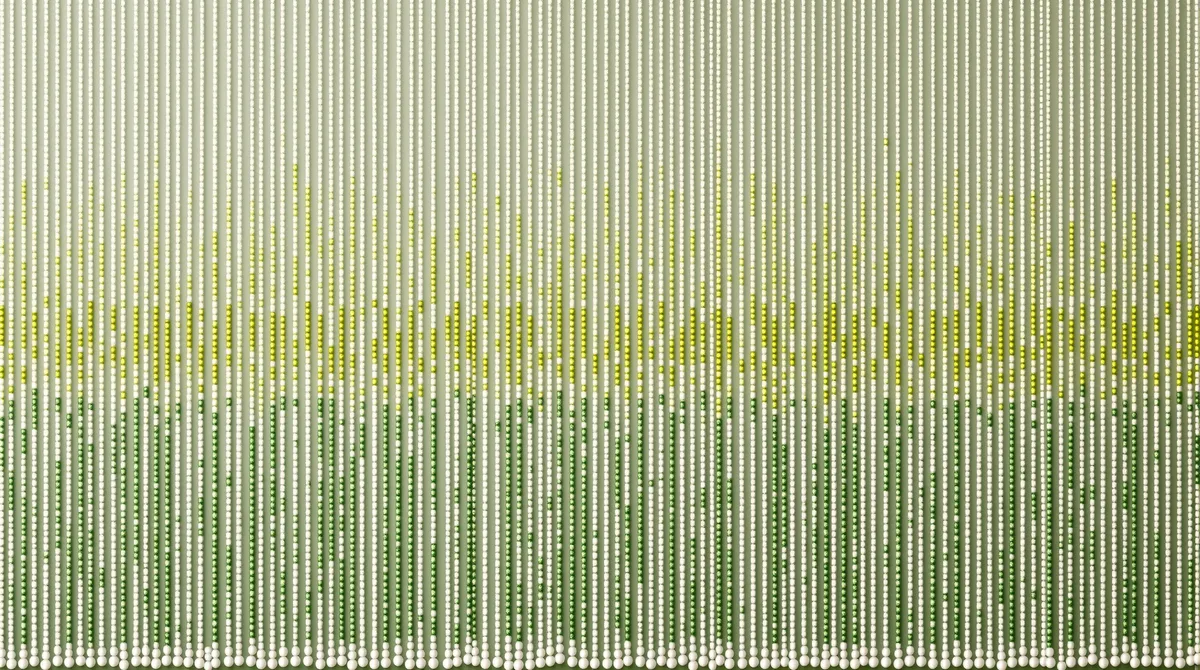
A curtain of round faux-pearl beads with a lustrous cream pearlised coating, a few low in the panel worn through to the pale core where they rest against their neighbours.
A pearl bead curtain hangs beads whose pearl appearance is a surface coating over a glass or acrylic core, not a body colour. That coating is the whole character — a soft directional sheen no body-coloured bead gives — and the whole weakness, because where beads rub, the coating scuffs through to the core underneath.
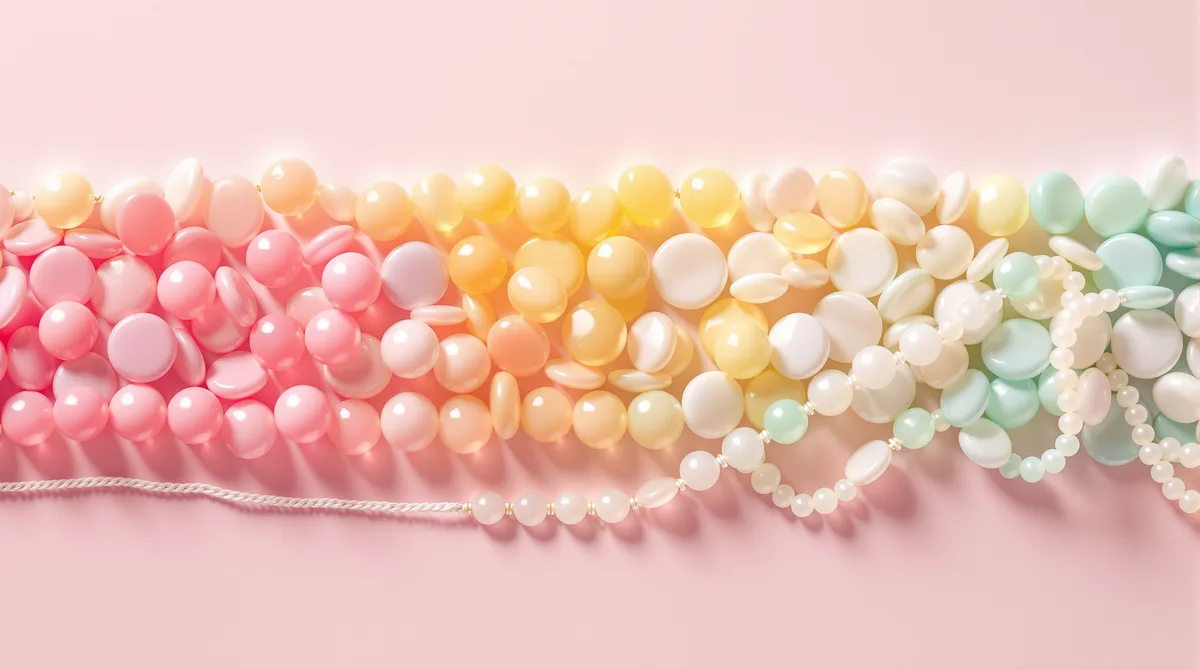
A coating over a core. The core is glass or acrylic and provides the weight, the shape and the drill hole. The pearlescent layer on the outside provides everything you actually see.
That is the one fact worth carrying through this whole page. It explains the appearance, which is unlike any body-coloured bead. It explains where the material works. And it explains the single way a pearl panel ages differently from everything else in the category.
It sits in the same family of logic as faux capiz, which is cast resin or dyed cut acrylic finished to imitate capiz shell: an engineered imitation, honestly described, with real advantages over the thing it imitates.
A soft directional sheen. Light does not pass through a pearl bead and it does not glint off a single point; it lifts off the whole surface with a slight shift of tone as the bead turns.
The practical effect is that a pearl panel reads calm. Cut glass is bright and busy; translucent glass is luminous; wood is matte and warm. Pearl is the only finish in the category that is lustrous without being sparkling, which is why it turns up on bridal, bedroom and spa briefs rather than on statement doorways.
Scuffing. Where beads rub, the coating wears through and the core shows.
Compare the ageing curves. A body-coloured glass bead that gets knocked about for years becomes very slightly duller and stays exactly the same colour. A coated bead that gets knocked about loses patches of coating, and because the core underneath is a different colour and a different surface, the wear is visible rather than gradual.
This is the same mechanism that makes surface-dyed beads fade where body-coloured ones do not, and frosted beads polish into gloss where glossy ones do not. Surface properties are the vulnerable ones.
Where the beads are not in constant contact — with each other or with anything else.
Good: a valance, a wall piece, a window panel, a bedroom or dressing-area opening that is used rather than barged through.
Bad: a doorway in daily use, where thirty strands knock together many times a day. Worse: a closet, where the beads are rubbing against hanging clothes all day — and where any bead with a hard edge or a delicate coating is the wrong choice anyway.
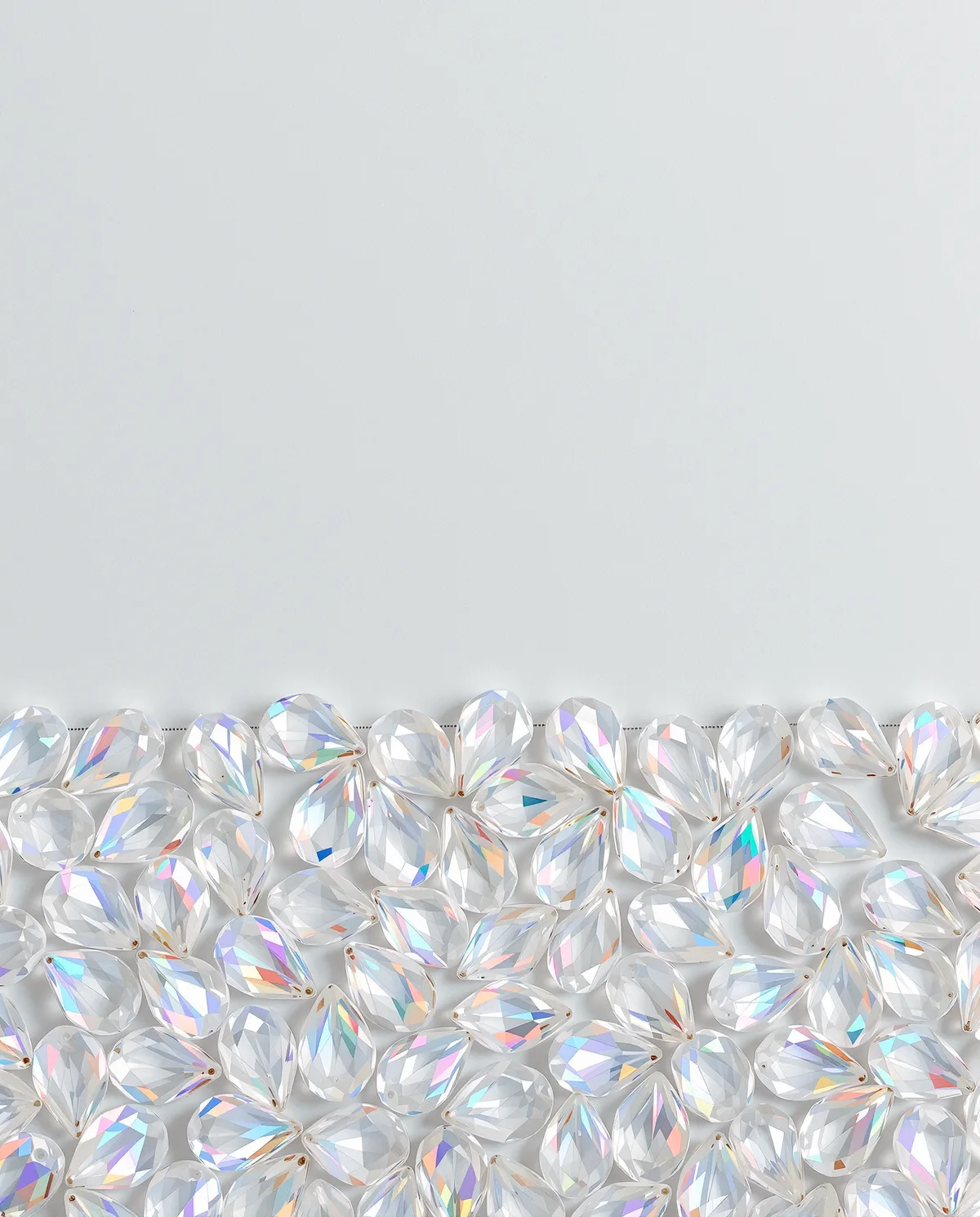
Related, and it ages the same way. A pearlised or AB finish is also a surface treatment, so the same scuffing logic applies, but it produces a rainbow shimmer rather than a single soft sheen.
Our Chiara iridescent portal is built from faceted iridescent teardrop beads in a pearlised crystal finish on a clean white base, and it reads as shimmer. If you want the hard glitter, specify clear cut glass; if you want the soft lustre, specify pearl; if you want the rainbow, specify iridescent. All three are available, and two of the three are coatings.
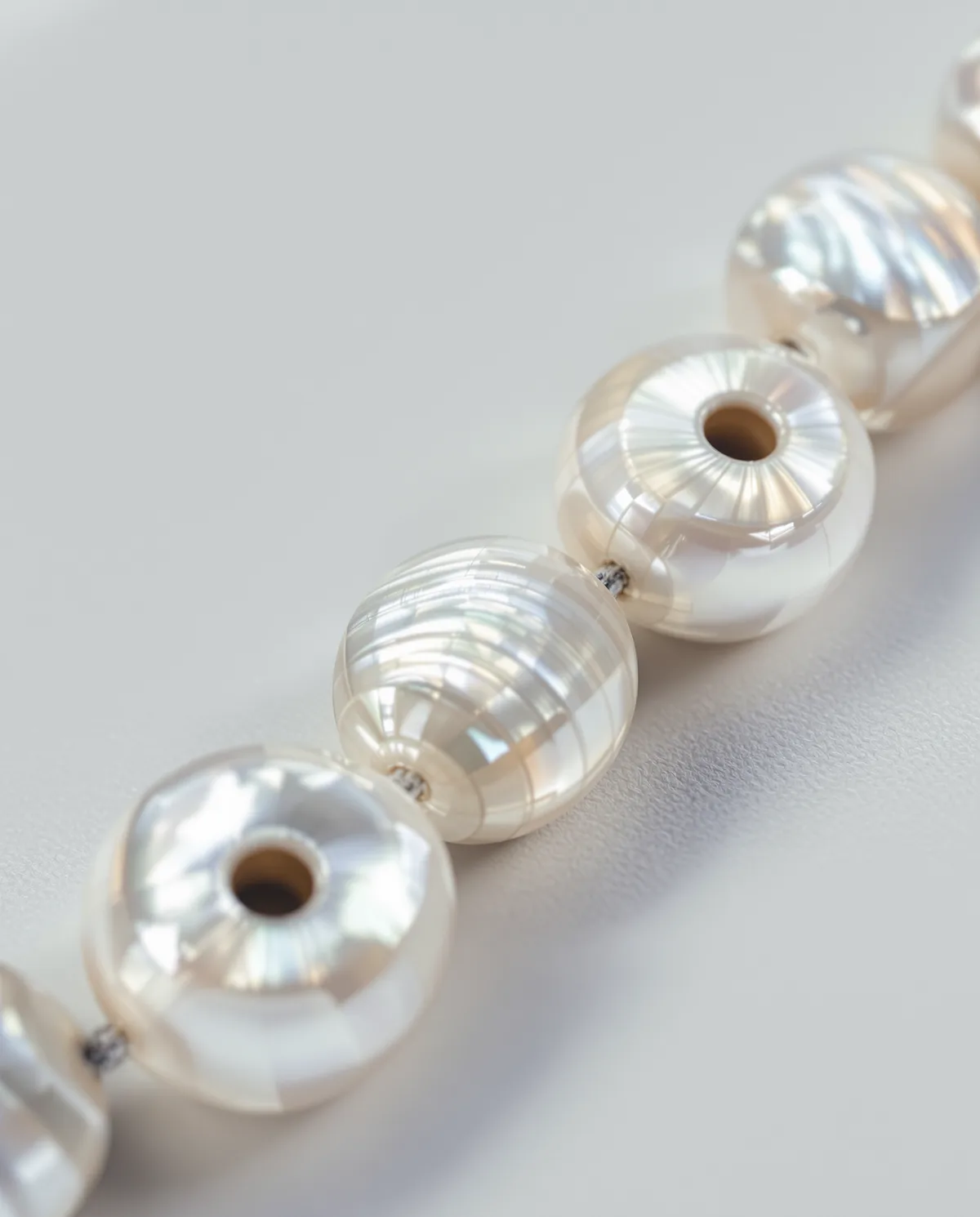
A genuinely different material, and in one respect a better one. Shell beads are cut and drilled from nacre, so the iridescence is in the layered structure of the material itself. It cannot scuff off, because there is no coating to lose.
What shell brings with it is natural variation: visible growth marks, piece-to-piece colour differences, and a tone range that has to be approved on the sample rather than matched exactly. Shell, capiz, bone and horn are all cut, drilled and finished to specification in our own beadwork studios.
For a repeat retail programme the consistency of a coated bead often wins. For a one-off piece where variation is a virtue, shell is the more interesting material.
Lightly, and this is the one material where the instruction is stricter than for the rest.
Dry dusting only, and with less pressure than on glass. A pearlised coating is a surface rather than a body colour, so what takes dust off a glass bead takes the lustre off a pearl one.
No solvents. No abrasive cream. No steam. And no rubbing, which is the hard part, because rubbing is the instinct. Every one of those removes coating faster than dirt accumulates on it.
Very well, and mixing is often the better specification rather than merely a cheaper one.
A handful of pearl beads as accents on a plain glass or acrylic base gives the sheen exactly where it is seen, and — because the pearl beads are now separated from each other by plain beads — it also stops them rubbing, which is what makes them last.
That is the same scattered-accent logic that governs our Polka Dot and Mushroom portals, applied to a material whose weakness is contact. It is the arrangement we would recommend for any pearl panel in a position that gets used.
Yes, for a valance, a wall piece, a bedroom opening or any brief where the word is lustre rather than sparkle. There is nothing else in the category that does soft directional sheen.
No, for a busy doorway, a closet, or a programme where the piece has to look new after five years of being pushed through. Specify body-coloured glass there and keep the pearl where it will be looked at rather than handled.
Bead materials sets out the difference between a body colour and a surface one, which is the whole of this page in one distinction. A capiz curtain is the other engineered-imitation material and a more robust one. The crystal bead curtain question covers the iridescent and faceted finishes that age the same way. Beaded valances is the format we would put a pearl panel in, because the beads are not in constant contact there. Routine care sets out the lighter hand a coated surface needs, and a seed bead curtain is the quieter alternative in glass.
Three more pages help. Mixing bead materials is the specification we would recommend for any pearl panel in a position that gets used, because separating the coated beads is what makes them last. Choosing a bead size covers the end bead that traces a shaped hem. And bead colour matching explains how a coated finish is approved on a sample rather than on a screen.
Good to know
A core of glass or acrylic with a pearlescent coating applied to the outside. The core gives the weight and the hole; the coating gives the appearance. It is an engineered imitation of a pearl's nacre, in the same family of logic as faux capiz being an engineered imitation of shell.
Because the appearance is a surface property rather than a body one. A body-coloured glass bead that is rubbed gets slightly duller and stays the same colour; a coated bead that is rubbed loses the coating and shows the core, which is a visible change rather than a gradual one.
Somewhere the beads are not in constant contact with each other or with anything else: a valance, a wall piece, a window panel, a low-traffic opening. The worst place is a doorway in daily use, where thirty strands knock together many times a day, and the second worst is a closet full of clothes.
Related but not identical. A pearlised or AB finish is also a surface treatment and ages the same way, but it produces a rainbow shimmer rather than a single soft sheen. Our Chiara iridescent portal uses faceted iridescent teardrops in a pearlised crystal finish, which reads as shimmer rather than as pearl.
It is a genuinely different material. Shell beads are cut and drilled from nacre, so the iridescence is in the material's layered structure and cannot scuff off. They carry natural variation and growth marks, which coated beads do not, and they are cut and finished to specification in our own beadwork studios.
Lightly. Dust dry first, then a barely damp cloth with no pressure at all, dried immediately. No solvents, no abrasive cream and no rubbing — the coating is the thing you are protecting, and every one of those removes it faster than dirt accumulates.
Very well, and mixing is often the better specification. A few pearl beads as accents on a plain glass or acrylic base give the sheen where it is seen while keeping the coated beads away from each other, which is also what makes them last.
Keep exploring
Reference
Nine material families, what each gives in light, weight and colour, and how far our own manufacturing reaches into every one of them.
How it is madePillar
Door curtains, portals, café lengths and valances: the standard sizes, the strand counts and the one question each format answers.
Read the guideGuide
Hundreds of beads to a strand: the finest colour resolution in beadwork, and the longest stringing time in the category.
Compare the optionsGuide
Glass where the light hits it, lighter beads everywhere else: the arrangement that most good bead panels actually use.
Compare the optionsGuide
Solvents, bleach, abrasive cream, steam and hot water — what each does to dye, to frosted surfaces, to acrylic and to the cord.
See the detail
Start a conversation
Send a reference, a colour chip or a sketch. Minimums are set per design and confirmed per quote; sampling is quoted separately and usually runs 16 to 20 days from an agreed brief.