Manufacturing
OEM and contract beadwork
Strands, trims, panels and framed shapes built to another maker's drawing, inspected, kitted and delivered to their line.
See the detail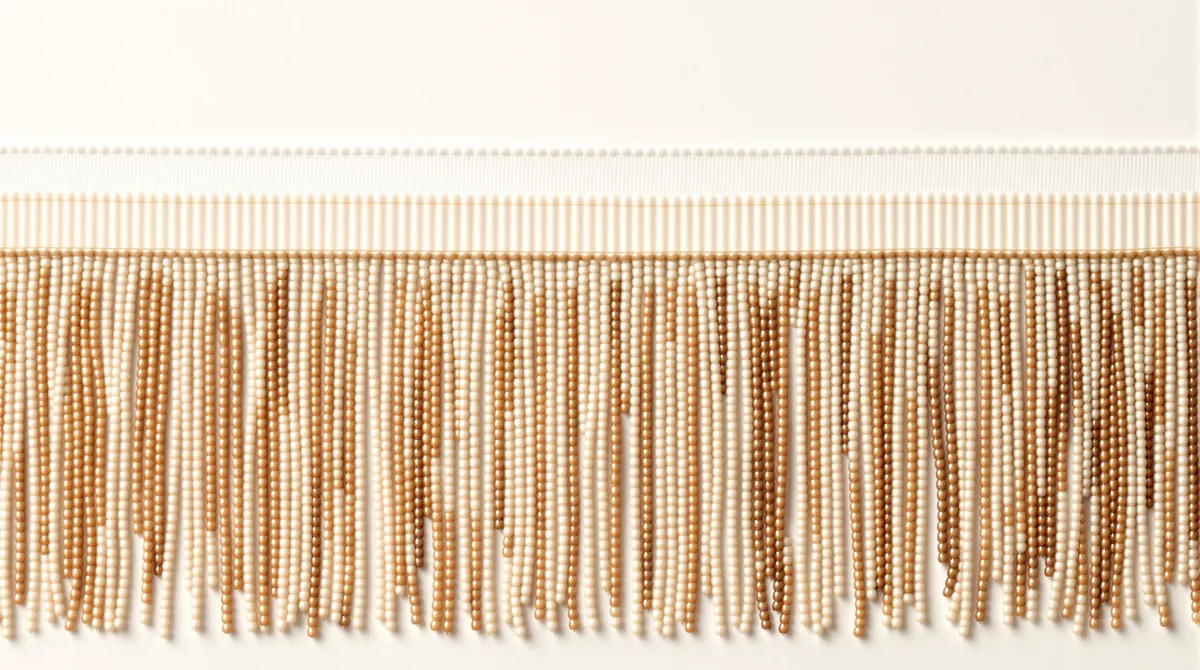
Manufacturing · Trim
Fringe is the one beaded build that is almost never the finished object. It goes to another maker, gets sewn or stapled into something else, and is judged on repeat accuracy rather than on how it looks hanging on its own.
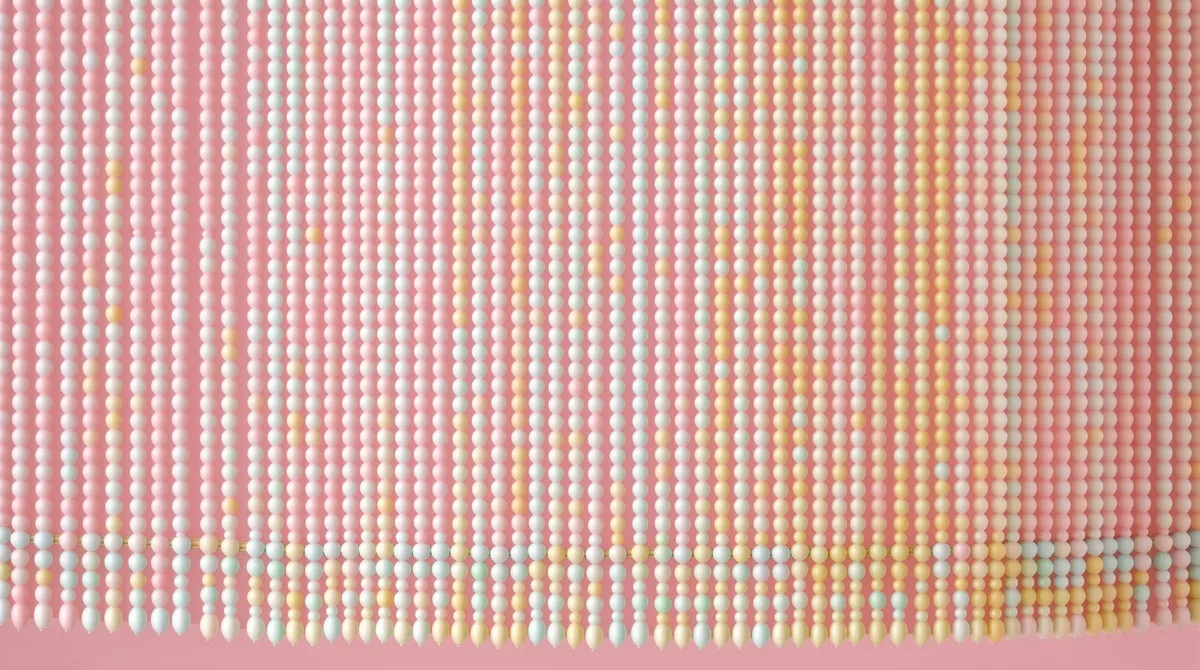
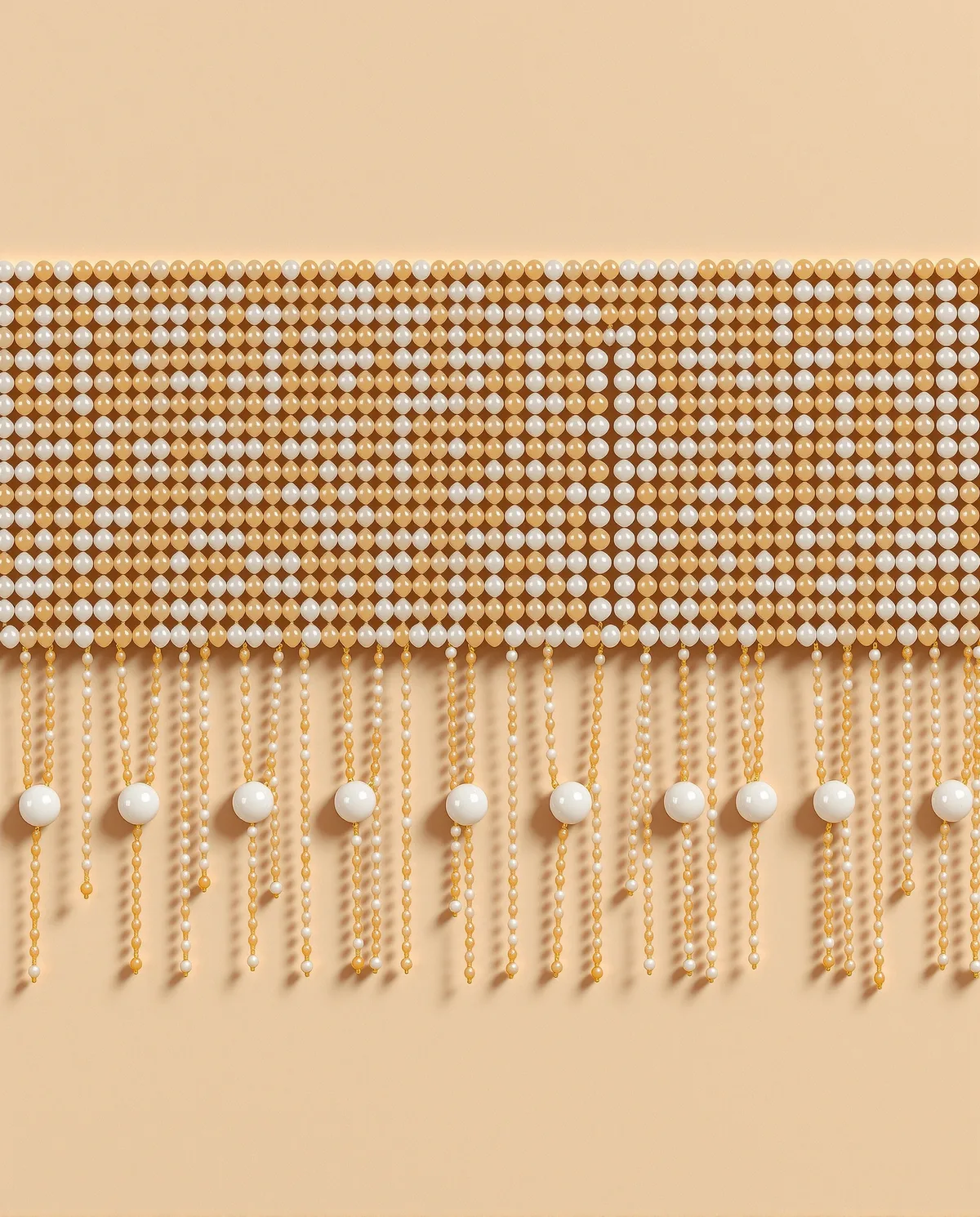
A length of beaded fringe on plain woven cotton tape, the bead drops hanging free below the tape in honey and cream glass.
Beaded fringe is a header carrying repeated bead drops, built to be sewn or fixed into somebody else's product — a lampshade, a cushion, a pelmet, a garment. Fringe and drops is a documented construction in our beadwork, and trim is a declared format, but there is no stock trim catalogue: every trim programme is developed and quoted per design.
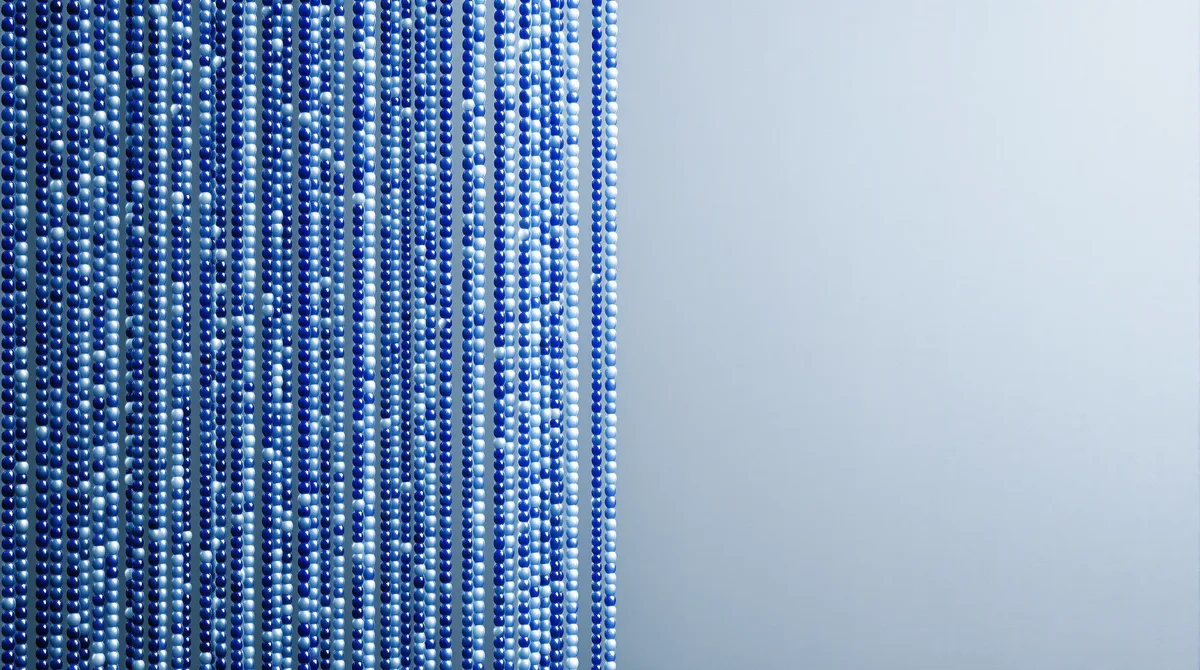
Beaded fringe is a header carrying repeated bead drops. The header can be a woven tape, a stitched cotton band, or a beaded top band worked in close horizontal rows above the point where the strands separate and fall free. Each drop is strung on cord to a count sheet, the end bead acts as the stop, and the repeat is what makes the trim usable by the person buying it.
Fringe and drops, strung strands and beaded top bands are all documented constructions in our beadwork, and trim is one of the formats we declare. It is developed to a brief rather than stocked by the metre.
Worth being direct, because this page sits in a category where catalogue claims are cheap.
We build fringe. It appears as the hem of a valance, the drop below a lamp shade ring, the beaded end of a wall hanging, the edge of a café curtain. Those are shipped constructions with a production record behind them. Beaded trim as a standalone component, cut to length and built into somebody else's product, is available to develop rather than selected from a catalogue: the repeat, the drop and the header are set per design and quoted with it.
So a trim programme here is a development. That is a slower start than a stock purchase and a better outcome, because the repeat gets set against your product rather than against ours.
Changeable: bead material, bead size, the number of beads per drop, the drop length, the repeat length, the header type and width, the end bead, and whether the drops are uniform or stepped into a scallop or point.
Fixed: cord is sized to the smallest drill hole in the build. The count sheet governs production, so the repeat cannot drift on the floor. And a drop lands on a bead boundary — a fringe specified to the millimetre will always carry a one-bead tolerance, so the way to write a drop is a bead count.
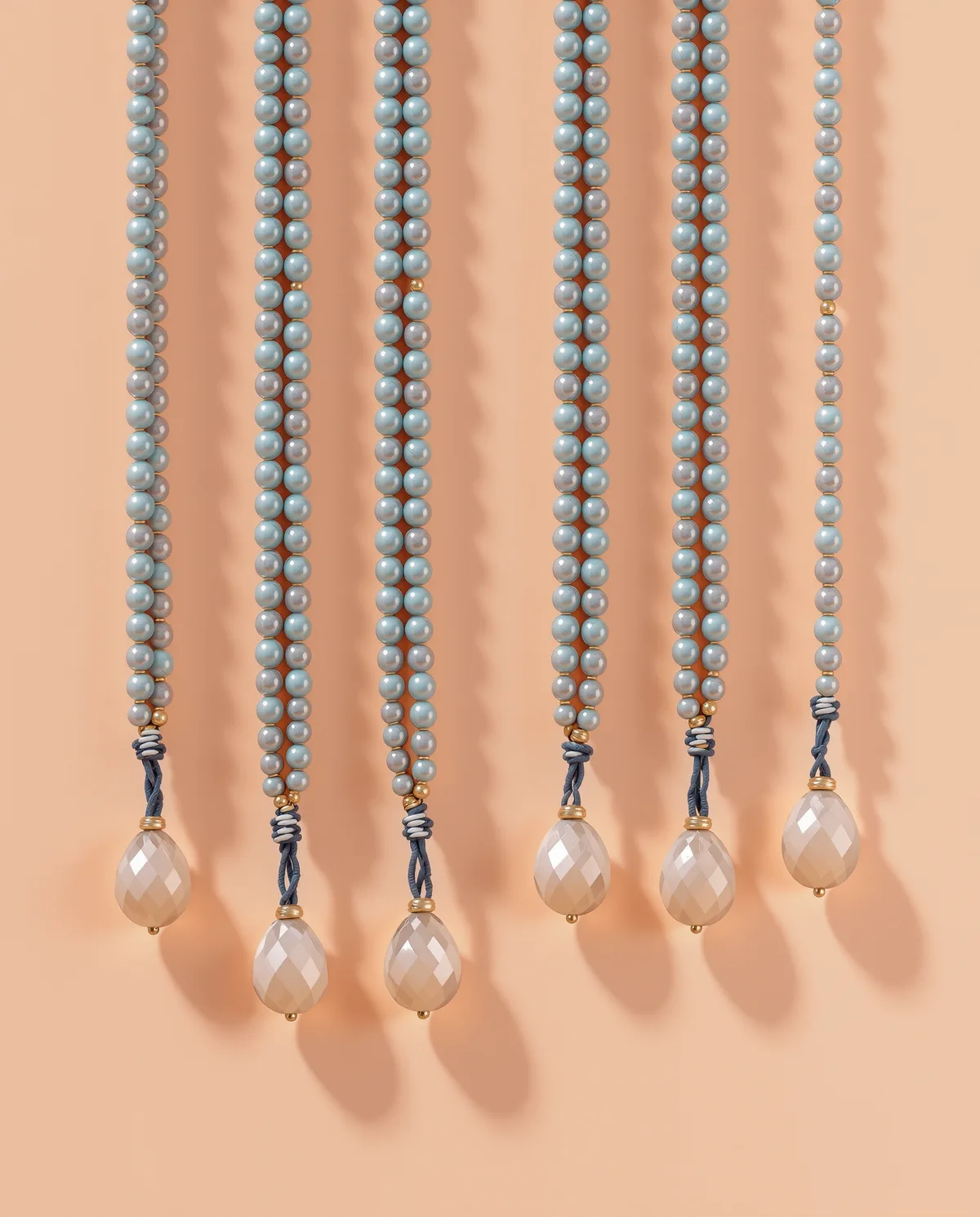
Glass carries weight, which on a fringe is a functional property rather than a luxury: a light fringe lifts and tangles, a weighted one hangs and swings. Faceted glass drops are the classic crystal-look end bead, and we describe them as glass rather than as crystal because that is what they are. Seed and bugle beads build the body of a drop. Pressed glass gives a repeatable motif bead. Acrylic is the right call where the end product has a weight limit, and cast faux capiz gives a pearlised shell-look drop with no shell in it.
| Specification | Value |
|---|---|
| Build | Repeated bead drops on a header, to a fixed repeat |
| Documented constructions | Strung strands; fringe and drops; beaded top band |
| Header options | Woven tape, stitched cotton band, or a beaded top band |
| Drop | Set per design; the end bead is the stop |
| Repeat length | Set per design and written on the count sheet |
| Bead materials | Glass seed, bugle, faceted and pressed; acrylic; cast faux capiz |
| Colour matching | To a colour reference or a physical chip, confirmed on the sample |
| Quoting basis | By length, per design |
| Minimums | Set per design, confirmed per quote |
| Sampling | 16–20 days from an agreed brief, quoted separately |
| Production | 40–60 days after sample approval |
Nothing here is standard and we will not pretend otherwise. The drop, the repeat and the header all come from the product the trim is going into: a lampshade ring, a cushion seam allowance, a pelmet board, a garment hem. That is why the first question on a trim brief is about the end product and not about the beads.
The end product and where the trim is fixed into it — sewn, stapled, glued or threaded. The header type and width. The drop, as a bead count or a dimension with a tolerance. The repeat length. The bead material, shape and size for the body and the end bead. The colours, with references or physical chips. The total length per colourway. Then packing, and the port or factory the trim is going to.
A header specified as tape with no width is the single most common gap, and it stops a sample.
Beads are matched to a colour reference or a physical chip and confirmed on the sample. On trim there is a second match to manage: the header against the receiving product. A tape that will be covered needs no colour match at all; one that will show has to be matched to the end product's own cloth, which may be made by somebody else entirely.
Surface-dyed glass shifts between dye lots, so a long trim run is specified against the approved sample and, where a run spans several rolls, the dye-lot continuity is worth writing into the brief.
A brief that starts with the end product. Then a rough cost sheet before anything is made. Then a sample length — long enough to show at least three full repeats, which is the only way a repeat can actually be judged. Usually 16 to 20 days from an agreed brief, photographed for approval before it ships. Production runs against that approved sample.
Asking for a sample of a single repeat is a false economy. One repeat looks fine; three show whether the repeat is true.
Beaded décor runs 40 to 60 days after sample approval. Sampling is quoted separately. A trim needing a new moulded or cast bead shape carries tooling in front of the 40 to 60 days, quoted per design.
Where a trim is a component in somebody else's production calendar, that lead time has to be read backwards from their cut date rather than from their ship date, and the gap between the two is usually where trim programmes go wrong.
Mostly it is not. Trim goes to a factory, so it is packed to be used: wound so the drops cannot tangle, header protected, cut ends secured, in the carton and label specification the receiving plant needs. Where a trim is destined for retail on a card or in a hank, the card is part of the specification and is sampled with the trim rather than decided afterwards.
Repeat accuracy first, measured across several repeats rather than one — a repeat that is half a bead long accumulates into a visible error over two metres. Then drop length against the count sheet, knots and crimps closed, the header for even stitch and straight edge, and colour against the approved sample. Total delivered length is measured and recorded, because on a component sold by length the length is the specification. First-article and lot inspection run through our own quality and packing house.
Bead count per metre, which is the product of beads per drop and drops per metre. Bead size and material next. Then the header: a beaded top band is beadwork and costs like beadwork, where a woven tape is a textile component and costs far less. Then the end bead, which on a faceted glass drop can be a surprising share of the total.
The lever buyers reach for too late is drop spacing. Opening the repeat slightly takes beads out of every metre and is almost invisible once the trim is sewn into a product.
Lighting manufacturers and lamp-parts distributors, who buy fringe for shade hems. Furniture and soft-furnishing makers, for cushions, pelmets, ottomans and blind edges. Apparel and accessory makers, where beaded trim goes onto hems, cuffs and bag edges. Event and display companies, who buy length rather than pieces. And contract manufacturers running their own OEM programmes, for whom trim is one line on a bill of materials.
Good to know
Yes, and on trim the resize that matters is the repeat rather than the drop. Changing the drop is arithmetic — more or fewer beads per strand. Changing the repeat length re-plots where every motif lands, and if the repeat does not divide into the finished length the maker is using, the joins show. Settle the repeat against the end product's dimensions first.
Beaded décor runs 40 to 60 days after sample approval, and that is the figure for trim. Sampling usually runs 16 to 20 days from an agreed brief and is quoted separately. A trim needing a new moulded or cast bead carries tooling time in front of that.
Trim is a component, so it is rarely packed for retail at all. It is packed to be used: wound so the drops cannot tangle, with the header protected and the cut ends secured, in the carton and label specification the receiving factory needs. Where a trim does go to retail on a card or a hank, that card is part of the specification and gets sampled with the trim.
Glass beads are drawn and hand-strung in our own Firozabad glass works. Acrylic and resin beads and cast faux capiz shapes are moulded, cast and dyed to our colour, to our own dies where a design needs a custom bead. Beadwork is strung and couched in our own beadwork studios, and inspection and export packing run through our own Greater Noida house.
No, and on trim they cannot be. Minimums are set per design and confirmed per quote, because trim is quoted by length and a metre of dense faceted-glass fringe and a metre of open acrylic fringe are different jobs by a wide margin.
Not from a card. Fringe and drops is a construction we build routinely inside finished beaded pieces, and trim as a standalone component is developed to a brief and quoted per design — which gives you a repeat that fits your product rather than ours.
Keep exploring
Manufacturing
Strands, trims, panels and framed shapes built to another maker's drawing, inspected, kitted and delivered to their line.
See the detailManufacturing
Bead count per metre, repeat length, cut tolerance, roll packing and dye-lot continuity — what changes when beadwork is priced as a running length.
See the detailHub
The full beaded range — curtains, portals, valances, tabletop, cushions, textiles and beads — from a leading manufacturer that makes the bead as well as the piece.
View the rangePillar
A live app holding the full bead library and the Gemixx 2027 collections: build a design, render it in about a minute, take it to tech pack and costing.
See the detailManufacturing
Brief, rough cost sheet, colour match, sample, production, packing — the route from a sketch to a packed carton, in plants we own.
Specs and sizesManufacturing
Pendant drums, empire table shades and sconce shades in glass beads — how the frame carries the shape, and why we supply shades only.
See the detailCraft topic
Head, skirt and loop — how each part is built, and the neck that decides whether it survives.
See the detail
Start a conversation
Send a reference, a colour chip or a sketch. Minimums are set per design and confirmed per quote; sampling is quoted separately and usually runs 16 to 20 days from an agreed brief.