Manufacturing
Beaded fringe
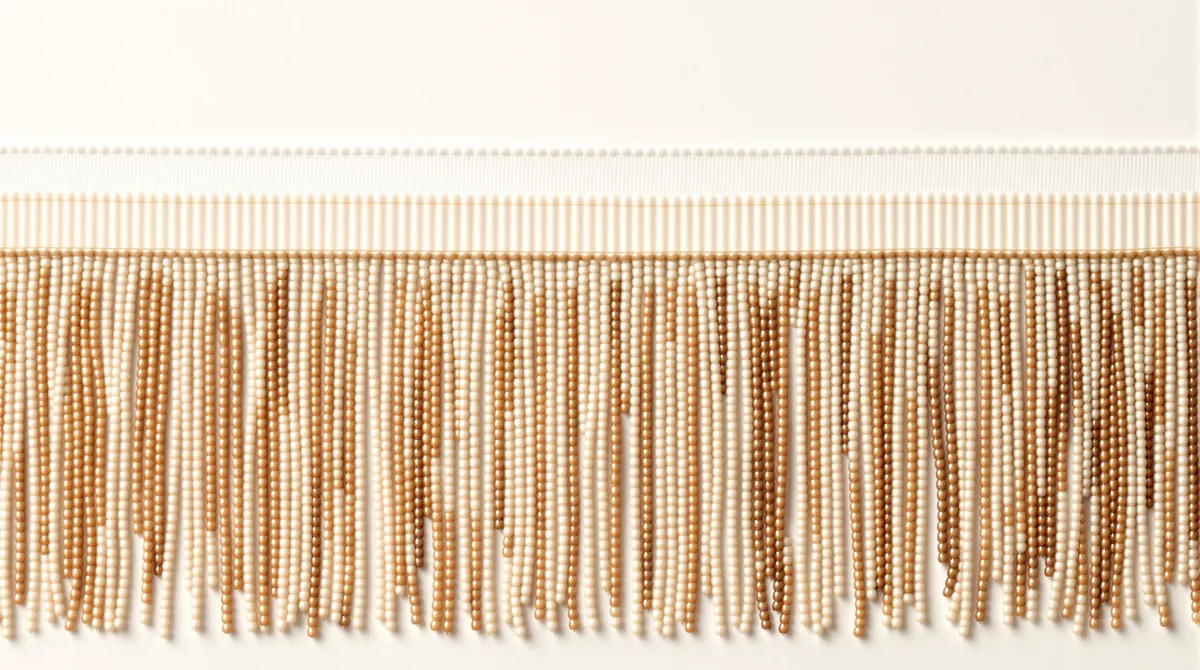
The header tape, the drop, the repeat length and the tolerances — how beaded fringe is built and quoted when it is a component in somebody else's product.
View the range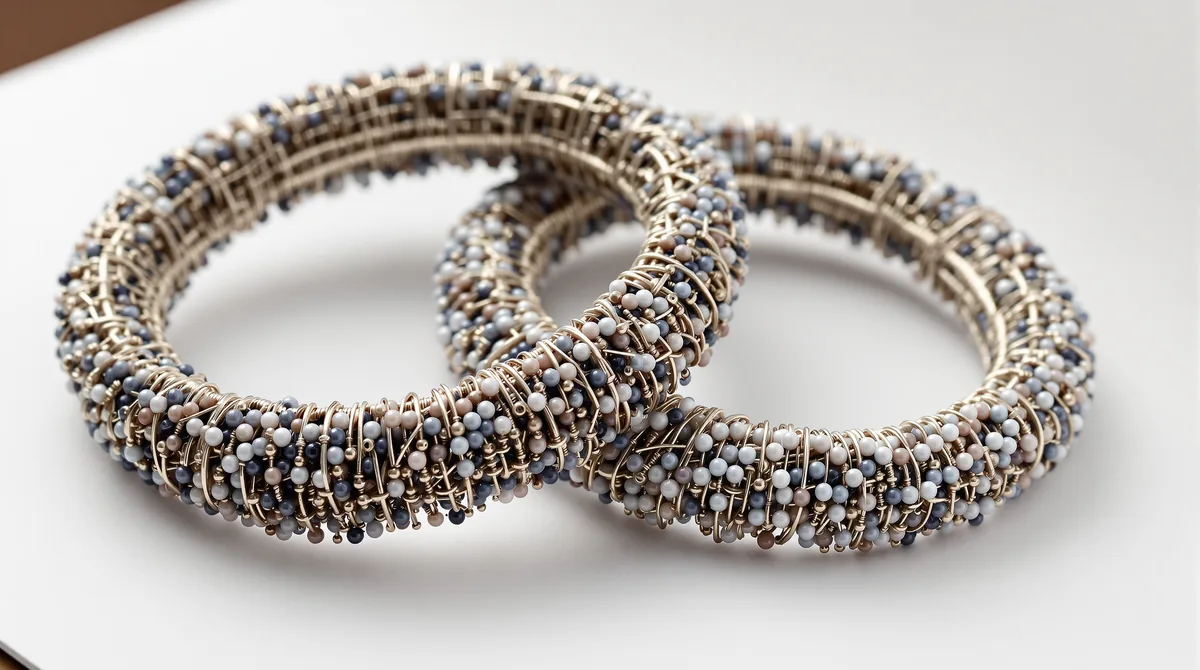
Manufacturing · OEM
Not every beaded order is a finished piece. Some are components for somebody else's product, and that is a different conversation: drawings, tolerances, kitting and first-article inspection rather than colour stories.
Two wire-wrapped beaded collars lying together, seed beads wrapped turn against turn over a shaped armature with the fine wire showing between them.
Contract beadwork supplies components rather than finished pieces: strung strands, fringe and drops, trims, framed shapes and sub-assemblies built to another maker's drawing and delivered ready for their assembly. The decisive inputs are a dimensioned drawing, a stated tolerance, and an agreed inspection standard — not a colour story.
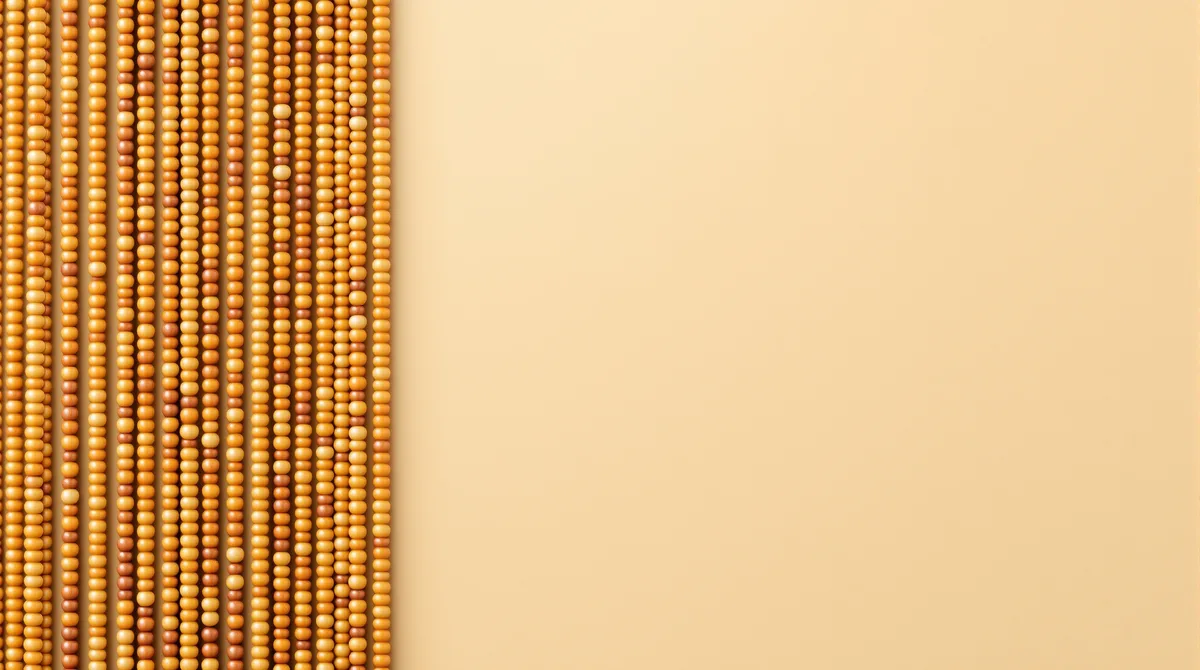
Beadwork supplied as a component rather than as a finished piece. Five families cover nearly all of it.
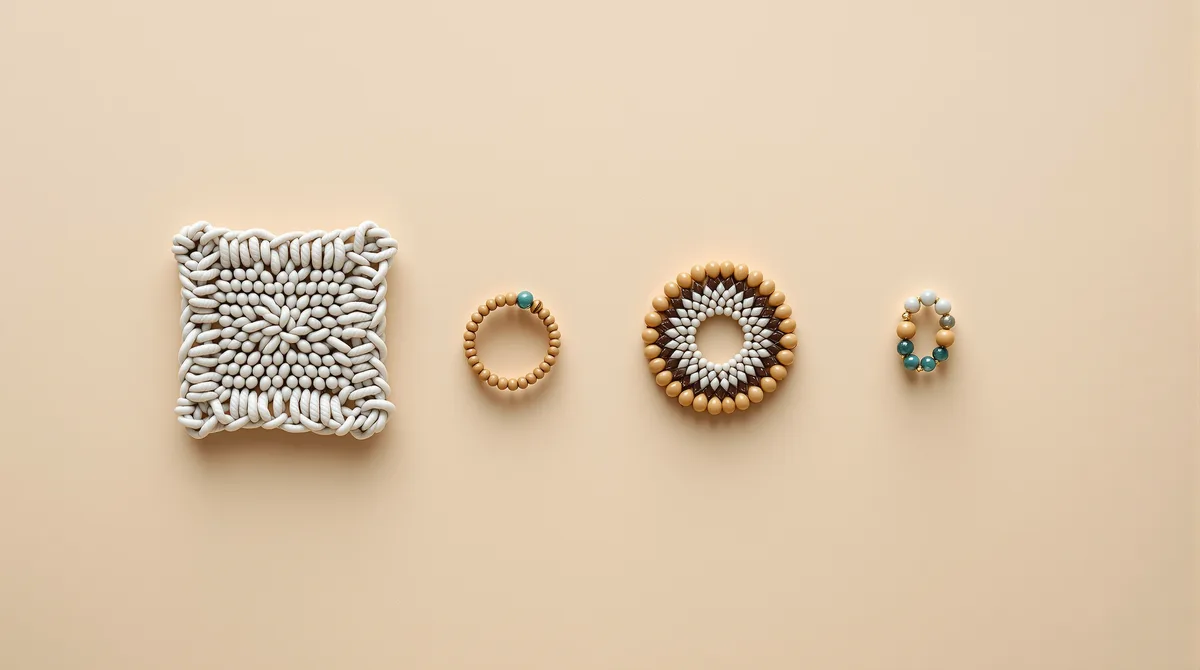
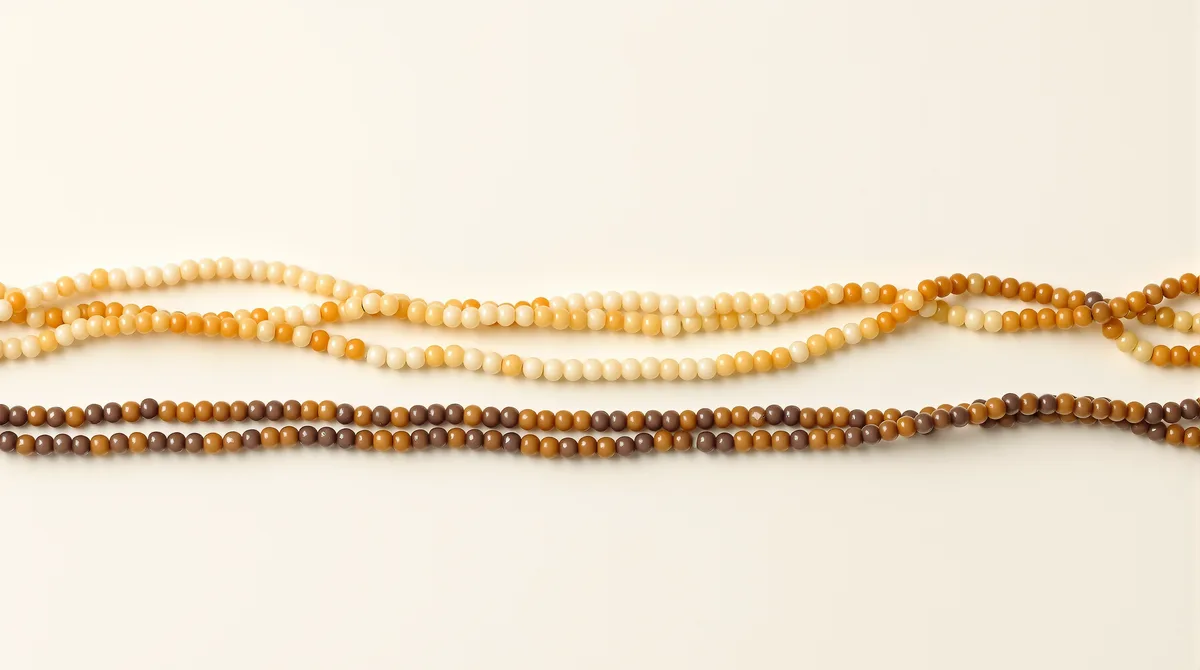
Strung strands cut to length, for another maker to mount. Fringe and drop assemblies, each finishing in a stopper or crimp. Beaded trims for textile or furniture work. Wire-wrapped and framed bead shapes, where beads are wrapped over a shaped brass armature or held in a rigid outline. And bead-embroidered panels, couched onto a stiffened ground in the zardozi tradition.
The construction is the same craft as our finished work. What changes is the deliverable: a part, counted and kitted, to be accepted on arrival.
Three things a retail brief does not contain.
A dimensioned drawing, because a component has to fit something. A stated tolerance, because hand-strung work has variation and the useful question is how much is acceptable rather than whether any exists. And an agreed inspection standard, so a delivery can be accepted or rejected on objective grounds.
A retail brief describes a look and gets resolved on an approved sample. A component brief describes a part and gets resolved on a first article against a drawing. Both work; they are not interchangeable.
The drawing and the tolerance first. Then: bead material, shape, outside size and drill hole for every bead in the part; the cord or wire and its specification; overall length and any cut-to-length tolerance; how the component terminates at each end; colour, as a reference or a physical chip; quantity, and how it should be counted and kitted.
The drill hole deserves repeating because it is the hard constraint. Cord is sized to the smallest hole in the build, and 4 to 5 mm is the usual ask on cord-strung work — a figure customers developing beads with us specify by name.
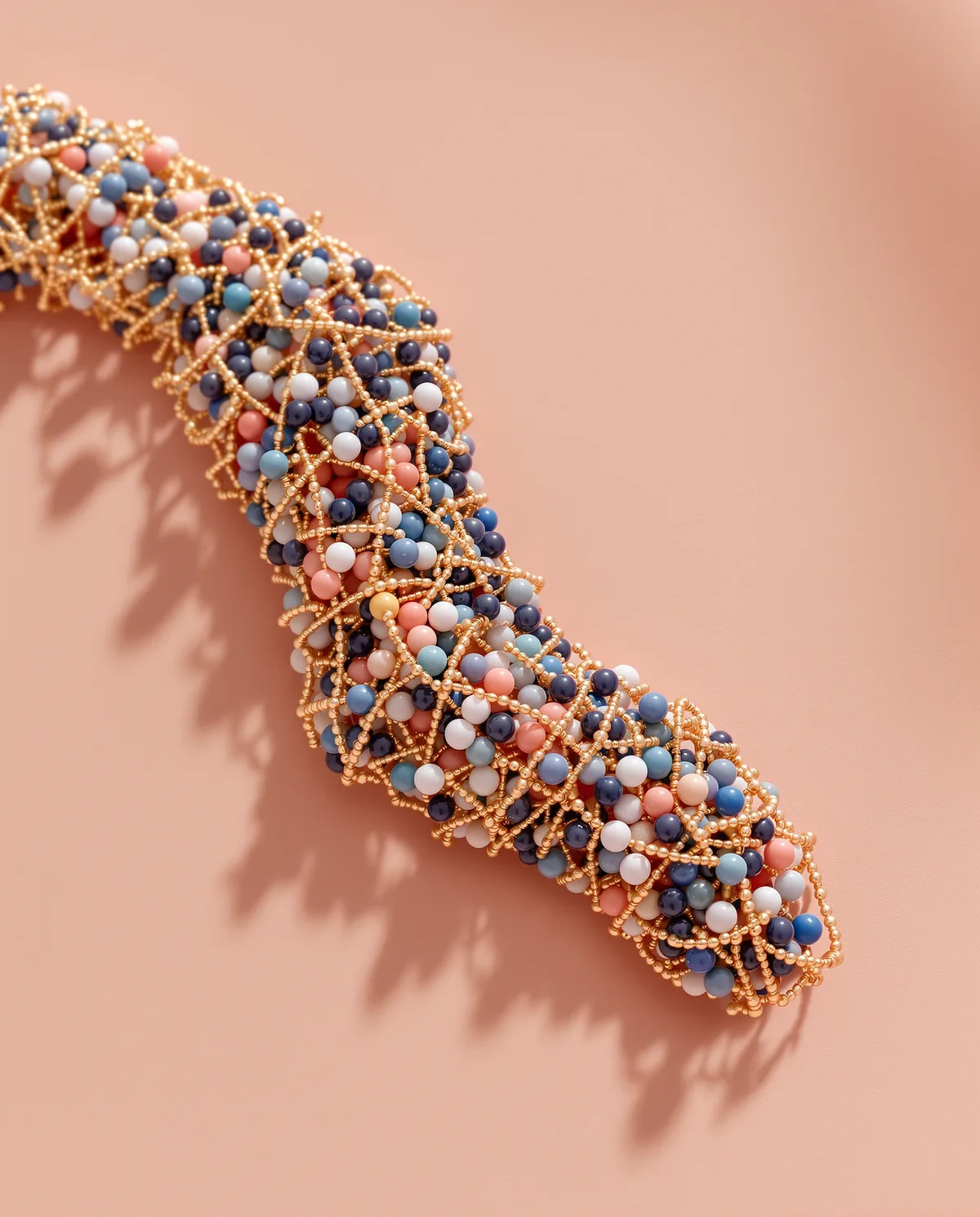
All nine bead families: glass (drawn seed, bugle, pressed, lampwork and Venetian-style), acrylic, wood, bone, horn, ceramic, shell, capiz and metal. The working library runs deep in every one of them — deep enough that a component is usually matched from beads we already draw, mould, turn or fire rather than tooled from scratch.
For carriers: cotton cord for strung work; brass wire for wrapped work over an armature; nylon-coated steel crimped at each end for fringe strands and edge loops on a rigid core. Those are different constructions with different strengths, and specifying the wrong one for a load-bearing component is a common error.
Eight standard metal finishes are available on plated components — matte gold, matte black, rose gold, brilliant gold, champagne gold, antique silver, brilliant silver and matte silver — with custom finishes using hand battering, large-grain sand casting, physical vapour deposition and gold plating.
Yes, and on component work this comes up more than on retail work, because a part often has to fit rather than merely look right.
Acrylic and resin beads are moulded to our own dies, and we cut a die where a design needs a bead nobody makes. Real examples: the custom three-inch almond beads that form the daisies on a café curtain, and a custom flower bead developed for a portal, both on dies we funded.
A die is a development with its own lead time and cost, and it is the one decision on a component programme that cannot be made late.
A brief with the drawing. A rough cost sheet before any sample, showing where the cost sits and which lever moves the price. Colour matching against a reference or chip. Then a first article, which must be approved before the production run begins — usually 16 to 20 days from an agreed brief, with photographs for approval, quoted separately.
Production runs 40 to 60 days after sample approval for beaded work. On component programmes the first article is the contractual reference point: production is held to it rather than to the drawing, because the drawing cannot describe everything a bead does.
A component lot is inspected differently from a finished piece, because the defect that matters is dimensional rather than visual. The first article is measured — section, hole diameter, hole axis, length — before bulk, and the lot is then inspected to an agreed AQL. Both happen in our own quality-control and packaging house at Greater Noida.
The AQL level is set per programme rather than fixed, because a decorative trim and a load-bearing fringe assembly do not warrant the same standard; the level goes into the quote. Across the network, product issue rates run at a fraction of a percent.
Quality is a system, not an inspection.
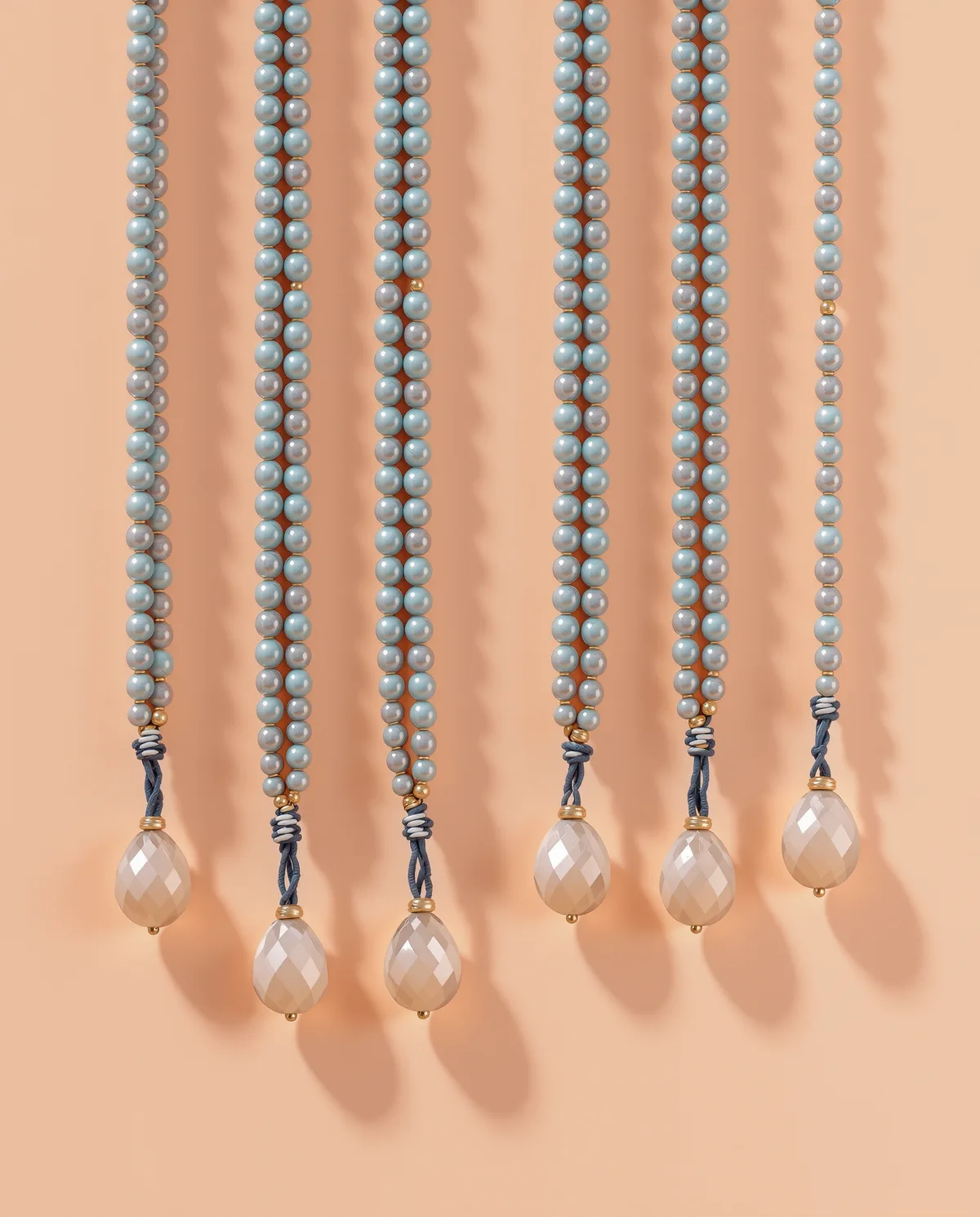
Kitted for your line rather than packed for a shelf. Counted, bagged, labelled and consolidated to whatever your assembly needs, and shipped to the port or warehouse you name.
Landed duty paid is available: manufacturing, export, freight, duties and US warehousing in a single delivered price at your chosen US location, with no separate freight agents or customs brokers in between. We manufacture, import and warehouse product in the US.
A component programme usually touches two plants rather than five. Glass is drawn and hand-strung at our own Firozabad works, where a colour can be altered at the furnace rather than reordered against a name. Metal is finished and plated at our own Moradabad plants. Wood turning sits at Saharanpur, ceramic firing at Khurja, and acrylic or resin is moulded and dyed to our colour on dies we cut and keep ourselves.
What an OEM buyer is actually asking is who holds the process when a lot goes wrong. The answer is that the plant and the quality house are the same company. Factories we own, not vendors we book.
OEM and contract manufacturing customers, which is one of the published client types we serve. In practice: lighting manufacturers and lamp-parts distributors, furniture and architectural-hardware makers, houseware brands with their own assembly, and display and event companies building to a drawing.
Beadwork is also an active development category for customers specifying at bead level rather than product level — one current development is being run to a customer-specified bead hole of 4 to 5 mm, which is a component conversation rather than a décor one.
A component programme is covered by the plant-level credentials: Sedex SMETA on the Sedex platform, FSC certification on the wood lines, C-TPAT membership, and Omega social-compliance audit. Certificates come with the quote pack.
Lead-content testing to California Proposition 65 is run as standard on the beaded curtain programme. Any further testing — mechanical, flammability, children's product, market-specific — is scoped against the actual build and quoted separately, because bead, cord, carrier and finish all matter.
| Specification | Value |
|---|---|
| Component types | Strands, fringe and drops, trims, wire-wrapped and framed shapes, embroidered panels |
| Drawing | Customer's dimensioned drawing; we return a colour-count sheet against it |
| Bead hole | Customer-specified; 4–5 mm is the usual ask for cord-strung work |
| Custom bead shapes | Moulded to our own dies where the design needs a bead that does not exist |
| Wire options | Brass wire for wrapped work; coated steel for crimped fringe on a rigid core |
| First article | Approved before the production run begins |
| Inspection | First-article and lot AQL inspection in our own Greater Noida house |
| Kitting | Assembly and kitting, export packing and labelling, consignment consolidation |
| Sampling | 16–20 days from an agreed brief, quoted separately |
| Production | 40–60 days after sample approval |
| Compliance | Sedex SMETA · FSC · C-TPAT · Omega social-compliance audit |
| Minimums | Set per design, confirmed per quote |
Stringing specifications holds the hole, cord and strand-length data a drawing has to carry. Graphic bead patterns covers the bead map, and design exclusivity covers what can be held for one customer. For repeat supply, repeat bead orders sets out the controls that keep a part identical run to run.
Good to know
No. Components are made to order against an approved first article, exactly as finished pieces are. For a contract programme that is usually what the customer wants anyway: a component held in stock is a component made to somebody else's drawing.
Yes. Beads are matched to a colour reference or a physical chip and confirmed on the first article. On a component programme we would also ask for the colour of whatever the component attaches to, because a bead that matches a chip and clashes with a frame has still failed.
Yes, and on a component programme resizing is routine. Bead and strand counts are recalculated for the new dimension and the colour-count sheet is reissued. What we would flag is any point where the new size changes a hole or cord constraint — those are the dimensions that cannot simply be scaled.
Beaded work runs 40 to 60 days after sample approval. Sampling is a separate step, usually 16 to 20 days from an agreed brief, and is quoted separately. On a component programme the first article is the approval gate rather than a presentation sample.
Components are not usually packed for retail — they are kitted for your assembly. Our Greater Noida house does assembly and kitting, export packing and labelling, and consignment consolidation, so a component can arrive counted, bagged and labelled to whatever your line needs.
Glass beads are drawn and hand-strung in our own Firozabad glass works; wood is turned in our own Saharanpur factory; ceramic is glazed and fired in Khurja; metal is finished and plated in Moradabad. Acrylic and resin beads are moulded and dyed to our colour, to our own dies where a design needs a custom bead. We own the plants, and we are not a sourcing office.
A dimensioned drawing, a stated tolerance, and the inspection standard you want applied. A retail brief describes a look; a component brief describes a part. The three items above are what turn a bead specification into something that can be accepted or rejected on arrival rather than discussed.
Keep exploring
Manufacturing
The header tape, the drop, the repeat length and the tolerances — how beaded fringe is built and quoted when it is a component in somebody else's product.
View the rangePillar
Brief, rough cost sheet, colour match, sample, production, packing — the six stages with the real published timings.
Open the referenceManufacturing
Brief, rough cost sheet, colour match, sample, production, packing — the route from a sketch to a packed carton, in plants we own.
See the detailManufacturing
Library design, recolour or ground-up development: the three routes, and what exclusivity can realistically cover on each.
See the detailManufacturing
The approved sample, the colour-count sheet, the dye-lot record and first-article inspection: what keeps a reorder identical.
Specs and sizesSpecification
Diameters, drill holes, cord selection, strand counts and format dimensions — the sheet to copy into a tech pack.
View the range
Start a conversation
Send a reference, a colour chip or a sketch. Minimums are set per design and confirmed per quote; sampling is quoted separately and usually runs 16 to 20 days from an agreed brief.