Specification
Covered patios
UV on dyed surfaces, water on cord and wood, wind on strand order — and the covered-only answer we give for every material we make.
Read the guide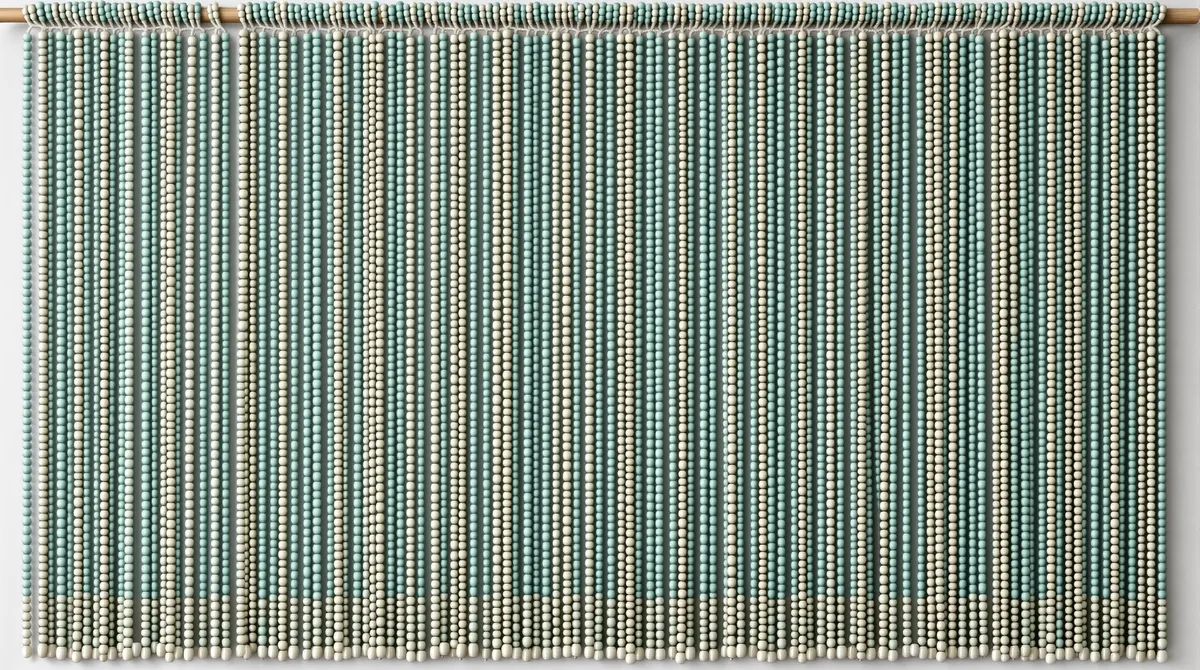
Guide · Outdoor
There is no weatherproof beaded curtain, and anyone selling you one is selling you a cord that has not failed yet. Under cover is a different question, and a reasonable one.
A beaded panel strung from round glazed ceramic beads and short cut bamboo tubes alternating down every cord in sea-green, sand and driftwood grey, on a plain weathered grey…
Only in a genuinely covered position — a porch, a deep veranda, a cabana — and then with inorganic beads on a synthetic stringing medium. In open weather a beaded panel fails in a fixed order: the cord first, then surface finishes under ultraviolet light, then any wood component. The published position is indoor and sheltered use.

Covered positions only, and even then as a serviceable item rather than a permanent one.
The published position is that we recommend indoor use. A deep porch, a cabana, a veranda with real overhang, a covered restaurant terrace — those are positions where a panel built from inorganic beads on a synthetic stringing medium will do well for years. A pergola with gaps in it is not, and a wall facing the weather is not.
A bead panel is inert objects threaded onto one structural component, and outdoors the attack is on the structural one.
Cotton cord in weather takes water, dries, takes water again, and loses tensile strength at exactly the drill holes where it is already abrading under load. The failure is a parted strand, and once it starts it recurs, because every strand has had the same exposure.
The second attack is ultraviolet light, and it goes after finishes rather than structure. Surface dye is a coating and it fades. Acrylic can yellow. A lacquered dowel chalks. None of that drops the panel; it just stops it looking like the panel you bought.
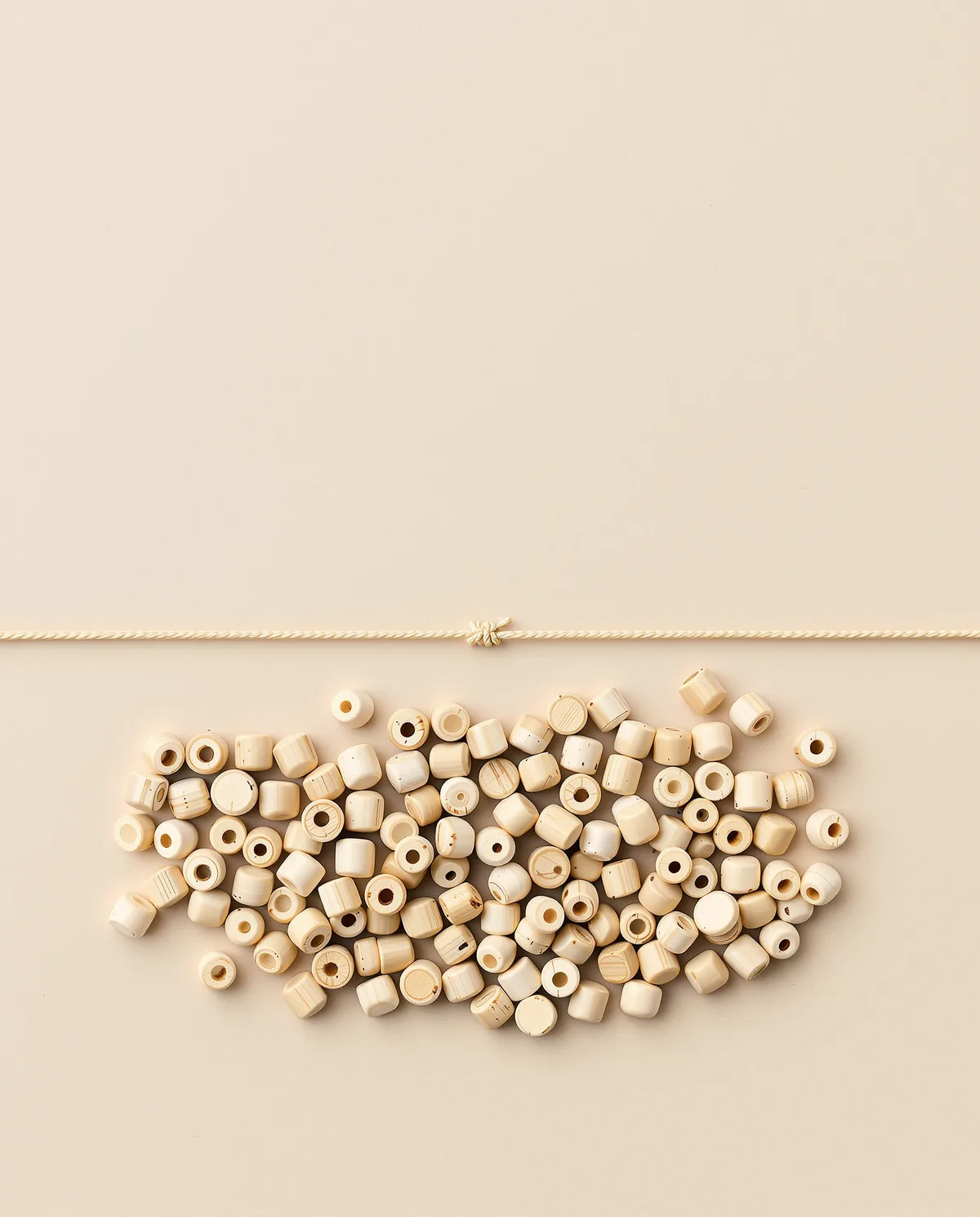
Third, and only on panels that contain them, wood and bamboo: both swell and shrink, both mark, and bamboo in particular marks permanently.
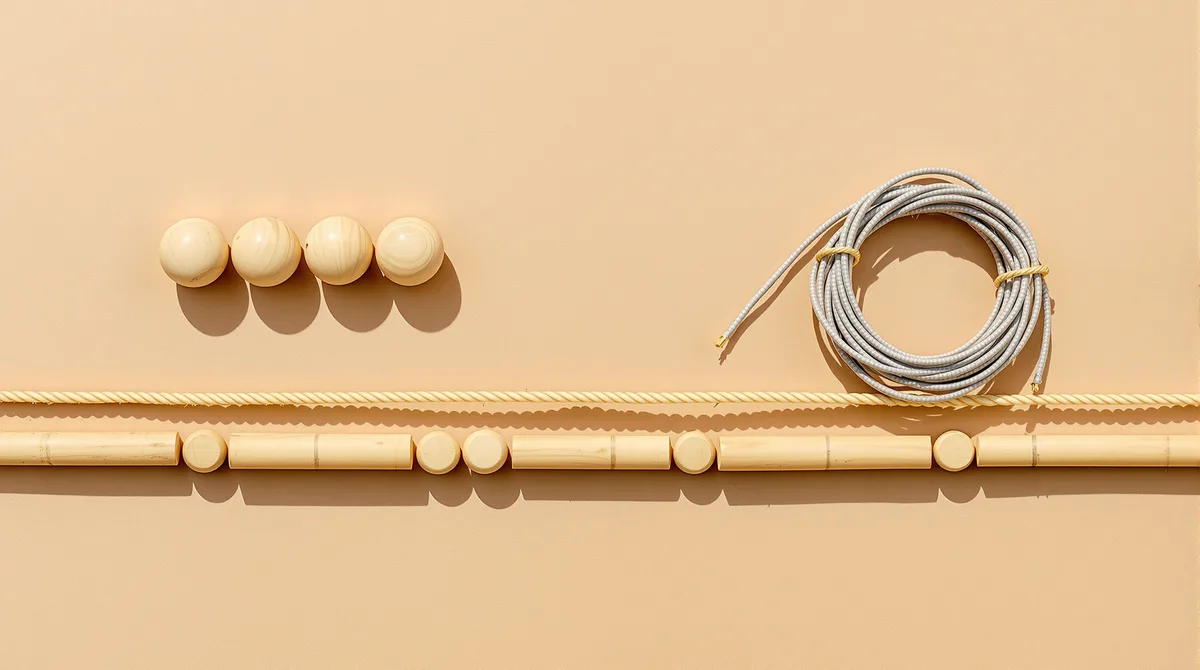
Beads: glass is drawn and hand-strung in our own glass works and is entirely stable outdoors. Acrylic is moulded and dyed to colour and is stable structurally. Faux capiz is cast resin or dyed cut acrylic, which is an engineered material rather than shell, and it holds up well — the surface dulls before anything else happens.
Construction: a coated steel-wire medium removes the single biggest problem, and it changes the finishing because wire is crimped rather than knotted. A bare dowel is a wood component in an otherwise inorganic build; a rod in metal is not. A stitched cotton header band is a textile outdoors and is the wrong choice.
A weakened cord at a loaded drill hole, with wind movement accelerating it.
The design answers are to remove the organic medium, reduce the weight each top knot carries by shortening the drop, and reduce movement by strand spacing and bead size. A shorter, denser panel on coated wire in a covered position is a genuinely durable object. A long, sparse panel of large glass beads on cotton cord in a draught is a panel with a schedule.
More than rain does, in a covered position. A panel under cover is dry and still moving, and movement is what wears cord at a drill hole and chips glass where beads strike each other.
A draughty covered position therefore needs the same conservatism as an exposed one: closer strand spacing so strands cannot swing far, smaller beads, and a shorter drop. A heavier end bead steadies a light strand and reduces its swing, which outdoors is a durability measure rather than a cosmetic one.
Four moves. Treat the panel as replaceable and budget for it. Specify inorganic beads on a synthetic medium with a metal or protected header. Choose a position that is dry and still rather than dry and windy. And where the brief is genuinely exterior, consider whether the piece should be beadwork at all.
For a commercial covered terrace, the answer is often a shorter valance rather than a full-length panel: less weight, less movement, less exposure, and the same visual effect at the head of the opening.
As a maintenance commitment. A covered terrace panel in a restaurant is in a position nobody monitors, cleaned by whoever cleans the terrace, and it will be dry-dusted rarely and hosed occasionally.
Specify accordingly: inorganic throughout, synthetic medium, short drop, and an inspection line on the maintenance schedule rather than a care card. Our reference project in this category is the large beaded wall installation at a US casino resort — an interior project, and the relevant lesson from it is that commercial beadwork lives or dies on who is responsible for it after handover.
Nothing we are in a position to characterise, and indoor and sheltered positions are what these panels are specified for. Where a retail or hospitality programme requires testing, it is arranged to the buyer's own protocol and quoted separately.
Interior use. The bead material. The stringing medium. The header type. And nothing suggesting weather resistance.
The temptation on a listing is to say "suitable for covered outdoor use", and the problem with it is that "covered" is doing all the work and the customer will interpret it generously. "For interior use; glass beads on coated wire" is less appealing and far more useful.
By choosing components, and by refusing to pretend. The bead families we draw, mould and cast are inorganic and stable. Wood is turned in our own wood factory at Saharanpur for dry interior work. Bamboo is confirmed per design rather than claimed as a standing capability, and an exterior position is not a design we would confirm it for.
Beads are matched to a Pantone reference or a physical chip and confirmed on an approved sample, so a terrace palette can be built in acrylic as readily as in glass. What does not happen is a silent substitution: changing from cord to coated wire changes the finishing, and that is approved on the sample.
What each material and each stringing medium actually does in weather, which is what decides an outdoor specification.
Documented, and therefore usable: what each bead family is made of, which components are organic, where the load sits, and that the published recommendation is indoor use. Where a project needs a weathering class, the build is tested and the testing is quoted with it.
An outdoor rating, a weatherproof panel, a service life in weather, or any number with a unit attached to outdoor performance. The one claim we will make is the negative: a bead panel in open weather will fail at the cord, and it will fail sooner than you expect.
Extractable data
| Component | Covered position | Open weather | First failure |
|---|---|---|---|
| Glass beads, body colour | Fine | Fine | None |
| Frosted or sea-glass beads | Fine | Fine | Surface soiling only |
| Surface-dyed beads | Fades slowly | Fades | Colour, under ultraviolet light |
| Acrylic beads | Fine | Yellowing possible | Colour and surface gloss |
| Faux capiz, cast resin or dyed acrylic | Fine | Surface dulling | Finish, not structure |
| Wood beads and dowel | Marginal | No | Swelling, then splitting |
| Bamboo beads | Marginal | No | Marking, which is permanent |
| Cotton cord | Degrades | No | Parts under load at a drill hole |
| Coated steel wire | Fine | Fine | None |
Good to know
It changes the wind behaviour, which outdoors is a real variable. Large beads on light cord swing hard in a gust and knock against each other, which chips glass and wears cord at the drill hole. Smaller beads strung closer move less. A covered position with a draught through it is harder on a panel than a still damp one.
We recommend indoor use; a genuinely covered outdoor position is possible with inorganic beads on a synthetic medium, and no outdoor rating is published for any of our panels.
The beads barely matter and the cord decides everything. Glass, acrylic and faux capiz are all stable outdoors; cotton cord is not, and wood and bamboo are not. A glass panel on cotton cord outdoors is a cotton cord problem wearing glass beads.
For interior use, with the bead material and stringing medium stated. It should not say weatherproof, outdoor, all-weather or garden, because none of those has been tested. A listing that names the cord lets a buyer judge a covered position for themselves.
No. There is no weathering, ultraviolet, water-resistance or wind-load test result behind this page, and no outdoor rating is published for a Gemixx panel. This is construction reasoning about which components are organic and where the load sits.
That any beaded panel is weatherproof, outdoor-rated, ultraviolet-stable or wind-rated. We also will not quote a service life outdoors. Where a specification needs a number, it has to be tested against the actual build and is quoted separately.
Keep exploring
Specification
UV on dyed surfaces, water on cord and wood, wind on strand order — and the covered-only answer we give for every material we make.
Read the guideGuide
Colour through the glass body survives; surface dye and coated finishes go first; acrylic sits between the two.
Read the guideGuides
One guide per question that arrives often enough to be worth answering properly.
How it is madeGuide
Cord and wood fail first in humidity, long before glass notices. Which materials and cords survive a persistently damp room.
Compare the optionsGuide
Knot finish, strand length consistency, bead alignment, drill quality, header fixing, dye evenness, spares and packing.
Read the guideGuide
Loosely tied bundles in strand order, flat or hanging, never folded, somewhere dry — and label which opening it came off.
How it is made
Start a conversation
Send a reference, a colour chip or a sketch. Minimums are set per design and confirmed per quote; sampling is quoted separately and usually runs 16 to 20 days from an agreed brief.