Guide
Beadwork outdoors
Under cover it lasts; in weather it does not, whatever the beads are made of. The failure order outdoors is cord, finish, wood.
See the detail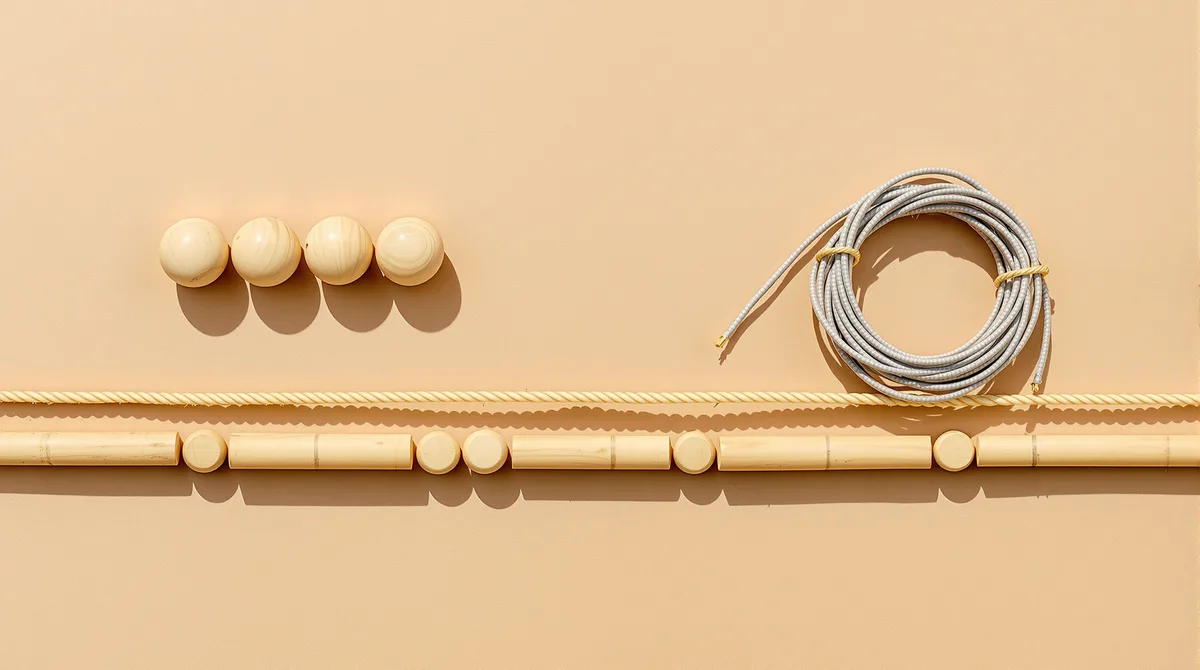
Application · Outdoor
Our answer to “can a beaded curtain go outside” is: under cover, out of the wind, in the right material, with the cord treated as a service item. Fully exposed, no — in any material we make.
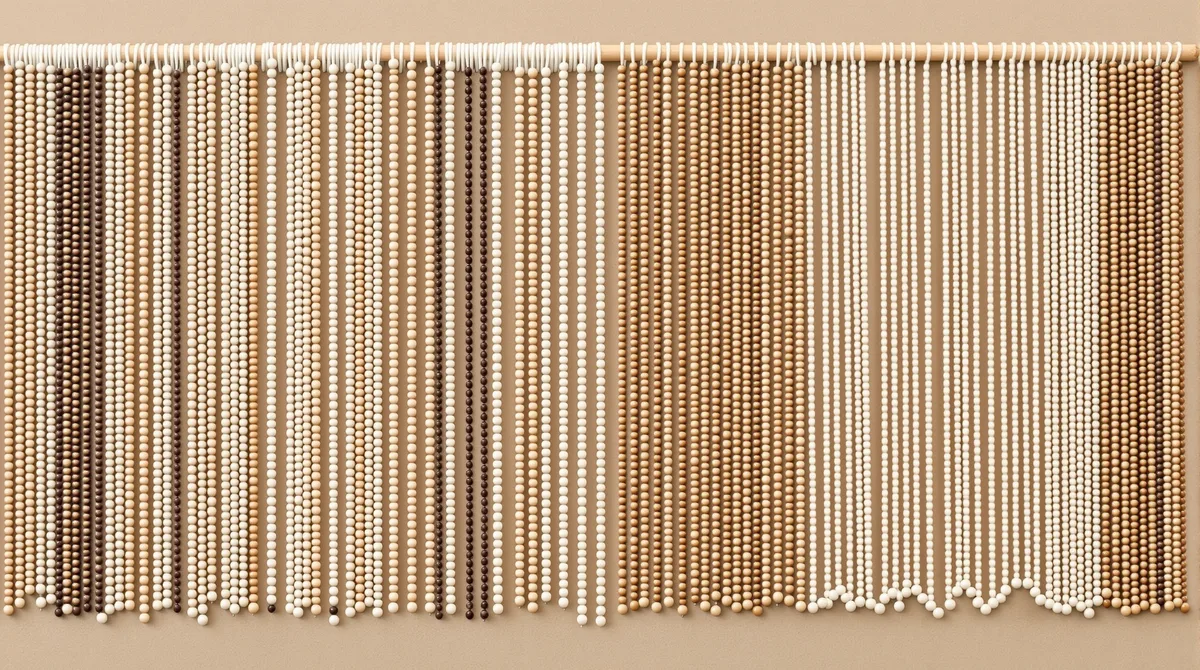
Large plain turned wooden beads, a turned wooden dowel strung with them, and a coil of grey coated steel wire.
Beadwork can go outdoors under cover, sheltered from wind and driven rain, in body-coloured glass or moulded acrylic, with cotton cord understood as a component with a service life. Fully exposed positions fail in every material we make: UV lifts dyed surfaces, water swells wood and slackens cord, and wind destroys strand order.
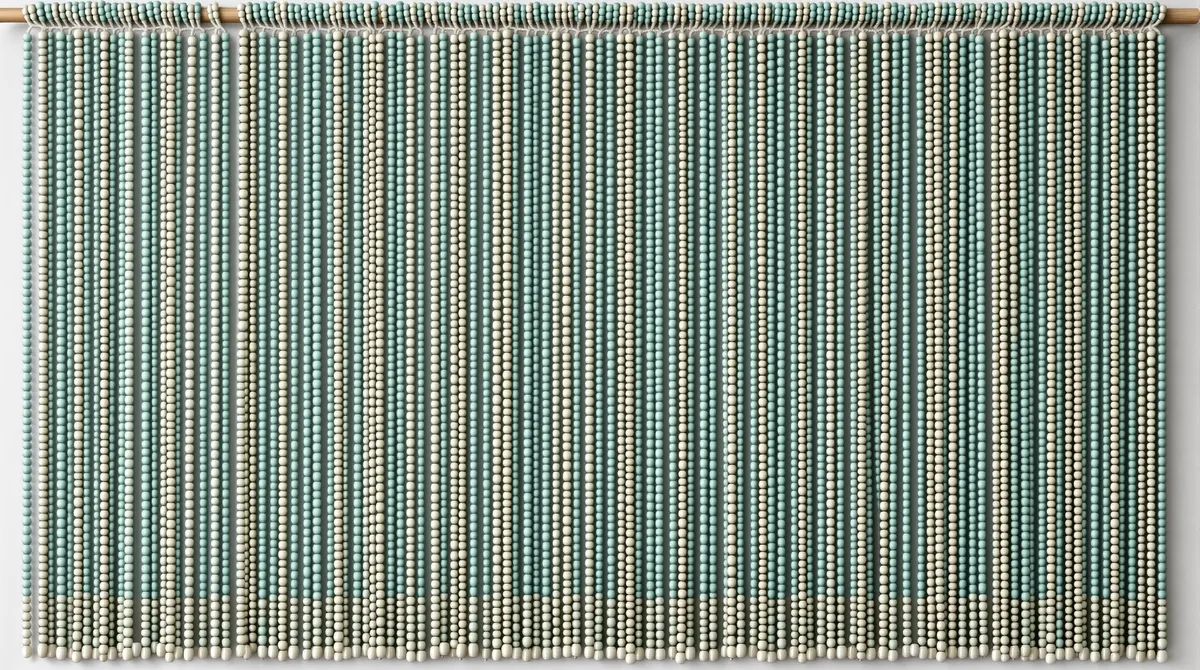
Carry an interior look out onto a terrace, a loggia, a covered patio or a verandah. It is one of the most-searched questions in the whole category — people want to know whether a beaded curtain can go outside — and most of the answers online are a cheerful yes.
Ours is narrower, and it is the whole answer on outdoor beaded curtains. Under cover, sheltered from wind and driven rain, in the right material, with the cord treated as a replaceable component: yes, and it can look very good. Fully exposed: no, in any material we make.
UV tolerance on the colour. Surface dye is a surface property and sunlight finds it.
Water tolerance on every component, including the one nobody thinks about, which is the cord.
Wind tolerance on strand order. A hanging panel in moving air is a row of pendulums, and a gust puts them permanently out of line.
A fixing that will not corrode, and a header that is not itself a weathering problem.
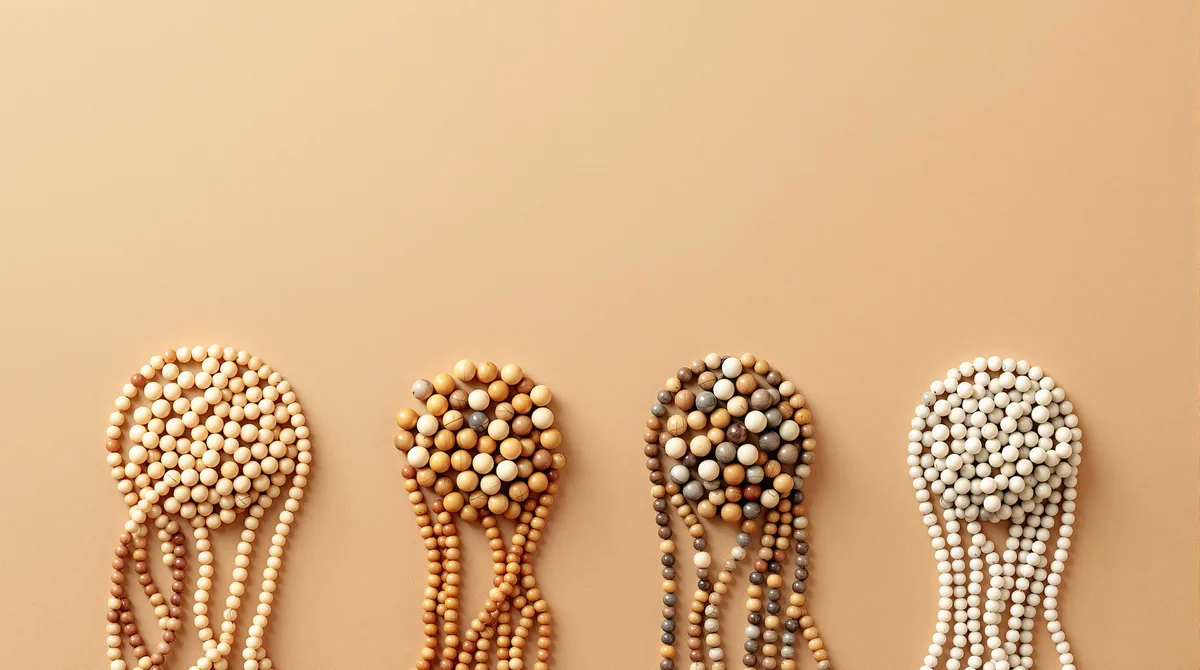
Material: body-coloured pressed glass is the most stable bead we make outdoors, because the colour is in the glass and the glass does not care about weather. Moulded acrylic is the practical alternative — light, shatterproof, dyed to colour — and it belongs under genuine cover rather than in full sun. Frosted and sea-glass beads work well, partly because a matte surface hides water marking.
Rule out surface-dyed beads, wood beads and bamboo. Wood should be dusted or wiped dry rather than soaked and should be kept away from constant steam and damp; bamboo can mark in rain or constant damp, and our published position on it is indoor use.
Format: short. A valance or a short drop beats a full-length panel on every axis that matters here.
Sampling runs 16 to 20 days from an agreed brief, photographs approved before the sample ships, and the production lead time is 40 to 60 days after sample approval. There is no outdoor-specific extension to that, because there is no outdoor-specific product. The construction is the same hand-strung build, specified in a more tolerant material and a shorter format. That is worth saying plainly rather than implying a hardened outdoor line exists.
State the exposure explicitly, in words a contractor cannot soften: "covered terrace, sheltered on two sides, no driven rain, no standing water at hem". A drawing that says "external" without that qualification invites an installation we would not stand behind.
Then finished width and drop, with the hem height above the paving stated so it never stands in water. Strand count or pitch. Bead material and size with hole diameter. Colour as Pantone references or physical chips. Header type and material, noting whether it is wood or a project-supplied metal rail. Fixing material, specified as corrosion-resistant. And the cord replacement expectation, written as a maintenance note.
Short formats and modest widths keep the beadwork cost low. Where an outdoor project costs more than an equivalent indoor one is in the fixings, the header upgrade and the replacement cycle.
The cost levers in order: bead size and material, then strand count and tightness, then pitch, then header and packing, then height. For an outdoor position two of those should be pulled deliberately in the cheap direction: shorter height and wider pitch both reduce cost and improve survival, which is an unusually comfortable alignment. Minimums and pricing are set per design and confirmed with your quote.
Beadwork is specified for indoor and sheltered positions, and a covered terrace sits at the edge of that. What works there is the build made for it: body-coloured glass or moulded acrylic, a short drop rather than a full-length panel, a corrosion-resistant fixing, and a cord specified as a replaceable component.
Anyone specifying beadwork for a covered terrace should plan on a shorter service life than the same panel indoors, and should specify the cord as a service item from the start rather than discover it later.

Full exposure, in any material. Bamboo or wood anywhere outdoors. Surface-dyed beads in daylight. A hem that reaches paving where rainwater collects. A wooden header in a wet climate. Mild-steel fixings.
And a full-length panel in a position with any real wind, which will be beautiful for a week and permanently combed sideways after that.
The designer and the client, with a documented acceptance of the exposure and the expected service life — not as a legal manoeuvre, but because the single most common cause of disappointment in this setting is an expectation nobody wrote down.
Corrosion-resistant brackets and hooks, specified and supplied by the project. Fixed into solid structure under the cover, sheltered on at least two sides where the architecture allows it.
We make the panel and its wooden dowel or header rail. Outdoors, a wooden header is itself exposed, so in a damp climate a project-supplied metal rail is the better choice and the panel is built to suit it. Wind loading is real and belongs to the project engineer; we supply the measured panel weight of the approved sample so the wind case can be worked from a real number.
For a private terrace, generally none. For a covered terrace at a commercial venue, the usual flammability question applies — NFPA 701 in the US or a local equivalent — and fire performance is tested on the specified build and quoted with the project.
The rest of an outdoor specification is answered by material and position rather than by a rating. Body-coloured pressed glass is the stable bead. Moulded acrylic is the practical alternative under genuine cover. Cotton cord is the limiting component and is specified as a replaceable service item. Wood and bamboo stay indoors. And the position itself has to be sheltered on at least two sides — a fully exposed terrace is outside what any of these materials is specified for. A coastal position adds salt, which the resort page covers.
Extractable data
| Item | Covered and sheltered | Fully exposed |
|---|---|---|
| Body-coloured pressed glass | Suitable; the most stable bead outdoors | Bead survives; cord and fixing do not |
| Moulded acrylic | Suitable; light and shatterproof | Not recommended; UV ageing unquantified |
| Surface-dyed beads | Not recommended | No |
| Frosted or sea-glass beads | Suitable; the matte surface hides water marks | No |
| Faux capiz discs | Marginal; keep out of standing water | No |
| Turned wood | Not recommended; keep dry | No |
| Bamboo | Not recommended; marks in damp | No |
| Cotton cord | A service item; expect to re-string eventually | No |
| Format | Short drops and valances over full-length panels | — |
| Wind exposure | Sheltered on at least two sides | Strand order will not survive |
| Fixing | Corrosion-resistant, by the project | — |
| Weathering | Tested on the specified build where a project needs a class | Indoor and sheltered positions are what these panels are specified for |
| Sampling | 16–20 days from an agreed brief | — |
| Production | 40–60 days after sample approval | — |
Good to know
Sampling is 16 to 20 days from an agreed brief, with photographs approved before the sample ships, and production is 40 to 60 days after sample approval. There is no outdoor-specific extension, because there is no outdoor-specific product: the build is the same construction specified in a more tolerant material, which is part of the honesty of this page.
The cord, by some distance. Cotton cord outdoors absorbs moisture repeatedly, slackens, discolours and eventually abrades inside the drill holes. After that, in an exposed position, strand order goes in the first real wind and does not come back. The beads themselves — body-coloured glass in particular — are the last thing to show anything at all.
Beadwork is specified for indoor and sheltered positions, which is the published care position for every material we make. A covered terrace sits at the edge of that: body-coloured glass or moulded acrylic, a short format, a corrosion-resistant fixing supplied by the project, and a cord treated as a replaceable service item. Bamboo and wood stay indoors.
Short formats. A valance at the head of a covered opening, or a short drop, rather than a full-length panel: less surface exposed, less weight on a cord that is already working harder, less sail area in wind, and much cheaper to replace when it eventually needs replacing. A full-length panel is viable in a deeply sheltered loggia and is a shorter-lived piece there than it would be indoors.
Corrosion-resistant throughout, and specified by the project — stainless or properly coated brackets, because a mild-steel hook outdoors will rust and stain. Fix into solid structure under the cover, sheltered on at least two sides if possible. We make the panel and its wooden dowel or header rail; note that a wooden header outdoors is itself a weathering risk, and a metal rail specified by the project is the better choice in a damp climate.
For a covered terrace at a commercial venue, the usual flammability question applies — NFPA 701 in the US or the local equivalent — and fire performance is tested on the specified build and quoted with the project. Beyond that, an outdoor specification is answered by material and position rather than by a rating: body-coloured pressed glass is the stable bead, moulded acrylic the practical alternative, the cord is the service item, and the position has to be genuinely sheltered. Fully exposed is outside what any of our materials is specified for.
Keep exploring
Guide
Under cover it lasts; in weather it does not, whatever the beads are made of. The failure order outdoors is cord, finish, wood.
See the detailPillar
Twenty settings, from a closet front to a hotel lobby, each with the format that suits it, the fixing it needs and the standard that applies.
How it is madeSpecification
Daylight and fade, sill-set lengths, the fabric header with a rod pocket, and why a window brief is a light brief rather than a privacy one.
How it is madeSpecification
Shallow header depth and narrow width push a closet panel towards lighter beads, a tighter pitch and a tension-rod fixing.
See the detailSpecification
Ceiling fixing, double-sided reading, strand drift in airflow, and a plain account of what a bead division will not do.
Read the guide
Start a conversation
Send a reference, a colour chip or a sketch. Minimums are set per design and confirmed per quote; sampling is quoted separately and usually runs 16 to 20 days from an agreed brief.