Pillar
The compliance layer
Lead, CPSIA, Prop 65, REACH, fire standards, electrical listing and audit — what applies, who carries it, and what we hold.
Read moreMarket · United Kingdom
Three things change for a UK programme: the vocabulary, the testing, and the audit gate. There is no UK office, and this page says so rather than implying one.
A UK programme changes in three ways. The vocabulary differs — a valance is often a pelmet and a doorway panel a fly screen. Testing expectations are specific, and UK entry commonly generates incremental testing beyond a US programme. And the ethical-audit gate is firmer: Gemixx states it is a Sedex member and SMETA audited. There is no UK office; the UK is served from India.
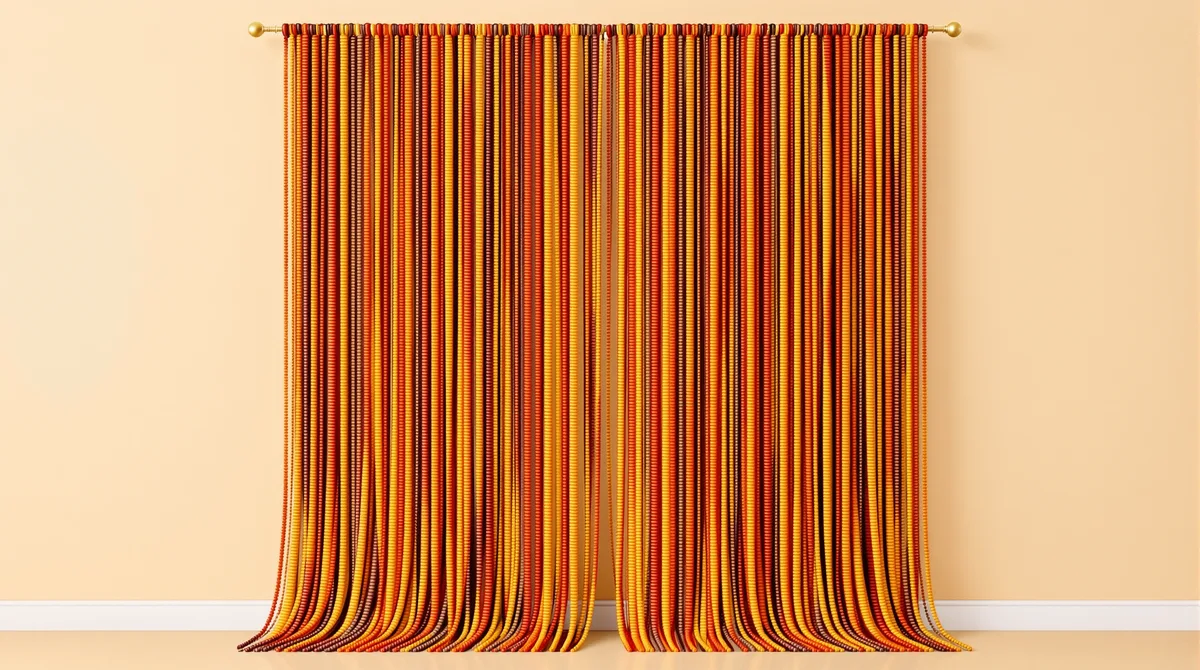
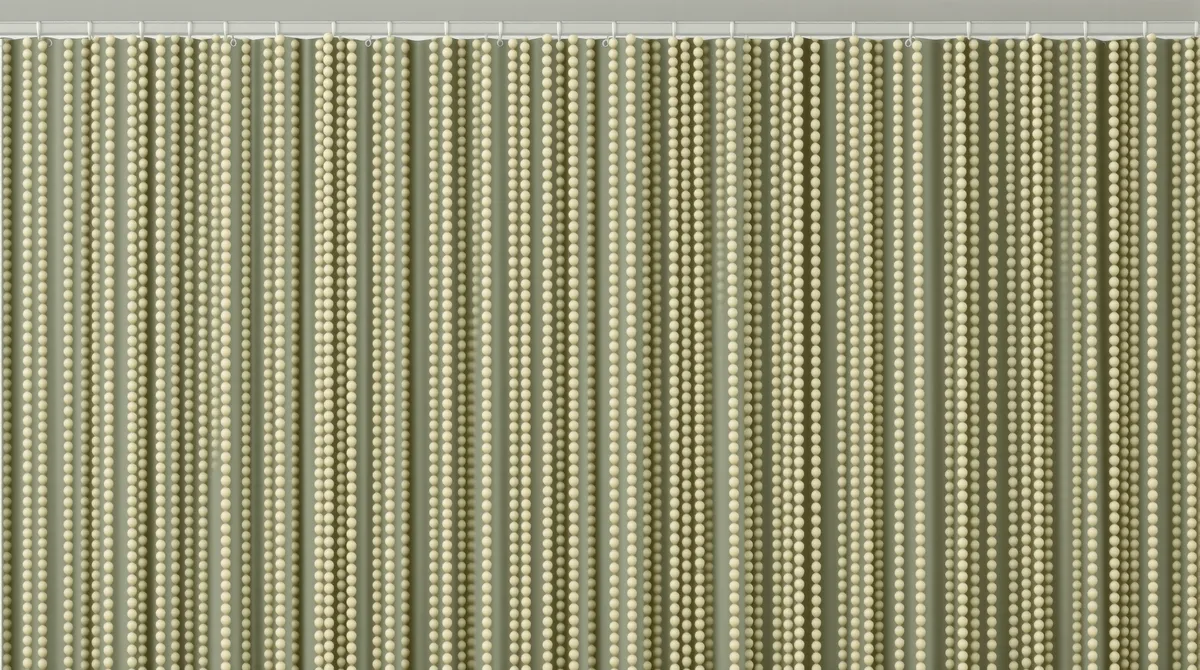
Portals and café curtains lead the UK, and the full range behind them — door curtains, pelmet-length valances and wall hangings — is built on the same construction. The library carries the register: a neutral wood-tone doorway portal in creams, tans, caramel and chocolate on an ivory base strand; a multi-colour portal; a multi-colour café curtain in translucent glossy beads; and a pink daisy café curtain with moulded daisy connectors on a cotton header. Those formats ship into the United Kingdom direct from the plants in India.
The UK runs on the same designs and the same colour-count sheets as the North American programme. That is deliberate: a UK floor set and a US floor set can carry the same object, in the same colour, built to the same sealed sample.
Changeable, per design: dimensions, strand count and spacing, bead material, colour, pattern, hem shape, header and packing. The neutral portal is the clearest example of how far that goes — it is the same thirty-strand build as the multi-colour original with the entire palette rewritten to wood tones, which is a colour-count sheet change rather than a new product.
Fixed: nothing is held in stock, every piece is made to order, and the UK is served direct from the plants in India, coordinated from the New Delhi headquarters. A UK buyer deals with the plant rather than with a local office, which is the point of the arrangement and should be planned for rather than discovered.
The standard nine — type, size, density, bead, colour, pattern, fixing, packing, quantity.
Three additions are particular to this market. First, the destinations inside the programme, because a UK order and an order consolidated onward into Europe no longer answer the same regulatory questions. Second, the test package, because testing is a development stage here rather than a pre-shipment formality. Third, the audit arrangement, because a UK retail buyer usually wants it visible before the first order rather than alongside it.
A vocabulary note first, because it saves real time: in UK briefs a valance is frequently a pelmet, a doorway panel is often a fly screen or a door fly curtain, and a window panel usually means something closer to a café curtain than to a full drop. We quote against the dimensions, which is why the specification asks for a size and a longest drop rather than a product name.
The café curtain is the format the UK has taken most readily, and it behaves differently from a portal in production. It carries a stitched cotton header with a three-inch rod pocket, so there is a sewn component and a beaded component on the same piece, and the fabric is dyed to match the beadwork rather than chosen from stock.
Against a colour reference or a physical chip, one per bead colour, and confirmed on the sample rather than on the brief. On a café curtain the cotton header is a colour approval in its own right, because a dyed fabric and a dyed bead take colour differently and a match that works on a chip can read apart on the piece.
Where a new glass colour is involved, annealing trials come before anyone strings a strand. Glass strength is colour-dependent, and two colours that are each sound on their own can be incompatible when beads knock against each other in a hanging panel.
The window is the standard one, and the discipline in front of it is the rough cost sheet, so the design that goes to sample is already one that can be afforded.
On approval the sample is sealed, and on a UK seasonal programme a change after that point costs a season rather than a fortnight. Build the test package into the same approval round: a sample passed on look and then failed on a test is two seasons, not one.
Forty to sixty days after sample approval for beaded décor, 60 to 90 for bohemian and macramé work.
The phase UK programmes most often mis-plan is testing, which sits outside that window along with inspection, export packing, consolidation and freight. Treat a required classification as a development stage: specimens have to be built before a laboratory can test anything, and specimen building is factory time that nobody has booked.
Packed and labelled to your carton specification in our own Greater Noida quality house.
Retail-ready packing is the field to settle early on a UK order, because the UK trade buys more of it than the US does. Printed sleeves, hang tags, applied tickets and barcode placement each change the cost and the carton count, and all of them are cheaper to specify than to retrofit.
Read it against the UK design library. The neutral portal's wood-tone discs and ovals and every curtain dowel and header rail are turned at our own Saharanpur wood factory. The café curtains' translucent beads are moulded and dyed to our colour at our own dies, and the moulded daisy connectors on the pink café curtain exist because we cut the die for them. Glass — seed, pressed and lampwork — is drawn and hand-strung at our own Firozabad glass works. Ceramic comes from our own Khurja plant and plated metal from our own Moradabad plants.
Five owned plants, one accountable network. No agents, no brokers.
Against the sealed sample, first article before volume and AQL by lot.
The finding most likely to arise on a bead run is colour tolerance, and it is the one a UK retailer should write its own view on at the brief. Surface-dyed seed beads shift between dye lots as a property of the material, so the real question is not whether there is variation but how much of it the buyer will take — stated as a tolerance against the sealed sample before the first lot is made.
Bead size and material, then construction, then strand count and spacing, then the dowel and packing, then height.
Two UK-specific additions sit on top. Testing, which is quoted per market and commonly arises as an incremental cost beyond a US test package; it is usually spread across the units of an order rather than charged against a first shipment. And consolidation, because a UK quantity is often smaller than a US one, and a UK order clubbed with a US shipment of the same style reaches order minimums it would not reach alone.
UK trade buyers for home and lifestyle retail, own-label brands, and the UK arms of retailers already running the style in another territory — which is how this market opened.
The record is recent. Beaded portals and café curtains are in current production for UK retail across several styles. We work to a client's own packaging, finish and SKU specification and never compete with our clients at retail.
Two gates matter more here than in the US.
The first is ethical audit. UK retail buyers frequently want a platform-visible audit in place before an order rather than after. Gemixx is SMETA audited on the Sedex platform and separately Omega social-compliance audited; FSC certification covers the wood lines, and the group is a C-TPAT member. Certificates are provided with the quote pack, and the SMETA report and its corrective-action plan are visible through the buyer's own Sedex account. A programme written against another scheme should be raised at briefing, so the audit route is agreed before the first order.
The second is fire. A UK commercial or public interior will ask for a classification under BS 5867-2 or an equivalent, and that is established on the build actually specified: the cord and header are specified to pass, specimens are built, and an accredited laboratory tests the named build on a project basis. Conformity marking is the third item to settle at briefing — UKCA and CE are now separate routes, so a style sold in Great Britain and onward into the EU carries two answers rather than one, and post-Brexit customs treatment differs from an EU entry in the same way.
Extractable data
| Specification | Value |
|---|---|
| Formats | Door panel about 90 × 200 cm; portals 90 × 67 cm and 76 × 140 cm; café curtains on a cotton header with a 3 in rod pocket; pelmet-length valances |
| Bead materials | Glass seed and pressed glass, acrylic, wood, bone, horn, ceramic, shell and faux capiz |
| Construction | Hand-strung strands on cord, to a colour-count sheet |
| Top fixing | Stained wooden header rail, single dowel, rod pocket on cotton, or end suspension loops |
| Colour | Matched to a colour reference or a physical chip, confirmed on the sample |
| Sampling | Usually 16–20 days from an agreed brief; quoted separately |
| Production | 40–60 days after sample approval |
| Inspection | First-article and lot AQL inspection in the Greater Noida quality and packing house |
| Packing | To the buyer's carton, label and packaging specification |
| Testing | Incremental testing is common for UK entry; quoted per market and often spread across the units of an order |
| Local presence | None. The UK is served from India, with the group's US office in Princeton, New Jersey |
Good to know
Yes. Width, drop, strand count and bead count are recalculated and the pattern is checked at the new size. UK briefs more often ask for pelmet and café lengths than full drops, and a shortened design is a new sample rather than a trimmed one.
Forty to sixty days for beaded décor, and 60 to 90 for bohemian and macramé. Sampling runs usually 16 to 20 days from an agreed brief and is quoted separately. UK testing, where required, sits outside both windows.
To your carton, label and packaging specification, packed and labelled in our own Greater Noida quality and packing house. Strands are restrained so a panel does not arrive tangled and glass accents are separated rather than merely cushioned.
Glass beads are drawn and hand-strung in our own Firozabad glass works, wood beads and dowels turned in our own Saharanpur factory, ceramic fired in Khurja, metal finished and plated in Moradabad, and acrylic moulded and dyed to our colour to our own dies where a design needs a custom bead.
No. Minimums are set per design and confirmed per quote. Where a UK order can be consolidated with a US or other order for the same colourway, that consolidation is the strongest lever for bringing a minimum down.
No. There is no retail stock programme — every beaded door curtain we ship is made to order, in the colours, size and packing you approve.
Yes. Beads are matched to a colour reference or a physical chip and confirmed on the sample. Where a base bead is dyed to match an accent, both are specified separately.
Keep exploring
Pillar
Lead, CPSIA, Prop 65, REACH, fire standards, electrical listing and audit — what applies, who carries it, and what we hold.
Read moreMarkets
Four markets, what changes in each on rules, vocabulary and freight, and the offices that carry them.
How it is madeManufacturing
The Princeton office, landed duty paid delivery, and the two US rules that decide a bead programme.
Open the referenceManufacturing
REACH and SVHC duties, national fire standards, FSC expectations and what paperwork actually travels with an EU load.
Compare the optionsManufacturing
A real local presence, transit and cubing from India, and the state of the Australian beadwork record.
Specs and sizes
Start a conversation
Send a reference, a colour chip or a sketch. Minimums are set per design and confirmed per quote; sampling is quoted separately and usually runs 16 to 20 days from an agreed brief.