Manufacturing
Matched to your chip
Matched to a Pantone reference or a physical chip, approved on the sample, never on screen — and what a dye lot can promise.
Read the guideSpecification · Colour
Two beads that match under a window can disagree under an LED. The fix costs nothing and has to happen before approval, not after installation.
An approved bead colour can read differently on site because two colours that match under one light source need not match under another. Beads compound the problem: body-coloured glass, surface-dyed seed beads and dyed acrylic respond differently to the same lamp. Colour is signed off under the installation's own light source.
Which light the colour is true under. Every colour decision on a bead panel is made under some light source, and the one it is made under is almost never the one the panel will live in.
The second decision is the dye-lot policy, which is what determines whether a second phase in two years matches the first.
| Value | Unit or option | Note |
|---|---|---|
| Colour reference | A colour reference or a physical chip, per bead colour | Confirmed on the sample, not on the reference alone |
| Dyed-to-match relationships | Named component to named component | Write the reference component, never DTM alone |
| Approval light source | Named: the installation's own lighting | The single most important field on this page |
| Secondary light source | Named, if the space is used by day and by night | Approve under both |
| Colour method | Body colour, surface dye or moulded-in | Decides how the bead behaves under a lamp |
| Dye-lot policy | Hold the lot, or state an acceptable variation | There is no third option |
| Colour difference tolerance | Approved on the sample | Matched to your reference and signed off at sampling |
A colour reference or a physical chip per bead colour. The dyed-to-match relationships written out component by component. The light source approval will happen under. And the dye-lot policy.
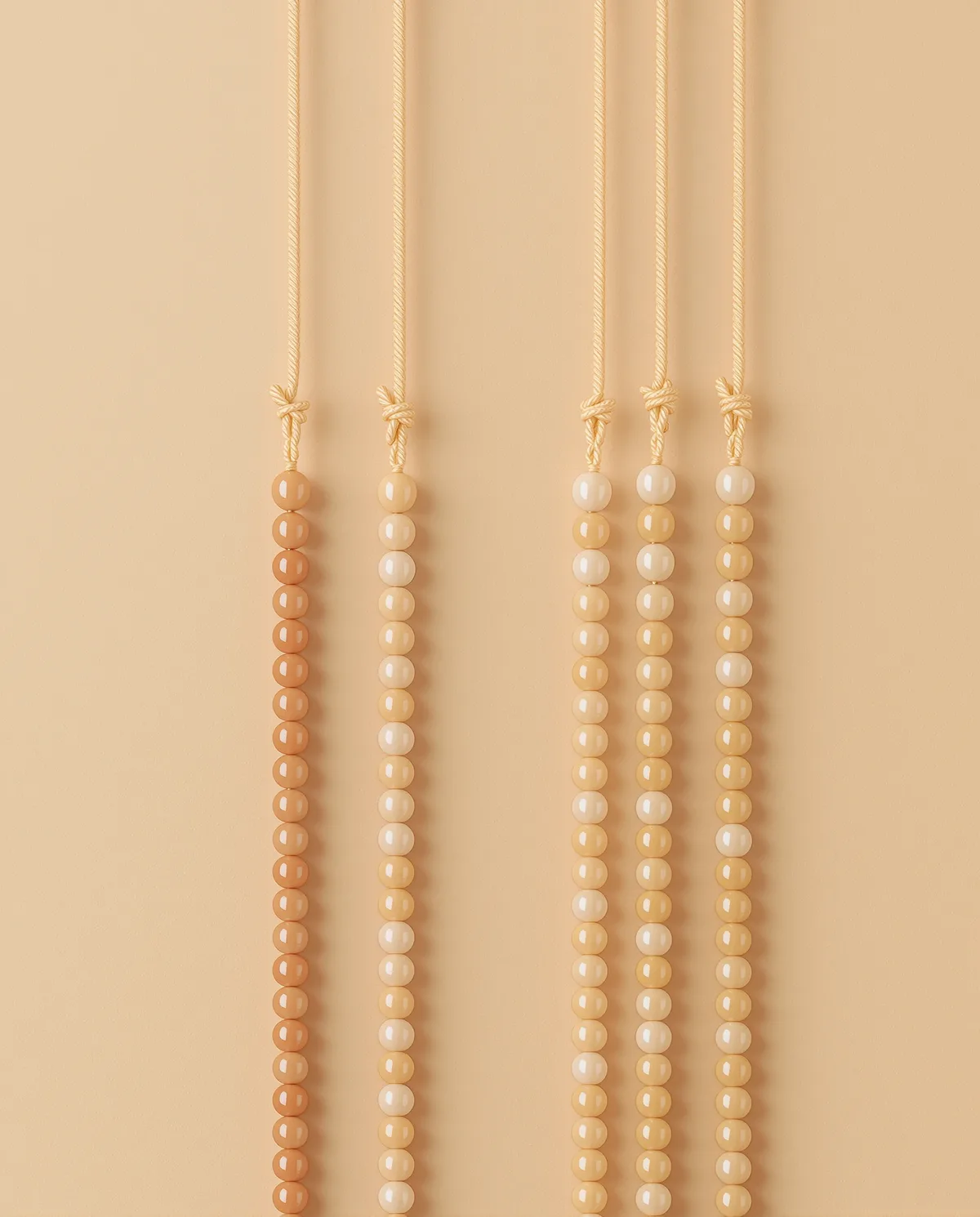
Our own practice is that beads are matched to a colour reference or a physical chip and confirmed on the sample. That confirmation step is where the light source has to be named, or it defaults to whatever light the approval meeting happens to be in.
Establish the installation's lighting: the lamp type, and whether the space is used by day as well as at night. Then assemble the full colourway as a set, not bead by bead, and view it under that lighting and under daylight.
Then look at the dyed-to-match pairs specifically, because a base dyed to an accent is the relationship most likely to break under a different lamp. Then fix the dye-lot policy and seal the sample.
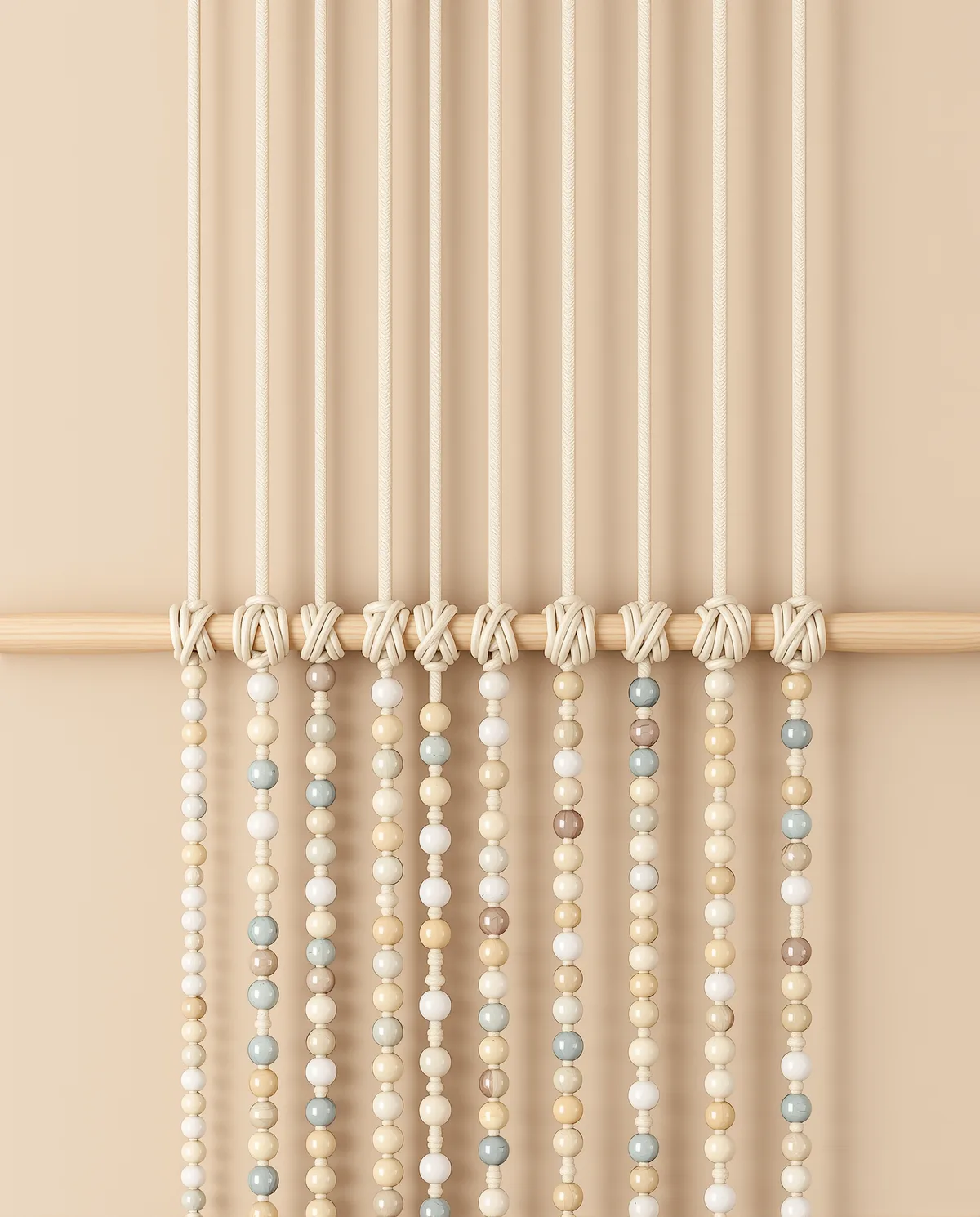
It is the mechanism behind the whole problem. Pressed glass takes its colour in the body at the press, so the colour is in the glass and is stable. Seed beads commonly take a surface dye, so the colour is on the glass and is a batch property. Acrylic beads are moulded and dyed to our colour, which is a third behaviour again.
Put those three in one panel, as most designs do, and you have three materials whose colours were created by three processes responding differently to the same lamp. That is why a colourway has to be approved as a set.
No numeric colour-difference tolerance is published in our record, and a single figure across body-coloured glass, surface-dyed glass and dyed acrylic in one panel would not mean anything useful.
What the specification can state is the acceptance method: matched to the sealed sample, under a named light source, viewed as a complete colourway. That is an auditable criterion and it is the one inspection can actually apply.
Through the lighting package. The bead colourway should be approved after the lamp specification is fixed and ideally after a lighting mock-up exists, which means the beadwork approval sits later in the programme than most people assume.
Where the lighting is not yet fixed, approve under a stated reference light source and record that the approval was conditional. That is recoverable; approving under an unknown condition is neither.
The specification carries the colour method, the dyed-to-match relationships, the approval light source and the dye-lot policy. The schedule carries the colourway per opening where a package uses more than one.
Sealed sample references belong in both: on the specification as the governing document and on the schedule line as the specific colourway approved for that opening.
Under warm LED, most often. A palette approved in a daylit studio can shift noticeably under a 2700 K source, and the shift is not uniform — the warm beads gain and the cool beads lose, so a balanced palette stops being balanced.
The second failure is a second phase ordered without a dye-lot policy. The new panels are correct against the reference and visibly different from the old ones hanging next to them.
The complete colourway, all beads together, under the installation's own lighting and under daylight. If the space is used both by day and at night, under both.
Photographs of this are worth keeping with the sealed sample, because they are the only record of what the approval actually looked like.
Dust shifts apparent colour towards grey and flattens the surface, and it affects transparent and polished beads most. A colourway approved on a clean sample and judged six months later on a panel nobody has cleaned will read duller and slightly cooler.
That is a cleaning issue rather than a colour issue, but it arrives as a colour complaint, which is why the maintenance schedule and the colour specification are worth reading together.
Colour cannot be guaranteed identical across production runs where surface dye is involved. Dye lots move. That is a material property, not a quality failure, and the only two responses are to hold the lot for the whole programme or to write an acceptable variation into the specification.
Our own published position is that beads are matched to a reference or a chip and confirmed on the sample. Confirmation on the sample is a point in time, and a specification that needs more than that has to say so.
That colour is specified at component level and amended at component level. Our own bead programme documents carry base seed beads dyed to match accent colours, spacer beads dyed to match the blossoms they lock in place, and whole colour amendments issued against existing styles as separate approved documents.
That last practice is the useful one to copy: a colour change is its own approved document referenced from the pack, not an edit to the original. It leaves a record of what was approved when.
Good to know
The colour references as approved, the dyed-to-match relationships written out component by component, the dye-lot policy, and the light source the approval was made under. Without the last one a future match is being made against an unknown condition.
A colour reference or physical chip per bead colour, the dyed-to-match relationships named explicitly, the light source colour is to be approved under, and the dye-lot policy. Four fields, and the fourth is the one that decides whether a second phase matches the first.
No numeric colour-difference tolerance is published for beadwork in our record and inventing one would be meaningless across body-coloured glass, surface-dyed glass and dyed acrylic in the same panel. What a specification can state is the acceptance method: matched to the sealed sample under a named light source.
The full colourway, every bead in it together, under the installation's own lighting. Individual beads approved separately will not tell you how they behave as a set, and a dyed-to-match base only makes sense viewed with the accent it is matched to.
Dust shifts apparent colour towards grey and dulls the surface, which affects transparent and polished beads most. A colour approved on a clean sample and judged on a dusty panel will look duller, and that is a cleaning question rather than a colour one.
Colour cannot be guaranteed identical across runs. Surface-dyed bead colour is a batch property and dye lots move, unlike pressed glass whose colour is in the body. Matching is fixed at approval; holding it across a repeat order is a separate commercial decision.
Keep exploring
Manufacturing
Matched to a Pantone reference or a physical chip, approved on the sample, never on screen — and what a dye lot can promise.
Read the guideSpecification
The dimensions, strand values, fixings and performance limits a drawing and schedule have to carry.
Specs and sizesSpecification
Air passes, insects are discouraged rather than excluded, and pitch is the only lever that changes either.
Read the guideSpecification
Plasterboard with and without a stud, timber, concrete and steel — and why the load has to be known first.
Compare the optionsSpecification
Tracks, joists, suspended rails and the services coordination a drawing has to show.
Read the guide
Start a conversation
Send a reference, a colour chip or a sketch. Minimums are set per design and confirmed per quote; sampling is quoted separately and usually runs 16 to 20 days from an agreed brief.