Colour story
The After Hours story
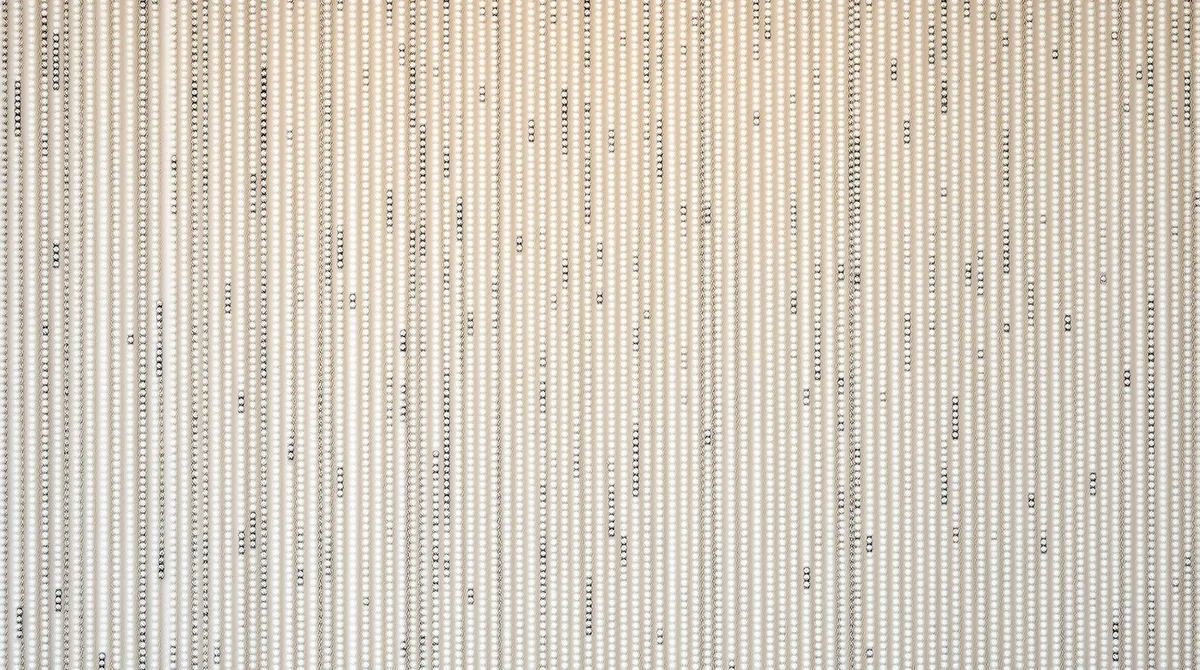
Jet and garnet glass with gold rounds across 33 strands — the point where an all-glass wall piece reaches its sensible weight.
How it is made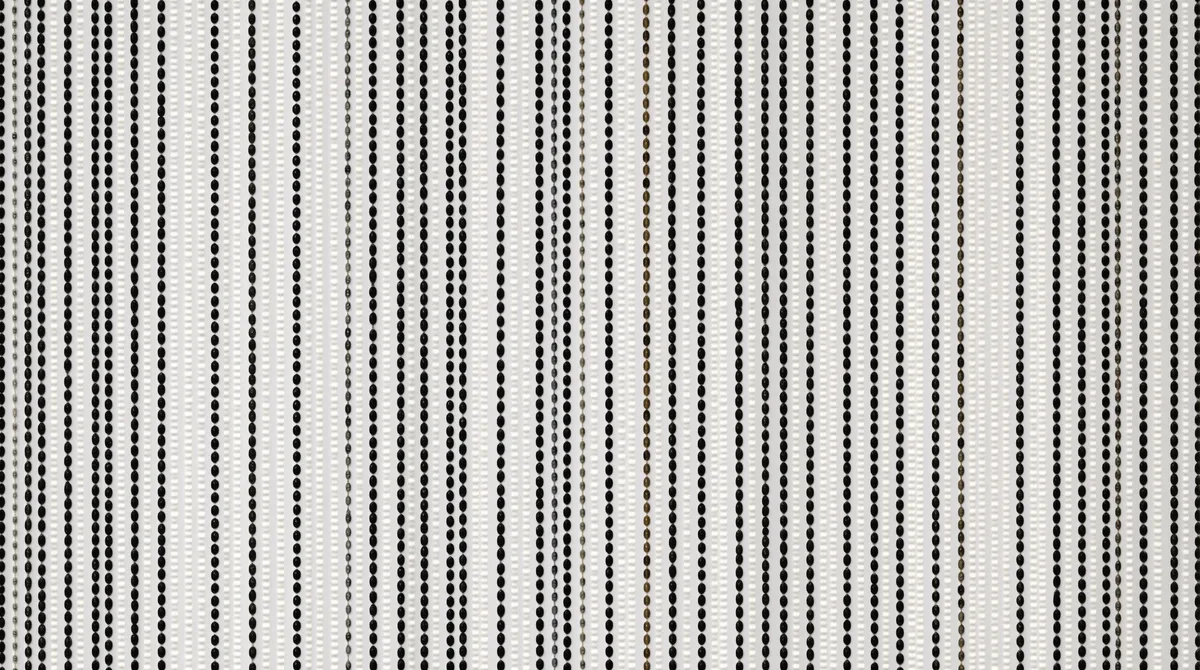
Style · Era
Deco is the one bead look that punishes handmade character. Everything else in this medium is forgiving of variation; deco is built on repetition, mirrored geometry and a hem cut like a drawing.
A strictly symmetrical beaded panel in jet black, smoke grey and chalk white glass, one bead shape repeating without variation down every strand.
Strict symmetry and a stepped hem carry deco, not the palette. A deco panel mirrors about its centre line, repeats one bead shape without variation, and finishes on a fan or stepped arch that reads as a drawn edge. Jet, smoke, gold and pearl help, but the same palette strung loosely reads as vintage, not deco.
Deco in beadwork is a borrowing. The 1920s and 1930s expressed themselves in beads mostly on the body — fringed dresses, bags, lamp fringes — and in architecture through metal, glass and stone. What gets briefed today as an art deco beaded curtain is a translation of that architectural vocabulary into a hanging panel: the stepped setback, the fan, the sunburst, the chevron, the hard mirror line. It is a geometry transplant, and it works because a bead panel is already a grid.
Three things, in order. Symmetry about a vertical centre line, so the left half of the panel is the mirror of the right. Repetition without variation, so one bead shape runs the full field and the eye reads rhythm rather than craft. And a drawn edge — a fan, a stepped arch, a sunburst — instead of a straight cut. Get those three and the palette becomes almost optional. Miss the symmetry and no palette rescues it.
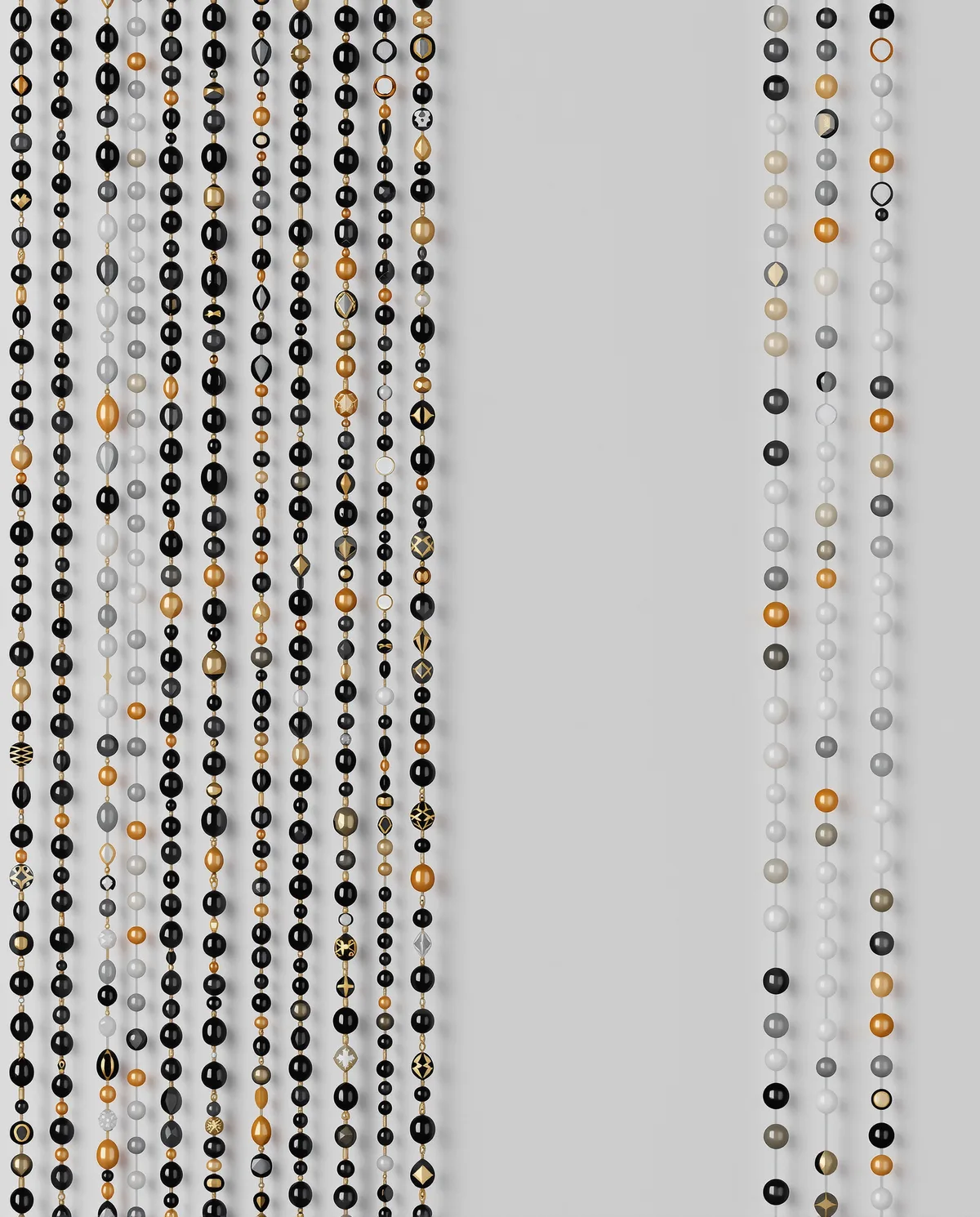
Faceted crystal and pressed glass, not seed beads. A faceted bead is machine cut to even facets with crisp edges, which is exactly what a hard geometry needs; a two-millimetre seed bead behaves as a continuous material and softens every line it draws. Colour sits in the jet-and-smoke family with antique gold, which in our library is the After Hours story — jet and garnet glass with gold rounds. Hems are the fan arch and the stepped scallop.
More, and in an unusual place. The bead count on a deco panel is often lower than on a boho one, because the design wants clear ground between the figures. The cost sits in the bead map and the inspection: a mirrored panel needs a patterned strand layout sequenced pair by pair, and first-article and lot inspection has to check that the mirror holds across the full width rather than checking strands individually.
Formal public rooms. Hotel lobbies, bars, lift lobbies, restaurant thresholds and private dining — anywhere the brief asks for a register that a hippie panel cannot provide. Our reference project in this category is the beaded décor walls at a US casino resort — large beaded wall panels.
Cut the gold back and raise the scale. Deco revival goes wrong by multiplying small gilt detail; it goes right by taking one deco gesture — a single large fan hem, or one sunburst at the head — and leaving the rest of the panel plain. Scale up the bead, reduce the ornament count, and let the hem profile be the whole idea.
A fixture in hospitality and a visitor in retail. The formal register never really leaves contract interiors, because a deco gesture signals occasion and that need is permanent. In home retail it appears and disappears with whatever period drama is running, which is a poor basis for a range.
The original was glass and metal with no plastics, cut rather than moulded, and often assembled on wire rather than cord. The revival has moulded shapes available and should use them where the shape needs to repeat a thousand times, but should not use them to imitate cut crystal — a moulded facet reads soft. The modern build is: moulded for the repeating ground, cut or wound glass for the feature.
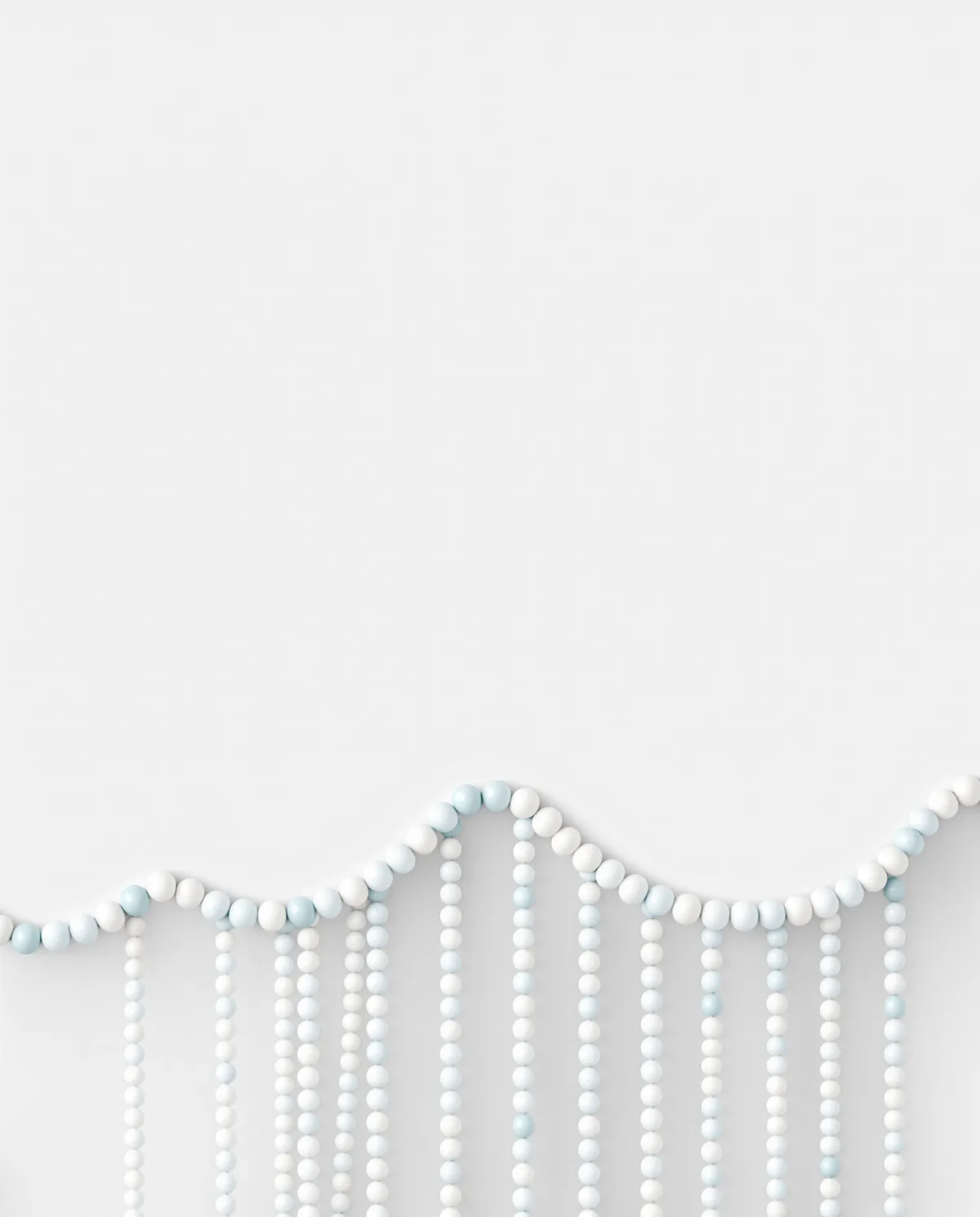
After Hours is the direct fit. Sterling Swan — mirrored silver with pearl and chalk white — is the cooler reading of the same register, and the mirrored beads give the hard small glints deco wants. Lapis Hour works if the brief wants colour rather than monochrome, because its range is narrow enough to keep the geometry legible.
It photographs better than it sells. A mirrored panel with a drawn hem shoots beautifully flat on, head on, with no perspective — which is why a flat elevation, not a styled room, is the right frame for this look. Commercially it is a specification product: it closes in interiors and hospitality conversations and it rarely wins a shelf.
Interior and hospitality designers specifying a look for hotels, restaurants, salons and spas, plus event and display companies dressing a period set. It is almost never a doorway purchase for a home, and a range built on it should be sized for project volumes rather than retail replenishment.
Good to know
We can match its look, colours and bead sizes in new materials, as a period-inspired design. We do not reproduce another brand's protected design. For deco in particular, the useful part of a vintage reference is usually the hem profile and the spacer rhythm rather than the beads themselves.
Jet black, smoke grey, pearl and antique gold is the core. Add one saturated jewel — garnet, emerald or lapis — and stop there. Deco palettes are short by design, because the geometry is doing the work and a wide palette fights it.
Yes, and the reason is not the beads. A mirrored design means every strand is sequenced against its partner, so the colour-count sheet is written per strand pair and the first-article inspection checks alignment across the whole panel rather than per strand.
Short formats suit it best. A valance or a café length gives the hem geometry somewhere to live and keeps the symmetry readable in one glance. On a full two-metre drop the eye loses the mirror line unless the pattern repeats vertically as well.
Drop the fringe-and-tassel reflexes and keep the metal honest. Deco pastiche comes from gloss black plus gold plastic; deco done properly comes from one good glass with internal character, a plated brass spacer from our own metal plants, and an edge profile that someone actually drew.
We treat this as a specification request rather than a consumer trend. It arrives through hospitality and interiors briefs, where a formal register is wanted and a boho panel would be wrong.
Keep exploring
Colour story
Jet and garnet glass with gold rounds across 33 strands — the point where an all-glass wall piece reaches its sensible weight.
How it is madeSpecification
Large-format panels, fire performance, the maintenance plan and the approvals a lobby specification has to clear before it gets built.
View the rangeIndex
Twenty-four named looks, each described by the material, palette, pitch and hem that actually produce it.
Specs and sizesStyle
Why the farmhouse look is nearly all turned wood, and what the garland archetype does and does not mean for us.
Specs and sizesStyle
Uniformity is the whole design, which raises the quality bar rather than lowering it.
See the detail
Start a conversation
Send a reference, a colour chip or a sketch. Minimums are set per design and confirmed per quote; sampling is quoted separately and usually runs 16 to 20 days from an agreed brief.