Specification
Hotel lobbies
Large-format panels, fire performance, the maintenance plan and the approvals a lobby specification has to clear before it gets built.
Read more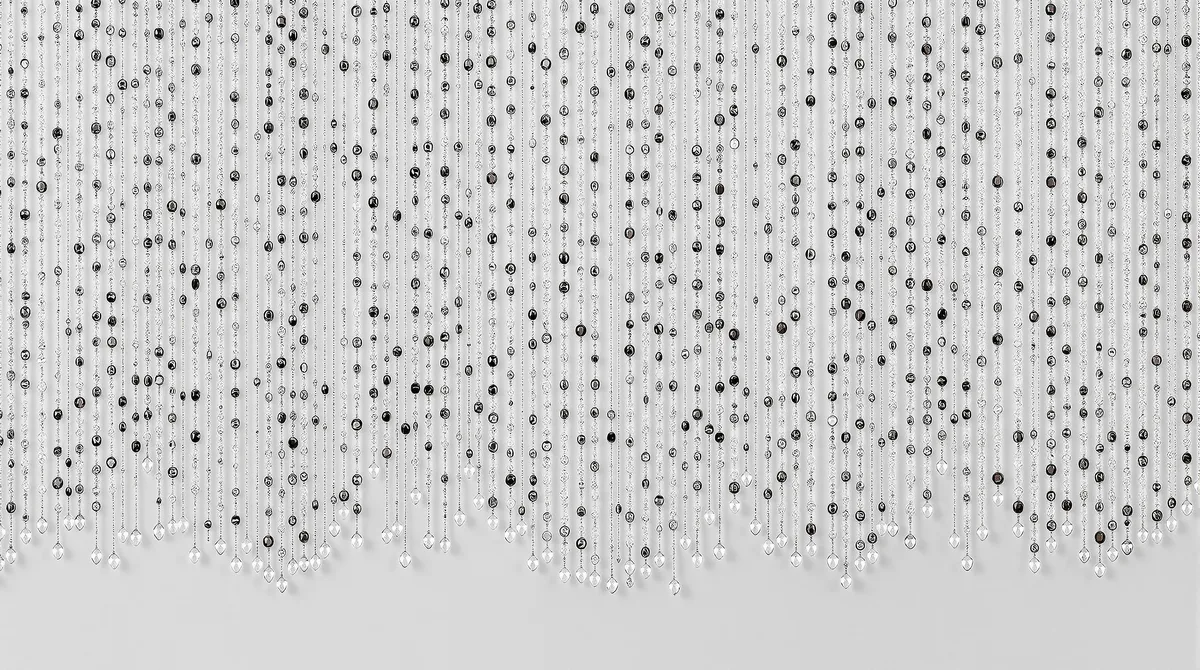
Style · Era
Expensive beadwork is not denser beadwork. Four details carry the register, and two of the things buyers reach for first actively cheapen it.
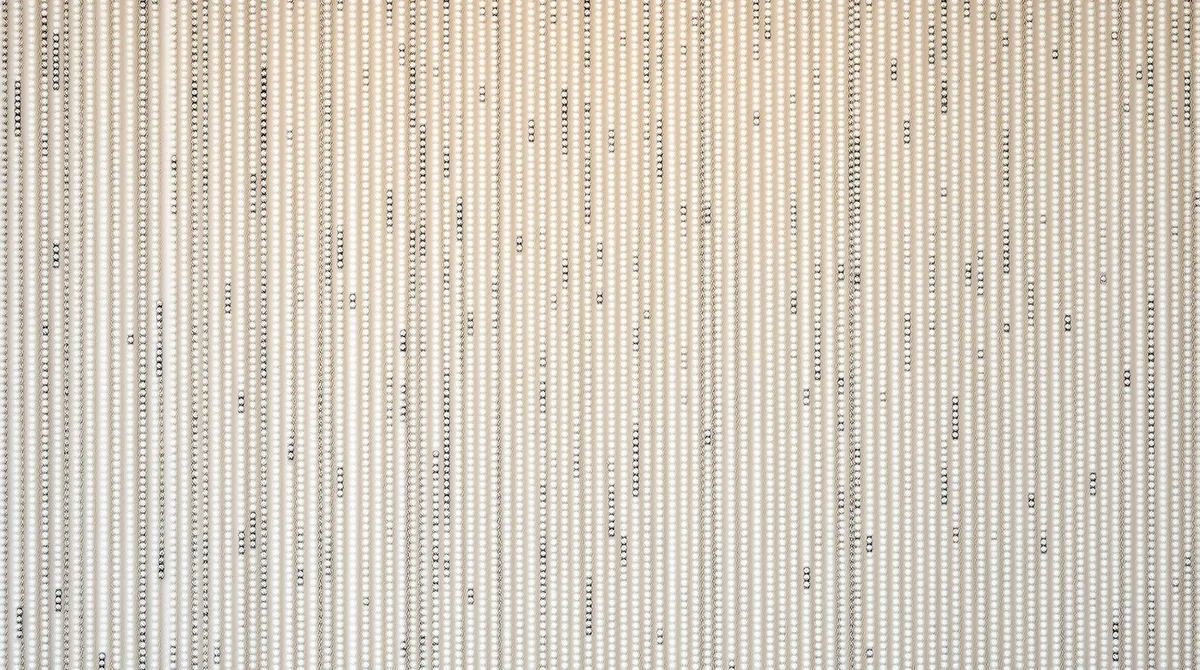
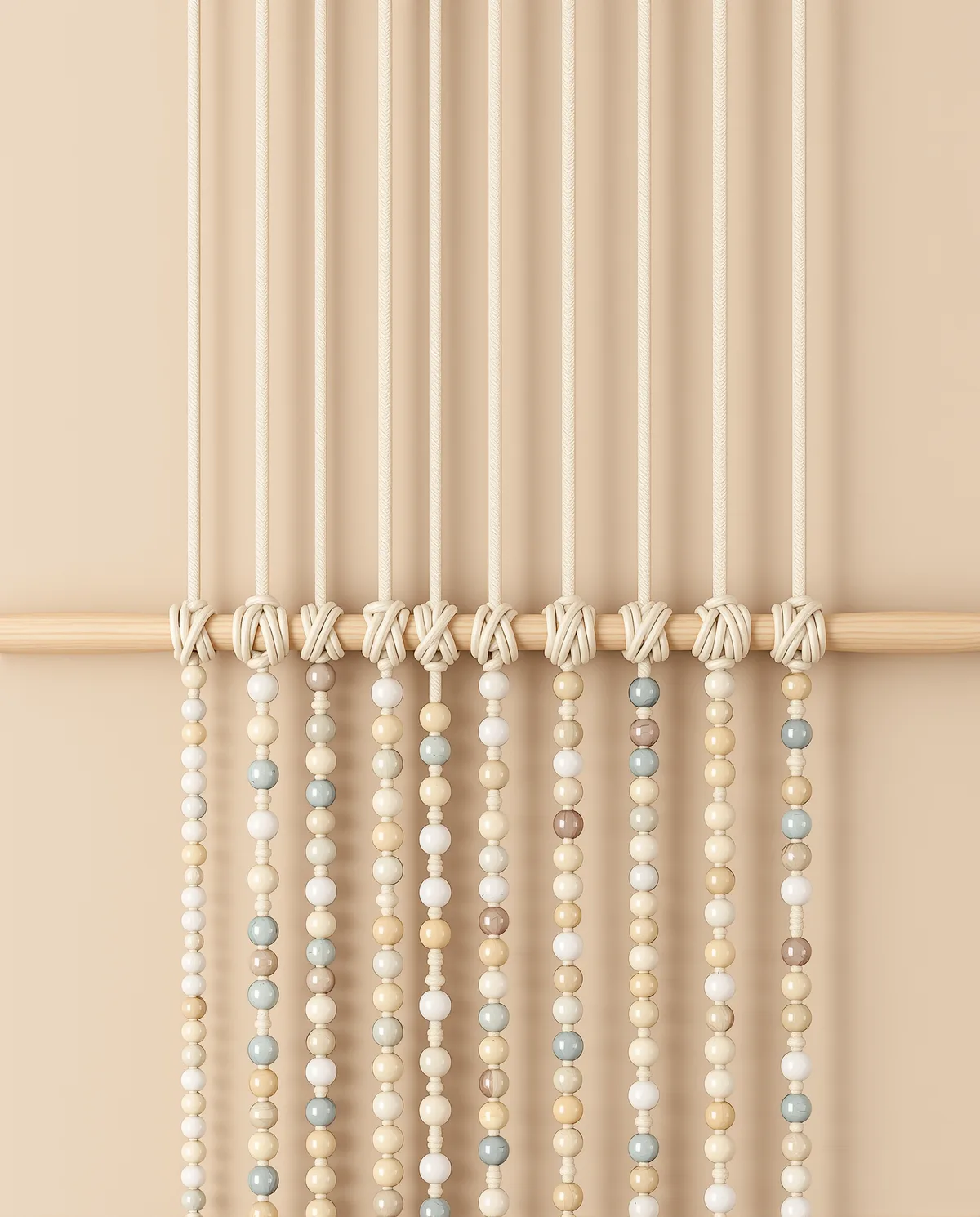
A beaded panel of cut crystal and mirrored silver beads spaced down chalk-white strands, the facets throwing small crisp highlights and the hem falling to a soft scallop.
Four details read as expensive: bead consistency across thousands of units so rows sit level, specialty glass with character inside the body, a hem that has been drawn rather than cut, and a header finished like joinery. Added sparkle and added density do not read as expensive. They read as busy.
From glass, and specifically from the European glass houses whose wound and trailed beads were luxury goods long before they were décor components. The luxury register in beadwork is inherited from jewellery and chandelier work rather than from interior textiles, which is why its signals are material signals — what the glass is, how consistently it was made — rather than compositional ones. A luxury bead panel is closer in logic to a chandelier than to a curtain.
Four things, and they are all about control. First, consistency: when bead diameters are matched and the drill holes are aligned, every row across the panel sits level, and the eye reads precision without knowing why. Second, internal character in the glass — fleck, trail, inclusion, gold leaf — which tells a viewer the bead was made rather than stamped. Third, a hem profile that has been drawn: a fan, a scalloped arch, a stepped sweep. Fourth, a header that is finished like a piece of joinery rather than left as hardware.
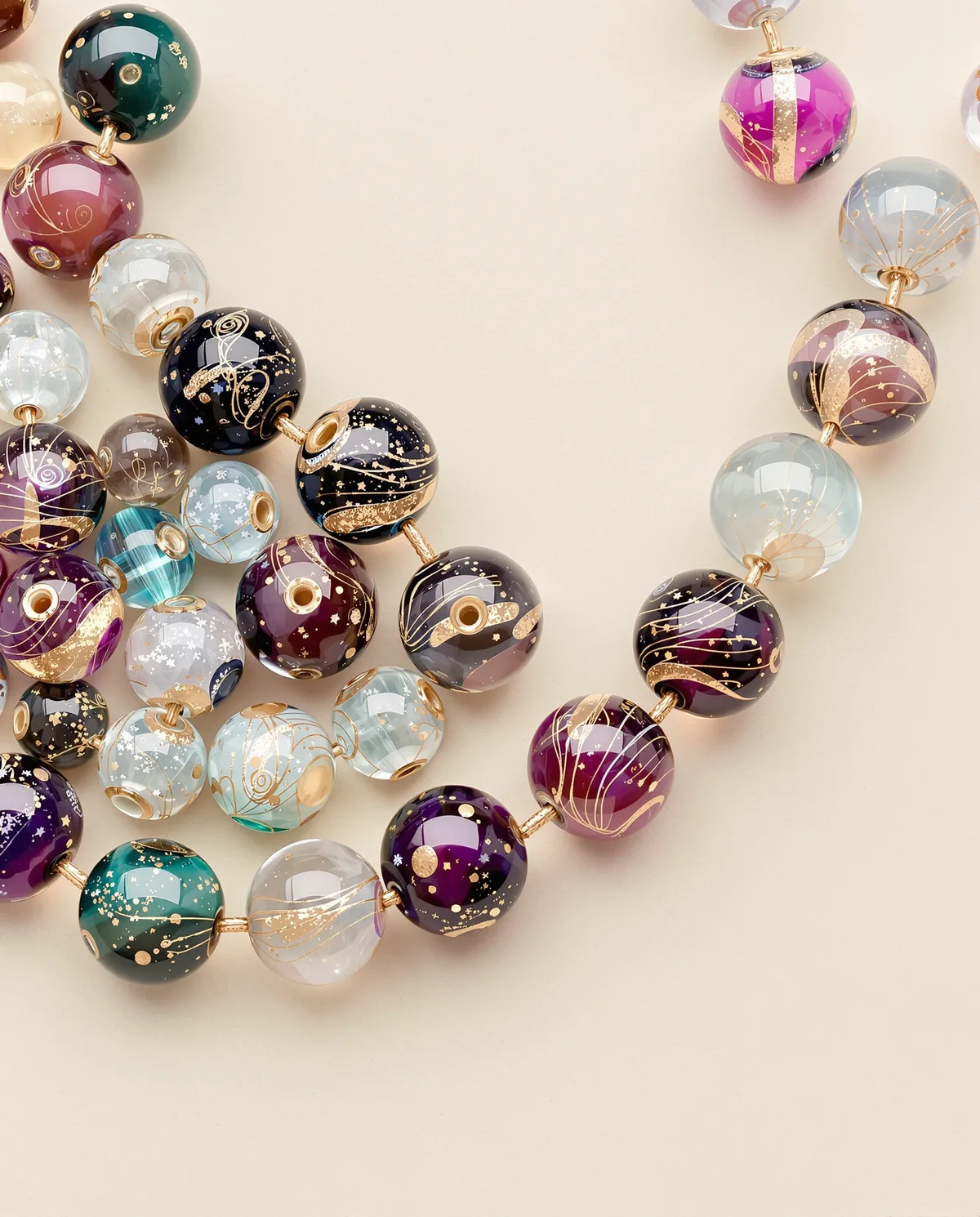
Hand-made wound glass and lampwork for the feature beads, with pressed glass for any repeating ground. Palettes are short and deep. Hems are drawn rather than cut: a fan arch, a scalloped sweep, a stepped profile. The header is the detail most often overlooked — a stained or finished rectangular beam reads as furniture, where a visible rod reads as fitting.
It photographs backlit, because the whole argument is about what happens to light inside the bead. A wound glass bead with fleck in it is an uninteresting object in reflected light and a remarkable one with light behind it. It sells in person or on a sample, which is why this register belongs in project and hospitality conversations rather than on a product page.
Interior and hospitality designers specifying hotels, restaurants, salons and spas, and architects on contract fit-outs. Our reference project in this use is the beaded décor walls at a US casino resort — large beaded wall panels. This is a specification product rather than a consumer one, which is why the page is written for a drawing rather than for a basket.
A large panel of faceted acrylic with an iridescent coating. It fails at close range, because a moulded facet has a soft edge where a cut facet has a crisp one, and the coating produces a uniform rainbow sheen that no glass does. It also fails over time: a surface coating wears where beads knock together, and a body colour does not.
Through tighter tolerances rather than through a different method. The construction is still hand-strung against a count sheet. What changes is the acceptance standard: bead diameter is matched before stringing, drill holes are checked for alignment, strand length tolerance narrows, and first-article and lot inspection through our own Greater Noida house look at row level across the full width rather than at individual strands.
Several multiples, and the money is not where buyers expect. Hand-made glass is the largest single item. Inspection and bead matching are the second. Bead count is often lower than on a mid-market panel, because the register wants clear ground between features. The cheapest expensive detail available is the hem profile, which costs a specification and no extra material at all.
A hotel lobby, a bar, a private dining room, a spa threshold, a lift lobby, a stairwell — spaces where a single large object is expected to do the decorative work. In domestic interiors it suits a double-height hall or a landing. It does not suit a kitchen doorway, where the piece will be knocked daily and the whole argument is about undamaged surfaces.
Replace sparkle with depth. The dated luxury panel is highly reflective; the current one is translucent and saturated, with the interest inside the bead rather than on its surface. The second change is scale: fewer, larger beads with real ground between them, instead of a dense field of small ones.
A fixture. Contract interiors permanently need objects that signal occasion, and beadwork is one of very few decorative materials that can do it at architectural scale while still moving. The palette inside the register follows fashion; the demand for the register does not.
Because glass strength is colour-dependent. On one Venetian-glass portal in our own record, large hand-made beads were chipping where they knocked against beads of another colour in a hanging panel — a failure that only appears once the piece is up and moving. The fix was a change to the furnace process, annealing the beads, and revising the palette so incompatible colours were no longer adjacent. That is the sort of conversation that belongs at sampling rather than after the first container, and it is a genuine argument for specifying a premium panel with the people who run the furnace.
Good to know
Hand-made glass. Wound Venetian-style beads carrying aventurine fleck, spiral trails and gold leaf, and lampwork beads shaped individually at the torch, are the two bead families that cannot be imitated by a mould. Both carry the highest per-bead cost in the catalogue and both show it.
We match a reference's look, colours and bead sizes in new materials as an inspired design, and we do not reproduce another brand's protected design. In this register the detail worth copying from an old piece is usually the header construction, which is where period work was consistently better than modern work.
Short palettes with depth. Jet and smoke with antique gold; deep lapis through slate to pale sky; plum, teal and amber in wound glass. What does not belong is a wide palette — in this register the number of colours is inversely related to how expensive the panel looks.
Substantially, and the drivers are bead grade and inspection rather than bead count. Hand-made glass is priced per bead at a different order from pressed or acrylic, and a premium panel is inspected on alignment and finish rather than only on count.
Large single statements. A wall panel, a tall portal or a window panel in one piece, rather than a set of small items. The register depends on scale and on the piece being the only thing in its part of the room.
Remove the glitter. The reflex when a brief says luxury is to add iridescence, crystal and metallic trim, and all three read as costume at volume. Replace them with one good glass, one metal finish and a hem somebody drew.
Keep exploring
Specification
Large-format panels, fire performance, the maintenance plan and the approvals a lobby specification has to clear before it gets built.
Read moreMaterial
Wound at the torch one bead at a time: what that buys in shape freedom, what it costs in hours, and how variation is specified instead of eliminated.
Compare the optionsIndex
Twenty-four named looks, each described by the material, palette, pitch and hem that actually produce it.
Read the guideStyle
Unmatched beads and uneven strands are the signature, not a palette — and genuine randomness has to be engineered.
Specs and sizesStyle
Four rules that make a loose look cohere, and the one that briefs almost always miss.
Read the guide
Start a conversation
Send a reference, a colour chip or a sketch. Minimums are set per design and confirmed per quote; sampling is quoted separately and usually runs 16 to 20 days from an agreed brief.