Guide
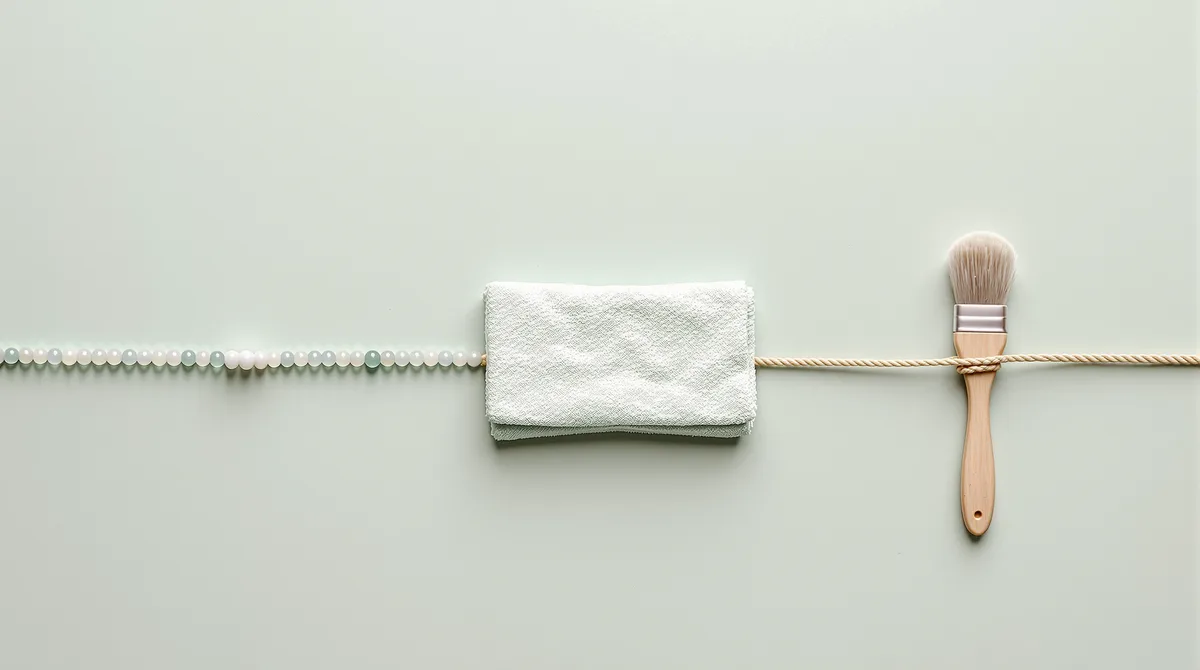
How to clean beaded curtains without damaging the cord
Dry dusting first, spot cleaning the beads, keeping the cord dry, what never to use, and how to handle a broken strand.
Specs and sizes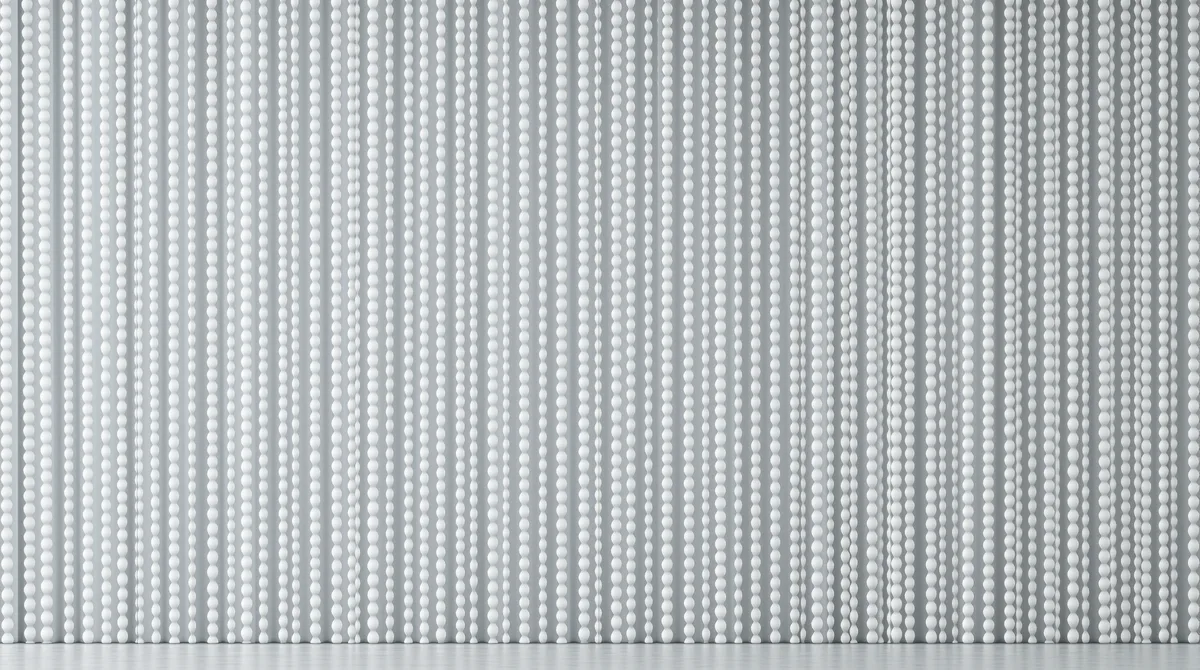
Application · Wellness
A salon is a chemistry problem disguised as an interior. Hairspray, bleach, acetone, massage oil and the disinfectant used to remove them all land on whatever is hanging nearby.
A beaded panel of frosted and lightly tumbled glass in pale grey-blue, silver-lined clear and pearl white, the surfaces matte and softly translucent.
In a salon or treatment room, humidity and product chemistry decide what lasts. Body-coloured pressed glass survives overspray and repeated disinfecting; surface-dyed beads, wood, bamboo and frosted finishes do not. Position matters as much as material: nothing should hang in a steam path or within overspray reach of a styling chair.

Soften a space that is full of hard surfaces, mirrors and equipment. Salons and spas are among the most enthusiastic buyers of decorative texture because the functional kit is clinical and the brand has to come from somewhere else.
Interior and hospitality designers specifying hotels, restaurants, salons and spas are a published buyer type for us, so the demand is real. The difficulty is that the parts of a salon that most want softening — the styling area, the wash station, the steam room — are the parts that will destroy a badly chosen bead.
Chemical indifference. Hairspray, bleach, toner, acetone, massage oil, self-tan and the sanitiser used to clean all of them off.
Humidity tolerance. Spa and wet areas are humid continuously, not occasionally, and cotton cord does not enjoy that.
A cleanable surface. Salon staff clean constantly, with whatever is on the trolley.
Position discipline, which is really a design demand rather than a material one: half of this page's advice is about where the panel goes.
Material, firmly: body-coloured pressed glass. The colour is fired into the glass body, so nothing on a salon trolley can reach it, and it tolerates repeated wiping indefinitely. Moulded acrylic is workable away from heat, with the caveat that some solvents attack acrylic itself. Use frosted or sea-glass beads with care — the matte surface is textured and hard wiping polishes it into gloss. Faux capiz discs are viable away from direct product contact, provided no abrasive cleaner reaches them.
Rule out surface-dyed beads, which lose colour to solvent on contact, and wood beads and bamboo in any wet or steam-exposed room: wood should not be soaked or kept near constant steam, and bamboo marks in damp.
Format: a door curtain at about 90 × 200 cm, a portal at 76 × 140 cm, or a short drop at a threshold.
Weekly dry dusting, down each strand, header to hem. Then damp spot-cleaning only: cloth wrung nearly dry, bead wiped, dried immediately.
The instruction that matters most in a salon is a negative one. Do not clean beadwork with the salon's disinfectant, sanitiser or surface spray. Those products are designed to lift residue, and on a surface-dyed bead the colour behaves like residue. Put that sentence in the specification and in the operations manual, because the care card will be gone within a week.
In a humid spa: the cord. It is cotton, it is under tension, and sustained humidity slackens and discolours it. That is a service item rather than a defect, and a panel in a wet area should be understood as having a shorter life than the same panel in a reception.
In a dry salon: the bead surface, via cleaning rather than via the product itself. Overspray settles, staff remove it, and the removal is what does the harm.
Sampling runs 16 to 20 days from an agreed brief with photographs approved first, and the production lead time is 40 to 60 days after sample approval. Most salon jobs are one to three panels, so the first sample is the entire programme.
If the landlord's fit-out guide or the local regime asks for a flammability report, that is a separate quotation and a separate lab schedule, best started the day the sample is approved rather than at hand-over.
Position first, with the reason written down: "corridor side of treatment room, clear of steam path and 2 m from wash station". A salon drawing that fixes position for the right reason survives value engineering better than one that fixes a bead.
Then opening dimension, finished width and drop, strand count or pitch, bead material and size with hole diameter, colour as Pantone references or physical chips, header type and length, hem shape. Then the cleaning clause, including the banned products, and a note that the panel is not a privacy barrier if it sits at a treatment-room threshold.
Salon work is small-format work, which keeps it among the cheaper applications in this cluster. A threshold drop or a valance uses a fraction of the beads of a full doorway panel, and height is the biggest single lever available.
The cost levers in order: bead size and material, then strand count and tightness, then pitch, then header and packing, then height. Minimums and pricing are set per design and confirmed with your quote, and the rough cost sheet comes before any sample. One cost note: specifying body-coloured pressed glass rather than a dyed bead can raise the bead cost, and it is the right trade in this setting every time.

The formats themselves are shipped in quantity — door curtains at around 90 × 200 cm, portals, café curtains and valances, into retail programmes across the US, the UK and the EU — and interior and hospitality designers are a published buyer type for us. What this page adds on top of that record is the salon-specific judgement: where the panel belongs in the plan, and which bead family survives product and steam.
What that means practically: expect material advice and construction evidence from us, and expect to carry the installation risk yourself or to test for it. That is a better position than being told a reference exists.
Beadwork inside a steam room or sauna. Wood or bamboo in any wet area. Surface-dyed beads anywhere in a salon. A panel within overspray reach of a styling chair. And beadwork as the sole privacy barrier at a treatment room, which is the same judgement we make about fitting rooms: a strung panel breaks a sightline and never blocks one.
Where a client wants the look in a wet area anyway, the workable answer is body-coloured glass on a short drop, positioned outside the direct steam path, with the cord understood as a replaceable element and spares ordered up front.
The designer, the salon owner or spa manager, and whoever writes the cleaning schedule — that last person is usually the salon owner too, which makes the conversation easy and makes it essential.
In a leased unit, add the landlord. Our sign-off is the sample: photographs approved before it ships, physical sample approved before production, production held to it through first-article and lot inspection.
The panel hangs from the wooden header rail or turned dowel we make; brackets and hooks are the project's. In a wet or humid area specify corrosion-resistant fixings, because a mild-steel hook in a spa corridor will rust and will stain the wall below it.
Fix above the opening into solid substrate. Loads are modest at salon formats. The panel is weighed on the approved sample and the fixing is sized to that weight.
Extractable data
| Item | What suits a salon or spa | Note |
|---|---|---|
| Best bead material | Body-coloured pressed glass | Colour is in the glass; chemistry cannot reach it |
| Workable alternative | Moulded acrylic, dyed to colour | Away from heat; some solvents attack acrylic |
| Avoid | Surface-dyed beads | Acetone, bleach and solvent strip dye on contact |
| Avoid | Wood and bamboo in a wet or steam room | Water raises grain; bamboo marks in damp |
| Use with care | Frosted or sea-glass beads | Hard wiping polishes the matte surface away |
| Faux capiz | Viable away from direct product contact | Cast resin or dyed cut acrylic; avoid abrasive cleaners |
| Best position | Reception, corridor, treatment-room threshold | Out of overspray and steam paths |
| Worst position | Beside a styling chair, in a steam room, over a wash basin | Direct chemistry and direct water |
| Format | Door curtain ≈90 × 200 cm; portal 76 × 140 cm | Both shipped formats |
| Short format | Valance or short drop at a threshold | Less surface exposed, cheaper to replace |
| Cord | Cotton; keep dry | The component that fails in a humid room |
| Cleaning | Dry dust; damp spot-clean only; no disinfectant on beads | Our guidance, not a tested regime |
| Sampling | 16–20 days from an agreed brief | Photographs approved before the sample ships |
| Production | 40–60 days after sample approval | Published lead time for beaded décor |
| Flammability | Tested on the specified build and quoted with the project | NFPA 701 or the local equivalent |
Good to know
Flammability, as in any commercial interior — NFPA 701 in the US or the local equivalent — and fire performance is tested on the specified build and quoted with the project. Beyond that, a salon is a chemical and humid environment, and the answer is material choice rather than a certificate: body-coloured glass and moulded acrylic wipe down and do not mind steam, and the panel is kept out of the wet zone and clear of the colour bar. Where an environmental health regime asks for a cleanable-surface classification, bring it with the brief. Our standing certifications are Sedex SMETA, FSC for wood, C-TPAT and Omega social compliance.
Dry dusting first, down each strand from header to hem, weekly in a working salon. Then damp spot-cleaning with a cloth wrung nearly dry, dried in the same pass. Critically: do not wipe beadwork with the salon's disinfectant or sanitiser. Those products are formulated to strip residue, and residue is what a surface dye effectively is. Keep the cord dry at all times.
Sampling is 16 to 20 days from an agreed brief, with photographs approved before the sample ships, and production is 40 to 60 days after sample approval. A small salon is usually one or two panels, so the first sample is the whole critical path. If the landlord or the local regime wants a flammability report, that is quoted separately and should be started at sample approval.
The cord, in anything genuinely humid, because it is cotton and humidity is relentless in a way that a single splash is not. In a dry salon it is the bead surface instead: overspray lands, someone cleans it off with product, and the cleaning is what does the damage. Body-coloured pressed glass is the material that avoids both outcomes.
Interior and hospitality designers specifying hotels, restaurants, salons and spas are a published buyer type for us, and the formats a salon would use are all shipped ones. This page is written as material and position advice: where the panel belongs in a salon plan, and which bead family to put there.
A threshold rather than a barrier. A door curtain at about 90 × 200 cm or a portal at 76 × 140 cm at the corridor side of the room, or a short drop or valance marking the opening. Beadwork should never be the privacy barrier for a treatment room where a client undresses — a strung panel breaks a sightline and does not block one, so a solid door or curtain has to do that work.
Keep exploring
Guide
Dry dusting first, spot cleaning the beads, keeping the cord dry, what never to use, and how to handle a broken strand.
Specs and sizesPillar
Twenty settings, from a closet front to a hotel lobby, each with the format that suits it, the fixing it needs and the standard that applies.
See the detailSpecification
How each bead family sounds, which ones suit a quiet natural interior, and what barefoot traffic changes about the specification.
Read the guideSpecification
Grease, steam and daily traffic: which bead materials survive a kitchen opening, which finishes do not, and how often it needs cleaning.
Compare the optionsSpecification
Large-format panels, fire performance, the maintenance plan and the approvals a lobby specification has to clear before it gets built.
How it is made
Start a conversation
Send a reference, a colour chip or a sketch. Minimums are set per design and confirmed per quote; sampling is quoted separately and usually runs 16 to 20 days from an agreed brief.