Specification
Headers and dowels
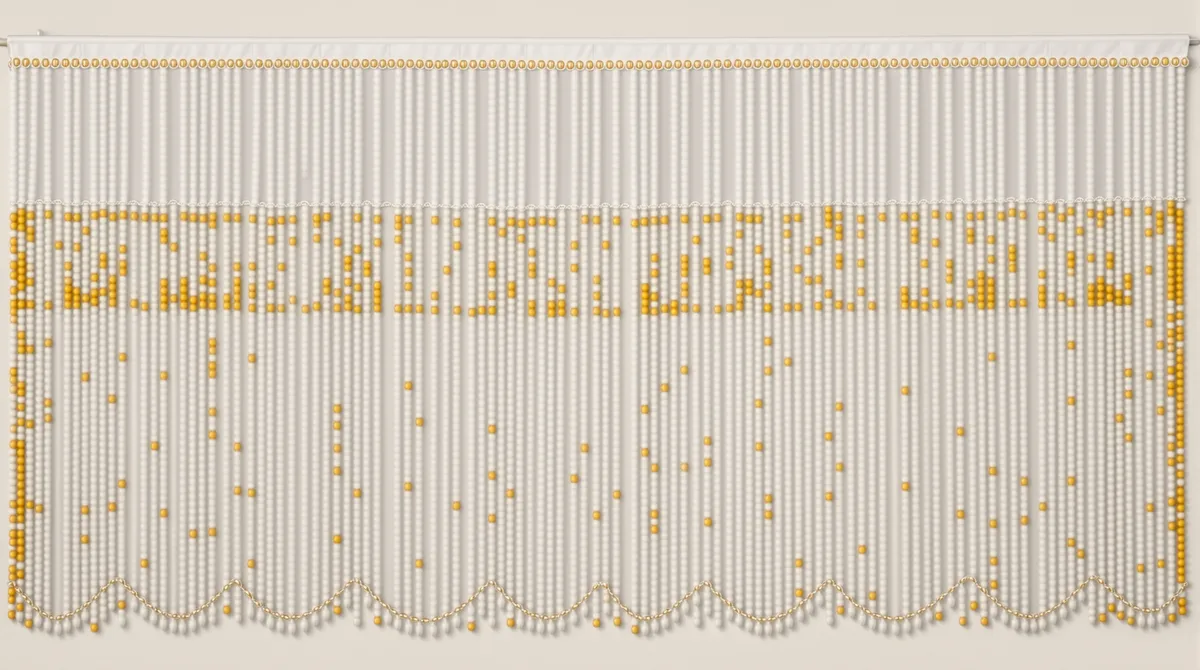
Dowel, stained header rail, sewn rod pocket or suspension loops — what each hangs from and when each fits.
See the detail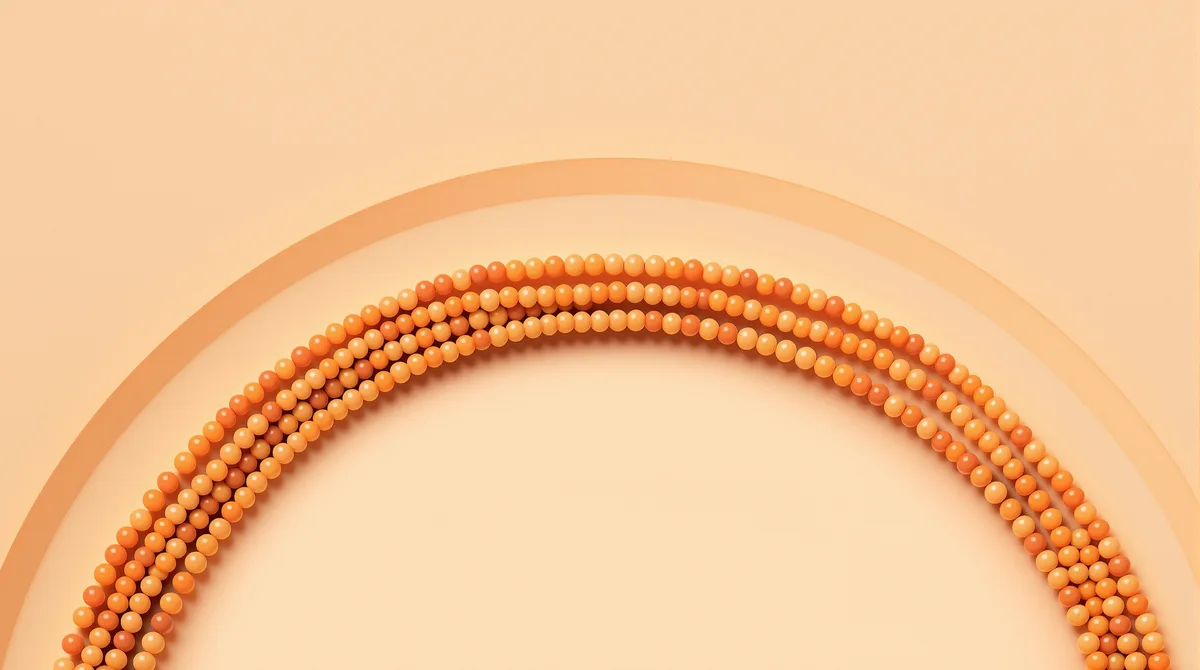
Guide · Format
An arch is a header problem. The beads do not care about the shape of the opening — the thing you hang them from does, and there are only three ways to resolve it.
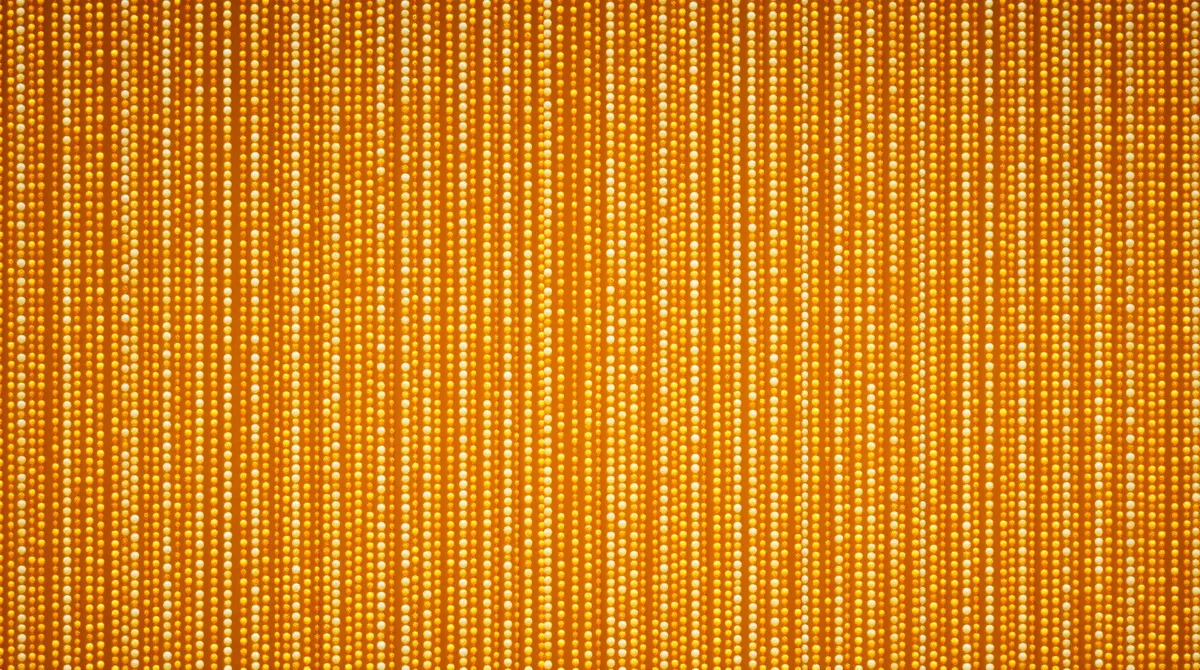
Rows of rust and burnt-orange glass beads following one smooth semicircular arch — the shape a bead panel takes across an arched opening.
A beaded curtain cannot follow an arch from the top, because the strands hang from a straight dowel. The three workable answers are to fix a straight rod low enough to sit inside the arch, to hang the panel from the springing line and cut the top of the pattern to suggest the curve, or to make a shaped top rail for a fixed opening.

A strung panel is a set of parallel verticals hanging off a single horizontal. That horizontal is the whole problem: a wooden dowel is straight, and an arch is not. Everything else about the panel — bead, colour, hem, pitch — is unaffected by the shape of the opening. The decision you are actually making is where the straight line goes.
Architecturally, the number that matters is the springing line: the height at which the sides stop being vertical and the arch begins. Above that line the opening narrows continuously, so there is no single width to fit a rod to.
At or just below the springing line, in almost every case. Fix it there and the rod is as long as the opening is wide, the panel hangs full height below it, and the only thing you lose is the crown of the arch, which stays open above the beads.
People instinctively want the beads to start at the very top of the opening. It cannot be done with a straight rod, and chasing it produces the two bad outcomes: a short rod floating in the middle of the arch with daylight either side of it, or a panel that will not fit at all.
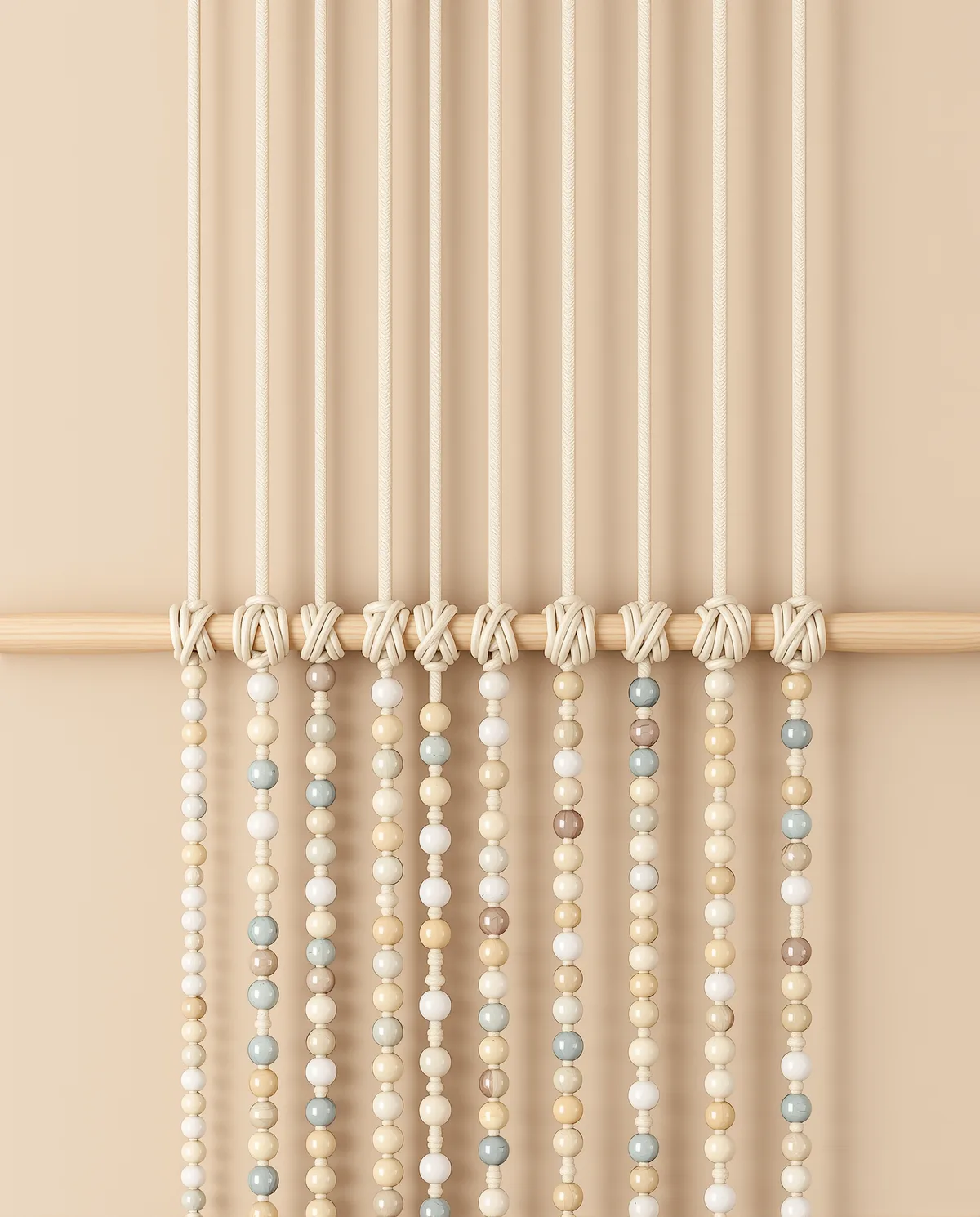
A straight rod inside the arch. Simplest, cheapest, reversible, and visually honest: the arch stays visible as architecture and the beads read as a panel within it. This is what we would specify nine times out of ten.
A full-drop panel from the springing line with the curve in the pattern. The header is still straight, but the colour or bead pattern is drawn so an arc reads across the top of the panel. The arch is then a graphic rather than a structural fact, and it works because a bead map can place every bead deliberately.
A shaped top rail. A rail cut to the curve of that specific arch, with strands hung from the curve itself. It is the only way to fill the crown. It is also joinery made for one opening, cannot be moved to another, and is quoted as a bespoke build rather than a standard format.
Three numbers, not one. The width at the springing line. The floor-to-springing-line height. The rise of the arch above the springing line.
From those the stringing sheet can be written: strand count from the width at pitch, the longest drop from the height, and — if you are going with the pattern option — where the arc has to fall within the bead map. A single width measured at the widest point of the opening tells the beadworker almost nothing useful.
Weight does, because an arch usually means an older building and an older frame. A glass panel at 90 cm wide is the heaviest thing in this category and wants brackets fixed into something solid; acrylic, wood and bamboo are light enough for a tension rod inside the frame.
The second factor is how straight the strands hang. An arch often sits in a through-route where people brush past constantly. Glass settles fastest; acrylic and bamboo need a weighted end bead to stop them drifting.
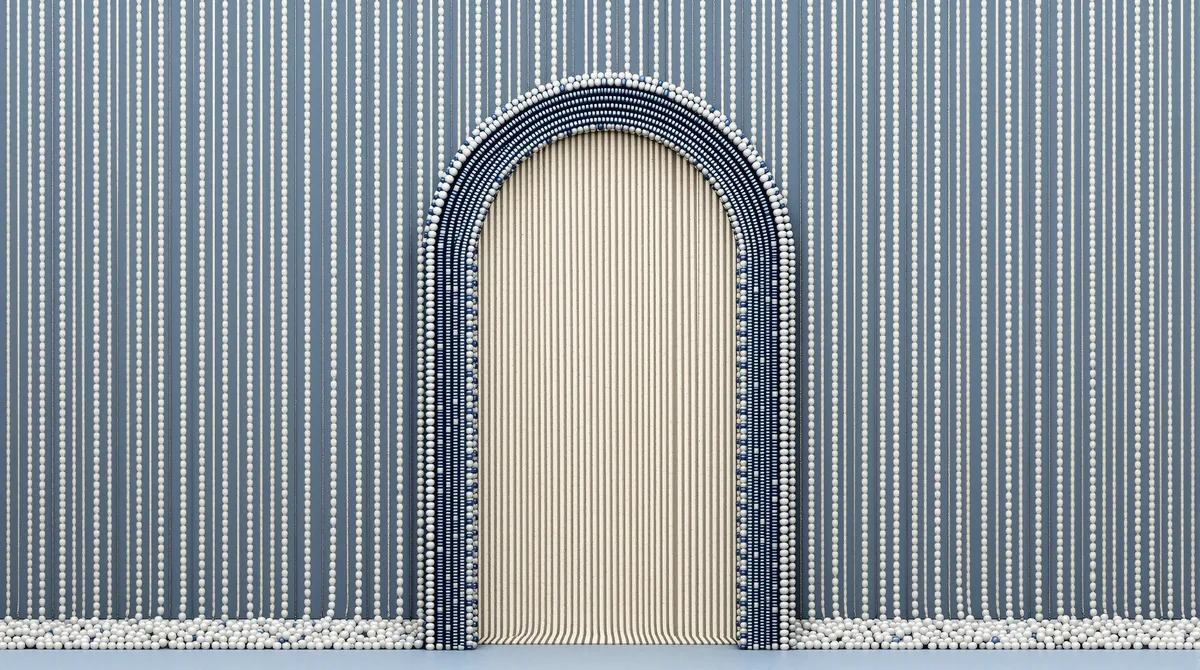
This is the inversion worth understanding. Instead of curving the top, you curve the bottom: strand lengths are graded so an arched opening is cut out of the middle of the panel, fullest at the sides and highest in the centre. You walk through the gap, not through the beads.
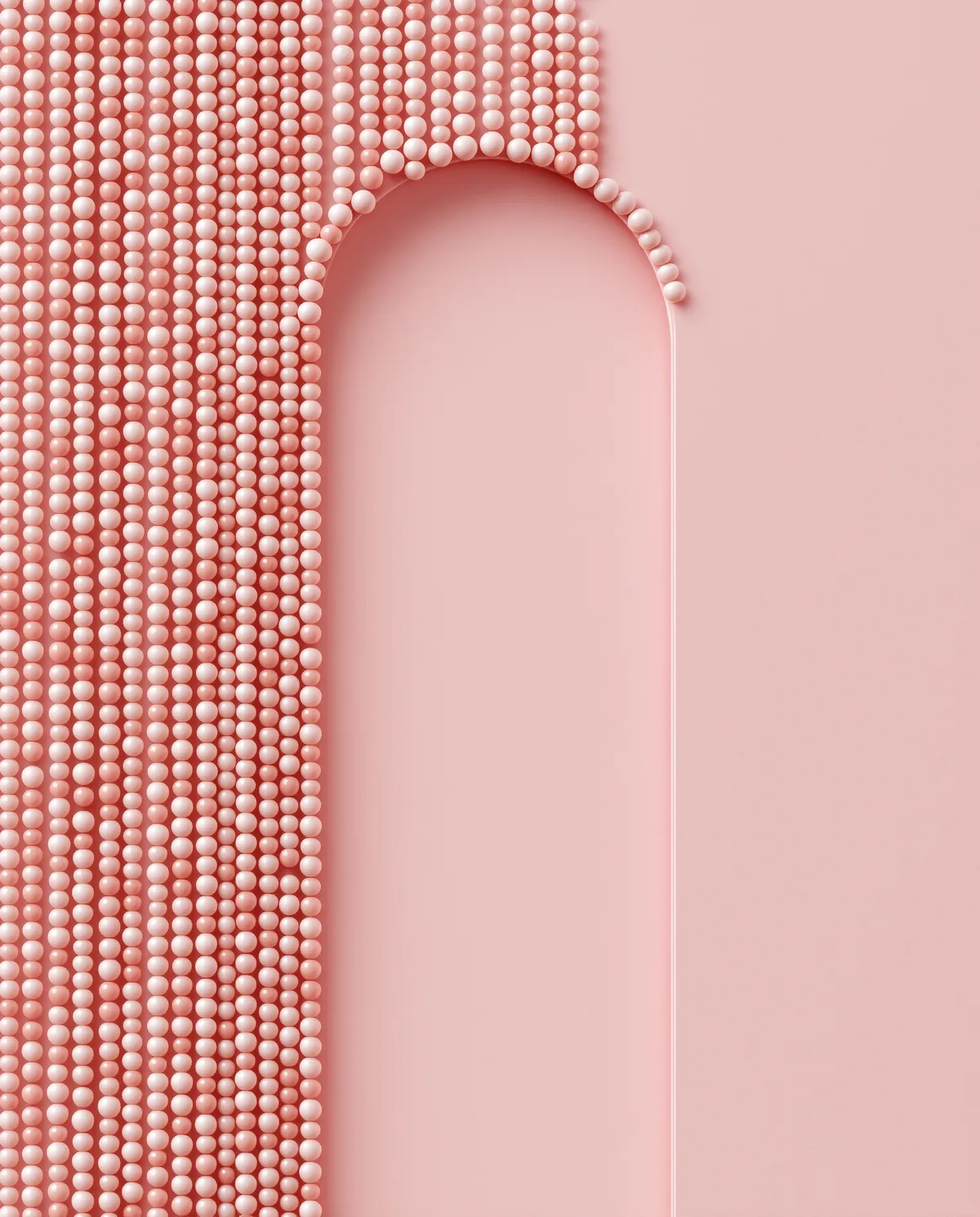
That construction is a portal, and it is a real, repeatedly reordered build — the arched-cut drop appears on our Fallon beaded door and on the Naia curtain. In a genuinely arched opening the effect is almost uncanny, because the beads echo the architecture without touching it.
Less than in a rectangular doorway, because the crown stays open above the rod. Sightlines through the top of an arch are exactly the ones you cannot screen with a straight-headed panel.
If the point of the panel is concealment rather than decoration, an arch is the wrong opening for beadwork and a fabric blind on a shaped track is the right answer. Beadwork in an arch is a decorative and spatial decision.
Three failures, all preventable. The rod gets fixed too high and does not fit. The panel is ordered to the opening's full height when the drop should have been measured from the springing line, so it pools on the floor. Or a shaped rail is commissioned for an opening in a building that moves, and the rail no longer matches the arch after a season.
The fix for all three is the same: measure the springing line first and decide where the straight line lives before you choose a bead.
Nothing extra, as long as the header stays straight. Bead count and stringing hours are set by the area covered, so an arch does not add beadwork cost — it adds a fitting decision. Only the shaped rail route changes the number, and that cost is woodwork, not beads.
Two other pages carry most of what an arch needs. Panel headers covers the dowel, the rail and the rod pocket in detail, which is the component an arch actually turns on. A short bead panel is worth reading too, because a valance drop hung at the springing line is often the neatest answer to a crown you cannot fill. If the arch is wide as well as curved, a wide doorway brings in the span question, and the beaded portal is the build that cuts the opening into the beadwork instead of leaving a parting. For the arithmetic behind strand counts and drops, stringing specifications has the figures.
Good to know
Only if the top rail itself is cut to the curve, which means a bespoke header made for one opening and no ability to move the panel later. For almost every arch the better answer is a straight rod set inside the opening, or a panel hung from the springing line with the curve suggested in the pattern instead.
At or just below the springing line — the point where the arch starts to curve. Fixing above it means the rod is longer than the opening is wide at that height and will not fit; fixing well below it wastes drop and leaves a visible gap of plain wall above the beads.
Give the width at the springing line, the height from the floor to the springing line, and the rise of the arch above it. Those three numbers let the stringing sheet be written. A single width measurement taken at the widest point is the usual cause of a panel that does not fit.
The beadwork is not, because strand count and bead count are set by the area you actually cover. What changes cost is a shaped rail, which is joinery rather than beadwork. A straight rod inside the arch costs nothing extra at all.
Yes, and this is the more interesting answer. An arched-cut drop sets the strand lengths so an arch is cut out of the middle of the panel, leaving a clear walk-through — the construction used on our Fallon and Naia designs. It reads as an arch without needing a curved header.
A tension rod inside the frame at the springing line, which works for light acrylic, wood and bamboo panels. A glass panel is heavy enough that it needs brackets or hooks fixed into the frame, arch or no arch.
Keep exploring
Specification
Dowel, stained header rail, sewn rod pocket or suspension loops — what each hangs from and when each fits.
See the detailPillar
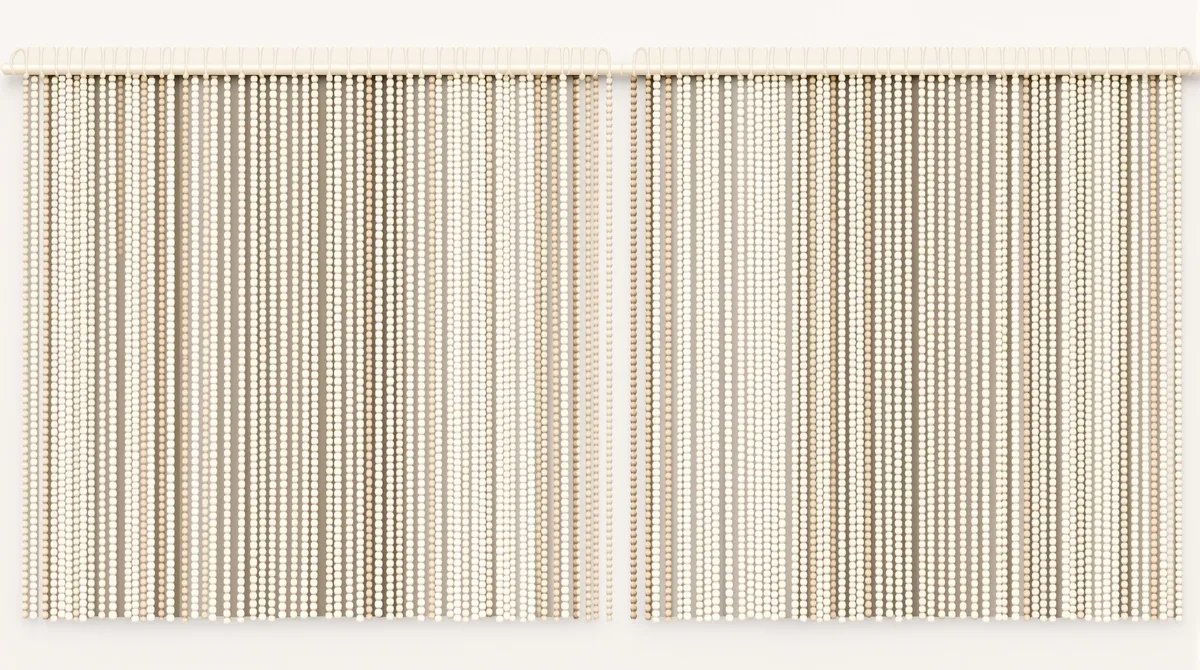
Door curtains, portals, café lengths and valances: the standard sizes, the strand counts and the one question each format answers.
Compare the optionsGuide
Valance, café length and half drop: three short formats, what each one does, and how bead count falls with height.
See the detailGuide
Backlit all day: why body-coloured glass belongs at a window, how length is measured from the sill, and what fades.
See the detailGuide
Shallow header depth, a narrow opening and constant contact with clothes: the lighter build that a closet actually needs.
See the detailManufacturing
Strands that frame an opening and leave a clear walk-through: arched and inverted-V drops, built to order on a turned dowel or a stained rail.
Specs and sizes
Start a conversation
Send a reference, a colour chip or a sketch. Minimums are set per design and confirmed per quote; sampling is quoted separately and usually runs 16 to 20 days from an agreed brief.