Guide
A no-drill fixing
Each no-drill method with the weight it holds, heaviest first, and the one material choice that makes all of them work.
See the detail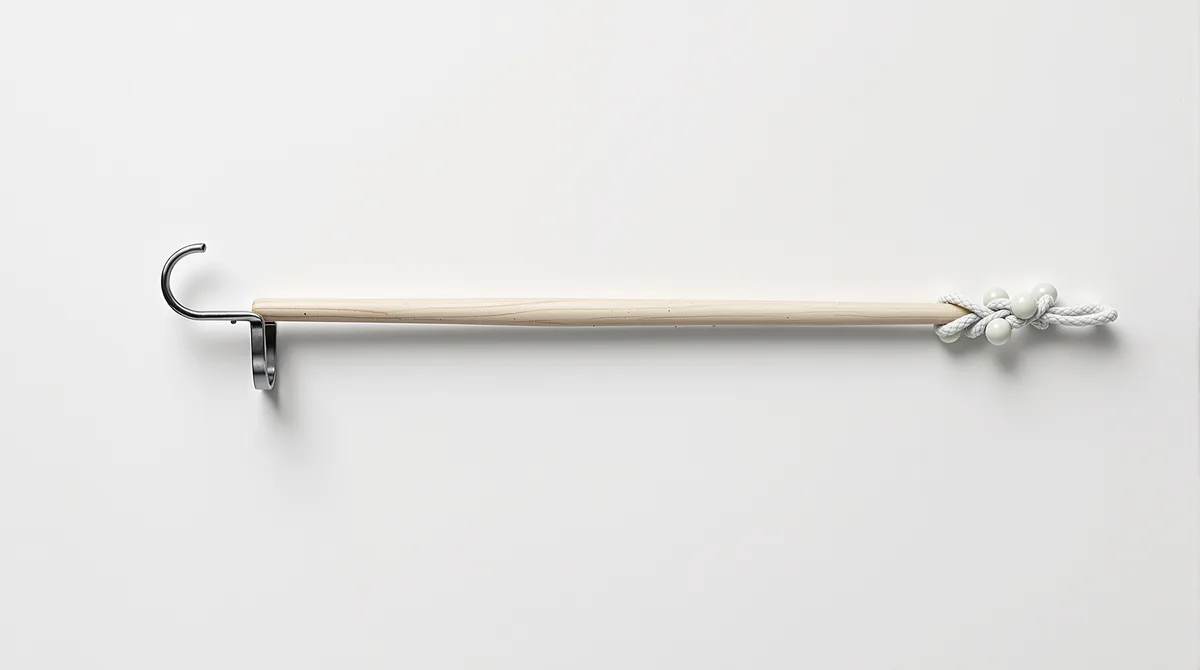
Guide · Install
The no-drill question has a clean answer and a dishonest one. The clean answer is a tension rod and a light panel. The dishonest one is an adhesive hook and a glass curtain.
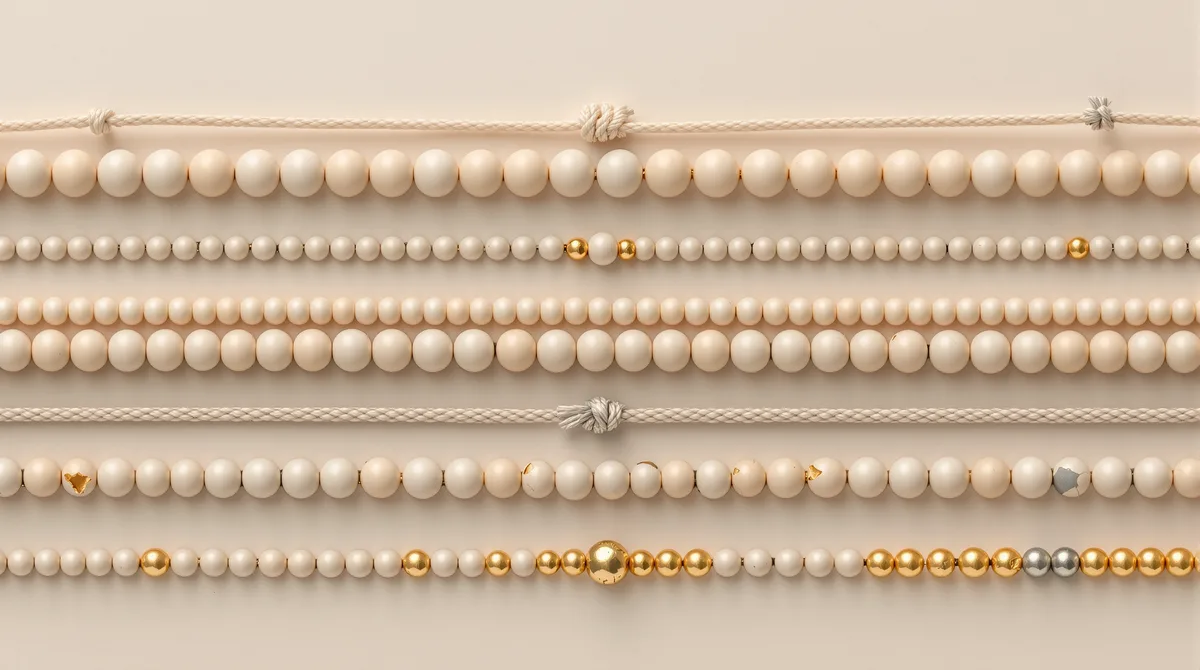
A steel over-door bracket carrying a round turned wooden dowel, a short strand of pale glass beads knotted at its end — a fixing that carries a bead panel and leaves no mark.
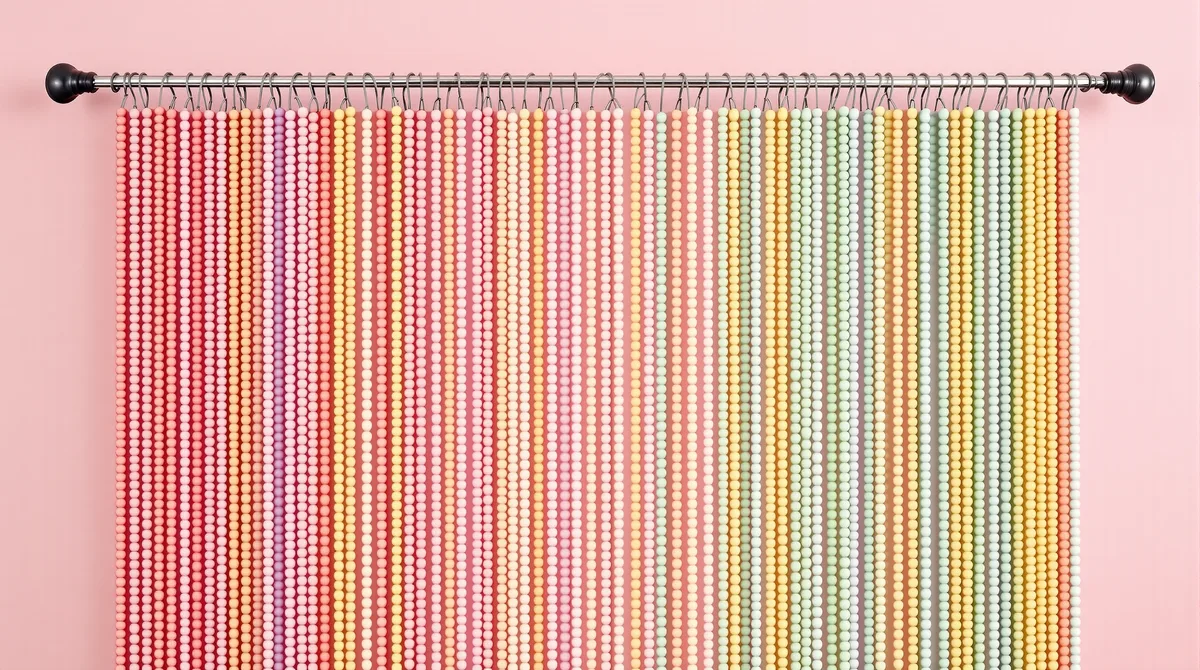
In a rental, hang a light bead panel on a tension rod inside the door or window frame. Tension rods suit acrylic, bamboo and wood panels and leave no mark. A glass panel needs brackets or hooks screwed into timber and is not a no-drill proposition. Match the panel's weight to the fixing before choosing the bead.

Not the beads — the fixing. A bead panel is a heavy, concentrated, vertically hanging load on a single horizontal, and the fixing has to take all of it. In an owned home you screw something into timber and stop thinking about it. In a rental you cannot, which means the fixing has to be chosen first and the panel chosen to suit it.
That inversion is the whole content of this page. People choose a glass panel they love and then look for a fixing that will hold it, and there isn't one that doesn't involve a drill.
A tension rod inside the reveal. It is the only no-drill method we would recommend for hanging work, and within its limits it is genuinely good: it needs two facing surfaces at a consistent spacing, which a door reveal or a window reveal provides, and it carries a light panel indefinitely.
The published guidance for fixings by weight puts tension rods squarely with light curtains — acrylic, bamboo, wood — and names renters as the use case. Cup hooks or screw hooks are simple and strong but involve a screw. A rod on brackets is what heavier glass panels and wide openings need, and also involves screws.
Three reasons, and the third is the one that matters.
They fail suddenly. A friction or adhesive bond does not creep gradually; it holds and then it lets go, usually when somebody pulls the hem.
They are humidity-sensitive, which rules out exactly the doorways — bathroom, kitchen — where people most want a no-drill solution.
And when they come off they frequently take the paint with them. The whole point of avoiding a drill in a rental is to leave no damage, and a torn patch of emulsion is worse than a filled 5 mm hole.
By weight, and the material decides it. As a physical guide, glass sits near 2.5 g/cm³, acrylic near 1.2, and most woods below 1. The same design in glass and in acrylic are not the same load.
So: acrylic, wood, bamboo → tension rod is fine. Glass, mixed glass-heavy, faux capiz in larger discs → screwed fixing. There is no clever intermediate. A panel that is on the edge of what a tension rod will take is a panel that will come down at some point, and the beads will be fine but the floor may not.
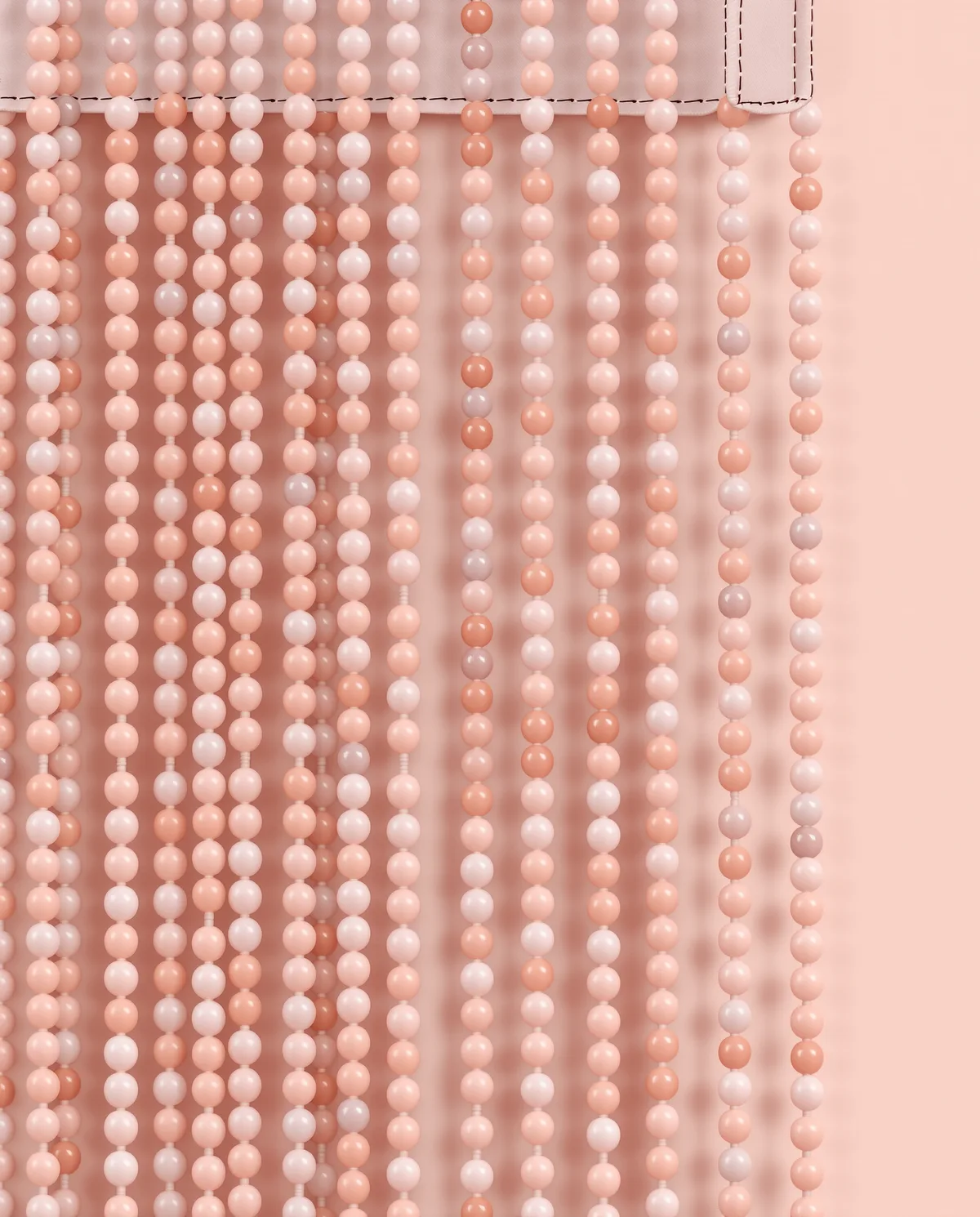
Often, and it is the most under-used route. Many rentals already have a curtain rod or a pole at a window. A panel built with a sewn rod pocket — a three-inch pocket on a cotton or canvas header band, the construction used on our café curtains and fabric-mounted portals — threads straight onto it.
A panel with end suspension loops at the strand tops is even more flexible: the same piece can hang from a dowel in one home and a rod in the next without being rebuilt. That is worth specifying deliberately if you expect to move.
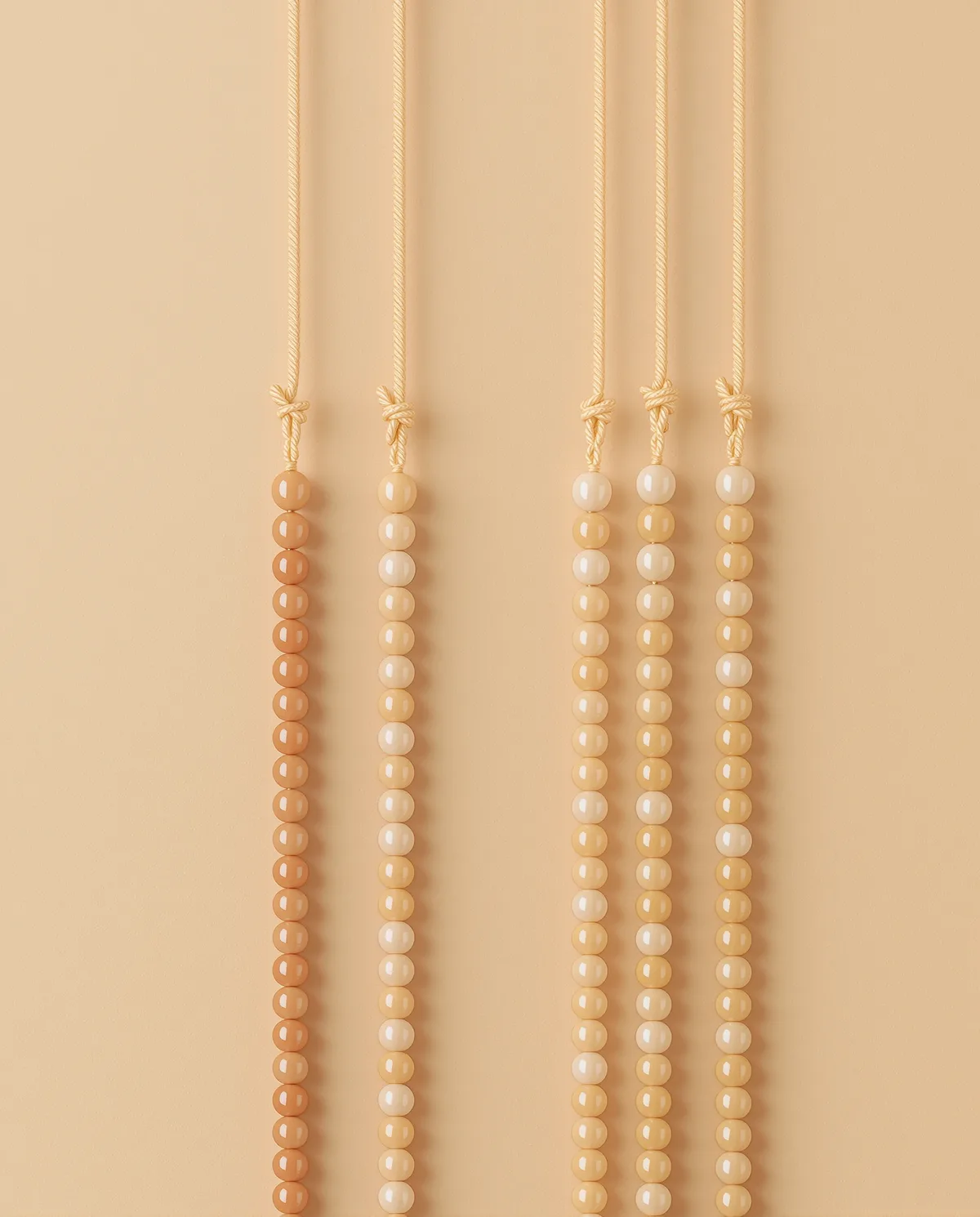
A panel built on a fixed dowel is the least portable option, because the dowel then needs its own support wherever you go.
Largely. A valance drop or a café length carries a fraction of the bead count of a full panel, so the load on the fixing is nowhere near its limit — and there is no hem at hand height for anyone to pull on, which is the load that actually brings panels down.
Where the opening genuinely matters and the fixing is marginal, this is the compromise, and it reads better than people expect: a short panel at the top of a doorway still does the decorative job.
Acrylic is the obvious choice: light, unbreakable, the widest colour range because the beads are moulded and dyed to a named colour, and the easiest thing to pack when you move. Wood is the quiet alternative, light and matte, but should not go anywhere damp.
Bamboo is lighter still and the least tolerant of humidity — permanent marking in a steamy doorway, with no finish to protect the fibre. Glass is the material to specify for the home you own.
Lift the panel off the rod by its dowel or loops, let the strands hang together as a mass, and tie them in loose bundles down the length. Never fold a strung panel: a fold creases every cord at the same height and that is where strands part.
Then release the tension rod and check both reveal faces. A rod that has been re-tightened repeatedly leaves a scuff; a rod set at the right length from the start usually leaves nothing.
Say so, and say the fixing. If the panel is going on a tension rod, the top fixing should be loops or a rod pocket rather than a fitted dowel, and the weight should be kept deliberately low — which usually means acrylic and a slightly wider strand pitch.
Width, drop and strand count are set per order, because every piece of beaded décor is made against an approved sample. There is no stock range, so specifying a rental-friendly build costs nothing extra; it just has to be said at the brief stage rather than afterwards.
Panel weight is the page that decides whether a tension rod is adequate, and panel headers covers the rod-pocket and suspension-loop options that make a panel portable. Acrylic beaded curtains is the material we would specify for almost any rental, for weight rather than for looks. Tangled strands sets out how to bundle a panel for a move without creasing the cord. A short bead panel is the compromise where the fixing is marginal, and child safety around beadwork is worth reading if a friction fixing is the only option available.
Good to know
Yes. A tension rod inside the door frame works well for light acrylic, wood and bamboo curtains, and it is the only no-drill method we would put a hanging panel on. It needs two facing surfaces at a consistent spacing, which a door reveal or a window reveal both provide.
No, and this is the line not to cross. Glass is roughly 2.5 g/cm³ against acrylic at about 1.2, so the same design is near double the weight, and a friction fixing under that load fails suddenly rather than gradually. A heavy glass panel wants a rod on brackets fixed into the frame or wall.
They are the wrong tool for hanging work. Their failure mode is sudden, they are badly affected by humidity, and when they do come off they frequently take paint with them — which is precisely the damage you were avoiding. For a bead panel, use a tension rod or a screwed fixing.
Yes, if it is built for it. A panel with a sewn rod pocket — a three-inch pocket on a cotton or canvas header band — threads onto a standard curtain rod directly. So does a panel with end suspension loops at the strand tops. A panel built on a fixed dowel needs the dowel supported instead.
Tension rod inside the reveal, nothing adhesive anywhere, and a panel light enough that the rod is not working at its limit. Check the rod's grip after a week and again after a month: a rod that slips slightly and is re-tightened leaves a scuff, and a rod that drops leaves a dent.
Materially, yes. A valance drop or a café length weighs a fraction of a full panel, so the fixing is nowhere near its limit, and there is no hem at hand height to be pulled on. It is the obvious answer where the opening matters and the fixing is marginal.
There is nothing to object to if nothing is fixed to the fabric of the building. That is the real argument for the tension-rod route: the panel is furniture rather than an alteration, and it leaves with you.
Keep exploring
Guide
Each no-drill method with the weight it holds, heaviest first, and the one material choice that makes all of them work.
See the detailPillar
Door curtains, portals, café lengths and valances: the standard sizes, the strand counts and the one question each format answers.
Read moreGuide
Cord first, then surface finish, then beads: what wears out in which order, and what each stage looks like before it fails.
Read the guideGuide
Pulling, cord loops and loose beads: the three real risks, and the two that are design decisions rather than inevitabilities.
Specs and sizesGuide
Cats climb, dogs push through: which builds survive it, which beads are a swallowing risk, and how to hang in a pet home.
Specs and sizesGuide
No drilling, packs flat twice a year, survives a car boot, and does the work of a whole wall of decoration.
See the detailGuide
Why there is no single weight figure, the density ratios that matter, and which fixing each weight class needs.
See the detailGuide
The lightest panel you can hang, the widest colour range, a light click rather than a chime, and no shatter risk.
Read the guide
Start a conversation
Send a reference, a colour chip or a sketch. Minimums are set per design and confirmed per quote; sampling is quoted separately and usually runs 16 to 20 days from an agreed brief.