Colour story
The Rose Clay Garden story
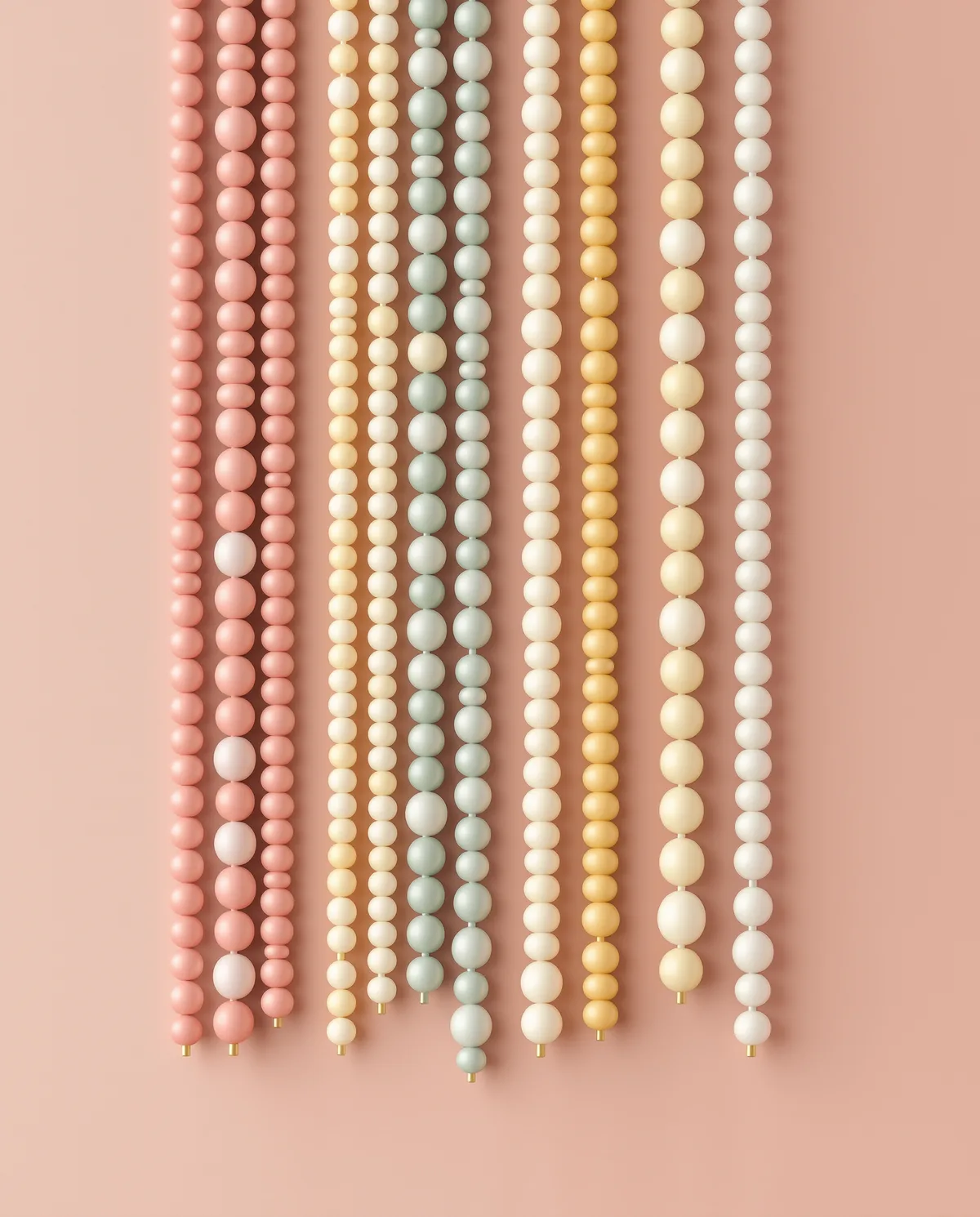
Sun-baked blush, soft sage, butter yellow and milky glaze, built as a linked disc hanging because the palette is matte.
See the detail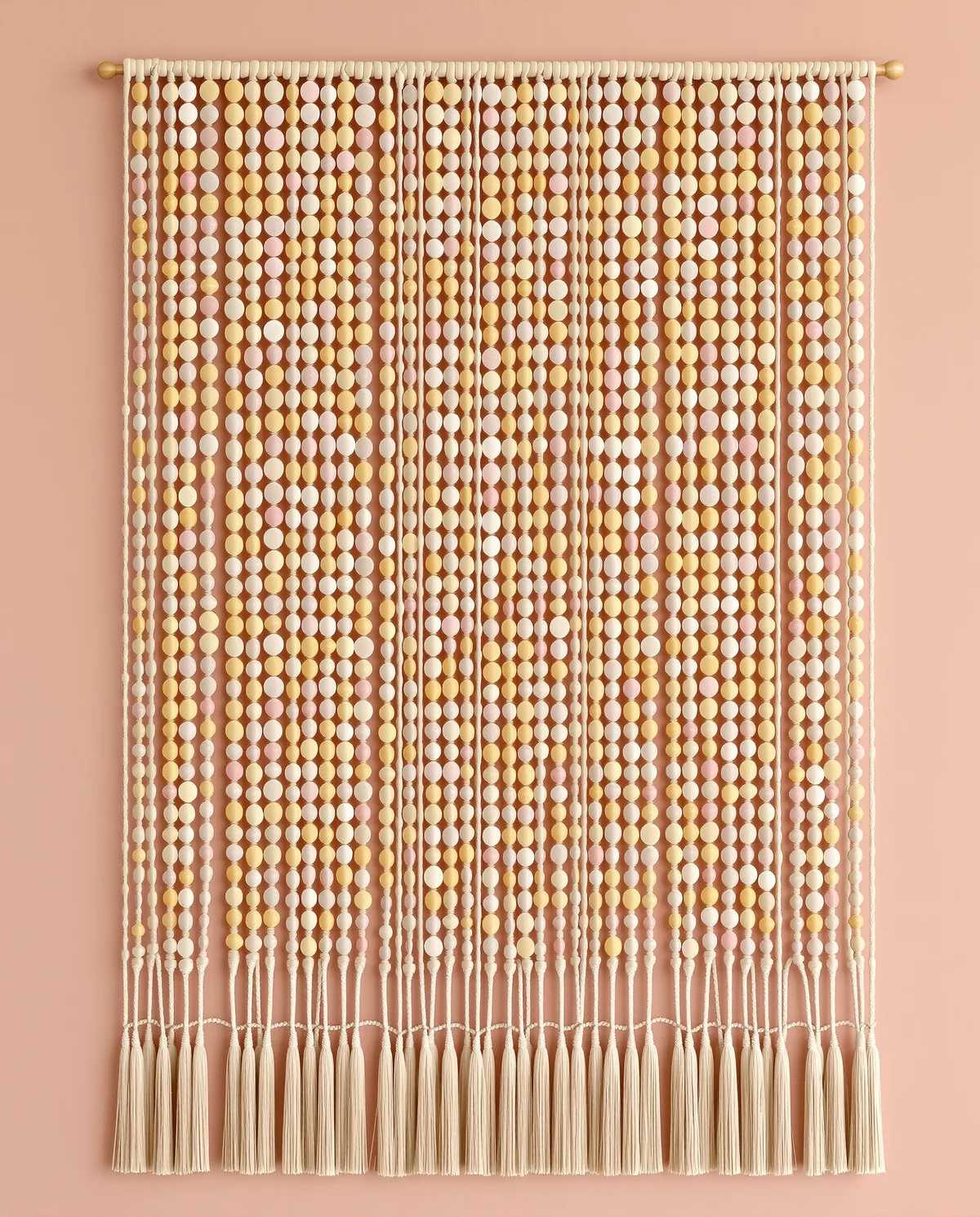
Design · Rose Clay Garden Disc Hanging
Half the discs of the large linked piece, and a palette that a cast disc reaches more easily than glass can. The smaller end of the build is the safer one.
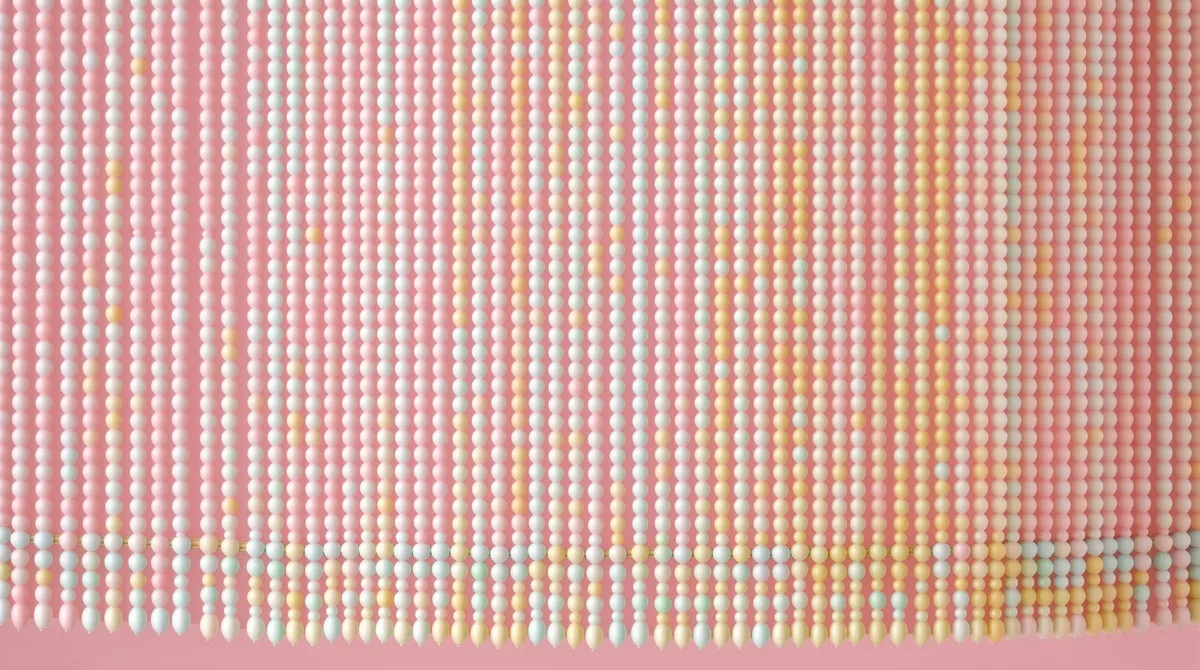
A beaded hanging in the Rose Clay Garden palette, close strands of sun-baked rose, soft sage and butter yellow beads falling to a stepped hem.
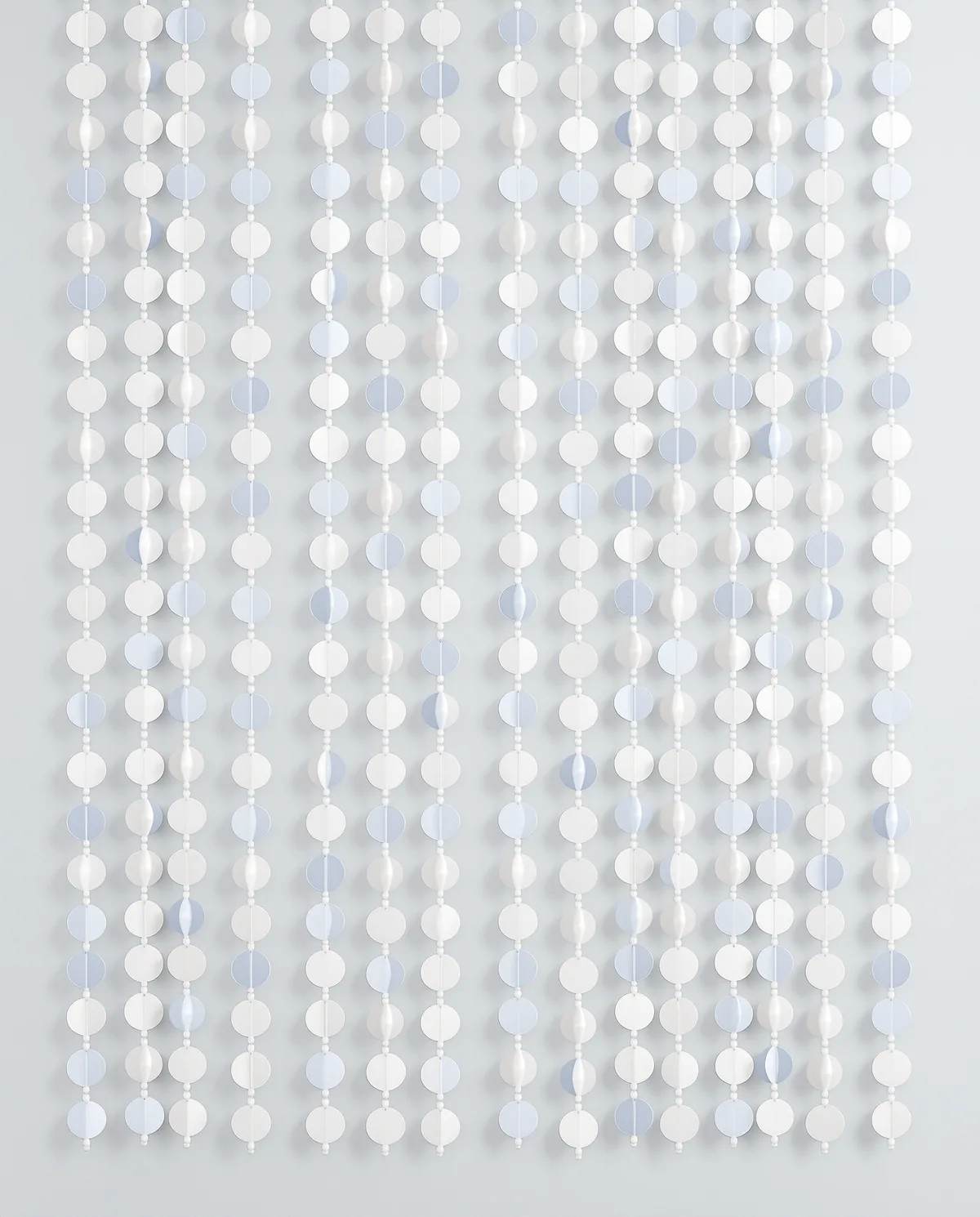
The Rose Clay Garden linked disc hanging is drawn at 70 × 130 cm with about 239 discs — roughly half the count of the largest linked piece in the library. Its discs are faux capiz, cast resin or dyed cut acrylic, in a matte and satin palette that a cast disc arrives with and a glass bead would need frosting on every unit to reach.
The Rose Clay Garden linked disc hanging is drawn at 70 × 130 cm with about 239 discs. It is the smaller of the two linked pieces in the library — roughly half the disc count of the 90 × 200 cm design — and it is the one to develop first.
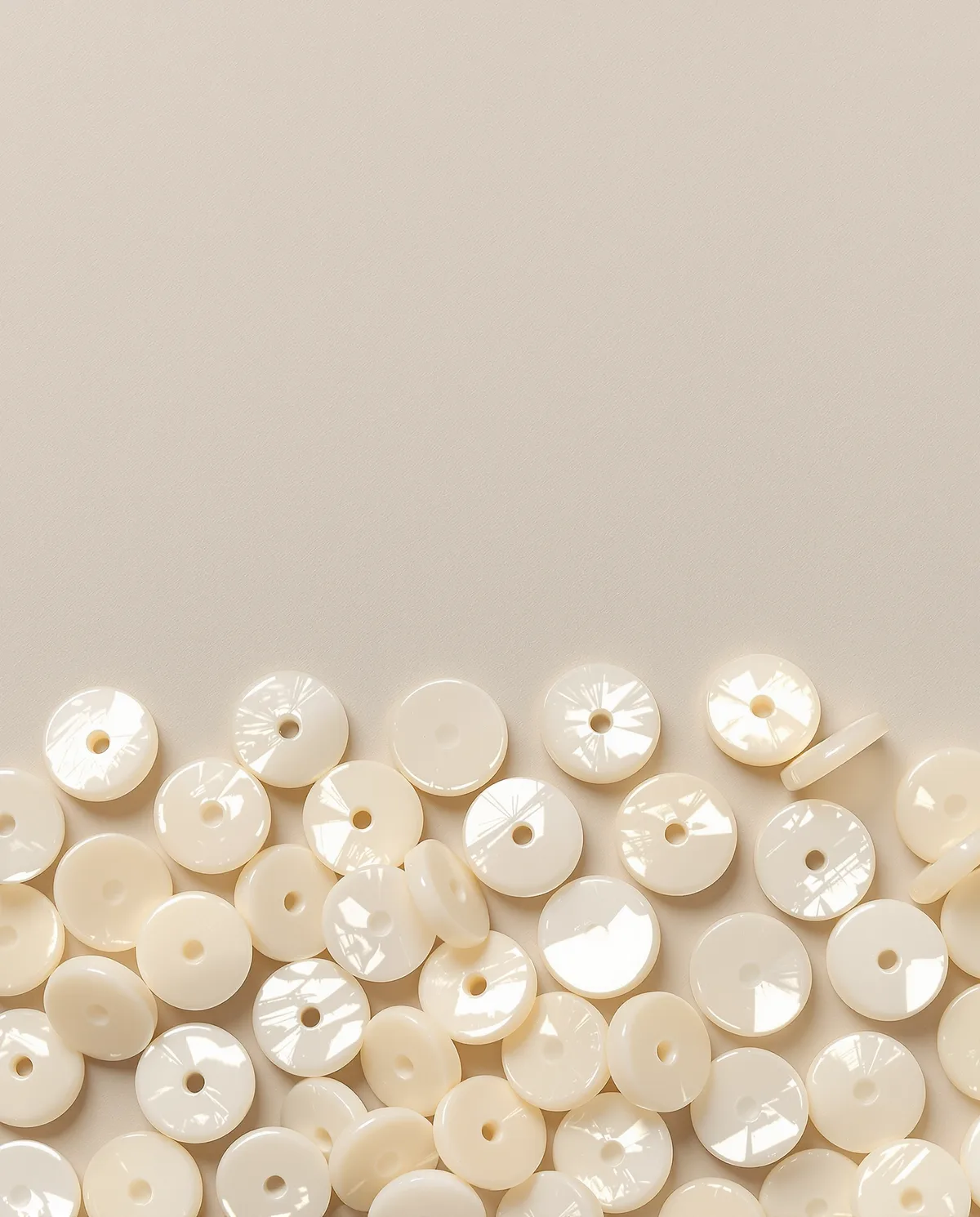
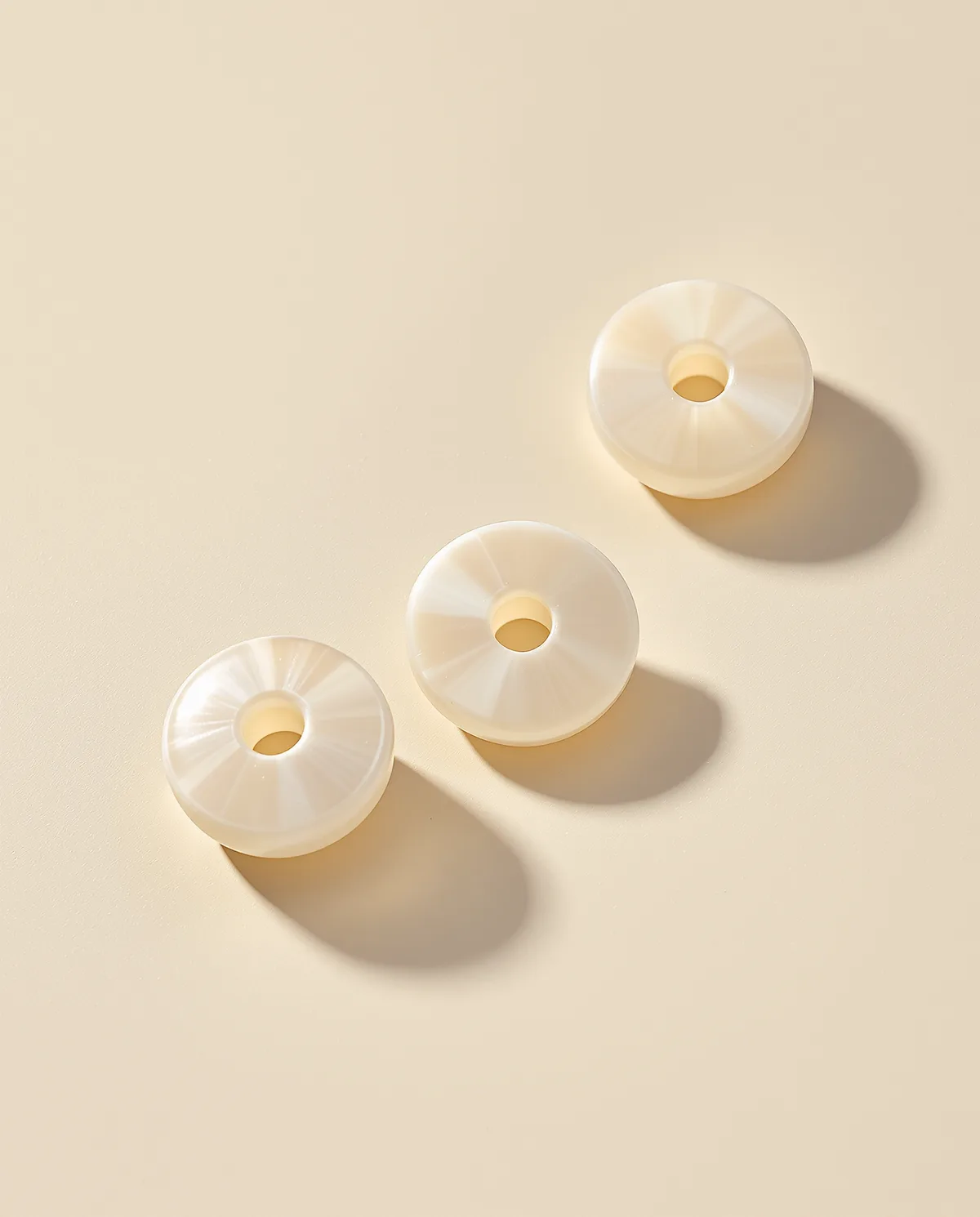
Its discs are faux capiz: cast resin or dyed cut acrylic, finished to imitate capiz shell. There is no shell in it.
Not in strands. Discs are linked one below the next into columns and the columns hang side by side from the dowel. Each link point carries the weight of everything beneath it.
At 239 discs on a 130 cm drop, the most loaded link carries considerably less than its equivalent on a 200 cm column. That is the reason this is the safer of the two linked designs to put into development: the same construction, with the load question at roughly half the magnitude.
The sheet reads unlike any strung design here. There is no strand count and no stringing medium; there is a disc count, a column pitch, a disc diameter and a link method. Every colour is dyed to match a physical reference, and the panel weight is lower than a glass piece of comparable area because the material is lighter.
| Specification | Value |
|---|---|
| Finished size | 70 × 130 cm |
| Disc count | About 239 |
| Construction | Discs linked one below the next into columns |
| Disc material | Faux capiz — cast resin or dyed cut acrylic |
| Palette | Sun-baked riverbank blush, soft sage, butter yellow, milky glaze |
| Finish | Matte and satin |
| Disc sizes drawn | 25 mm and 50 mm |
| Studio link | Confirmed collection slug — app.gemixx.com/?c=rose-clay-garden |
| Status | A design available to develop at the drawn size |
It cannot show how the columns settle or twist after a week on a dowel. That, and the finished weight, are sample questions.
The matte story — sun-baked riverbank blush, soft sage, butter yellow and a milky glaze, in matte and satin finishes. It is collection 9 in the Design Studio, announced in October 2026, and most of that collection is tabletop.
This is its only beaded expression. The Design Studio link for the collection is confirmed: app.gemixx.com/?c=rose-clay-garden, where the design opens as your own copy to recolour, resize and send back for costing.
None, and the material is the point. Every colour in this palette is defined by being matte, and a matte palette is where a cast disc beats a glass bead outright.
Matte, and on a linked piece that is not a preference but a structural choice: a cast resin or dyed cut acrylic disc arrives matte as made, so the finish costs nothing on a piece with several hundred discs in it. The same finish in glass would be a frosting operation repeated a few hundred times.
As the bottom of the columns, level in the drawn design. A shaped lower edge is possible and means columns of different disc counts, which changes the load and the settling behaviour column to column.
For a first development, level is the right answer. Shape the piece in the second season.
A turned wooden dowel at 70 cm, made in our own Saharanpur wood factory. At 70 cm the dowel span is short, so the question is load at the two fixings rather than deflection. Resin and acrylic are light materials — as general properties, acrylic runs around 1.2 g/cm³ against roughly 2.5 for glass — so a disc piece is lighter than a glass piece of comparable area.
Recoloured more easily than anything else in the library. A disc has no natural colour, so every colour is a decision, and both cast resin and cut acrylic take dye uniformly because the colour runs through the material rather than sitting on its surface.
For a buyer with a fixed brand palette this is the most exactly matchable design on the property. A glass story trades colour accuracy for depth; a disc story does not have to.
Interior designers and retailers with a calm, matte, plaster-and-clay interior register, which is exactly the audience the parent collection was built for. It also suits hospitality specifiers wanting a wall piece that does not reflect.
At 70 × 130 cm it is a domestic rather than architectural scale, which widens the market relative to the larger linked piece.
Not sampled. The record's one relevant conflict applies here as it does to the larger piece, and it applies more favourably.
Faux-capiz disc sampling covers 10 to 30 mm, and the drawn sizes are 25 and 50 mm. The smaller disc sits inside sampled experience; the larger one is confirmed on the sample. On a 130 cm column at 239 discs that is a lighter proposition than on a 200 cm column at 497, which is another reason this is the right piece to prove the construction on.
It would be agreed on the sample. A linked column does not fold and a thin disc tangles readily, so columns bundled in order with interleaving is the starting point, and the carton is set by the 130 cm column length.
Compared with the larger linked design, a 130 cm column is a far more manageable carton, and that is a real commercial difference rather than a detail — freight on an oversize non-collapsible piece can outweigh the saving made anywhere else in the build.
Good to know
None. The piece is faux-capiz discs linked to each other — cast resin or dyed cut acrylic finished to imitate capiz shell. There is no cord carrying beads, so the specification is a disc count and a link method rather than a bead sequence.
Exclusivity is a commercial decision taken per programme rather than a property of the design. On an unsampled design it is a conversation to have alongside the development.
It shows the format and a disc count that is an accurate count of the design. What a drawing cannot show is how the columns settle or twist after hanging — which is a sample question.
It would be agreed on the sample. A linked column does not fold and a thin disc tangles readily, so columns bundled in order with interleaving is the starting point, and the carton is set by the 130 cm column length.
Yes. For a linked piece, send the disc diameter, the column pitch, the overall size and the link method. A rough cost sheet is produced before any sample is made so the levers are visible early.
More easily than anything else in the library. Every colour is a dye decision on a material with no natural colour, and both cast resin and cut acrylic take dye uniformly because the colour runs through the material rather than sitting on its surface.
Yes, with the disc count following the area. Narrowing the width removes whole columns; shortening the drop reduces the discs per column. Quote against the disc count rather than the finished size.
Keep exploring
Colour story
Sun-baked blush, soft sage, butter yellow and milky glaze, built as a linked disc hanging because the palette is matte.
See the detailTechnique
Why a column of linked discs is a different build from a strung strand: the connection, the twist, the packing, and the repair.
Compare the optionsDesign
Linked faux-capiz disc hangings at 70 × 130 to 90 × 200 cm, and beaded shade designs from a 15 cm sconce to a 50 cm pendant.
Open the referenceDesign
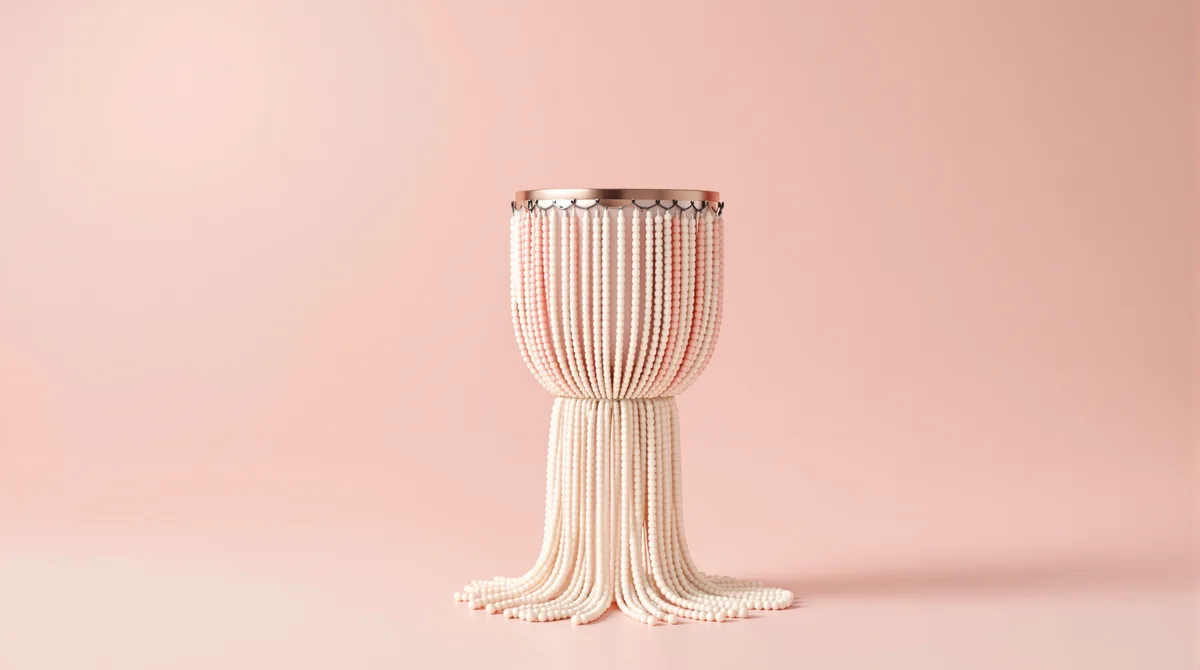
A long-fringe drum at 40 cm diameter by 50 cm deep with deep scalloped hems — the longest fringe in the shade group.
Read the guideDesign
90 × 200 cm at about 497 linked faux-capiz discs in 12 to 16 columns — the largest disc piece in the library.
Read the guideDesign
Petal-cut faux-capiz discs in an arched field at 90 × 180 cm, with the arch cut into the column disc counts.
Compare the options
Start a conversation
Send a reference, a colour chip or a sketch. Minimums are set per design and confirmed per quote; sampling is quoted separately and usually runs 16 to 20 days from an agreed brief.