Pillar
Beaded curtains: the formats, and what each one is for
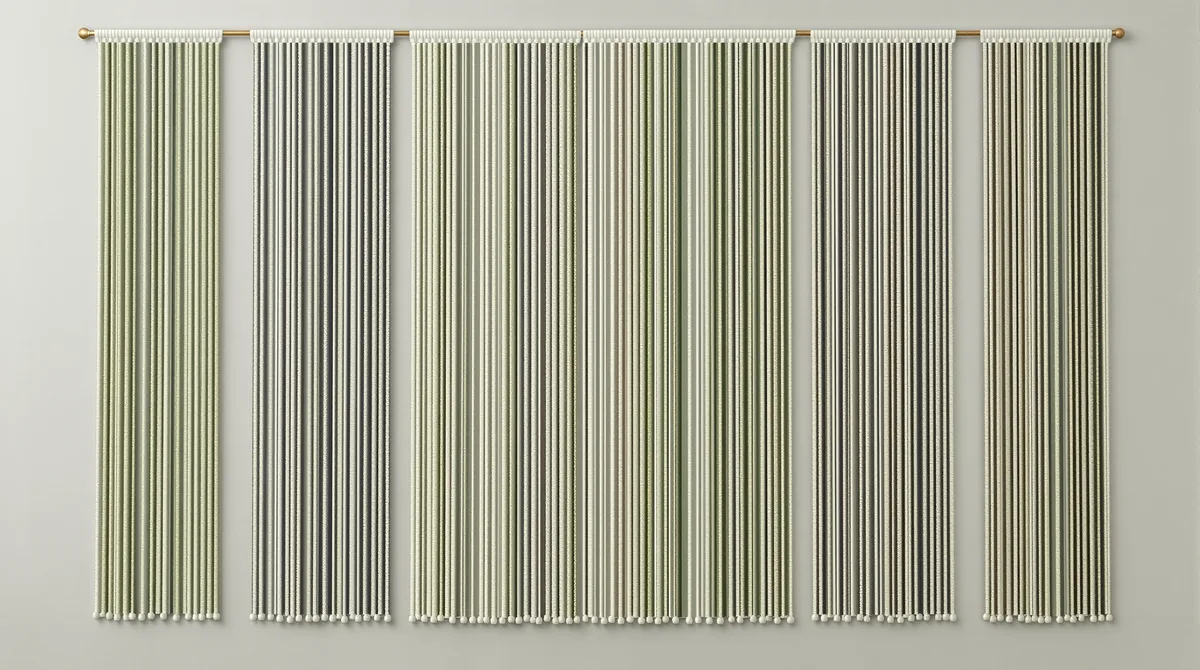
Door curtains, portals, café lengths and valances: the standard sizes, the strand counts and the one question each format answers.
See the detail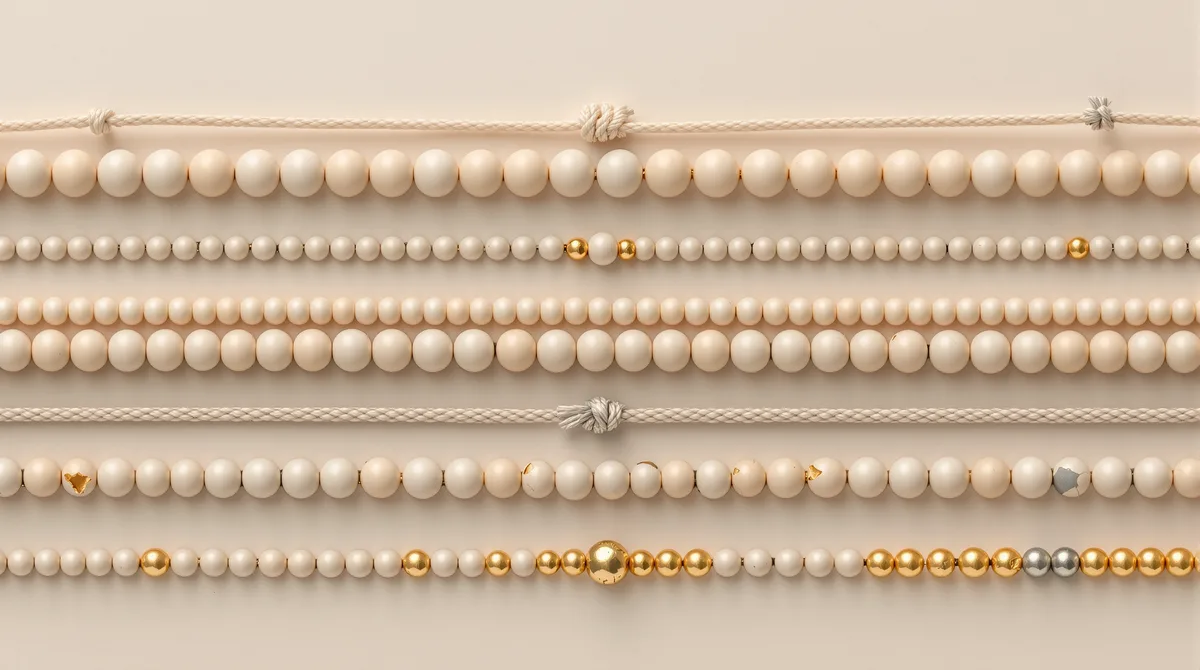
Guide · Performance
The answer is that the beads outlive the room and the cord does not. A bead panel is not a product with a lifespan; it is a product with a service item.
Four bead strands laid out parallel in cream and antique gold, knots in the braided stringing cord showing between the beads on two of them.
A bead panel's beads will outlast the room; its cord will not. Cord is the service item: wet or abraded cotton cord slackens, discolours and eventually parts at a drill hole. Surface finishes go second — dye and frosting are surface properties. Body-coloured glass and turned wood are effectively permanent in dry indoor use.

That a bead panel is not a product with a lifespan — it is a product with a service item.
The beads will almost certainly outlast the room they are hanging in. Body-coloured glass is effectively permanent in domestic use; turned wood rarely breaks; acrylic does not craze. The cord is a different matter, and it is the only thing on the panel that will ever need replacing.
That distinction is unusual in soft furnishing and it is worth understanding, because it changes the question from "how long will this last" to "what will need doing, and when".
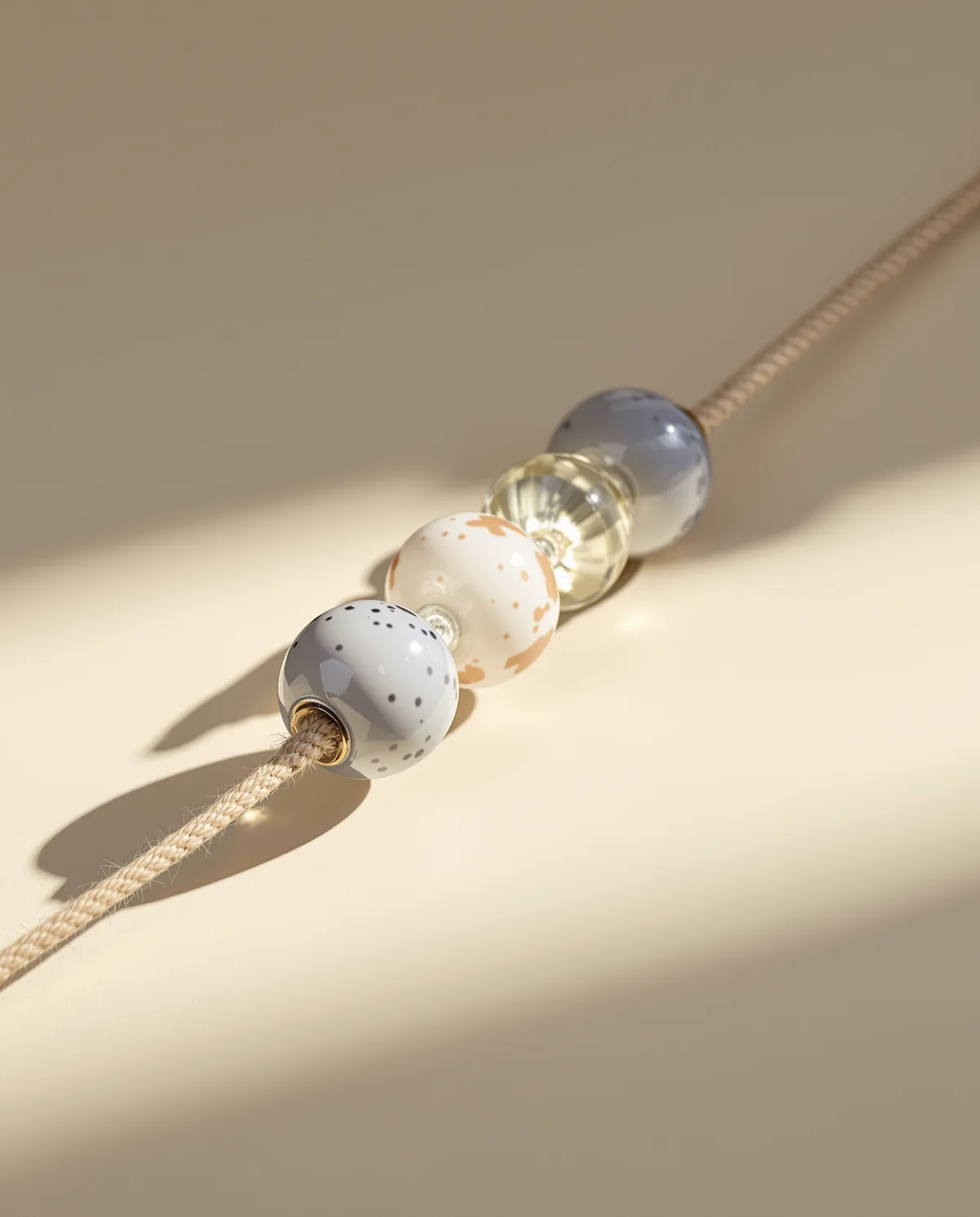
Because it is doing all the structural work. Thirty lengths of cotton cord carry every bead in the panel, and each one passes through the drill hole of every bead it holds.
Two things attack it. Water: wet cotton cord slackens, discolours, holds dust and takes much longer to dry than people assume. And abrasion: under load, the cord bears against the inside of each drill hole, and over years of a panel being pushed through, that contact wears.
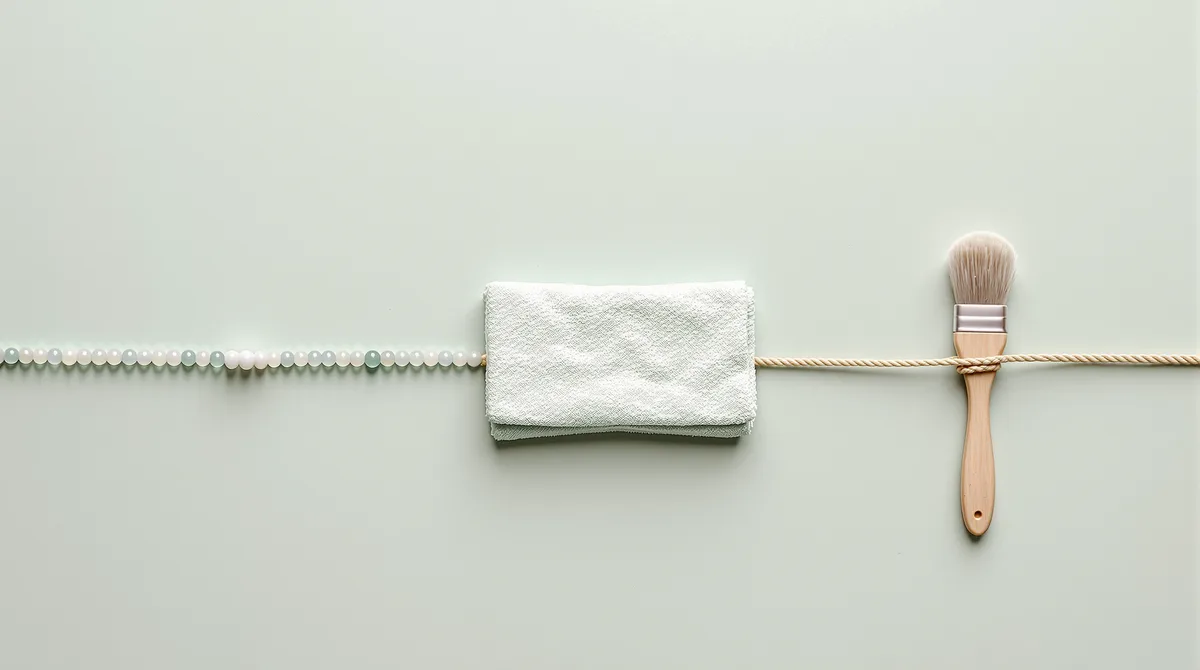
Everything in the standard care advice — dry dusting first, barely damp cloths, never immersion — is one instruction in different words: keep the cord dry.
It gives you plenty of notice, in three stages.
Strands hang at slightly different lengths. Cord has crept unevenly under load, so the hem line goes soft. This is cosmetic and reversible.
The cord darkens or greys in the gaps between beads, usually first at the hem on a panel that has been near a floor, or at the header on one in a humid room.
One strand parts. Almost always at a drill hole near the top, where the load is highest.
None of it is sudden. All of it is a prompt to re-string rather than to replace.
Rarely, and not structurally.
Glass can chip if knocked hard against glass — a faceted bead slightly more readily than a smooth one, because an impact lands on an edge rather than spreading round a curve. In a doorway in daily use that is an occasional event.
Acrylic picks up fine surface scratches where it rubs a door frame. Wood is dimensionally stable in a dry room and splits only if it has been wetted and dried repeatedly. Faux capiz holds its colour, because it is dyed through; the finish is what to protect, so it is wiped lightly rather than scrubbed.
None of those ends a panel. They age it.
Surface ones, and the distinction between surface and body colour is the single most useful thing to know when specifying for longevity.
Body colour — the colour is in the glass or dyed through the acrylic. Effectively permanent.
Surface dye — the colour sits on the bead. Solvents lift it immediately and strong daylight fades it over time. That matters most on designs built around dyed-to-match base beads, where a base has been dyed to sit against an accent: if the base shifts and the accent does not, the design drifts.
Frosted and sea-glass surfaces are matte because the surface is textured. Rub them hard and they polish into gloss, which cannot be undone.
Pearlised and iridescent coatings scuff where beads rub against each other, so they age fastest in a doorway in constant use.
More than the panel does.
A dry hallway is the best case: dusted dry, never immersed, the cord will serve for years and the beads indefinitely.
A bathroom doorway is a humidity cycle twice a day, and the cord is on a much shorter clock — survivable with glass or acrylic beads, a metal rod rather than a wooden dowel, and the panel hung on the dry side.
A kitchen adds airborne grease, which turns loose dust into a film that needs damp work, which puts more water near the cord.
A sunny window adds the fade question, which is why body-coloured glass belongs there and surface-dyed beads do not.
Water, by a long way. Immersion in a sink or a bath, a washing machine, a steam cleaner, or a hem resting in a wet patch on a bathroom floor — all of them put water into the cord in quantity.
Second worst is a hem sitting on the floor. It gets trodden on, hooked under and pulled, and the force goes straight to the drill holes and the header knot. Leaving a clear gap at the bottom is the cheapest life-extending decision available.
The strand is re-strung onto new cord in bead-map order and re-knotted at the header. That is the repair, and it restores the panel to its original state rather than approximating it.
Two things make it possible. Spare beads, if they were specified with the order, which is why the bag is worth asking for and then worth keeping rather than throwing away. And the build is documented bead by bead — the bead map fixes every position, so the replacement strand matches the others exactly.
Where no spares were specified, a photograph of the strand and the header is usually enough to match beads from the library, because the construction is on record.
A panel that looks the same in ten years, with a cord that has been replaced once somewhere in the middle of that — and, where the order specified them, a bag of spare beads that has got slightly lighter.
That is a different proposition from a fabric curtain, which has a life and then an end. It is also why specifying a panel built to a documented bead map matters more than it appears to at the point of purchase.
Routine care is the page that actually extends the life of a panel, because every instruction in it protects the cord. Steam and beadwork explains which rooms shorten the service interval and why. Glass bead curtains and a wood bead curtain are the two most durable materials, and faux pearl beads is the finish that ages fastest. Bead materials sets out the body-colour versus surface-colour distinction that decides how a panel fades. If the piece has to be reproduced years later, reordering a bead design explains what makes that possible.
Two more pages bear on the question. Bead curtain formats explains why a short panel in a protected position outlives a full drape in a doorway, and tangled strands covers the handling habits that stop a cord being pulled against a drill hole. Both are cheaper than any material upgrade.
Good to know
Service life depends on the room rather than on the panel: the beads outlast the room, and the cord is the service item. In a dry hallway, dusted dry and never immersed, the glass will outlive the décor around it and the cord is the only thing that will ever need attention. In a steamy bathroom doorway the cord is on a much shorter clock.
The cord, always. It is cotton, it is doing all the structural work, and it passes through the drill hole of every bead it carries. Wet cord slackens and discolours; abraded cord eventually parts at a hole. Everything else on the panel outlasts it comfortably.
Strands hanging at slightly different lengths, because the cord has slackened unevenly. Then a visible darkening or greying of the cord between beads. Then one strand parts. None of that is sudden, and all of it is a signal to re-string rather than to replace.
Rarely. Body-coloured glass is close to indestructible in domestic use and turned wood almost never breaks. Glass can chip if knocked hard against glass, and acrylic picks up fine surface scratches where it rubs a door frame. Neither is a structural failure.
Surface ones. Dye on a bead is a surface property, so solvents lift it and strong daylight fades it. Frosted and sea-glass beads are matte because the surface is textured, and rubbing hard polishes them permanently into gloss. Pearlised and iridescent coatings scuff where beads rub.
Yes, and that is the real answer to the lifespan question. A strand that has parted is re-strung onto new cord in bead-map order and re-knotted at the header, from spare beads specified with the order. Because the build is documented bead by bead, the repair is identical to the original rather than approximate.
Water. Immersion, steam, a hem resting in a wet patch, or washing the panel in a sink — all of them put water into the cord, and the cord is the component that fails. After water, the next worst is a hem sitting on the floor, which gets trodden on and pulled.
Keep exploring
Pillar
Door curtains, portals, café lengths and valances: the standard sizes, the strand counts and the one question each format answers.
See the detailGuide
Air moves through, insects are discouraged rather than excluded, and strand pitch is the only lever that changes either.
Open the referenceGuide
Opaque beads at a tight pitch screen movement and never detail — and nothing in this category works from close up.
View the rangeGuide
Three predictable failures — soaked cord, lime scale, no containment — and the two things people usually want instead.
How it is madeGuide
Dry dusting first, spot cleaning the beads, keeping the cord dry, what never to use, and how to handle a broken strand.
How it is madeGuide
Identify what failed, re-string that strand, re-knot it at the header, and match the bead from the spares specified with the order.
See the detail
Start a conversation
Send a reference, a colour chip or a sketch. Minimums are set per design and confirmed per quote; sampling is quoted separately and usually runs 16 to 20 days from an agreed brief.