Style
The Japanese reading
A noren is split dyed fabric; a bead panel is strung glass. Same threshold job, different object, different maker.
See the detail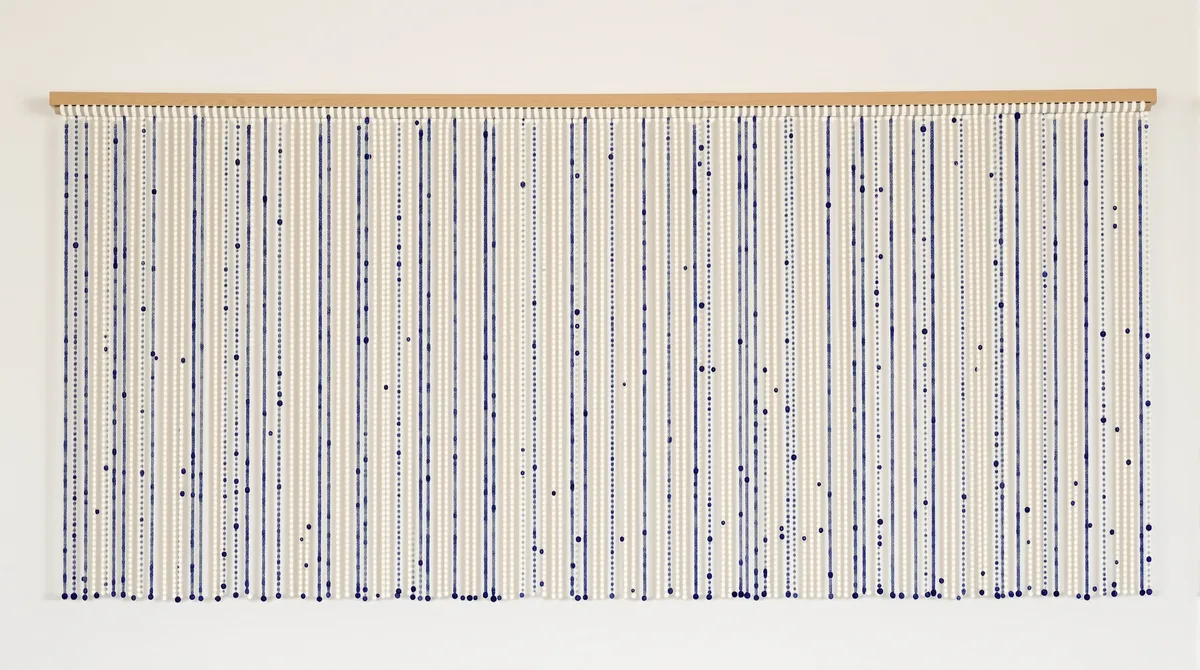
Guide · Comparison
Two unrelated objects that share a job: marking a threshold without closing it. Searches run them together, so here is the distinction stated plainly.
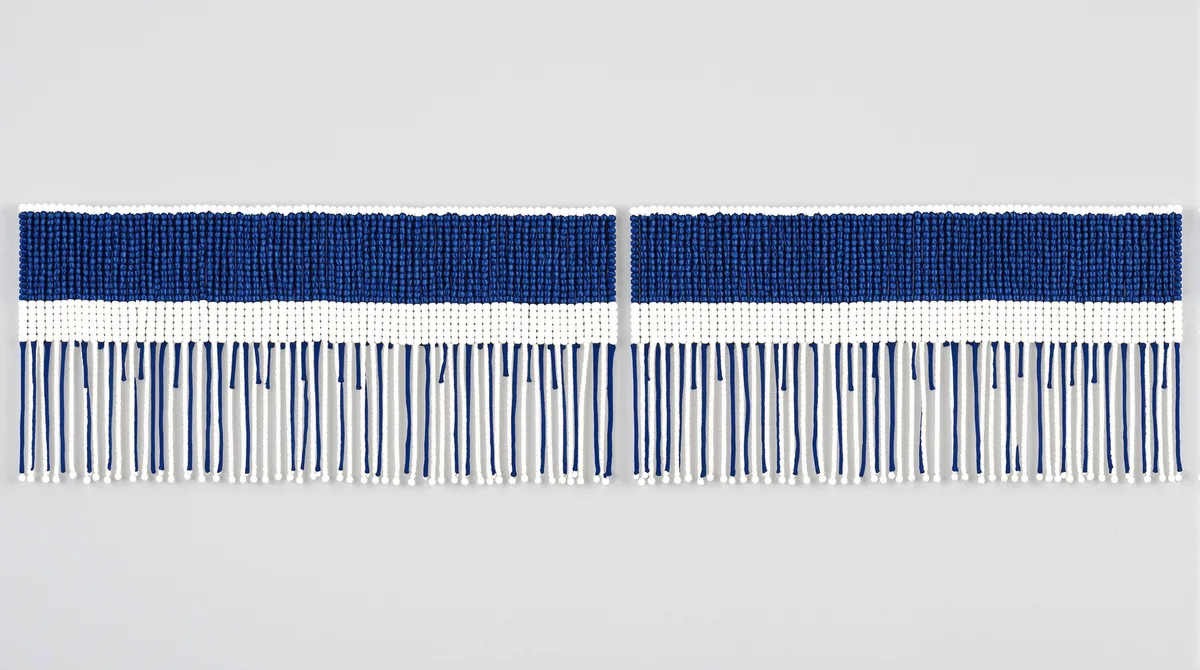
A beaded hanging split down the centre into two equal halves below a single slim wooden rail, the parted construction worked in chalk-white and indigo glass beads.
A noren is a Japanese split fabric panel, hung from a pole through a sewn sleeve and slit vertically so people can pass through. A bead curtain is a set of beads threaded onto independent cords hanging from a dowel. Both mark a threshold without closing it; a noren carries printed or dyed graphics, and a bead panel carries pattern bead by bead.
A noren is a Japanese split fabric panel: a sheet of cotton, linen or hemp hung from a pole through a sewn sleeve and slit vertically so that people can walk through. A bead curtain is beads threaded onto independent cords and hung from a dowel.
They share one function — marking a threshold without closing it — and nothing else. A noren is a cloth plane that has been interrupted; a bead panel is a set of separate elements held close enough to read as a plane.
A noren has a continuous textile plane, usually divided into two to five panels by vertical slits that stop short of the top. The graphic is dyed, printed or appliquéd onto the cloth and reads as a silhouette with light behind it. It hangs still, it is silent, and it launders.
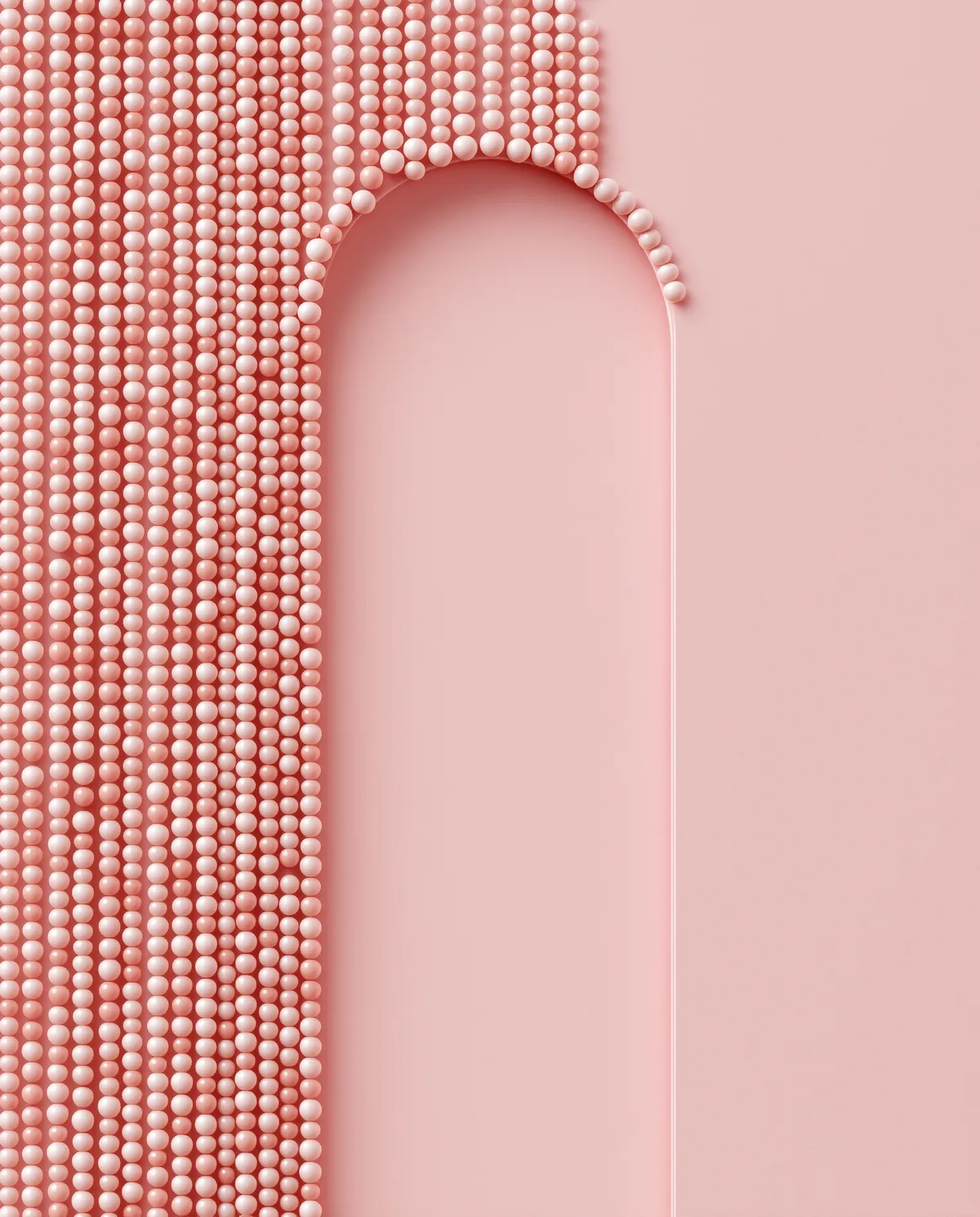
A bead panel has no plane. Thirty hand-strung strands on a single wooden dowel is our standard build; the formats in our design library run from a 90 × 200 cm doorway to a 76 × 140 cm portal, with café-length panels at 24 × 30 in. Pattern comes from bead positions — a bead map names every bead on every strand — and light passes through the beads rather than behind them.
| Noren | Bead panel | |
|---|---|---|
| Origin | Japan; traditionally a shop and bathhouse threshold marker | Strung beadwork; made in our own beadwork studios |
| Material | Cotton, linen or hemp cloth | Glass, acrylic, wood, bone, ceramic, metal or faux capiz beads on cord |
| Structure | A continuous cloth plane, slit vertically into panels | Independent strands; no plane |
| Top fixing | A sewn sleeve over a pole | A turned wooden dowel, a rail, or a textile header with a rod pocket |
| How pattern is made | Dyed, printed or appliquéd graphic | Bead position on a bead map, bead by bead |
| Light | Filtered through cloth; graphic reads as silhouette | Passes through the beads; glass throws caustics |
| Sound | Silent | Chime, click or knock, by bead material |
| Typical formats | Panel widths to suit the opening; 2–5 slits | 90 × 200 cm doorway; 76 × 140 cm portal; 24 × 30 in café |
| Cleaning | Launderable as a textile | Dry dust downwards; damp cloth on the beads; keep the cord dry |
The bead panel, by a wide margin, especially in glass. A noren is a few hundred grams of cloth on a light pole and will hang from almost anything.
A full-length glass bead panel needs a rod on brackets fixed into the frame or into structure. An acrylic or wood panel is lighter and will sit on a tension rod inside a door frame, which is the usual answer for a rented room.
The practical consequence for a shopfitter is that a noren is a ten-minute job and a bead panel is a fixing decision.
Beads, where the bead is body-coloured glass, and it is not a close contest. The colour is in the glass.
A noren's graphic is dye or print in cloth. In a sunlit shopfront — which is exactly where noren are traditionally used — that graphic fades, and it fades unevenly where the slits overlap. Beadwork's equivalent weakness is the surface-dyed seed bead, where the dye is a coating rather than a body colour; for a sun-facing position, specify body colour.
A noren is cheaper to make and cheaper to replace. Its cost is cloth, printing and making-up.
A bead panel's cost is bead count and stringing hours. A densely patterned 90 × 200 cm panel holds about 11,800 beads on our 2027 design-render basis, and a spaced panel of the same dimensions nearer 3,100 — which is why "how much is a bead curtain" has no answer until the density is settled. The levers, in order: bead size and material, strand count and tightness, strand spacing, the dowel and packing, then height.
The noren. It folds flat.
Bead panels keep their strands in order so they do not tangle, and glass needs cushioning against bead-on-bead contact, so a carton is large for the piece. We pack to the carton, label and packaging specification given to us and ship to the port or warehouse named, but no packing scheme makes a rigid-headed panel compress like cloth.
A noren fails as a textile: sleeve stitching pulls, the hem frays, the print goes. All of it is visible early and none of it is repairable in any satisfying way.
A bead panel fails at the cord, which abrades against the drill hole of every bead it passes through and slackens if it gets wet. It fails one strand at a time, and the strand is re-strung in bead-map order and re-knotted at the header — a repair, not a write-off, which is why spare beads are worth specifying with the order.
A noren: restaurants and retailers who need a logo or a graphic at the door, anywhere the threshold must stay quiet, and anywhere the panel will be washed weekly.
A bead panel: home retail, hospitality front-of-house where movement and chime are wanted, salons and spas, children's and teen ranges, event and display. If the brief mentions sunlight through the material, or sound, it is a bead brief.
A textile header carrying beaded drops is real and we make it: a 100% cotton header band with a three-inch rod pocket, with hand-strung strands below finishing in a scalloped chevron hem. Earlier portal developments used a ten-ounce canvas mounting pattern with the same pocket.
That is a hybrid, but it is not a noren, because what defines a noren is the cloth plane the slits are cut into. Keep the vocabulary straight in a tech pack: "beaded panel on a cotton header with a three-inch rod pocket" is unambiguous, and "noren-style bead curtain" will produce the wrong sample.
If a logo, a word or a flat graphic has to appear on the threshold: a noren, and we do not make them. Say so early rather than trying to render type in beads, which is possible but expensive and only works at a size most doorways cannot carry.
If the threshold has to move, catch light and announce someone walking through: a bead panel, with an arched centre opening if the brief wants a clear walk-through rather than a full screen. The arch is cut into the strand lengths on the bead map, so it repeats exactly across a production run.
It shows the formats, not the tradition. The construction that overlaps most with a noren's function is the portal: strands cut to stepped lengths so an arched opening is cut out of the middle of the panel, leaving a clear walk-through with beadwork framing it. In our library that runs at 90 × 200 cm and at 76 × 140 cm, and a 90 × 67 cm dual wall-hanging and door-portal format was developed in 2026.
What the record does not contain is a noren, a split textile panel, or a printed graphic on cloth. When a brief arrives using the word, the first job is establishing which of the two objects the buyer has in mind — and in our experience it is usually the bead panel, found through a search that grouped them.
Good to know
A split textile panel with beaded drops below it is a coherent construction and close to things we already make — a cotton header band with a three-inch rod pocket carrying beaded strands is the same logic. What it is not is a noren, because the defining feature of a noren is the cloth plane that the slits are cut into.
The noren, comfortably. It is cloth: it folds flat and compresses. A bead panel has a rigid header, strands that must stay in order, and in glass a need for cushioning so beads do not knock, so the carton is large for the piece.
Beads, where the bead is body-coloured glass, because the colour sits inside the glass. A noren's graphic is dyed or printed into cloth and will fade in a sunlit shopfront. The one bead that behaves like a textile here is a surface-dyed seed bead.
A noren fails as a textile: the sleeve stitching, the hem, the print. A bead panel fails at the cord, in one strand at a time, and that is a repair rather than a replacement. In a doorway used all day, beadwork generally has the longer service life, with the cord as the item that needs attention.
We work in the formats, not the tradition. Our portal construction leaves an arched centre opening cut out of the panel so there is a clear walk-through, which is the same functional idea as a noren slit arrived at from the bead side. Portals run at 90 × 200 cm and 76 × 140 cm in our design library.
A noren if the threshold needs a graphic, needs to be quiet, and will be laundered. A bead panel if it needs movement, light transmission and sound. For a restaurant or salon entrance the deciding factor is usually whether a logo has to appear on it — a graphic belongs on cloth.
No, and the question usually arises because a search engine has grouped them. They solve the same brief with opposite means: a noren is one continuous surface deliberately interrupted, and a bead panel is many separate elements deliberately held close together.
Keep exploring
Style
A noren is split dyed fabric; a bead panel is strung glass. Same threshold job, different object, different maker.
See the detailGuides
One guide per question that arrives often enough to be worth answering properly.
Compare the optionsGuide
Weight, sound, behaviour when cut and damp tolerance — and why the wood route is turned, drilled and finished in our own factory.
Read the guideGuide
What the trade means by crystal, how cutting changes a bead, and which of the two a brief actually needs.
Specs and sizesGuide
Colour consistency, durability, paperwork and the two production routes faux capiz actually uses — cast resin, or dyed cut acrylic.
See the detail
Start a conversation
Send a reference, a colour chip or a sketch. Minimums are set per design and confirmed per quote; sampling is quoted separately and usually runs 16 to 20 days from an agreed brief.