Material
Moulded and dyed acrylic
Moulded to our dies and dyed to the reference: the widest colour latitude in the library, half the weight of glass, and no shatter risk.
View the range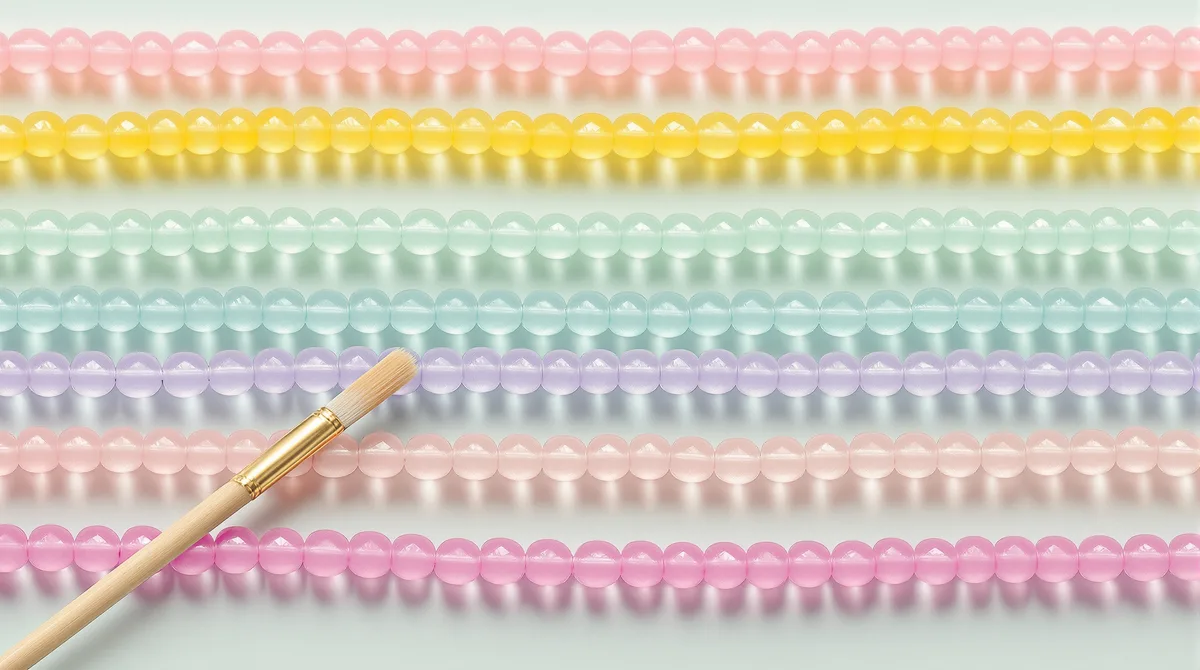
Guide · Care
Acrylic is the forgiving bead on water and the unforgiving one on heat and solvent. Both halves of that matter.
Four short strands of moulded acrylic beads in candy pink, lemon, mint and lilac laid parallel with a soft natural-bristle brush across them, every translucent bead clear and…
Wash acrylic bead strands in lukewarm water with a mild soap, with the strands taken off the wooden dowel, then rinse in clean lukewarm water and dry them fully while hanging. Avoid solvents, alcohol-based cleaners, abrasive creams and hot water: each of those clouds, crazes or deforms the surface, and none of the damage can be undone.
Acrylic is the one material in the range that will take a wash, and even then only with the strands off the dowel. Dry dusting handles most of it; washing is for the case where something has actually been spilled.
Acrylic is the one material in this category where the third step is genuinely available, and it is still an intervention rather than a routine. A panel dusted monthly will not need it.
Even on acrylic, the stringing medium is the structure: thirty lengths of cotton carrying the beads, each passing through the drill hole of every bead on its strand. Wet cord slackens, discolours, holds dust and abrades at the hole edges.
That is why washing acrylic has a procedure rather than a method. The point of taking the strands off the dowel is not to protect the dowel alone — it is to let the strands hang freely and dry completely, so the cord does not sit damp against a timber header for two days afterwards.
Wash once in a panel's life and the cord takes it. Wash it quarterly and the cord is the thing that ends the panel.
| Component | Dry clean | Damp cloth | Immersion | Notes |
|---|---|---|---|---|
| Acrylic beads, body-dyed | Yes | Yes | Yes, off the dowel | Lukewarm water and mild soap; rinse clean |
| Acrylic beads with a surface finish | Yes | Lightly | No | A finish applied after moulding is a surface |
| Translucent acrylic | Yes | Yes | Yes, off the dowel | Shows film and water marks most clearly |
| Opaque acrylic | Yes | Yes | Yes, off the dowel | Hides film; still scuffs |
| Plastic seed beads | Yes | Lightly | No | Too small to handle wet without losing them |
| Cotton cord | Yes | Avoid | Unavoidable when washing | The reason washing is an intervention, not a routine |
| Wooden dowel | Yes | Barely damp | No | Take the strands off, or keep the dowel clear of the water |
| Cotton header or rod pocket | Yes | Avoid | No | Shrinks unevenly; wicks water into the knots |
| Water temperature | — | — | Lukewarm | Hot water softens and deforms acrylic |
| Solvents, alcohol, abrasives | Never | Never | Never | Clouds, crazes or dulls the surface permanently |
Dust more often than you would a glass panel, because acrylic collects more dust in the same room.
The reason is static. Acrylic takes and holds a surface charge in a way soda-lime glass does not, and a charged surface attracts airborne dust towards it rather than waiting for it to settle. That is a material property, not a quality fault, and it is the single most useful thing to know about living with an acrylic panel.
Two practical consequences. Dust with a dry microfibre cloth rather than a feather duster, because microfibre lifts charged dust instead of redistributing it, and in a commercial interior put the interval on a maintenance schedule. And avoid dusting sprays entirely — most are solvent-carried, and solvent is what clouds acrylic.
Dry work, and a close look at the surface rather than the colour.
Acrylic beads in our builds are moulded and dyed to the colour specified, to our own dies where a design needs a bead shape that does not exist — a three-inch almond bead used as a moulded daisy connector is one we funded dies for. Because the colour is in the body of the bead rather than on it, the inspection question is not whether colour has transferred but whether the surface has scuffed or crazed in handling.
First article inspection happens at our quality-control and packaging house in Greater Noida, dry, against the approved sample, with network product issue rates at a fraction of a percent.
Dry dusting every two to three weeks on an acrylic panel at home, against monthly on glass. Fortnightly in a kitchen or a bar doorway.
Damp wiping once or twice a year. Washing: once, when a panel has acquired a film that damp wiping no longer shifts, and ideally not at all.
On acrylic, the banned list is longer than on glass and the reasons are specific.
Solvent, acetone, alcohol-based cleaners and most dusting sprays: they cloud the surface and can craze it into a network of fine cracks. Abrasive cream: it dulls a gloss finish permanently. Hot water and steam: acrylic softens well below the point at which glass would notice anything, and a deformed bead stays deformed. Bleach: it attacks the cord even where the bead shrugs it off.
Mild soap and lukewarm water. That is the complete permitted list, and it is enough.
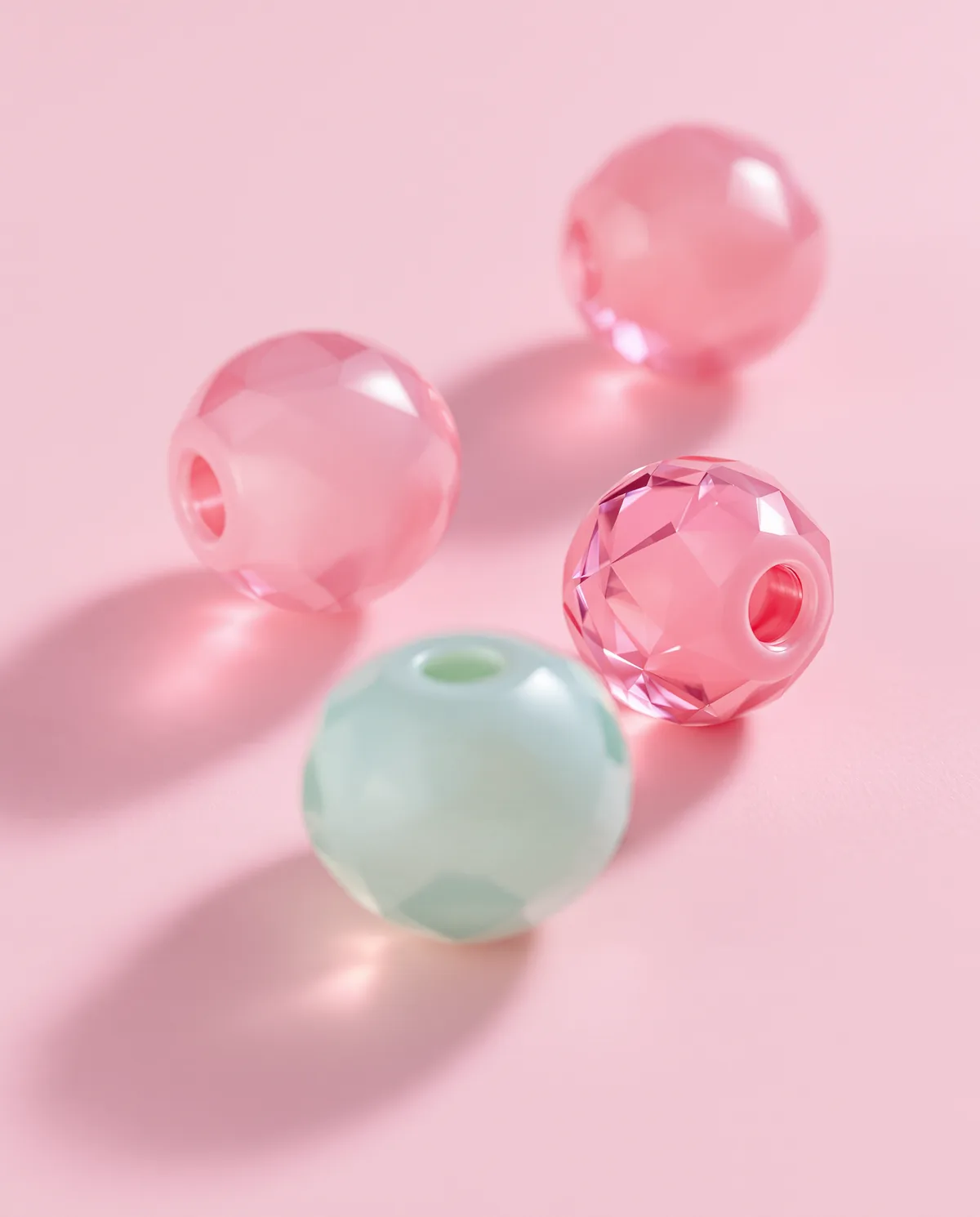
Most acrylic in our builds is body-dyed rather than dyed to match a separate accent, which is the good case: the colour goes all the way through, so washing and wiping cannot lift it and a scuff shows as a change in gloss rather than a change in colour.
Where acrylic carries a finish applied after moulding — a pearlised or metallic coating — treat it as a surface and wipe lightly along the strand rather than working at one bead. A matte acrylic bead is also a surface effect in practice: rubbing it hard brings up a shine in patches, which reads as dirt and is not.
If you cannot tell which you have, wipe lightly. Nothing is lost by being gentle.
This is the step most people skip and the one that decides whether washing was a good idea.
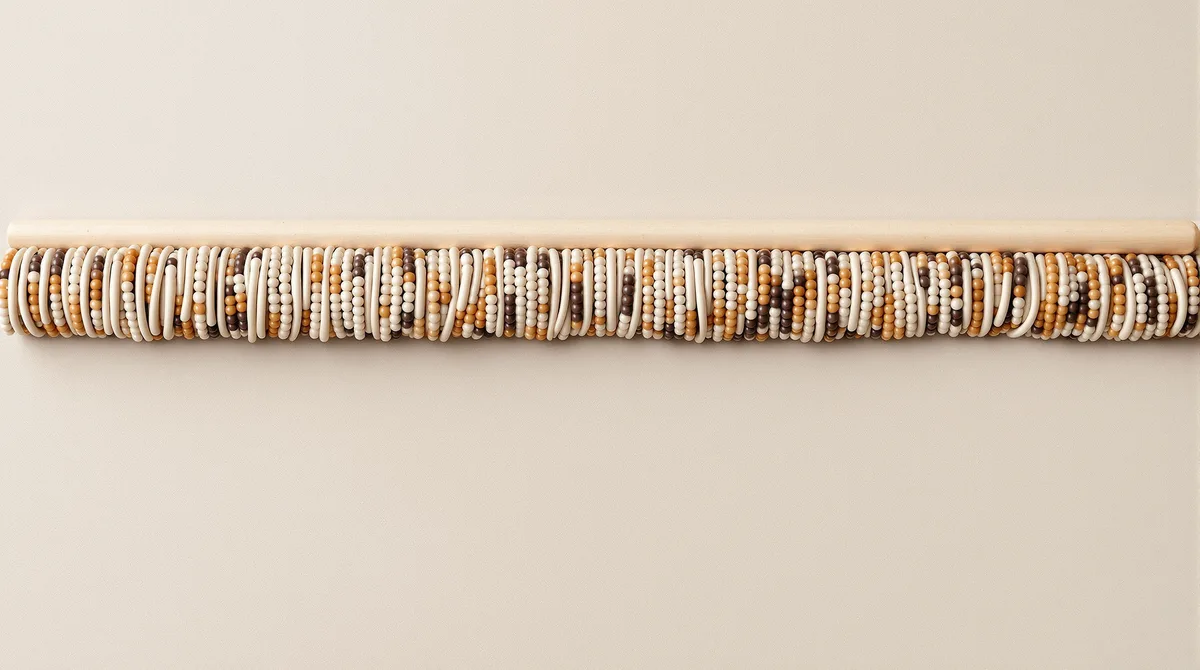
Take the strands off the dowel, or support the dowel well clear of the water. A dowel is turned timber — ours come from our own wood factory in Saharanpur — usually stained or lacquered, and water raises the grain and can lift the finish.
A rod pocket header on a cotton band must not be washed at all. It marks, it shrinks unevenly, and it wicks water up into the knots where every strand is fixed. On a rod-pocket panel, washing is simply not available: wipe the beads and leave it at that.
Acrylic is the easiest material in the category to repair. The beads are light, they do not chip, and spares from the original order almost always still match because the colour is in the body of the bead rather than in a dye lot on its surface.
Re-string on new cord in bead-map order, re-knot at the header, and finish with a crimp or the original stopper bead rather than a knot alone. Replacement strands are a specification item, not an improvisation. An end bead is worth keeping if the design had one: acrylic strands are light, and the stopper bead is what makes them hang straight instead of swaying.
Dry, loosely bundled, and uncompressed — and the last of those matters more on acrylic than on glass.
Acrylic takes a set. Strands held tightly compressed in a bag for six months come out with a memory of the fold, and while they recover over a few days hanging, they do not always recover completely. Lay the panel flat or roll it around a cardboard tube with the dowel along the axis, tied loosely at two or three points with soft ribbon — the retail packing reference covers the same principle for a new panel.
Store it away from direct sun and away from heat. A loft in summer is the worst available storage for acrylic for exactly the reason hot water is: the material softens.
Good to know
No. Re-string the strand on new cord in bead-map order, re-knot it at the header and finish the end with a crimp or the original stopper bead. Acrylic is the easiest material to repair because the beads are light and do not chip, so spares from the original order usually still match.
Dry and uncompressed. Take the panel down by the dowel, bundle the strands loosely and tie each bundle at two or three points with soft ribbon, then lay it flat or roll it around a cardboard tube. Acrylic takes a set if it is stored tightly compressed for months, which glass does not.
No, even in acrylic. The beads would survive but the drum tangles thirty independent strands into one mass and abrades the cord against every drill hole on the way. Washing acrylic means a bowl, lukewarm water and strands handled a few at a time.
Dry, downwards, strand by strand, with a soft brush or a dry microfibre cloth from the header to the hem. On acrylic it is worth doing more often than on glass, because a static charge on the bead surface pulls airborne dust towards it.
On acrylic specifically: solvents, alcohol-based cleaners, acetone, abrasive cream, hot water and steam. Acrylic clouds under solvent and crazes into a network of fine cracks, and it softens with heat long before glass would register a change. Mild soap and lukewarm water is the whole permitted list.
No, and on acrylic that matters more than usual, because washing is actually on the table. Take the strands off the dowel first, or support the dowel clear of the water. A soaked dowel raises its grain and can lift its lacquer, and it is turned timber from our own wood factory, not a plastic rod.
Keep exploring
Material
Moulded to our dies and dyed to the reference: the widest colour latitude in the library, half the weight of glass, and no shatter risk.
View the rangeGuide
The one material that tolerates water, the method that works, and why immersing a complete panel ends it.
See the detailGuides
One guide per question that arrives often enough to be worth answering properly.
Open the referenceGuide
The one case for a mild detergent: how to lift kitchen or smoke film without soaking the cord, and why dry dusting comes first.
See the detailGuide
Loosely tied bundles in strand order, flat or hanging, never folded, somewhere dry — and label which opening it came off.
See the detail
Start a conversation
Send a reference, a colour chip or a sketch. Minimums are set per design and confirmed per quote; sampling is quoted separately and usually runs 16 to 20 days from an agreed brief.