What is the typical production lead time for custom ceramic tableware?
Production lead time is typically 60–90 days after sample approval. Sampling and prototype development are quoted separately based on the complexity of the design, glaze type, and packaging requirements. Buyers should plan program launches around this timeline, especially for seasonal or promotional retail collections.
Can ceramic and stoneware tableware be customized with private labeling?
Yes, private label manufacturing with custom packaging is available and has been used across 250+ partner brands. Customization includes prints, patterns, and silhouettes developed from sketches, samples, or reference designs, allowing retailers and wholesalers to launch fully branded dinnerware and tabletop collections.
Is the tableware food-safe for everyday use?
Food-contact pieces are designed for functional everyday use, and relevant components meet California Prop 65 requirements. Specific care and food-contact details vary by decoration and finish and are confirmed per program in the quote.
What materials and glaze options are available for tableware collections?
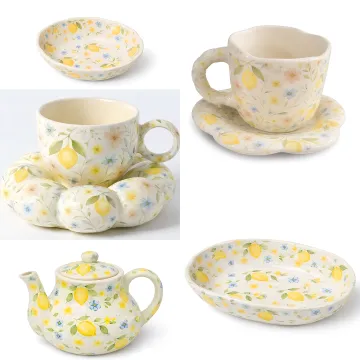
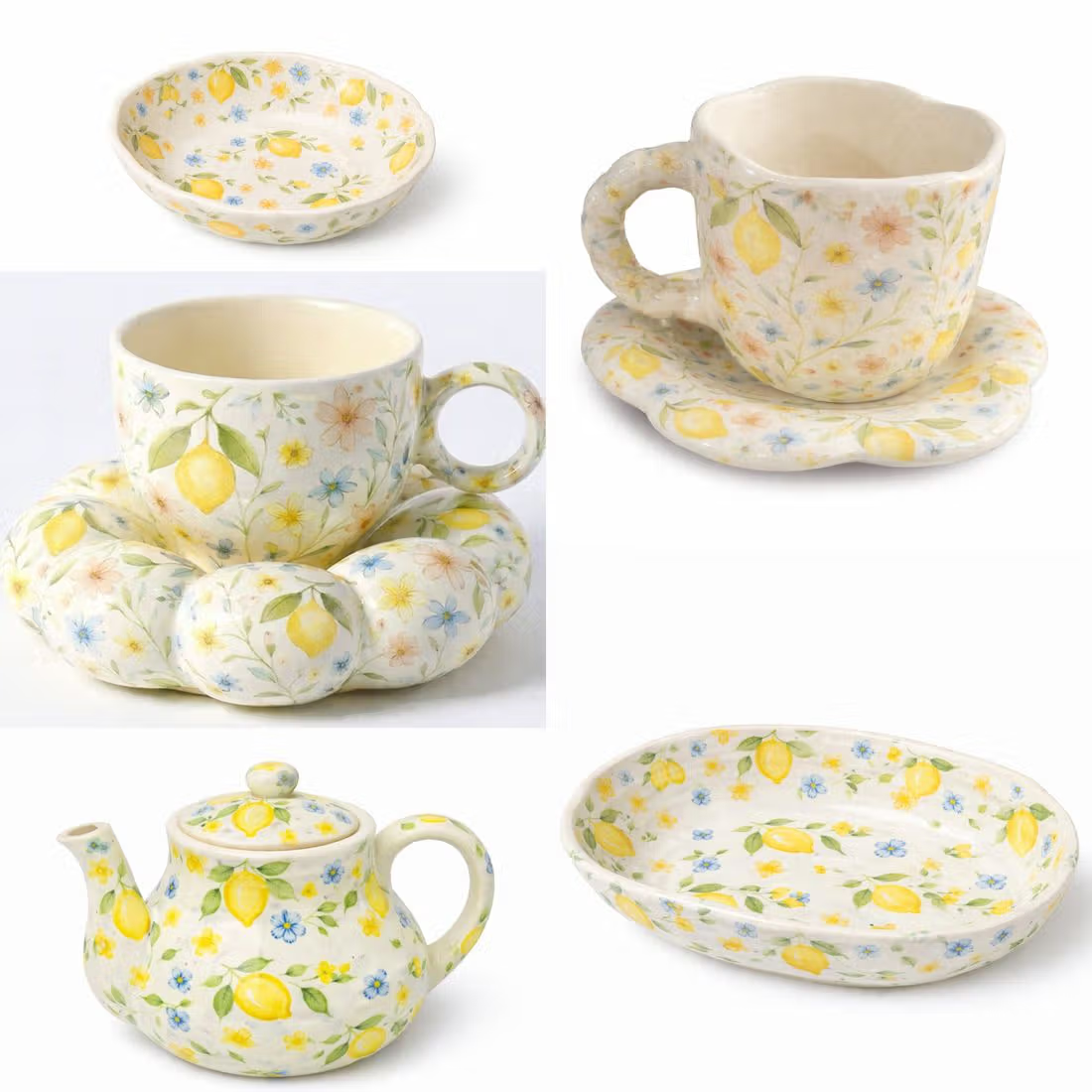
Products are made in ceramic and stoneware bodies, formed by jiggering, slip casting or wheel-throwing depending on the piece. Glaze finishes include reactive, matte, gloss, and wax-resist styles, decorated using hand-painting, ceramic decals, and seasonal or floral hand-decorated prints for a distinctive, artisanal look.
What is the minimum order quantity (MOQ) for custom tableware programs?
MOQ varies based on the shape, print complexity, and packaging requirements of each program, and is confirmed per quote. Buyers should provide design references or samples early in the process so accurate MOQ and pricing figures can be calculated for their specific dinnerware or gift program.
How are quotes and pricing determined for ceramic tableware orders?
Pricing is available on request and calculated per program based on shape, print complexity, packaging, and order volume. Sampling is quoted separately from bulk production. Quote requests are typically answered within one business day, with detailed pricing provided within 48 hours of receiving full specifications.
Do you offer logistics support for delivery within the United States?
Yes, logistics support is available to move finished goods to a client-designated US warehouse as part of a vertically integrated supply chain, streamlining the process from prototype approval through to final delivery and reducing the need to coordinate multiple separate vendors.
Are Gemixx dishes made in the USA?
No. Gemixx dishes are made at its own ceramics plant in Khurja, India, and inspected and packed at its Noida quality-control unit. US buyers work with the client-facing office in Princeton, New Jersey, and Gemixx USA LLC imports the goods and delivers them landed duty paid to your US warehouse. That means one price covering manufacturing, freight, duties and delivery, with no separate broker. For private-label dinnerware at volume, that gives you factory-direct pricing with a single delivered cost.
What is the difference between ceramic, stoneware and porcelain dishes?
All three are fired clay. They differ in the clay body and the firing temperature. Earthenware is fired lowest and stays porous until it is glazed. Stoneware is fired hotter, is denser and absorbs little water, and suits everyday plates and mugs. Porcelain uses a refined, kaolin-rich body fired hotter still, which makes it thin, white and very low in porosity. Gemixx's Khurja plant works in ceramic and stoneware. If your spec calls for porcelain, say so in the brief and we will confirm the fit in your quote.
How are dishes shaped in a factory, and why does it matter for my order?
Flat pieces such as plates are usually jiggered: clay is pressed onto a plaster mold and shaped with a profile tool, which gives repeatable size and rim shape. Hollow or irregular pieces such as jugs and some bowls are slip cast, which means liquid clay is poured into plaster molds. Wheel-throwing gives a handmade look but more variation from piece to piece. The method affects tooling, unit cost and how uniform the set looks. Khurja uses all three, so you can mix jiggered plates with wheel-thrown serving bowls.
What food-contact testing should I ask a dish manufacturer for?
For glazed dishes sold in the US, ask for lead and cadmium leach test results for each glaze and decoration. FDA sets action levels for lead in ceramic foodware and checks imports against them, and California Proposition 65 has its own limits. Decals and metallic trims need testing too, not only the base glaze. Gemixx confirms food-contact suitability and care guidance for each program in your quote, because both depend on the glaze and decoration. Fix the test plan before you approve the sample, not after production.
What should I include when requesting a quote for a dinnerware program?
Send the piece list and sizes (for example dinner plate, side plate, bowl, mug), reference images or samples, the glaze and decoration, target quantity per SKU, packaging (bulk, boxed sets or individually boxed for e-commerce) and the US delivery location. Mention any testing or labeling you need. With full specifications, a formal quote follows within 48 hours, and complex multi-SKU programs start with a discovery call. Sampling is quoted separately, and production runs 60 to 90 days after sample approval.