Tin is soft. It's heat-sensitive. And it doesn't forgive careless handling the way modern cookware does.
Without the right habits, that soft lining wears thin, pits, or exposes bare copper underneath — which means either an expensive trip to a retinning specialist or, worse, cooking directly on reactive metal. This guide breaks down why care matters, how to cook on tin without wrecking it, the three levels of maintenance you'll actually need, and the warning signs that tell you it's time for professional help.
Key Takeaways
- Tin lining is soft and heat-sensitive — use gentle tools and low-to-medium heat only
- Well-maintained tin can last 10-15 years before retinning is needed
- Metal utensils, abrasive scrubbers, and dishwashers cause the most damage
- Dullness, pitting, exposed copper, or green residue signal that retinning is overdue
- Hand care plus periodic retinning keeps cookware functional and food-safe
Why Proper Care of Tin-Lined Copper Cookware Matters
Copper's entire appeal is heat responsiveness: it adjusts to burner changes almost instantly. That advantage disappears the moment the tin lining warps, pits, or wears unevenly, since a damaged surface no longer transfers heat consistently.
The Heat Threshold You Can't Ignore
Pure tin has a melting point of roughly 450°F (231°C), according to Serious Eats' guide to copper cookware. An empty pan left on a hot burner can climb toward that threshold surprisingly fast, since copper conducts heat so efficiently. Once tin starts to soften, it can't distribute heat evenly again, undoing the entire reason you bought copper in the first place.
How Long Should Tin Lining Last?
According to Rocky Mountain Retinning, a specialist retinning service, service life depends heavily on how the cookware gets used:
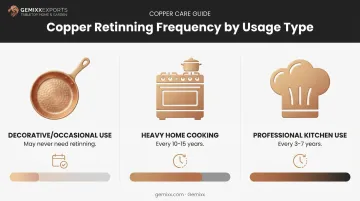
- Decorative or occasional use: may never need retinning
- Heavy home cooking: typically every 10-15 years
- Professional kitchen use: often every 3-7 years
Neglect, including metal utensils, harsh scrubbing, and dishwasher cycles, shortens every one of those timelines considerably.
Food safety is the other half of the equation. An intact tin barrier is what keeps copper from reacting with acidic ingredients. The FDA Food Code restricts direct copper contact with foods below pH 6.0, which includes tomatoes, citrus, wine, and vinegar. Reputable manufacturers also hold Prop 65 and FDA food-contact compliance to confirm materials are safe from the start.
On cost: routine hand washing costs nothing but a few minutes. Retinning a single pan runs into real money once copper is exposed. Pricing varies by pan size and provider, so a written quote from a specialist is worth getting before assuming the worst.
Cooking with Tin-Lined Copper: Best Practices
Cooking on tin means unlearning a few habits from stainless and nonstick cookware. The lining rewards patience and punishes shortcuts.
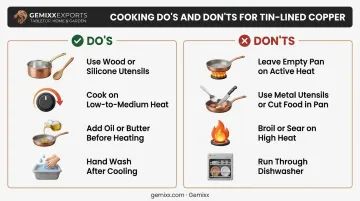
That patience starts with heat management. Because copper conducts heat so efficiently, low-to-medium settings are almost always enough, so you rarely need to crank the dial. Skip dry, very-high-heat searing entirely; it's the fastest way to push the surface toward that 450°F danger zone.
Utensils and Prep Habits
Stick to tools that won't gouge the soft surface:
- Wood or natural silicone utensils: metal scratches and digs into tin almost immediately
- Never cut food directly in the pan: a knife blade will slice through the lining
- Add butter or oil before heating, with only a brief preheat, to prevent sticking without stressing the surface
What Tin-Lined Copper Excels At
This cookware shines for delicate, precision work:
- Silky sauces that need constant, even heat
- Eggs and omelets, where sticking ruins the result
- Delicate fish that falls apart under uneven heat
- Sugar work, where temperature control is everything
Acid safety is another common concern. Acidic ingredients like wine, tomato, or citrus are perfectly safe to cook, as long as the tin lining is fully intact. Once copper is exposed, that safety margin disappears.
Habits That Accelerate Wear
Avoid these without exception:
- Leaving an empty pan on active heat
- Broiling or other dry high-heat exposure
- Dishwasher cycles of any kind
- Letting food sit and stick rather than soaking it loose
Types of Care & Maintenance for Tin-Lined Copper
Types of Care & Maintenance for Tin-Lined Copper
Caring for tin-lined copper isn't one task — it's three distinct levels, each triggered differently.
Routine / Preventive Care
This happens after every single use, no exceptions:
- Hand wash once the pan has cooled, using warm water, mild soap, and a soft sponge
- Dry immediately to avoid water spotting on both the tin interior and copper exterior
- Store with felt liners between stacked pieces or hang them to prevent scratches
Corrective / Spot Care
This care happens as needed to address stuck food or light discoloration. Instead of scrubbing, try these gentler methods:
- Create a baking soda paste to lift residue without scratching the surface.
- Soak the pan in hot, soapy water to loosen stubborn spots before cleaning.
A critical warning: avoid harsh scrubbing. While it removes stains quickly, repeated abrasion gradually thins the tin lining and shortens the pan's life. Short-term results aren't worth the long-term cost.
Retinning / Major Maintenance
Eventually, even careful use wears tin thin enough to expose copper. Retinning is a specialist process — old tin is removed, the copper is cleaned and prepared, then a fresh layer of molten tin is hand-applied and wiped to form a new, even lining.
Watch for these signs that retinning is overdue:
- Patchy areas where copper shows through, especially on the bottom center
- Visible pitting or an uneven, rough texture
- Dull gray coloring across large sections (distinct from normal darkening)
- Green or green-gray residue — never cook on this; it means the lining has failed
This maintenance cycle is a key consideration when choosing copper cookware, and some manufacturers address it by using a different lining altogether.
For instance, Gemixx pairs its hand-hammered copper with a durable, FDA-compliant stainless steel interior. This construction offers the same exceptional heat conductivity of copper without the need for periodic retinning.
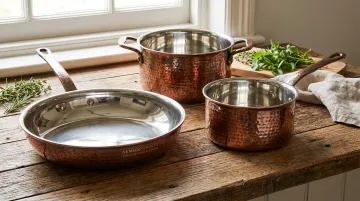
The choice comes down to priorities. Traditional tin offers a unique cooking feel for those who enjoy the maintenance ritual, while stainless-lined copper provides a low-maintenance alternative for modern kitchens.
Care & Cooking Schedule (General Guidelines)
The right rhythm depends on how often you cook and what you're making. Here's a general framework:
| Frequency | Task |
|---|---|
| After each use | Hand wash, dry thoroughly, store with liners or hang |
| Periodic (roughly monthly) | Inspect lining for dullness or thin spots; polish exterior patina if desired |
| Occasional (as needed) | Deep clean with baking soda paste for stubborn stains |
| Long-term (years) | Professional retinning once wear signs appear |
Two factors shift where you land on that retinning timeline:
- Heavy daily cooking (restaurant kitchens or frequent home use) pushes retinning toward the shorter end of the 3-15 year range.
- Occasional or display-focused use stretches that timeline considerably, sometimes indefinitely.
Conclusion
Tin-lined copper rewards attentive owners with instant heat response and forgiving sauce work — a surface that only improves with age when treated right. Keep cleaning gentle, keep heat moderate, and call a retinner once the copper starts to show through.
Whether the pan came from a grandmother's kitchen or last month's purchase, the rule doesn't change: treat the tin gently, and call a retinner before copper shows through the surface.
Frequently Asked Questions
What is lined copper cookware?
Lined copper cookware has a protective interior layer, commonly tin, stainless steel, or silver, bonded to the copper body. This lining prevents food from directly contacting reactive copper underneath.
How can I tell if my copper cookware is lined?
Check the interior surface: bare copper looks reddish-orange, while tin appears matte gray with visible hand-wiping marks. A seam near the rim often marks where the two materials meet.
How long does tin lining last on copper cookware?
It depends heavily on use and care. Home cooks can often go 10-15 years before retinning, while daily professional use may require it every 3-7 years.
Can you put tin-lined copper cookware in the dishwasher?
No — always avoid the dishwasher. Harsh detergents and high heat degrade both the soft tin lining and the copper's exterior finish over time.
Is it safe to cook acidic foods in tin-lined copper?
Yes, as long as the tin lining is fully intact. Tin is inert and creates the barrier that keeps copper from reacting with tomatoes, wine, or citrus.
How much does it cost to retin copper cookware?
Costs vary based on pan size, tin thickness, and the specialist's labor rates. Request a written quote before committing, since general estimates rarely reflect the actual work involved.