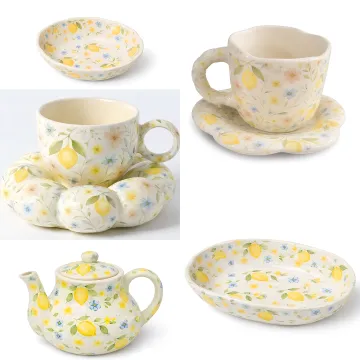
Where can I buy dishes in bulk?
Bulk ceramic dishes are best sourced directly from manufacturers offering wholesale and private label programs. Gemixx supplies retailers, wholesalers, and hospitality brands with hand-decorated dinnerware, coordinating production, quality control, and logistics through to a US warehouse for streamlined bulk fulfillment.
What is the minimum order quantity (MOQ) for wholesale ceramic dishes?
MOQ varies based on shape, print, and packaging requirements and is confirmed per quote. Custom programs with unique decoration techniques or packaging typically require higher volumes than standard designs, so buyers should share specifications early to get an accurate MOQ estimate.
How long does production take for custom ceramic dinnerware?
Production lead time is typically 60-90 days after sample approval. Sampling and prototype development are quoted separately and can be based on sketches, physical samples, or reference designs, allowing buyers to validate quality before committing to full production runs.
Are the ceramic dishes food-safe for commercial use?
Food-contact pieces are designed for everyday functional use, and relevant components meet California Prop 65 requirements. Specific care and food-contact guidance can vary by decoration and finish, and details are confirmed per program at the quote stage.
Can I get custom prints and packaging for my dish line?
Yes, fully customizable prints, patterns, and silhouettes can be developed from sketches, samples, or reference designs. Private label manufacturing with custom packaging is available, allowing retailers and brands to build a cohesive, branded dinnerware collection.
What materials and glazes are used in the ceramic dishes?
Products are made from ceramic and stoneware clay bodies, finished with reactive, matte, gloss, or wax-resist glazes. Decoration techniques include hand-painted florals, seasonal prints, and ceramic decals, giving buyers flexibility across different aesthetic and functional requirements.
Do you offer coordinated collections beyond dinnerware?
Yes, product lines can be coordinated across dinnerware, jars, vases, and decor pieces to create a cohesive collection for retail or hospitality programs, giving buyers a unified aesthetic across tabletop, storage, and decorative categories.
Is stoneware, earthenware or porcelain better for a wholesale dish program?
It depends on use. Porcelain is fired at the highest temperatures, so it is dense, thin and resists chipping, which suits high-turnover restaurants. Stoneware is also fired hot and is thicker and heavier, with an earthy look that suits retail and casual dining. Earthenware is fired lower, is more porous and chips more easily. Gemixx's Khurja factory forms ceramic and stoneware and finishes it in reactive, matte, gloss or wax-resist glazes; porcelain is not part of its listed range. Choose the body first, then the glaze and decoration.
How is lead and cadmium leaching checked on ceramic dishes sold in the US?
The FDA sets action levels for lead that can leach from ceramic foodware, and California Proposition 65 adds warning requirements for products sold in that state. Buyers usually confirm compliance by having pieces from the production lot tested at an independent lab, commonly to ASTM C738, which measures lead and cadmium extracted by a mild acid solution. Glaze colors and decorations affect results, so test each glaze and decal combination, not just one SKU. Gemixx confirms food-contact suitability and care guidance for each program in the quote.
Should a private label dish line use decals or hand-painting?
Decals give near-identical repeats across thousands of pieces and handle detailed artwork, logos and fine patterns well, so they suit large retail sets and hospitality branding. Hand-painting gives each piece slight variation and a handmade look that suits boutique and seasonal ranges, but it takes more labor per piece. Khurja does both, with decals fired onto the glaze, and the two can be combined, for example a hand-painted rim with a decal center. Share artwork early, because decoration affects sampling and cost, and MOQ is set by shape, print and packaging.
What should a restaurant or hotel specify when buying ceramic dishes in bulk?
Give the sizes and pieces per cover, expected weekly volume and how plates will be washed and stacked. Commercial kitchens are hard on rims, so ask for a thicker or rolled rim on high-use plates and check stacking height on samples. Ask for care guidance per glaze, since it varies by decoration and finish, and plan replacement stock: production runs 60 to 90 days after sample approval, so many operators order a reserve with the first run. Gemixx's managing director is a former executive chef, and the team supplies hospitality groups.
Why are Gemixx ceramic dishes made in Khurja?
Khurja, in Uttar Pradesh, is a long-established Indian pottery center known for glazed ceramic tableware. Gemixx's Khurja plant handles ceramic and stoneware forming, slip casting and jiggering, glossy, matte, speckle and reactive glazes, and hand decoration with decal firing. Finished dishes go to Gemixx's Noida site for final inspection and export packing, and Gemixx USA delivers them landed duty paid to your US warehouse. Buying from the factory itself means one party answers for clay body, glaze, decoration and delivery.