Material
The engineered shell look
Cast resin or dyed cut acrylic, finished to imitate capiz shell: what it gives that real shell cannot, and why thin discs tangle.
Specs and sizes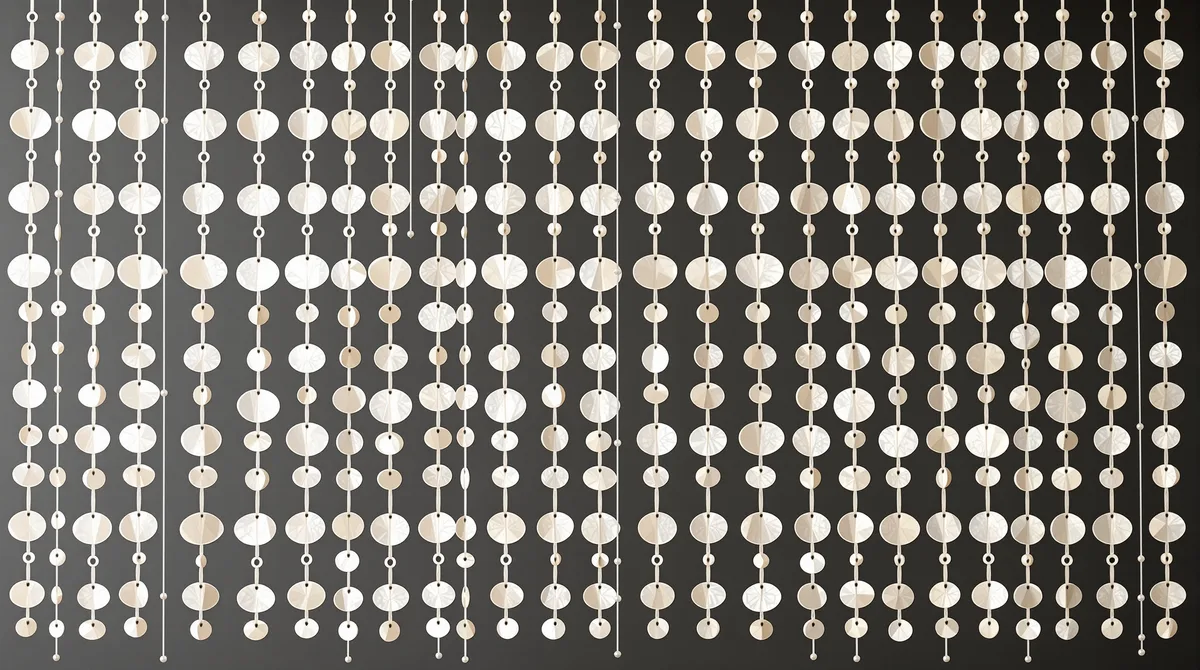
Guide · Material
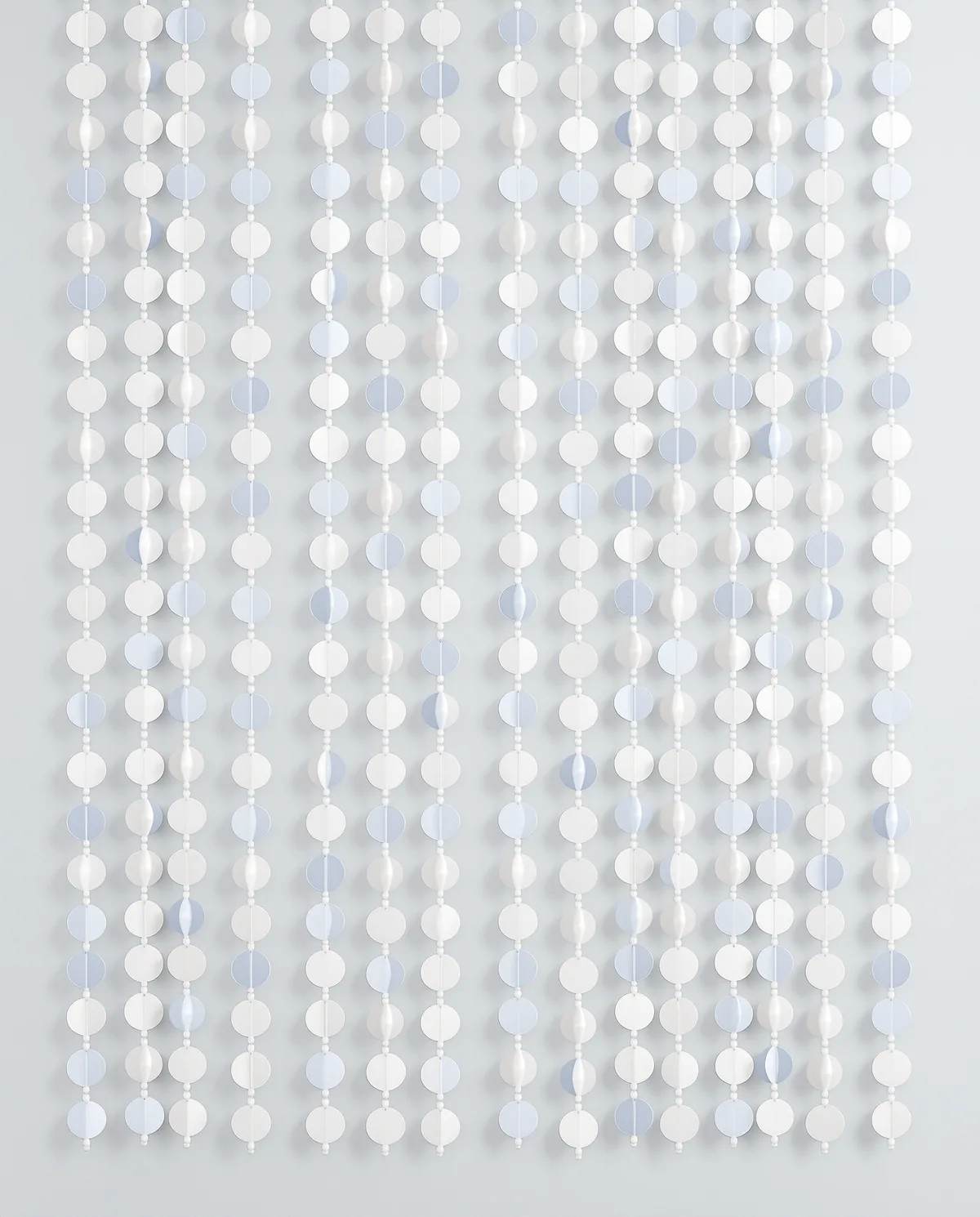
The word curtain is doing a lot of work here. A capiz piece hangs flat overlapping discs in linked columns rather than beads threaded on a cord, and almost nothing about a bead panel transfers to it.
A hanging built from flat round pearlised discs of cast resin finished to imitate capiz shell, linked edge to edge by small rings into an open lattice, each disc carrying a…
A capiz curtain hangs flat, broad, translucent discs linked into columns rather than beads strung on cord. Gemixx makes faux capiz, which is cast resin or dyed cut acrylic finished to imitate capiz shell — not shell — cast or cut to our own dies. The discs clatter rather than chime, screen far more than beads do, and need a locking bead to stop them sliding.
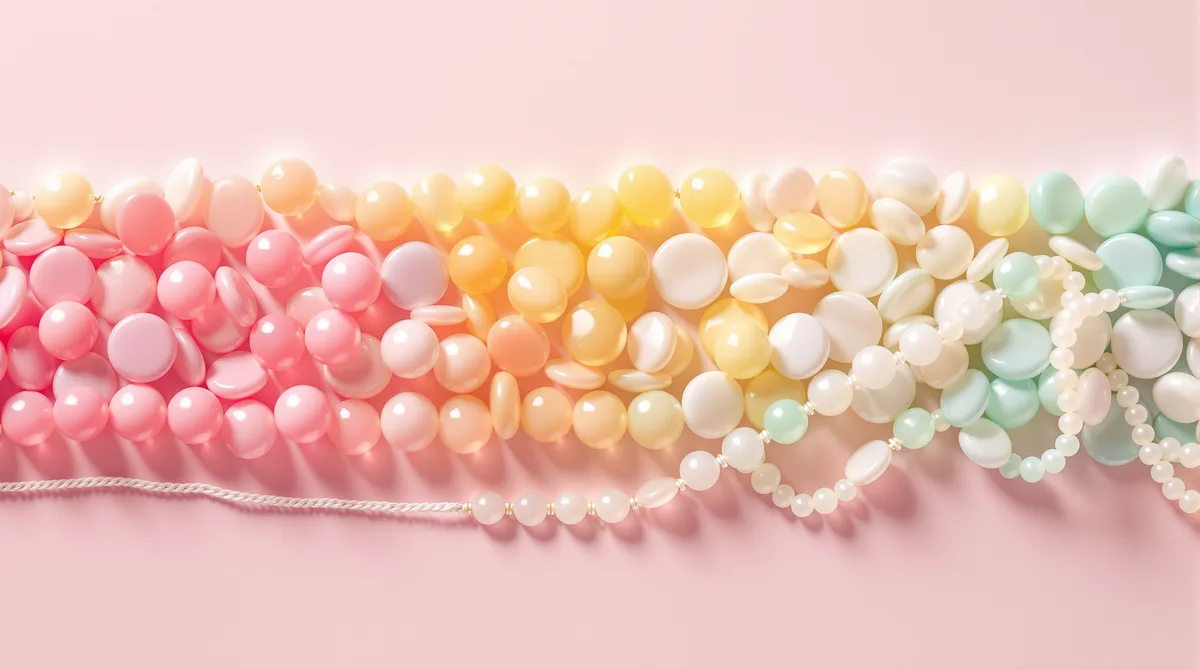
Because the unit is a disc, not a bead, and the construction is linked, not strung.
A bead curtain threads beads onto a cord: each strand is a line of separate objects with cord visible between them, and the strand hangs as a line. A capiz piece links flat, broad, translucent discs one below the next into columns, and the columns hang side by side from a dowel. The discs overlap. The result behaves like a sheet of loosely connected scales rather than like a set of lines.
Almost nothing transfers between the two. Pitch arithmetic, bead counts, strand weights, hem-shaping by strand length — all of it is different.
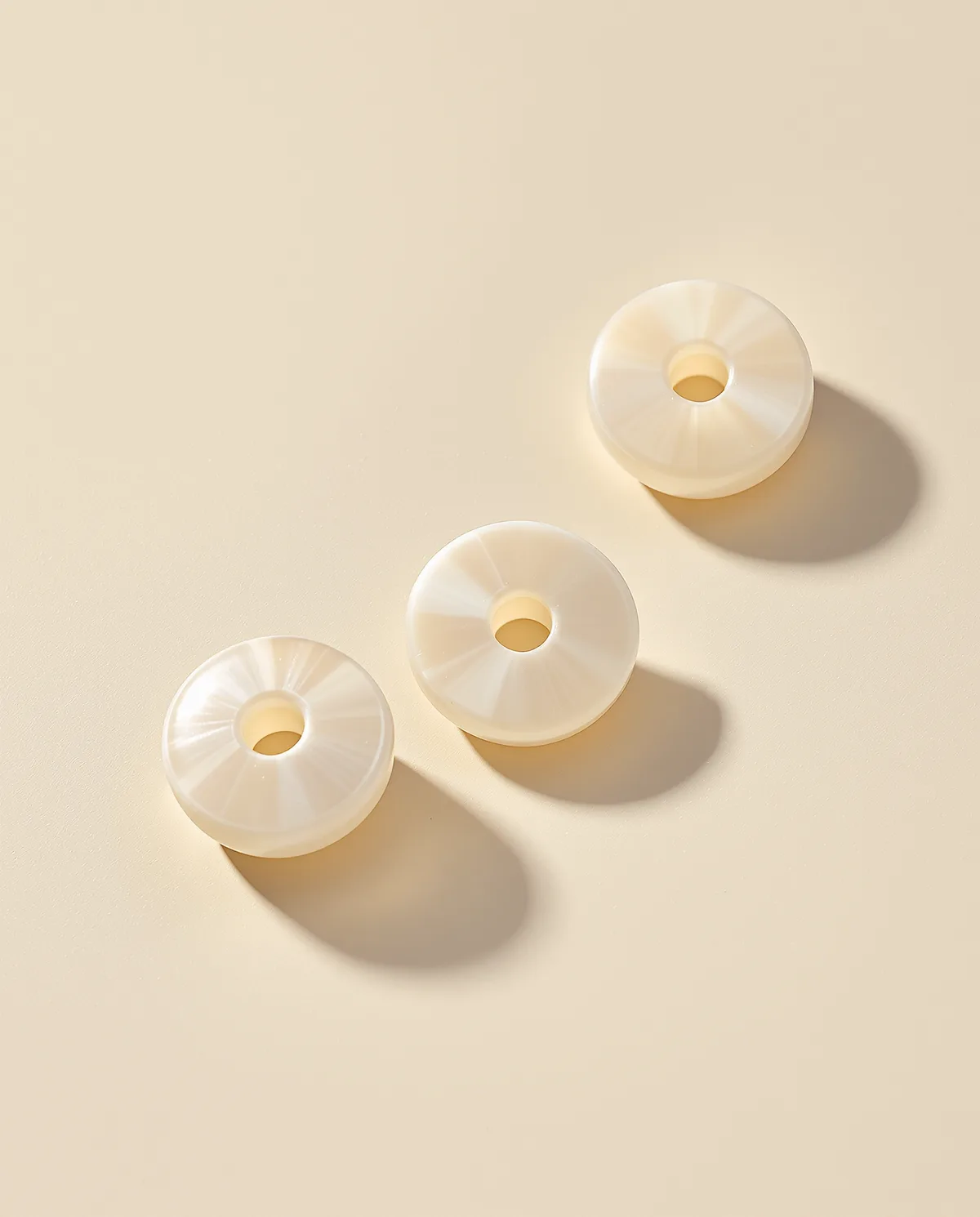
Cast resin or dyed cut acrylic, cut and finished to imitate capiz shell. That is the whole answer, and it is worth being precise about because the category is full of vagueness.
Real capiz is the shell of Placuna placenta — a genuinely beautiful natural material, and the reference being imitated. Gemixx's product is the engineered one. It is made two ways: resin cast to shape, which is how we developed the 2026 capiz pieces specifically to avoid the wastage of cutting discs from square sheets, or cut from acrylic and dyed.
Being the engineered material is the advantage here. Consistent colour across a run. No wildlife import paperwork. Better durability. And the colour is a specification rather than a selection, dyed to our own reference in our own studios.
Differently from beads, in both cases.
A linked column moves as a plane: push it and the whole column swings together, because the discs are connected and overlapping. A bead strand moves as a line of independent weights. The capiz version feels heavier and more deliberate, and it settles faster than a light bead strand.
The sound is a clatter — broad flat surfaces striking face to face — rather than the point-contact chime of glass or the click of acrylic beads. It is a bigger, flatter, lower sound, and it is the first thing people notice.
Far more than any bead panel, and this is the strongest practical argument for the construction. A broad overlapping disc covers area in a way a sphere on a cord cannot.
The library's linked faux-capiz disc pieces run from 70 × 130 cm up to 90 × 200 cm, with twelve to sixteen columns and in the region of 239 to 497 discs. Those figures come from the 2027 designs, and they are worth reading as proportions rather than as counts: a dozen or so columns rather than forty strands, and hundreds of discs rather than thousands of beads.
Even so, it is not a solid surface and concealment is judged on the sample, in the real light and at the real distance.
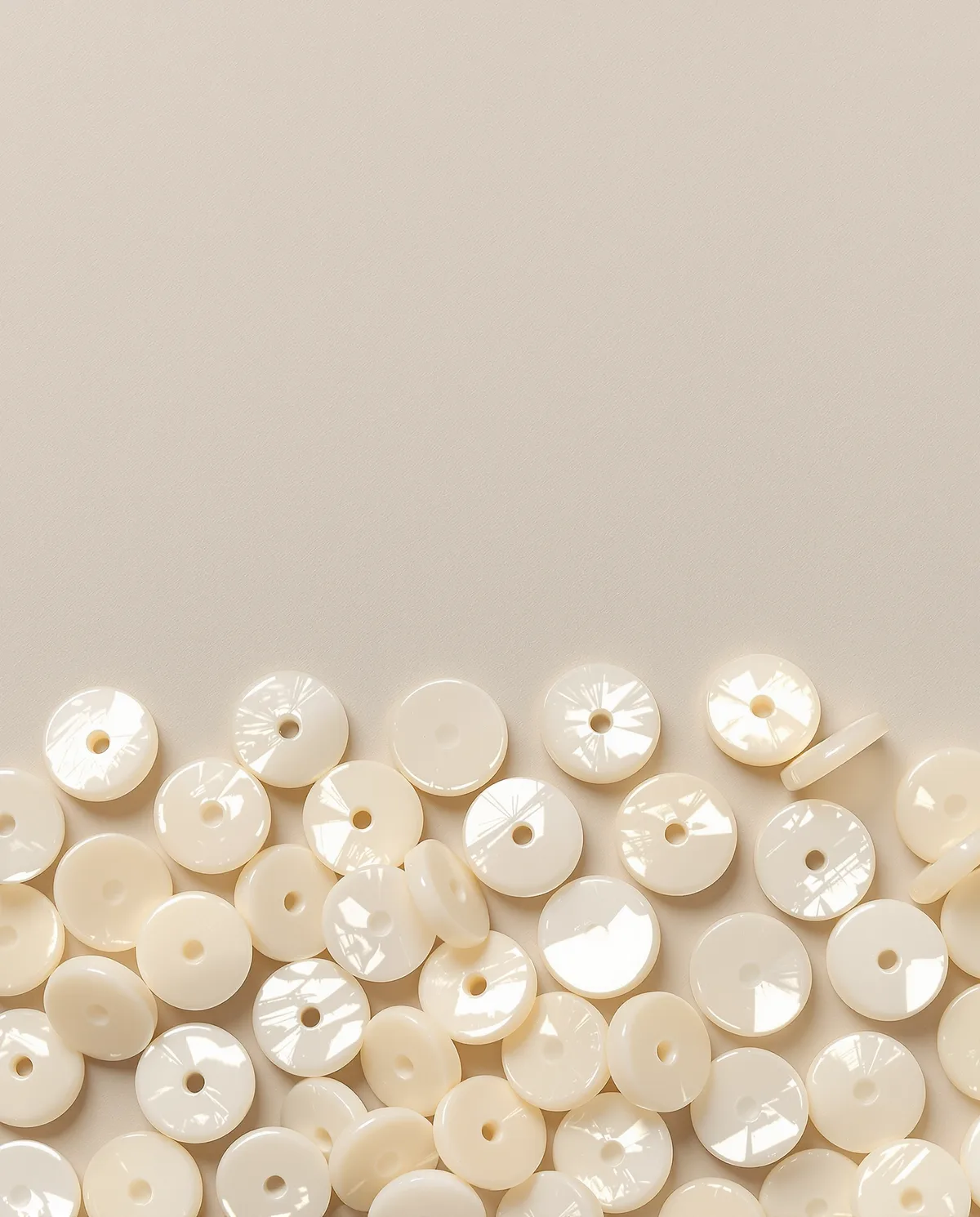
Disc diameter is a per-design specification. Sampled work covers 10 to 30 mm; the linked-disc designs are drawn at 25 and 50 mm, and the diameter is set in the drawing and confirmed on the approved sample.
What holds across all of them is the relationship: a larger disc covers more area per unit, so a 50 mm disc panel is a very different object from a 15 mm one at the same dimensions, and the cost difference runs the other way from what you might expect, because fewer units means less assembly. A 50 mm disc is also heavier, catches more air, and puts more load through each link point, which is the figure the sample settles.
A spacer bead at the centre, and it is the detail that makes the whole construction work.
On our Cherry Blossom wall hanging — five-petal blossoms laser-cut to shape from faux capiz — a small bead dyed to match the blossom sits at the centre of each one and locks it in place. Without it the blossoms slide down the cord and bunch at the bottom of the column.
The same piece illustrates how much the mounting changes the count: the dowel version carries 155 to 170 blossoms, and the rod-pocket version carries 130, at a finished size of 18 × 30 in. Same design, different header, forty blossoms' difference.
Laser-cut, from sheet stock, or cast directly to shape in resin. Both routes are in use and they have different consequences: casting to shape avoids the wastage of cutting a round disc out of a square, which is why it was developed; laser cutting handles complex outlines like a five-petal blossom that casting would struggle with.
The correct description is cast resin or dyed cut acrylic, by either of those two routes, and the route is named in the design so the finish is repeatable from one production run to the next.
It lasts well — better than natural shell, which is one of the reasons the imitation exists. The material is unaffected by humidity, which also makes it one of the few options that tolerates a bathroom doorway.
Cleaning is gentler than for beads, not rougher. Wipe with a soft, barely damp cloth and dry. Avoid abrasive cleaners, which dull the surface, and never immerse: the cord and any locking beads are the vulnerable parts, exactly as on a strung panel. Cut edges and pearlised surfaces are the finish, so a light hand matters more here than on glass.
Yes, if you want maximum screening from a hanging construction, a flatter and more architectural look than beads give, or a shell appearance with none of the variability or paperwork of shell.
No, if you want the refraction and light-play that only glass delivers, or the fine colour resolution of a seed-bead panel. A disc is a broad flat plane; it reflects and transmits, but it does not refract. Those are different pleasures, and only one of them is available here.
Bead materials puts faux capiz alongside the other eight families and explains what each gives. Glass bead curtains is the comparison worth making, because refraction is the one thing a flat disc cannot do. Screening a doorway is relevant because a disc construction is the closest this category comes to a dense screen. A pearl bead curtain is the other engineered-finish material and ages in a related way. For construction, hand-strung construction covers the strung alternative, and routine care sets out the lighter hand a pearlised surface needs.
Good to know
Ours is not. Gemixx makes faux capiz: cast resin or dyed cut acrylic, cut and finished to imitate capiz shell. Real capiz is the shell of Placuna placenta and is the reference material being imitated. Saying so is a strength rather than a hedge — consistent colour, no wildlife import paperwork, better durability.
Because it behaves better. A cast or cut disc has consistent thickness and colour across a production run, where natural shell varies piece to piece; it takes dye, so a colourway can be specified rather than selected; it does not carry wildlife import paperwork; and it is tougher. For a repeat retail programme those four things decide it.
In construction. A bead curtain threads beads onto cord so each strand is a line of separate objects; a capiz piece links flat discs one below the next into columns hung side by side. The discs are broad and overlap, so a capiz panel screens far more, moves as sheets rather than as lines, and sounds like a clatter rather than a chime.
Disc size is a per-design specification, not a range the category fixes. Sampled work covers 10 to 30 mm; the linked-disc designs are drawn at 25 and 50 mm. For any specific design the disc diameter is set in the drawing and confirmed on the approved sample, because a larger disc covers more area per unit and loads the link point harder.
Very thin discs can, which is why disc weight and size are chosen deliberately and beads are mixed in where a column needs steadying. A linked column is actually less prone to tangling than a light strung strand, because the discs hold each other in a plane rather than swinging independently.
Yes, and widely. Dyed acrylic gives a broad colour range and the colour is confirmed on the sample. On our Cherry Blossom wall hanging the small spacer beads at the centre of each blossom were dyed to match the blossom colour, which is the level of control the material allows.
A spacer bead at the centre. On the Cherry Blossom piece a small dyed-to-match bead sits at the middle of each five-petal blossom and locks it in place, so the blossoms cannot slide down the cord and bunch. It is the single detail that makes a disc construction hold its spacing.
Keep exploring
Material
Cast resin or dyed cut acrylic, finished to imitate capiz shell: what it gives that real shell cannot, and why thin discs tangle.
Specs and sizesTechnique
Why a column of linked discs is a different build from a strung strand: the connection, the twist, the packing, and the repair.
See the detailPillar
Door curtains, portals, café lengths and valances: the standard sizes, the strand counts and the one question each format answers.
Open the referenceGuide
The heaviest panel and the only one that refracts: weight, chime, a straight hang, and the chipping risk that comes with them.
Read the guideGuide
A dry rattle, almost no weight, a natural look that marks in damp — and the note that bamboo is confirmed design by design.
Read the guideGuide
A coated surface rather than a body colour: why pearl beads scuff where others dull, and where they are still the right answer.
Read the guideGuide
Opaque beads at a tight pitch screen movement and never detail — and nothing in this category works from close up.
Read the guideReference
Nine material families, what each gives in light, weight and colour, and how far our own manufacturing reaches into every one of them.
Specs and sizes
Start a conversation
Send a reference, a colour chip or a sketch. Minimums are set per design and confirmed per quote; sampling is quoted separately and usually runs 16 to 20 days from an agreed brief.