Manufacturing
Beaded door portals
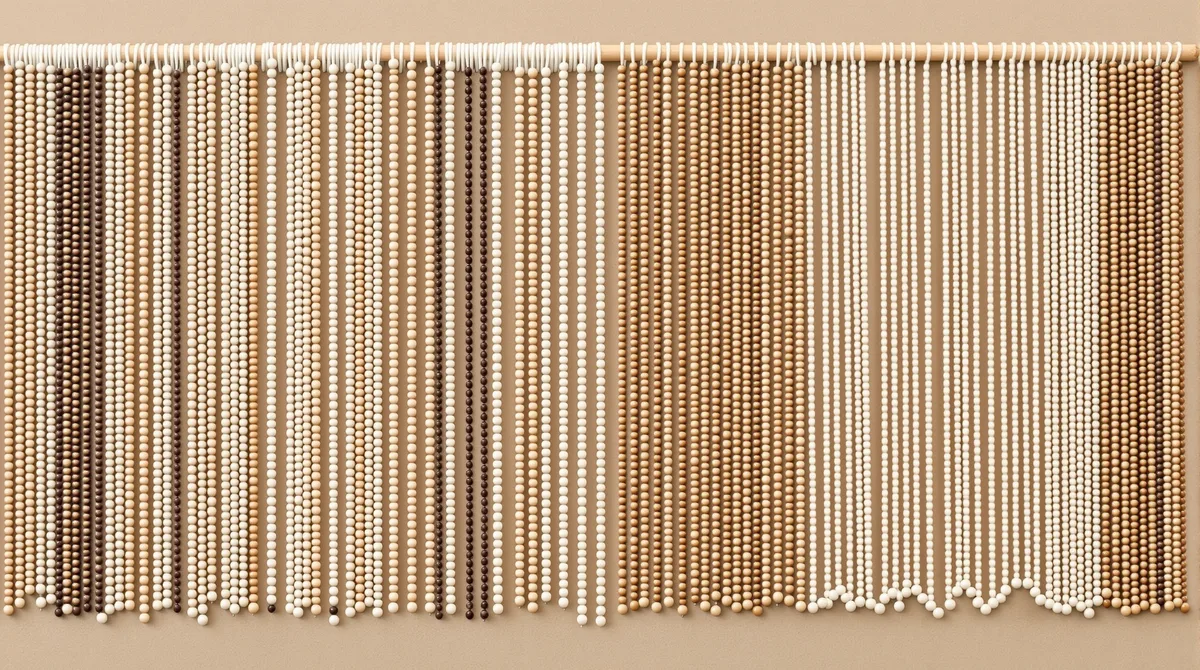
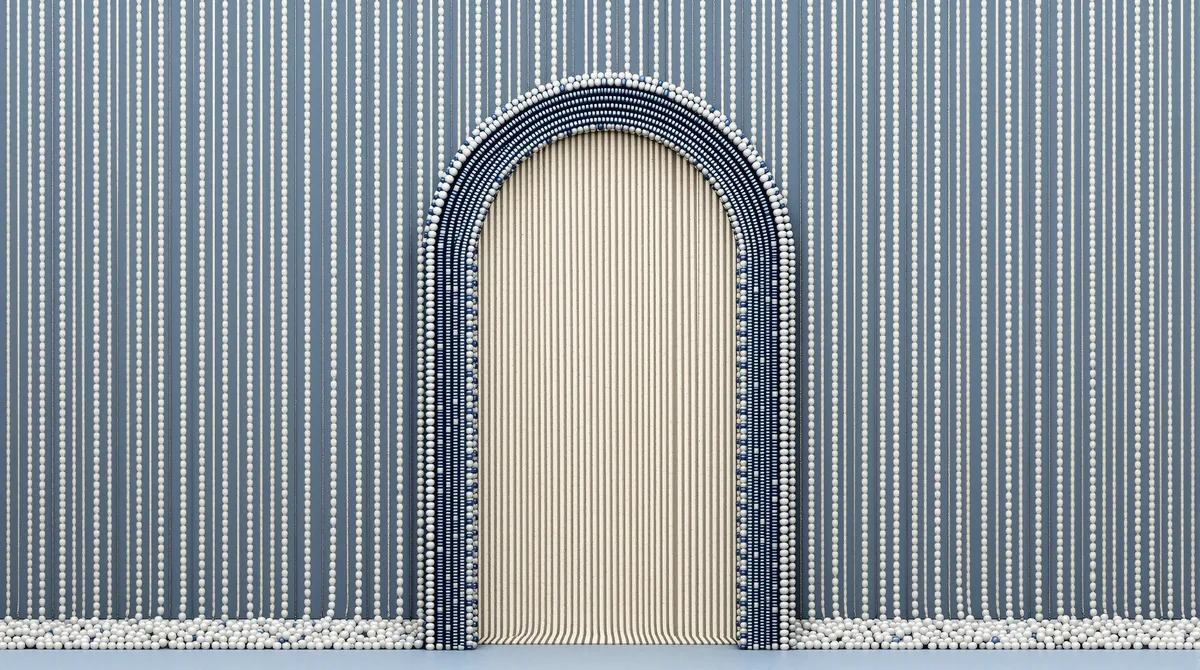
Strands that frame an opening and leave a clear walk-through: arched and inverted-V drops, built to order on a turned dowel or a stained rail.
See the detail
Application · Application
A doorway panel is pushed aside a few hundred times a day. Everything that makes a bead curtain good in a photograph — long drops, heavy feature beads, a tight pitch — is working against it.
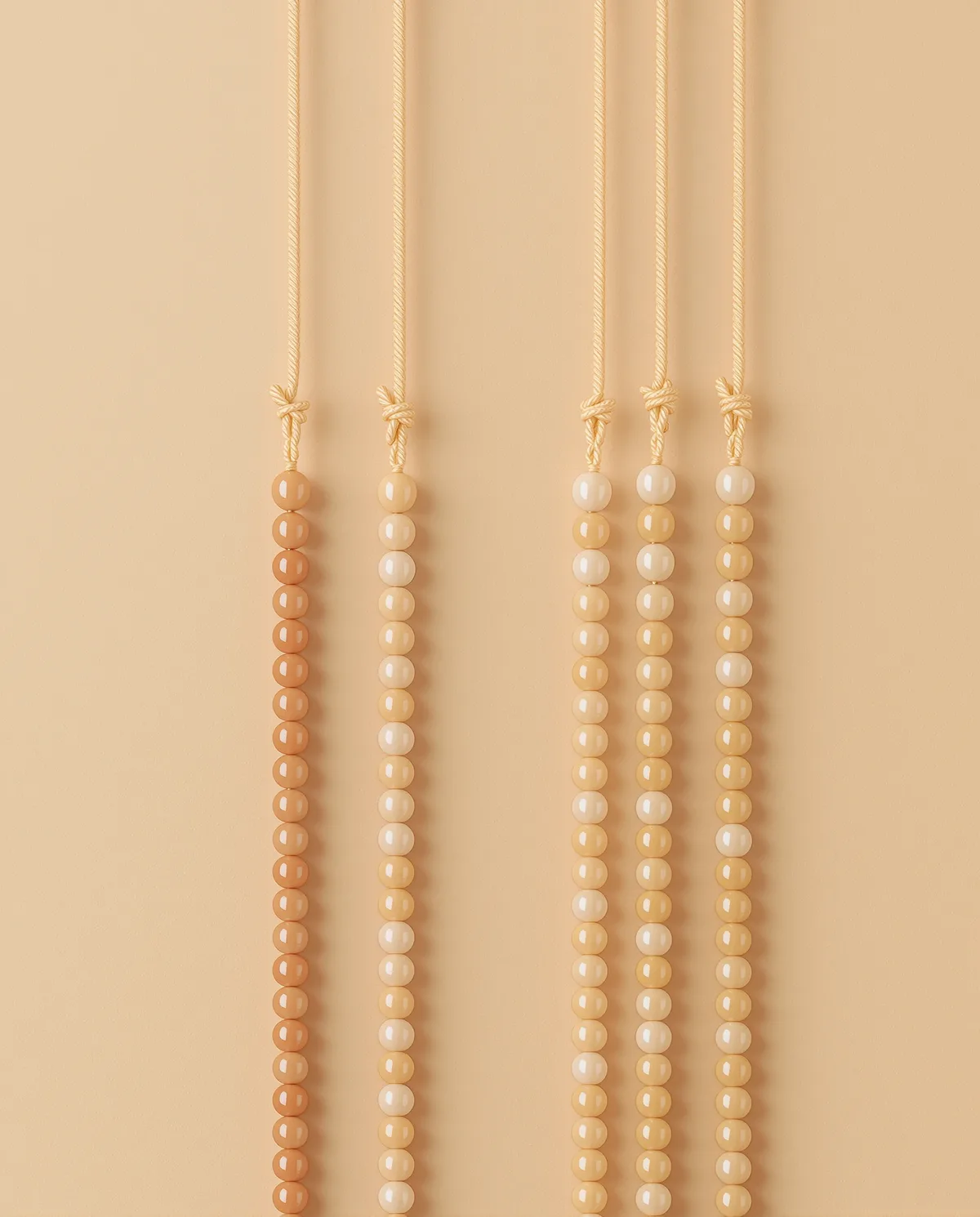
Close hand-strung strands of glossy orange, rust and cream glass beads, hung in two dense banks with clear ground between them.
A doorway in constant use demands a panel engineered for walk-through wear rather than for appearance: a bead whose glass will survive being knocked, strands heavy enough to fall back into order unaided, a header that carries the load without sagging, and an opening shape that gives a body somewhere to go. Strand drift, not breakage, is the usual failure.
Usually two things at once: dress the opening, and let people through it without touching a door. The second part is what makes a doorway different from a window. A window panel hangs still for years. A doorway panel is a moving part.
The practical brief is therefore a durability brief wearing a decorative hat. Ask the client how many passes a day the opening takes, whether anyone will be carrying trays or boxes through it, and whether the opening is on an escape route. Those three answers change the specification more than the colour story will.
Four properties, in this order. Weight enough to self-order — a strand that is too light stays where the last shoulder left it. Impact tolerance at the bead — contact is constant and it is not gentle. A header that does not sag — the whole load hangs from one rail. A clear path — somewhere for a body to go that is not through the densest part of the panel.
Everything else is negotiable. Pattern, hem shape and colour can all be designed around those four.
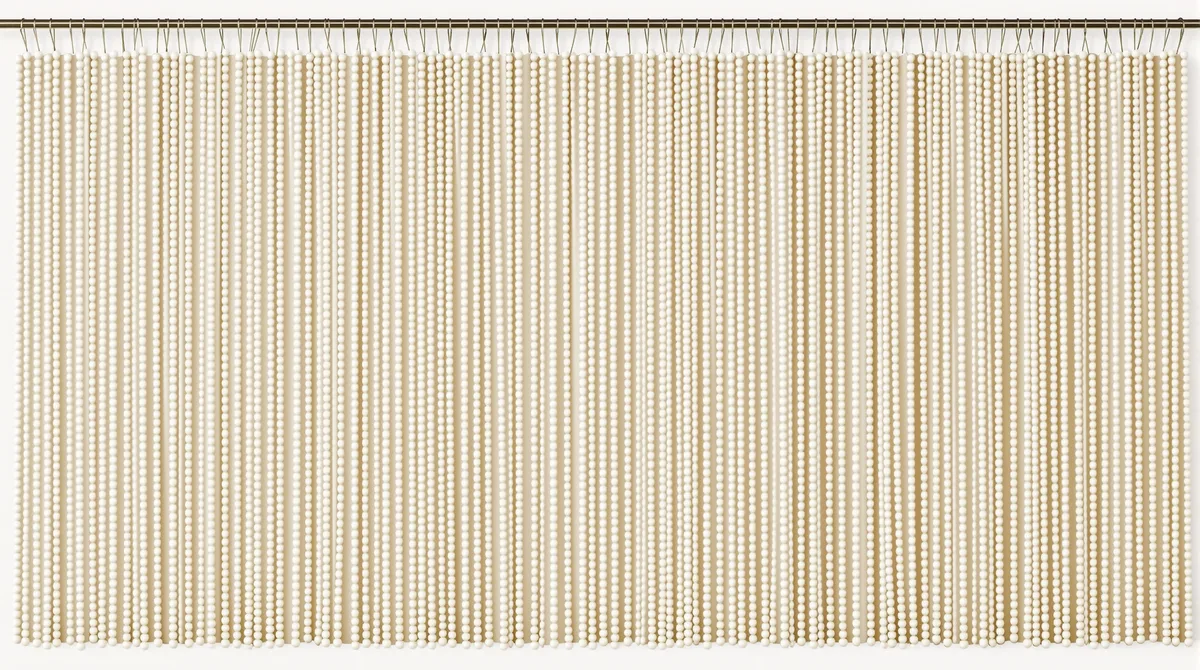
The shipped standard is a door curtain of about 90 × 200 cm on a wooden dowel, commonly thirty hand-strung strands. That suits most single interior doors: North American interior doors run roughly 28 to 36 inches, and 90 cm is about 35.
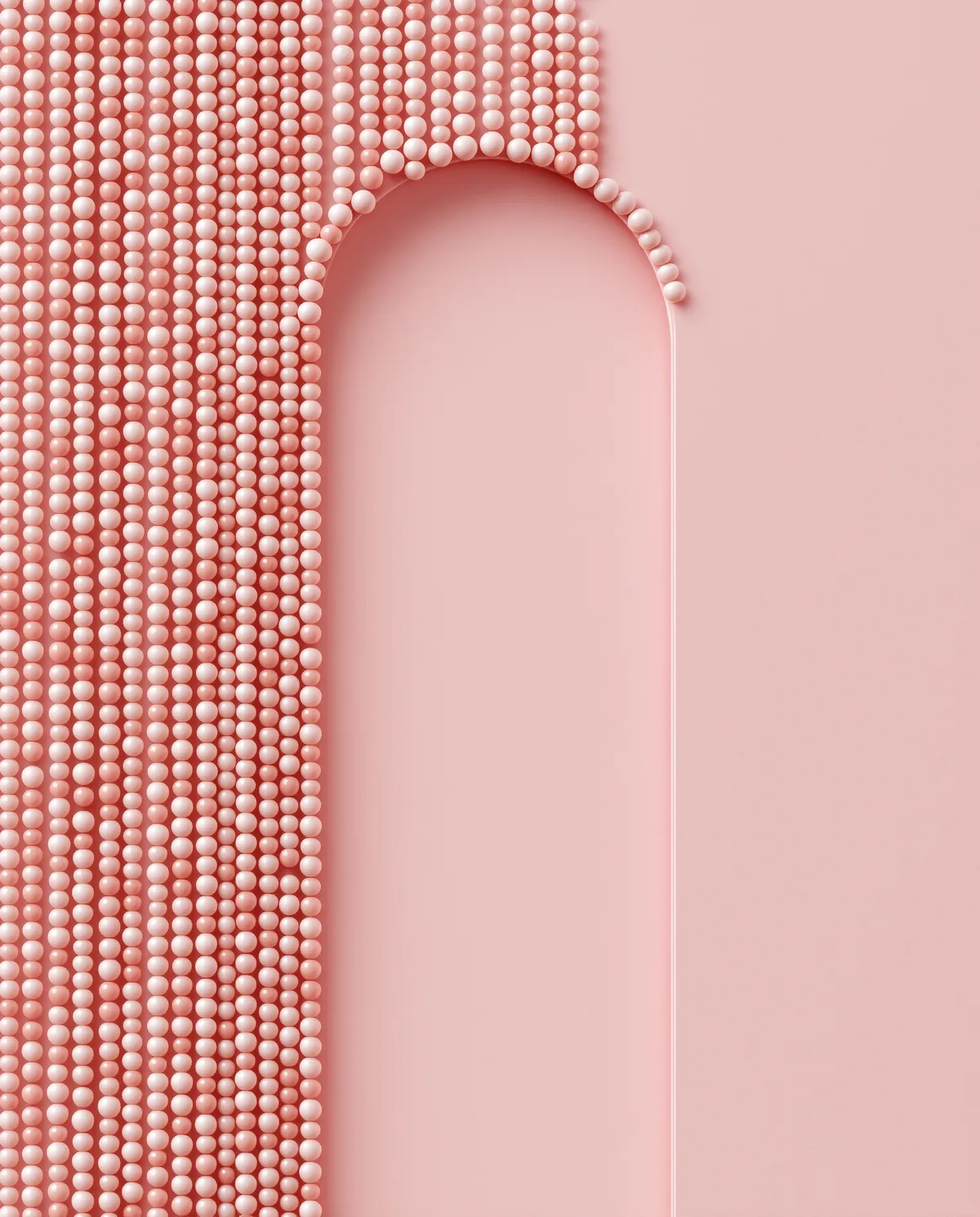
For a genuinely busy opening, a portal with an arched-cut drop is better. The strands are cut to stepped lengths so an arch is removed from the centre, which gives the walk-through a clear middle and leaves the decorative mass at the sides where nothing touches it. Our portals run 76 × 140 cm, and the arched centre opening exists precisely to frame a walk-through.
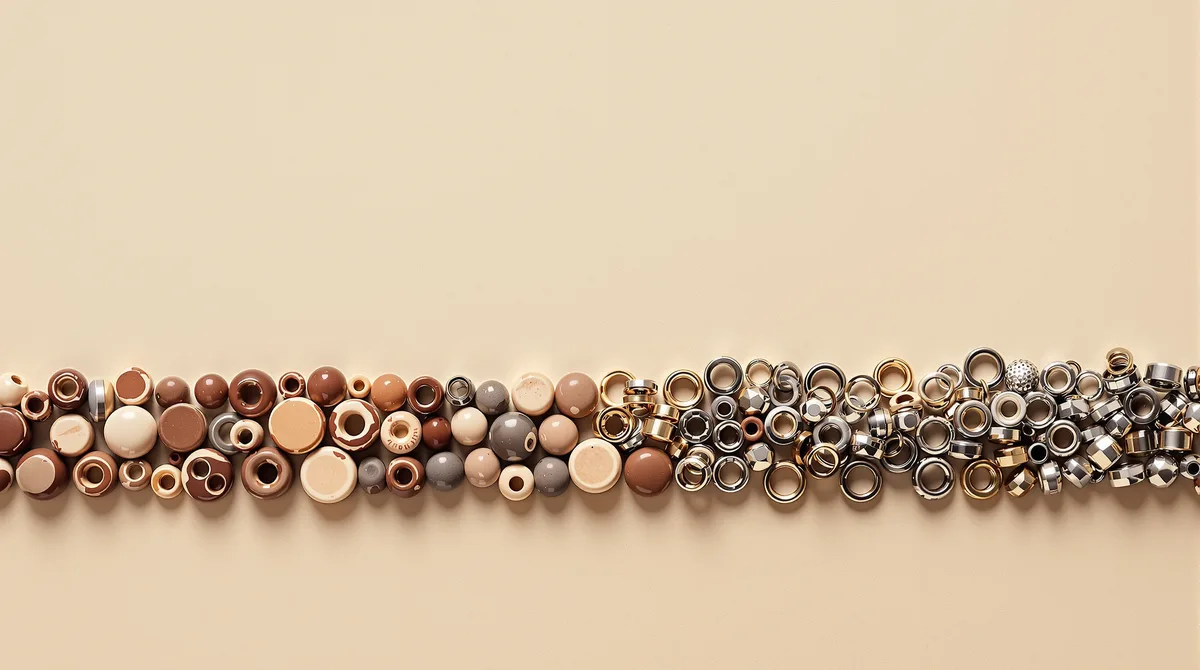
On material: body-coloured pressed glass or moulded acrylic. Avoid surface-dyed beads at contact height.
Strand drift, every time. The hem stops reading as a line because individual strands are left displaced, and the eye catches that long before it catches a chipped bead. The fix is in the design: a heavier end bead, a slightly wider pitch so strands are not interlocking, and enough strand mass to swing back.
Then contact wear. Then cord abrasion at the drill hole, which is why hole size and cord gauge are specified together rather than assumed.
Sampling is 16 to 20 days from an agreed brief, and photographs are approved before the sample ships. Production is 40 to 60 days after sample approval. Those are the published figures for beaded décor and they do not change for a doorway.
What does change is the front of the schedule. A doorway with a specialty glass bead can need annealing trials before anyone strings a strand, because glass strength is colour-dependent and two colours that are individually fine can be a poor pair when beads knock together all day. Build that into the programme rather than discovering it at sample review.
Give finished width and the longest drop, measured from the underside of the fixing. Then strand count or pitch; bead material, shape and size for the main bead and each accent; colour references as Pantone codes or physical chips; the top fixing and its length; the hem shape with the longest and shortest drop if it is shaped; and the opening dimension the panel has to sit inside.
Note the frame-to-panel gap explicitly. A panel hung on the face of an architrave behaves very differently from one hung inside the reveal, and that single decision changes how much the strands are touched.
Minimums and pricing are set per design and confirmed with your quote rather than fixed across the range. What we can give before a sample exists is a rough cost sheet showing where the cost sits and which lever moves it.
The levers, in order of effect: bead size and material first, then construction — strand count and tightness — then strand spacing, then the dowel and the packing, then height. A graphic doorway panel is expensive because of bead count and stringing hours, not because of the dowel: a densely patterned 90 × 200 cm curtain can hold about 11,800 beads, each one placed by hand.
Doorway curtains and portals are the core of what we make, and they run continuously. Beaded portals, curtains, café curtains, valances and wall hangings are in continuous production, with the lead doorway portal reordered season after season.
This is retail product manufacturing at volume, and the construction is exactly what a specifier receives: same strands, same header, same hand. Contract work adds fire performance on the specified build and a spares schedule, both quoted with the project.
Long feature beads at shoulder height. Surface-dyed beads in a panel that is touched. All-bamboo or very light all-wood strands in a high-traffic opening without added end weight. And a pitch tight enough that adjacent strands interlock — it looks dense and beautiful hanging still, and it tangles the first time two people pass at once.
We would also advise against beadwork altogether across a required egress door. A decorative hanging in an escape route is a question for the project's authority having jurisdiction, and it should be settled with them before the opening is specified.
On a domestic job, the client. On a commercial one, three people: the designer who owns the look, the operator who will live with the cleaning regime, and whoever holds the fire file. The third is the one most often missed, and the one most likely to stop the specification late.
Our part of it is the sample, and on a doorway the thing to approve physically rather than on a photograph is the floor gap. A centimetre either way reads as deliberate or as an error, and no render settles which.
The panel arrives on its header — a stained wooden header rail or a single turned dowel, both made in our own Saharanpur wood factory. End suspension loops can be knotted at the top of each strand where a level door or wall mount is wanted.
Beyond that the fixing is the project's. Brackets, rods, tracks and tension rods are not supplied, and the panel is weighed on the approved sample and the fixing is sized to that weight. What we will do is give the finished weight of the approved sample, which is a measured figure a bracket can be chosen against.
A private doorway in a home: generally none. A doorway in a commercial interior: expect to be asked for a flammability rating, typically NFPA 701 in the US. Fire performance is tested on the specified build and quoted with the project — bead material, cord and header all affect the result, so it has to be the specified build.
House rules matter as much as codes. A landlord's fit-out guide, a hotel brand standard or a shopping-centre handbook will often have its own hanging-décor clause, and it is cheaper to read it before the sample than after.
Routine care, the bead materials a doorway panel can be built from, and the cost levers behind the quotation each have a page of their own.
Extractable data
| Item | What suits a used doorway | Note |
|---|---|---|
| Format | Door curtain, ≈90 × 200 cm (35 × 79 in) | Shipped format; suits most single interior doors |
| Alternative format | Portal, 76 × 140 cm, arched-cut drop | Clear centre opening to frame a walk-through |
| Strands | 30 hand-strung strands on a single wooden dowel | The common shipped build |
| Pitch | 40 strands at ≈2.25 cm on a 90 cm width | From the design library |
| Bead material | Body-coloured pressed glass, or moulded acrylic | Surface-dyed beads abrade at contact points |
| Specialty glass | Annealed for strength; colours confirmed together | Glass strength is colour-dependent |
| Bead hole | Specified per design; 4–5 mm has been run to customer spec | Hole size sets cord choice |
| Top fixing | Stained wooden header rail or single turned dowel | End suspension loops available for a level mount |
| Hardware | Not supplied | Brackets, rods and fixings are the project's |
| Sampling | 16–20 days from an agreed brief | Photographs approved before the sample ships |
| Production | 40–60 days after sample approval | Published lead time for beaded décor |
| Minimums | Set per design, confirmed per quote | No range-wide figure is published |
| Flammability | Tested on the specified build and quoted with the project | Project-specific, where a specification calls for it |
Good to know
Either a full door curtain at about 90 × 200 cm, or a portal with an arched-cut drop. The portal is usually the better commercial answer: the centre is cut away so the opening a body walks through is already clear, which means far fewer strands are pushed aside on each pass and far less contact wear.
The panel hangs from a stained wooden header rail or a single turned dowel, and that is the part we make. It then needs a fixing rated for its weight — screw hooks or brackets into the frame or the wall above it, not into plasterboard alone. A glass panel is substantially heavier than an acrylic one of the same size, so the fixing is chosen after the bead material, never before.
In most US jurisdictions a hanging decorative panel in a public space is treated as drapery and is asked to meet NFPA 701; UK and EU projects ask for their own equivalents. We do not currently hold a flammability rating for any bead panel. Testing against the actual build — bead, cord, header — is the only route, and it is quoted separately. A domestic doorway in a private home normally triggers none of this.
Dry first. A soft brush drawn down each strand from header to hem, monthly in a normal room and more often where airborne grease is present. Beads can then be spot-cleaned with a barely damp cloth and dried in the same pass. The cord is the part that fails, so it never gets wet and the panel never goes into water.
Sampling is 16 to 20 days from an agreed brief, with photographs approved before the sample ships, and production is 40 to 60 days after sample approval. Add shipping. A fit-out that needs flammability testing should add the lab turnaround on top, which is quoted and scheduled separately.
Strand order. Strands get pushed aside hundreds of times a day and a light panel stops falling back into line, so the hem looks ragged long before anything breaks. Second is contact wear at the knock points, which shows on surface-dyed beads as a dulled band. Cord abrasion inside the drill hole is third, and genuine bead breakage is rare.
Door curtains and portals in this format are the core of our beaded programme and never off the floor. Beaded portals, curtains, café curtains, valances and wall hangings are in continuous production, with the lead portal reordered season after season. That is retail product manufacturing, at volume, rather than contract doorway work — worth saying only because a specifier is buying the build, and the build is identical.
Keep exploring
Manufacturing
Strands that frame an opening and leave a clear walk-through: arched and inverted-V drops, built to order on a turned dowel or a stained rail.
See the detailSpecification
What a beaded panel weighs by material and density, and which fixings suit light acrylic against heavy glass.
See the detailPillar
Twenty settings, from a closet front to a hotel lobby, each with the format that suits it, the fixing it needs and the standard that applies.
Compare the optionsSpecification
Grease, steam and daily traffic: which bead materials survive a kitchen opening, which finishes do not, and how often it needs cleaning.
Specs and sizesSpecification
Daylight and fade, sill-set lengths, the fabric header with a rod pocket, and why a window brief is a light brief rather than a privacy one.
Specs and sizes
Start a conversation
Send a reference, a colour chip or a sketch. Minimums are set per design and confirmed per quote; sampling is quoted separately and usually runs 16 to 20 days from an agreed brief.