Pillar
The beaded curtains index
Door curtains, portals, café lengths and valances: the standard sizes, the strand counts and the one question each format answers.
Read more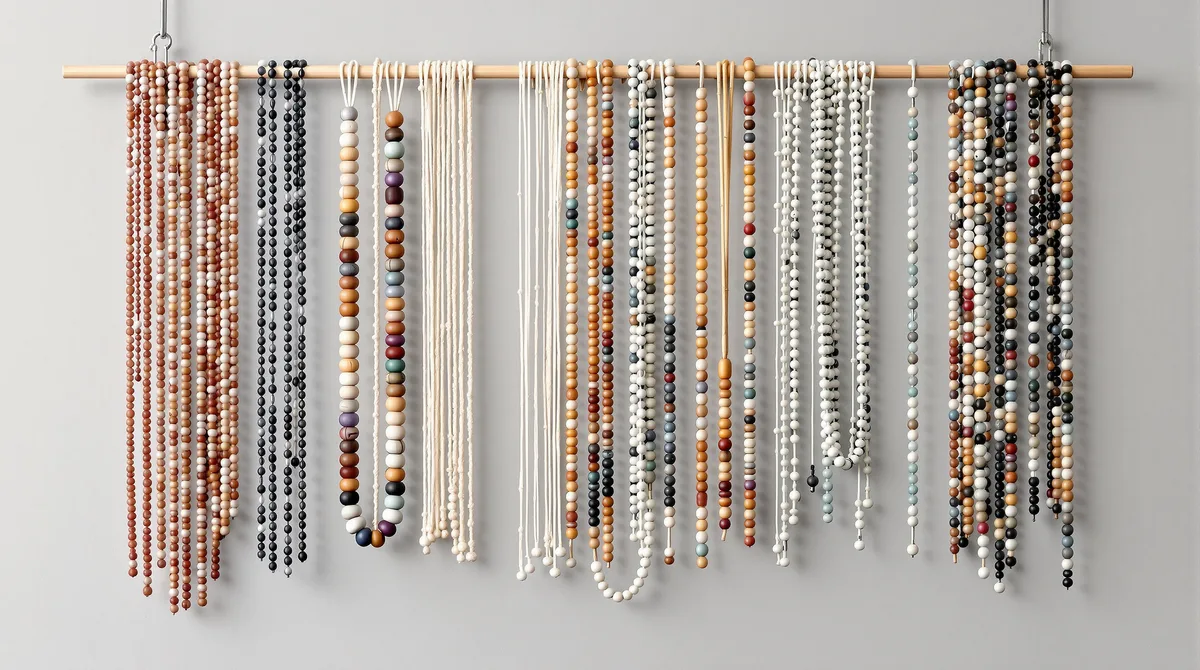
Guide · Performance
Weight is established on the approved sample — a panel weighs its bead count times its material density, so one number across the category would mean nothing. But the ratios are reliable, and the ratios are what you actually need.
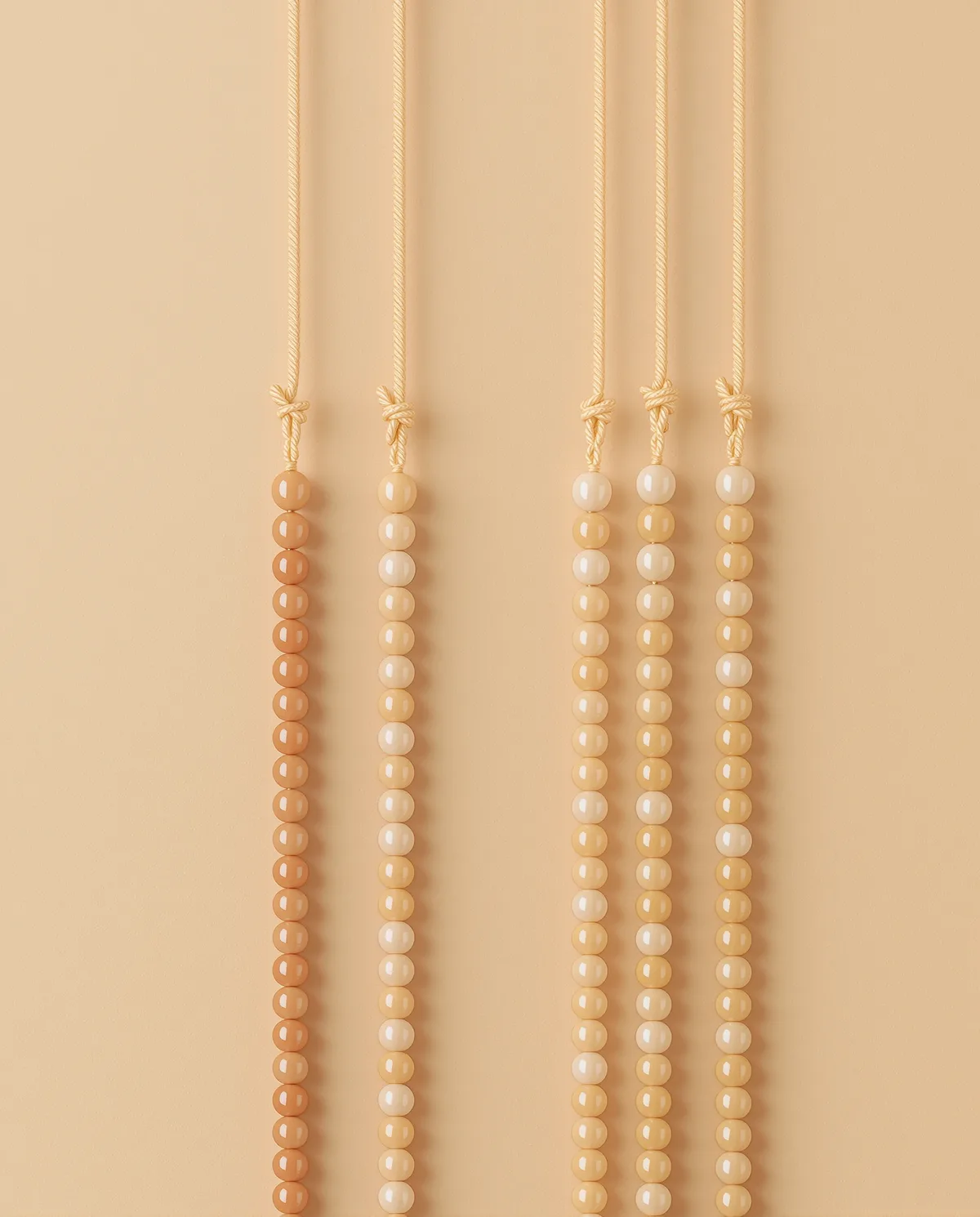
Five bead strands of equal length hung from a steel bar in moulded acrylic, cut bamboo, turned wood, glazed ceramic and heavy pressed glass, each cord pulled to a different…
A bead panel's weight is its bead count multiplied by its material density, so there is no single figure. The ratios are what matter: glass sits near 2.5 g/cm³, acrylic near 1.2, most woods below 1, and bamboo lower still because the bead is hollow. A dense 90 by 200 cm glass panel holds about 11,800 beads.

Because a bead panel's weight is the product of two things that both vary enormously: how many beads are on it and what those beads are made of.
Bead count on a 90 × 200 cm panel can run from a few thousand to about 11,800 depending on pattern density. Material density runs from near 2.5 g/cm³ for glass down below 1 for wood. Multiply the extremes and the same nominal size covers a range of several times over.
So weight is established on the approved sample, and anyone who quotes you a single weight for "a beaded curtain" is quoting one specific build and not telling you which.
These are the numbers worth carrying, and they are general material densities rather than Gemixx measurements:
The practical statement: the same design in glass is about double its acrylic weight and about two and a half times its weight in most woods.
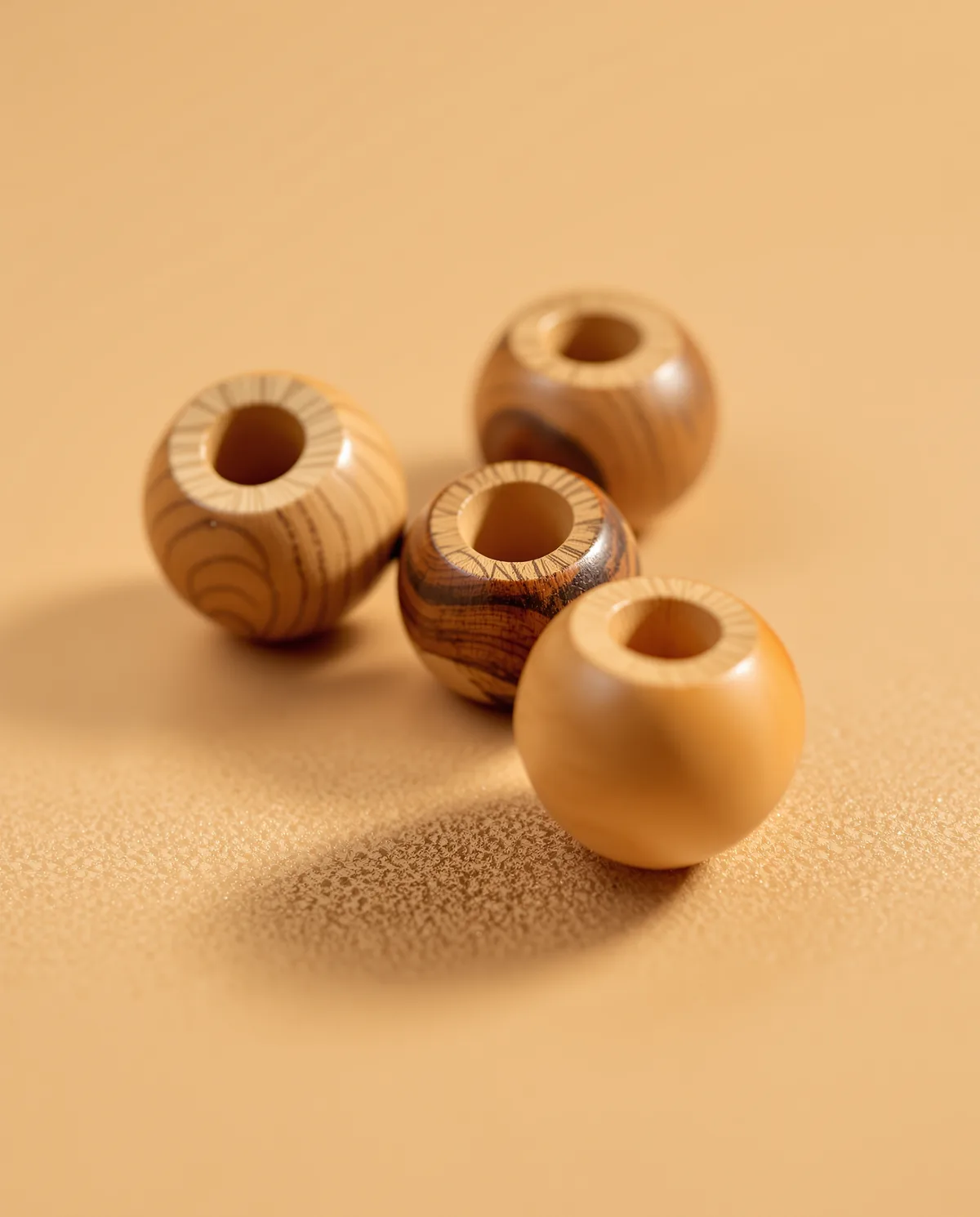
Bead count, and it moves at least as much as material does. The reference figure is about 11,800 beads in a densely patterned 90 × 200 cm curtain — a published production figure, with every bead placed by hand.
For comparison, the design library's open-pattern 90 × 200 cm panel at 40 strands comes out around 3,100 beads. That figure comes from the 2027 design library, so read it as a proportion: an open panel holds something like a third of what a dense one does.
Which means pattern density changes the panel's weight by as much as changing from glass to acrylic does.
The published guidance maps cleanly onto the density ranking.
Tension rod — light curtains: acrylic, bamboo, wood. No drilling, named for renters. Genuinely adequate within that class.
Cup hooks or screw hooks — simple and strong, holding the dowel or its suspension loops. The most common domestic answer.
Curtain rod and brackets — heavier glass panels and wide openings. This is the right answer for any full-size glass panel.
Ceiling hooks or track — for work hung away from a wall, and they go into a joist rather than into plasterboard.
Size the fixing above the panel's weight rather than at it, because the load is not static: someone walking through a panel applies a sideways and downward jerk, and a child or a cat applies considerably more.
A fixing into solid timber or masonry will. Plasterboard with nothing behind it will not carry a glass panel, and the failure mode is sudden rather than gradual — the fixing holds, and then it does not.
The door frame is usually the best target: it is timber, it is already at the right height, and it is the thing the opening is defined by. Failing that, a timber stud, or masonry with a proper plug.
Mostly it is a feature. Weight per strand is what pulls a strand straight, so a heavy panel hangs true, settles quickly after someone walks through, and is the least tangle-prone thing in the category. A light panel drifts in any air movement and takes far longer to stop.
That is why light materials get a weighted end bead as standard: a deliberately heavier final bead to supply the weight the material does not. Acrylic, wood and bamboo strands all benefit, and on bamboo it is effectively mandatory.
So weight is only a problem at one point in the system, and that point is the easiest to specify properly.
Three levers, all of which reduce bead count.
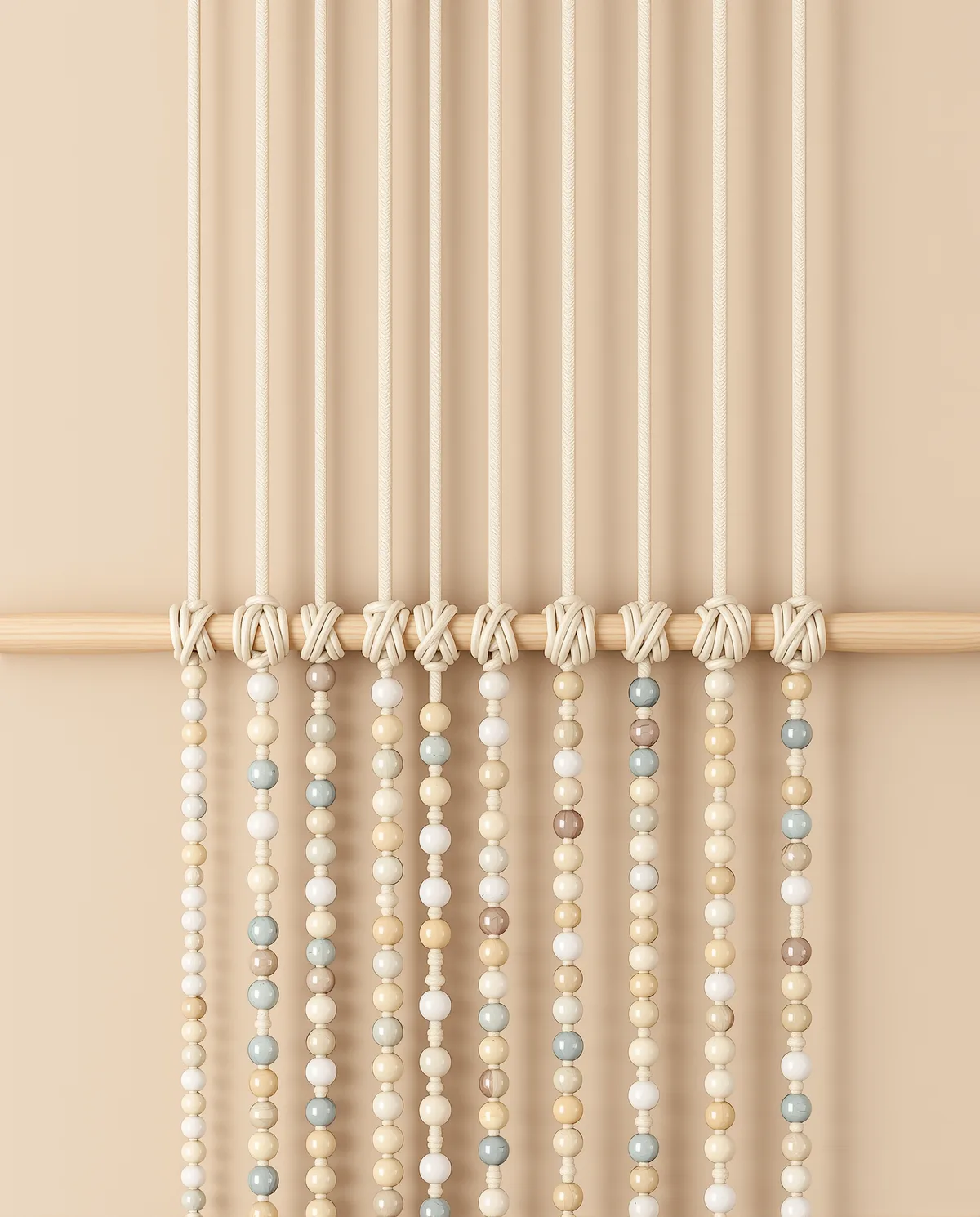
Smaller beads — fewer grams per bead, though more beads per drop, so the net effect depends on the geometry. A wider strand pitch — removes whole strands, which is the fastest reduction available. A scattered accent instead of a fully covered strand — our Polka Dot portal carries about 90 to 120 feature beads across the whole curtain rather than covering every strand, and the Mushroom portal about 120 glass mushrooms.
And the usual professional answer: a mixed strand, with glass only where the light actually hits it and lighter beads carrying the rest of the drop.
Close to it, because bead count follows drop almost linearly. But the more important consequence is where the weight sits.
Every bead on a strand hangs from one knot at the header and bears against the drill holes of the topmost beads. A long panel does not spread its load; it concentrates it at the top. That is why long drops are designed with lighter beads at the header and the weight at the hem — it is the one arrangement where the physics and the appearance point the same way.
Panel weight and load is the reference page with the hardware figures on it, and panel headers covers the fixings themselves. Glass bead curtains and an acrylic bead curtain are the two ends of the density range, and mixing bead materials is how a design lands between them. Choosing a bead size is the other multiplier, since bead count moves weight as much as material does. An extra-long panel concentrates that weight at the header, which is the case where the arithmetic matters most.
Good to know
Weight is bead count times material density, and both vary by a factor of two or more, so the figure comes off the approved sample. What this page can give you is the ratio: the same design in glass is roughly double its weight in acrylic, and roughly two and a half times its weight in most woods.
They are the heaviest panel in the category, yes. Glass sits near 2.5 g/cm³ against acrylic at about 1.2, and a densely patterned 90 by 200 cm panel can hold about 11,800 beads. Multiply those two facts together and a full glass door panel is a substantial object.
A fixing into solid timber or masonry will. Plasterboard with no backing behind it will not, for a glass panel, and the failure is sudden rather than gradual. Fix into the door frame, into a timber stud, or into masonry with a proper plug — and size the fixing above the panel's weight, not at it.
For a light panel, yes. The published fixing guidance puts tension rods with light curtains — acrylic, bamboo, wood — and names renters as the use case. For a heavier glass panel or a wide opening, the answer is a rod on brackets fixed into the frame or wall.
Better, mostly. Weight per strand is what pulls a strand straight, so a heavy panel hangs true and settles quickly after someone walks through it. A light panel drifts and tangles. Weight is only a problem at the fixing, and the fixing is the easiest part to specify properly.
Smaller beads, a wider strand pitch, or a scattered accent instead of a fully covered strand. All three reduce bead count, which is the other multiplier. A mixed strand — glass only where the light hits it, lighter beads elsewhere — is the usual professional answer.
Close to it, because bead count follows drop almost linearly. The more important consequence is where that weight sits: every bead on a strand hangs from one knot at the header, so a long panel concentrates its load at the top rather than spreading it.
Keep exploring
Pillar
Door curtains, portals, café lengths and valances: the standard sizes, the strand counts and the one question each format answers.
Read moreGuide
Air moves through, insects are discouraged rather than excluded, and strand pitch is the only lever that changes either.
How it is madeGuide
Opaque beads at a tight pitch screen movement and never detail — and nothing in this category works from close up.
Open the referenceGuide
The heaviest panel and the only one that refracts: weight, chime, a straight hang, and the chipping risk that comes with them.
How it is madeSpecification
What a beaded panel weighs by material and density, and which fixings suit light acrylic against heavy glass.
Compare the optionsGuide
How to establish the real load, which fixing class it demands, and why the substrate decides the job.
See the detail
Start a conversation
Send a reference, a colour chip or a sketch. Minimums are set per design and confirmed per quote; sampling is quoted separately and usually runs 16 to 20 days from an agreed brief.